







Eggless chickens and shell-less eggs to prevent species extinction. This is the striking announcement just made by the American biotechnology company Colossal, whose declared goal is to bring back animals that disappeared hundreds, even thousands of years ago, such as the woolly mammoth, the giant wolf, or the dodo.
Read more Carlos Alcaraz also withdraws from Wimbledon due to wrist injury
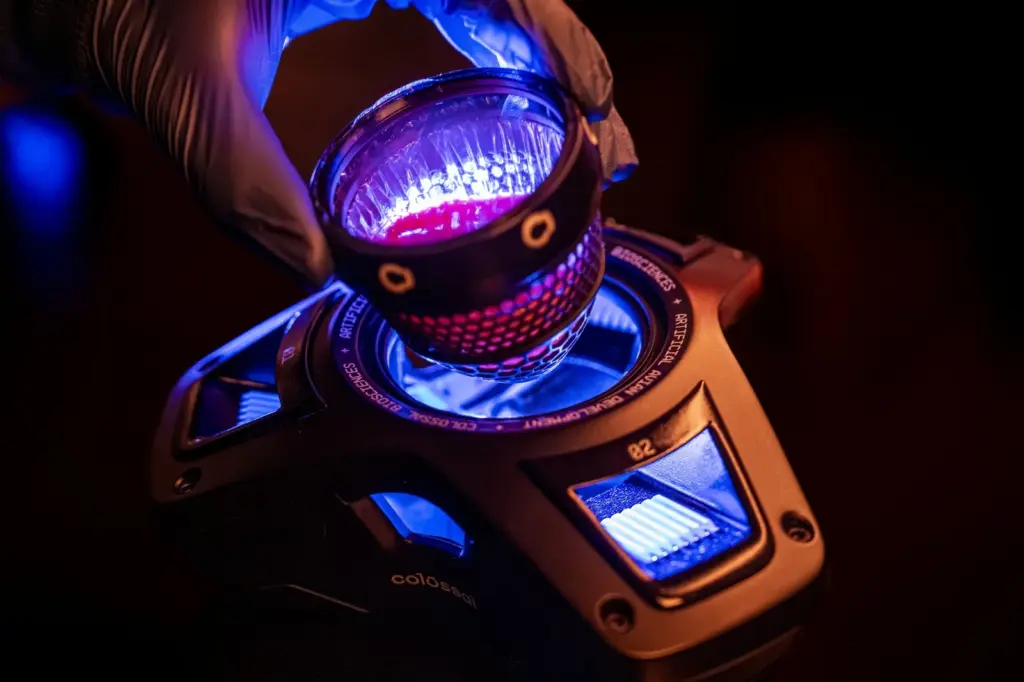
The company published a press release this Wednesday stating that it has bred live chickens for the first time that developed in “artificial eggs” created with 3D printing. Their shell is a transparent silicone membrane.
The company has thus created 26 healthy Leghorn chickens, a breed widely used in the livestock industry for their white eggs, Andrew Pask, head of biology at Colossal, explains to EL PAÍS. It is a proof of concept to demonstrate that the technology is scalable and “mimics” a natural egg as much as possible, he explains. “When we see the moment approaching and see the chicken pecking, we take the egg out of the incubator and the animal breaks the membrane to be born, just like with a normal egg,” he adds.
This new advance is not backed by any scientific study, as is almost always the case with Colossal. If what they claim is true, this company takes a key step in its goal of resurrecting the giant moa of New Zealand’s South Island: it was almost four meters tall and weighed about 85 kilos, making it impossible to breed in natural eggs of any living bird. The moas disappeared about 600 years ago after the arrival of Polynesians to New Zealand and the new species they brought with them, such as dogs and rats.
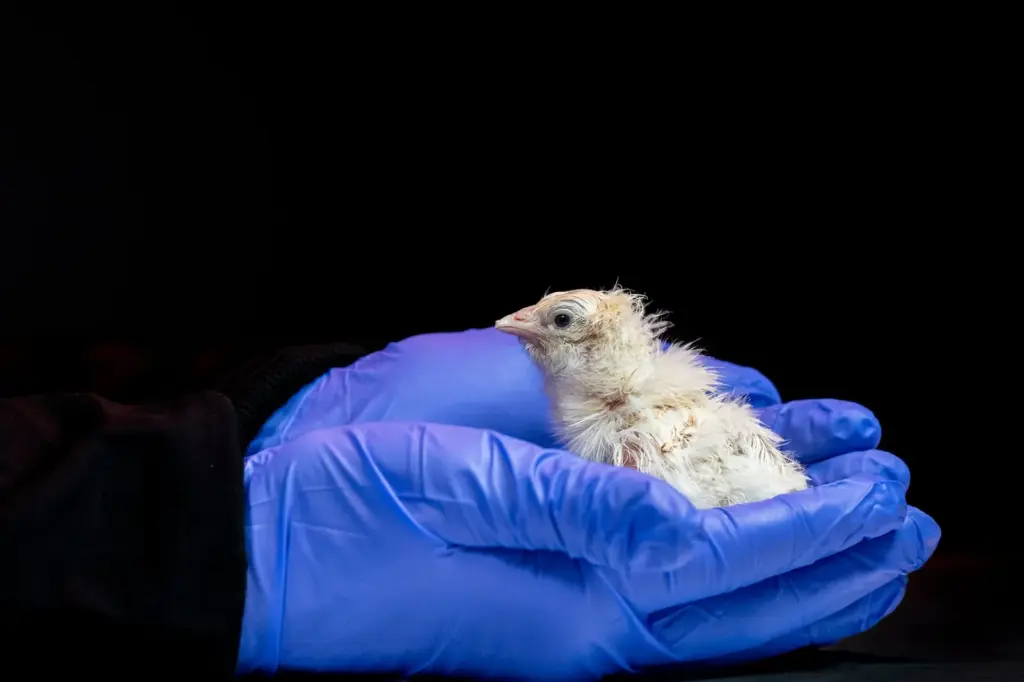
The main advance is not the creation of transparent eggs, something already achieved by Chinese scientists in 2015. The important thing is that Colossal’s eggs would not need artificial oxygen, a technical barrier that had so far hindered the field. The soft membrane of these artificial incubators would allow oxygen to pass through the shell to enable embryo development, which saves costs, allows industrial production, and prevents malformations.
The new system allows live observation of the chicken’s growth until birth and the creation of artificial eggs for any current or extinct bird, always according to the company’s version. This advance could help conserve current endangered birds and even improve bird production for research, for example, to produce antibodies for human use. The company has not revealed the success rate of this new system, that is, how many chickens die before birth. It also does not plan to publish a peer-reviewed scientific study for now, according to Pask. Currently, the company is collecting DNA from the nine extinct moa species, including that of the South Island, until complete genomes are obtained to create embryos for subsequent development in these artificial eggs, Pask adds.
Colossal was co-founded in 2021 by the charismatic geneticist George Church from Harvard University. Its declared goal was to resurrect the woolly mammoth, a huge elephant that survived more than two million years through glaciations until its extinction about 4,000 years ago, when Egyptian civilization was already flourishing.
Colossal has already raised more than 620 million dollars from fortunes such as Paris Hilton, Peter Jackson, or Thomas Tull, one of the creators of Jurassic World, according to the company’s own data. Its first major milestone was the creation of mice with long, reddish hair, thanks to several genetic modifications rescued from the woolly mammoth genome. A few months later, they announced the birth of what they claim is the first de-extincted animal: a giant wolf that was actually a current gray wolf with several genes modified to include characteristics of extinct animals, such as white fur and larger size. In neither of these two cases have the responsible parties yet published peer-reviewed scientific studies on the subject. The company, which plans to create parks where its animals can live freely, argues that de-extinction is the last chance for many current species on the brink of disappearance, as explained to EL PAÍS by Beth Shapiro, the company’s chief zoologist.
This new announcement has been met with surprise and skepticism by independent scientists. “It sounds impressive, but of course, that is to be expected from a press release,” reacted geneticist Louise Johnson from the University of Reading (UK). “We need real data to know if this is a big step forward. I look forward to seeing that data when it is published; until then, I give my expert opinion on this YouTube announcement,” she added in comments to the Science Media Centre portal. At least four other experts consulted by the same service criticized the absence of a serious scientific study supporting the announcement. Publishing a peer-reviewed scientific study is an essential step for other teams to reproduce it, which demonstrates its real validity.
Carles Lalueza-Fox, a geneticist at CSIC, acknowledges: “Colossal has been able to develop an artificial egg, something for which there were no comparable precedents.” The expert highlights the usefulness of this system to recreate species like the moa, whose eggs were 80 times larger than chicken eggs; and even to apply it to the resurrection of other smaller extinct species, in statements to SMC Spain. However, he warns, “ethical questions persist regarding Colossal’s ultimate goals, and it is legitimate to ask whether it makes ecological sense to genetically redesign some current birds to superficially resemble moas, and what fate would await those animals.” The expert sees “a rather surprising mix of scientific advances and advertising that can be described as misleading.”
Lluis Montoliu, also a CSIC researcher and former president of that institution’s ethics committee, believes that “Colossal is demonstrating that it is a unique biotechnology company, with challenges that would seem impossible for any other company.” “However,” he adds, “they pose challenges that require the development of technologies and devices that do not exist, such as the artificial womb to gestate a possible woolly mammoth fetus or, now, the artificial egg for embryos of birds capable of generating species that, like the giant moa, ceased to exist more than five centuries ago, or the dodo, also extinct due to humans in the 17th century.”
Dusko Ilic, a physician and molecular biologist at King’s College London, opines that this “is a technically interesting development, but it is important to distinguish the platform technology from the broader narrative of de-extinction.” “Recreating an extinct species like the moa would require much more than an incubation platform, including an accurate genome reconstruction, proper development, physiology, behavior, welfare, and ecological context. Even then, the result would likely be an engineered substitute rather than a true restoration of the extinct species,” he details.