








—Did they try to use her from the Presidency of the Generalitat Valenciana?
A second of silence.
—Eh, Your Honor, no.
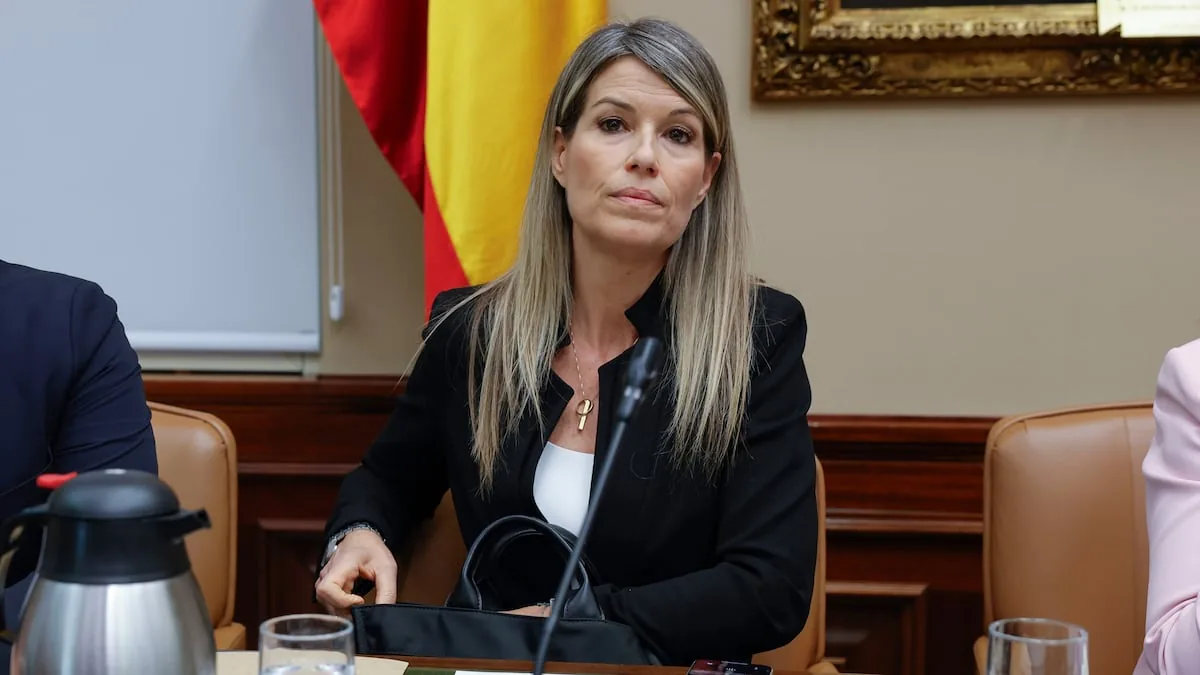
Dressed in a black suit, with a serious and somewhat nervous face, Maribel Vilaplana sat this Tuesday in the DANA commission of the Congress of Deputies. The journalist who had lunch with Carlos Mazón on that tragic October 29, 2024, was summoned this Tuesday in a session marked by the judicial indictment of former president José Luis Rodríguez Zapatero, a topic of conversation among deputies in the corridors of the Chamber throughout the morning. Vilaplana, a professional journalist, did not say much. She stuck for an hour and a half to the judicial statement she made last November in the Valencian courts as a witness in the case. “I refer to my statement.” “Your Honor, everything is in the statement.” “Everything I could contribute I did in my statement.” “The same as I said in the statement.” “I insist, the facts have not changed. How many times do I have to say it?”.
📺LIVE TV | Maribel Vilaplana breaks down crying in the DANA Commission: “I know you are not judging me but I feel judged” https://t.co/QnY9Fjuakp pic.twitter.com/14iBa8vRYl
— EL PAÍS (@el_pais) May 19, 2026
Vilaplana’s lawyer — plastic glasses, gray suit, white shirt — sat in the back rows of the room, with a sheet of paper and a black pen, barely taking notes. The strategy was clear: stick to what was said before the judge investigating the tragedy. The lawyer, however, only moved his right foot up and down when he saw Vilaplana get emotional in front of everyone. Perhaps the tensest moment of the hearing.
“All those stories…,” Vilaplana said in response to questions from Compromís deputy Alberto Ibáñez, “I think so much has been said without saying anything. It is very difficult to go out on the street and not break down. And in front of all my people. It seems that I am assuming a victimhood… which is the last thing I want. The circumstances are complex when you have to live through them. I am dealing with and managing them. I cannot explain anything new because there is nothing new.” And she wiped her tears with a handkerchief.
It was not a harsh hearing for Vilaplana, but reliving her judicial statement and what happened that afternoon in the restaurant led some deputies to talk about the importance of mental health in these cases. “We only want to repair the pain of those victims and know a little of the truth,” said Podemos deputy Javier Sánchez Serna, the most incisive. “We know he received calls. You were there, if someone warned you, if they went to look for him. He [continuously referring to Mazón] talks a lot about the lack of communication. He even went to the room where they were eating. We would like you to tell us some detail that could help us know the truth.” Vilaplana was blunt again:
—I cannot add anything else. Everything I knew and could say I already explained. Those doubts you have about that person, Mr. Carlos Mazón, you have to ask him. I have assumed my responsibility and have cooperated. I have been very consistent.
Read more A Day in the Backstage of Cannes (II): The Film Market and Each Country’s Pavilions
—When do you set the lunch?
—I already answered all that and much more. I insist. Out of responsibility and prudence, I will not interfere.
—Look, the investigation commission does not interfere. You are not in any judicial process.
—I have fulfilled my obligation. I did not participate in the emergency system.
Vilaplana then took a sip of water. “You know what? It has reached a point where I already know when my name comes up to tell something and when it comes up to cover something.” Other political groups chose not to ask anything. “Honestly,” said ERC deputy Teresa Jordá, “I try to understand humanly before politically. Did no one really enter that room during those hours? Only the owner? Did no one interrupt that lunch? Didn’t the phones ring every 30 seconds?” Vilaplana insisted that all this is already in her judicial statement and that if they have doubts, they should ask Mazón.
Seconds later, it was Ibáñez’s turn, the Compromís deputy, who spoke about mental health in these cases. “I have no responsibility or burdens,” said Vilaplana, who broke down crying. “I feel judged […] It is very difficult to go out on the street and not break down. And in front of all my people. It seems that I am assuming a victimhood which is the last thing I want. The circumstances are complex when you have to live through them. I am dealing with and managing them. I cannot explain anything new because there is nothing new.” Ibáñez immediately cut off her intervention. “I have no more questions.”
And the socialist deputy defended the importance of these commissions. “We are not judges, we do not judge. If this commission becomes a wall for playing fronton, it will be difficult to move forward.” The commission president declared the hearing closed. Some deputies approached to greet Vilaplana, who got emotional again. Minutes later, deputy Ibáñez, in response to the press, acknowledged that “maybe it was a mistake” to call Vilaplana. “Or at least to prolong her statement once she said she was not going to testify. I think sometimes we can also make mistakes.” Vilaplana, meanwhile, left through the corridors accompanied by her lawyer.