









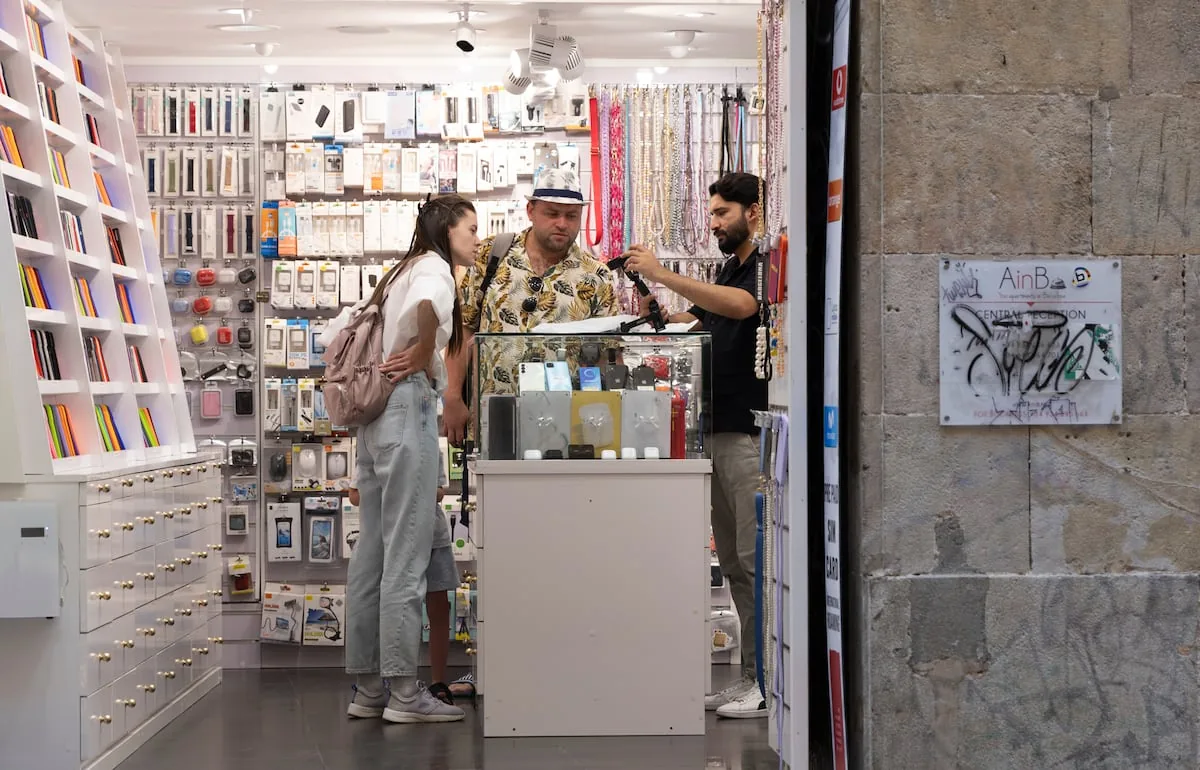
The Barcelona City Council has provisionally approved this afternoon in committee the future Use Plan of Ciutat Vella, which seeks, according to the government of Mayor Jaume Collboni, to correct the previous one and curb the proliferation of businesses such as stores linked to cannabis consumption, manicure shops, or mobile phone accessories. The executive defends “a more precise, agile, and surgical urban planning tool” than the one inherited from the commons, from 2017. In this case, areas are considered by density of each type of permitted activity, the width of the streets is taken into account, and a minimum and maximum surface area for each type of establishment.
Read more General Motors advances in its $1 billion investment plan in Mexico over the next two years
The provisional approval of the future plan, which incorporates two unique streets (Via Laietana and Rambla), has counted on the votes of PSC and Junts. The ERC and Comuns groups have voted against a text with which they claim new tourist businesses and even nightclubs could be opened in an already saturated area where local commerce has practically disappeared. PP has voted against, and Vox has reserved its vote for the plenary session at the end of the month.
Any municipal plan for the most pressured district of the city by visitors is scrutinized carefully. There have been six different use plans for Ciutat Vella in three decades, a document that regulates which establishments can open, how, where, and under what conditions. The previous plan, from the first term of former mayor Ada Colau in 2017, sought to curb nightlife and businesses exclusively oriented to tourism such as luggage storage, souvenir shops, or scooter rentals.
But the market and commercial offer, which usually precede regulations, drove the proliferation of cannabis shops, mobile accessories, and manicure salons. A frantic activity that found a loophole in the regulations on florists, phone shops, and hairdressers. Last summer, the city council suspended the granting of new licenses, and the plan that now passes the first procedure is the new urban planning text.
For Collboni’s government, the plan has been defended by the deputy mayor of Security and councilor of Ciutat Vella, Albert Batlle. He has assured that work has been done “for months” with urban planning, neighbors, and merchants and that it is a regulatory framework that “better organizes, reduces gaps, strengthens the diversity of uses and culture, with bookstores or musical activities that can coexist with daily life.” And he insisted that “it does not liberalize commercial activity, nor increase tourist pressure, it manages and redistributes it.” Colau’s plan regulated 55 activities, and this one, 180: “Flexibility, little,” he responded to the left-wing opposition, while defending that “Ciutat Vella cannot be closed, it must open to the city and the city enter Ciutat Vella.” “Allowing is not favoring,” he said without responding with numbers to the groups that stated that seven nightclubs or 200 supermarkets could open. The confrontation between Batlle and the common councilor Jordi Rabassa was harsh: “There has been expulsion of Ciutat Vella residents, and it was due to their policies that deserted large spaces, ask those who have left.”
Read more An ICE agent is accused of shooting a Venezuelan migrant in Minneapolis
Rabassa has assured that the plan will impact the neighborhoods of the tourist center already pressured with offers that the previous plan banned, such as personal mobility vehicle rental businesses, like scooters. About the possible opening of nightclubs, he asked: “Why do we need more nightclubs? Tell the neighbors.”
For ERC, councilor Eva Baró has also been belligerent against “a very bad plan” for a district that lives a “situation of urban emergency.” “Losing Ciutat Vella is losing Barcelona,” she said and cited municipal sources to assure that the plan would allow growth of between 17 and 20 cannabis shops, 200 24-hour supermarkets, and seven nightclubs, two on the National promenade. “It stops nothing, it accentuates problems,” she concluded reproaching the PSC for not accepting ERC’s allegations.
On behalf of Junts, councilor Damià Calvet defended his support for a plan that “Ciutat Vella needs” due to the “failure” of the 2018 plan, which despite restrictions did not prevent an “increase of establishments without added value that colonize and desertify.” Calvet assured that the plan consolidates restrictions on nightclubs and cannabis shops and “increases the capacity for inspection, sanction, and closure” of those who do not comply.
Other use plans debated are those of Sant Antoni or the superilla of Consell de Cent, areas where investment has been made in public space improvements and attract restaurant or tourist businesses, such as 24-hour supermarkets, which have also partly become a loophole for new offers that stray from the needs of the neighbors.