






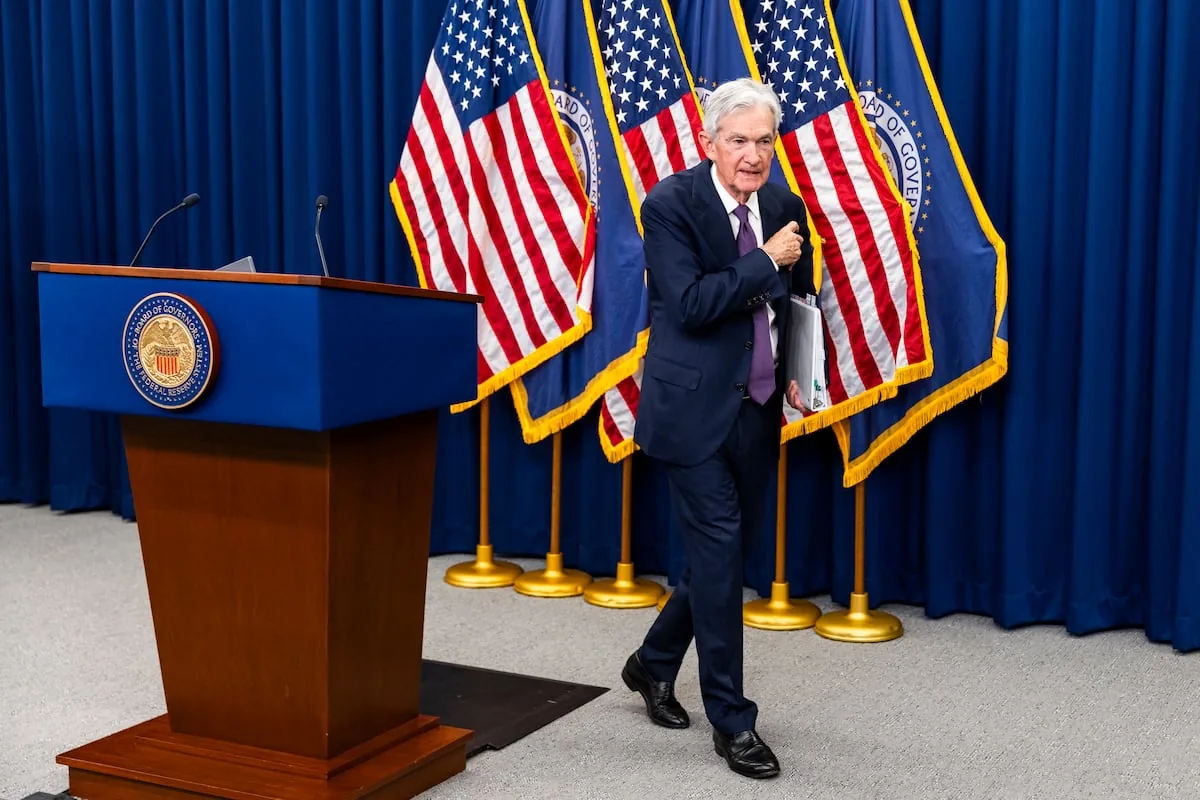
Kevin Warsh has a difficult job ahead. The president-elect of the Federal Reserve (the official oath is this Friday at the White House) inherits an institution facing a deeply uncertain economic scenario with an unusual division in its board. It cannot catch him by surprise, and the minutes of the meeting on the 29th, the last with Jerome Powell at the helm, only underline this situation. The Fed kept interest rates unchanged, as the market expected, but with a third of the 12 voting members (the open market committee) opposing the decision. Three, because they reject the neutral bias of the statement and believe the Fed should lean towards rate hikes. A fourth, Stephen Miran, who regardless of the context, at every meeting aims for cheaper money.
The majority of the board, in any case, had taken good note of the inflation risks. “Most participants noted that it is probably appropriate to slightly tighten monetary policy if inflation remains persistently above 2%,” they indicate. After the meeting, the US reported the highest inflation in three years, 3.8%, due to rising gasoline prices from the Iran war. “To address this possibility [inflation above 2%], many participants indicated they would have preferred to remove from the post-meeting statement the text suggesting a tendency towards easing regarding the likely direction of future Committee decisions on interest rates.” The change in rhetoric, in any case, was subtle: in March the Fed said inflation “remains elevated reflecting the increase in energy prices” and now, that inflation “remains somewhat elevated.”
Markets, and the figures, have ended up proving this sector further from Trump right. A month ago, futures gave almost a 50% probability that the cost of money would fall by at least a quarter point by the end of the year, and no hikes were anticipated. Now the cut is practically ruled out and the market gives a one in two chance that interest rates will rise, including in this percentage a 15% chance that they will do so twice. Along these lines, debt yields have risen, so that the US 30-year bond has surged to reach the highest level since 2007, 5.18%.
The focus, obviously, is the Iran war, which adds large doses of uncertainty to the economic outlook and also justifies the decision not to move the cost of money. Almost all board members believe there is a risk that the Middle East conflict will extend for a prolonged period or that, “even after the end of the conflict, oil and other commodity prices would remain elevated longer than expected.”
The combination of tariffs, energy crisis, a migration policy that is reducing the workforce, and the impact of artificial intelligence create a cocktail that even for the Fed’s renowned economists is difficult to discern. Thus, while some meeting members consider productivity growth a disinflationary force (a thesis defended by the incoming president, Kevin Warsh), others believe that the investment effort in data centers for artificial intelligence is implying higher costs for other economic sectors. Divergent readings are also found regarding the labor market or the risk that energy inflation implies second-round effects on prices and wages.
The unprecedented situation at the Federal Reserve is also the result of Trumpist pressure on Powell to cut interest rates and his stubborn resistance. The minutes have shown for months an almost impossible search for consensus: on the Fed board coexist Trump-appointed governors who favor lower rates (Stephen Miran always; Michelle Bowman and Christopher Waller occasionally) with other more orthodox bankers, like those who voted against the change in rhetoric (Beth Hammack, Neel Kashkari, and Lorie Logan, none of them on the executive committee). And Jerome Powell himself remains, who will stay in office as a governor as a way to prevent new attacks on the institution’s independence and denouncing, in his last appearance, an “unprecedented” legal persecution. That said, the Miran factor, Trump’s chief economist, is deactivated: the White House had to pull him out to appoint Warsh.
Read more The National Court establishes that companies must compensate holidays that fall on Saturday