








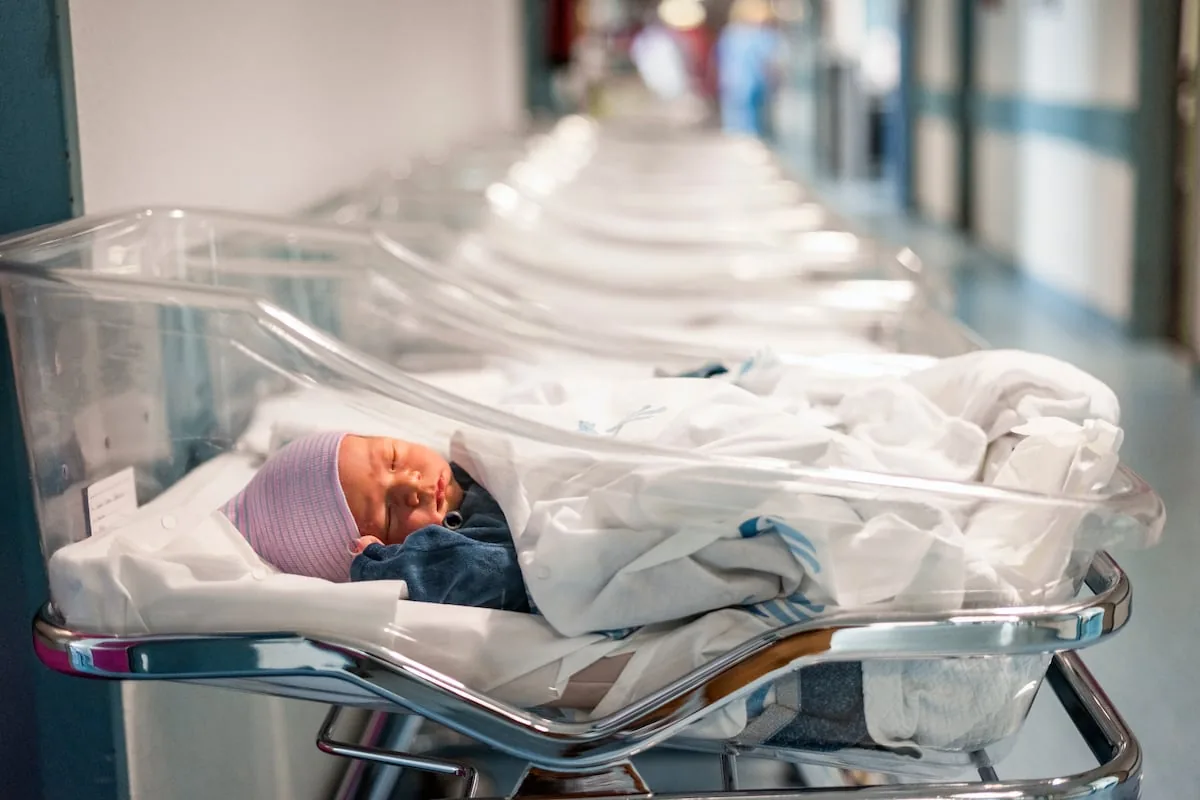
The two babies were born 14 minutes apart in a hospital located in Goiás, in the heart of Brazil. The first child at 7:35; the second, at 7:49 on a Friday in October 2021. Since the pandemic restrictions were still in place, neither of the parents could accompany the mother during childbirth. Each family returned home with a baby and everyone continued with their lives until, in 2024, the separation of one of the couples led to a nightmare that would turn their lives upside down: the child growing up with them was not their biological son. A court has just ordered the hospital to pay compensation of one million reais (about 200,000 dollars) to the four parents for mistakenly swapping the two babies right after birth.
Read more The Fed minutes confirm the central bank’s concern about rising inflation
The children at the center of this drama are now four years and seven months old. Their names have not been disclosed. Given the rapid pace at which they are growing (and possibly to mitigate the damage), a magistrate ordered months ago that both minors begin the process of being gradually returned to their biological families. But the adjustment has been very difficult, as one of the affected parents confessed to the Brazilian media outlet G1: “They still haven’t accepted their biological father, you see? In their little heads, the parents who raised them are their parents. They have not yet adapted to their new homes. Yes, they were swapped, but they still haven’t fully adapted.” For all involved, the emotional and psychological impact is enormous, as one of the victims’ lawyers highlighted.
A year and a half passed from the first suspicions to this ruling, which can be appealed. A judge from a court in Goiás, in central Brazil, sentenced this week the Women’s Hospital of the city of Inhumas (about 50,000 inhabitants) to pay one million reais in compensation to the parents for moral damages. That is the amount to be divided among the four. The judge found “very serious violations of the rights of all involved.”
The health center must also reimburse them the nearly 900 reais that the DNA tests cost, which changed forever the lives of the two children and their families.
Both mothers have told the local press that they do not remember if they were given identification bracelets. The police investigation concluded that, at birth, both babies were correctly identified, but that later a nursing assistant made a mistake and gave each couple the other’s child.
“No amount of money can compensate for what we are going through, including the children’s adjustment. That is what we are suffering. Only we know what we are living through,” said one of the parents.
Exceptional, but not unique
The case is exceptional, but by no means unique. A look at the archives shows at least three more cases in Brazil in the last seven years, including two in the state of Goiás, the same as the now sentenced case.
The affected babies returned to their biological families after 17 days, 41 days, but in the third case, suspicions only arose two years later. This third also occurred during the pandemic. It involved two newborns who began their lives admitted to intensive care.
In the now sentenced case, the error was discovered during the separation process of one of the couples, that of Yasmin Kessia da Silva and Cláudio Alves. Since he wanted to confirm the paternity of the baby they were raising, he took a DNA test. It was October 2024, the child had turned three years old. Negative result. Then his ex also took the test because, as Da Silva explained to the press, “if he wasn’t Claudio’s son, he wasn’t mine either.”
The DNA confirmed their suspicions. Indeed, the child they had considered their son since October 15, 2021, was not their blood. News that would cause colossal shock to anyone.
Seeking to solve this mystery, they remembered that that same pandemic Friday morning another child was born in the same hospital. Thanks to an evangelical pastor, they managed to find his parents, Isamara Mendanha and Guilherme Luiz de Souza. They decided to undergo genetic testing. Confirmed, each pair was raising the other’s child.
And so they simultaneously began the legal battle and the painful process of rapprochement between two families whose destinies were forever linked by a human error in a hospital.