







A tank that is no longer a tank could be the national monument of Somaliland, a country that is not a country. The armored vehicle that now rests beside Hargeisa’s road 1 was a weapon of war sent in 1988 from Somalia to prevent this Horn of Africa territory from becoming independent. Today it is part of the decor of the capital of a territory that proclaimed itself a republic 35 years ago and, although almost no one recognizes it, it is hard to pretend it does not exist.
Read more Alert in the Baltic over the fall of Ukrainian drones and Russia’s electronic warfare
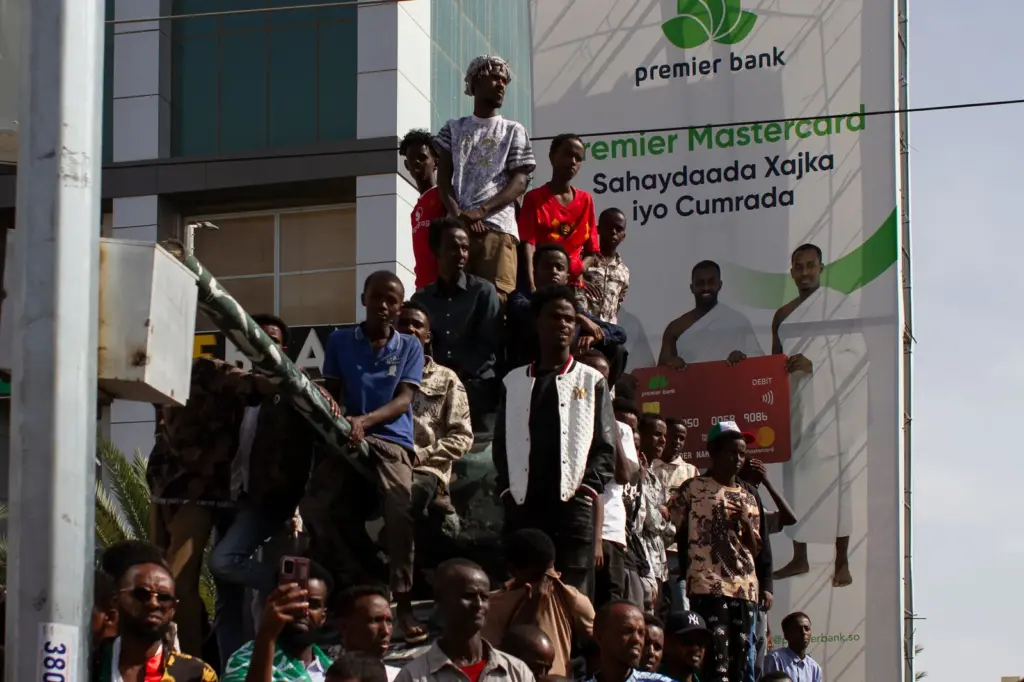
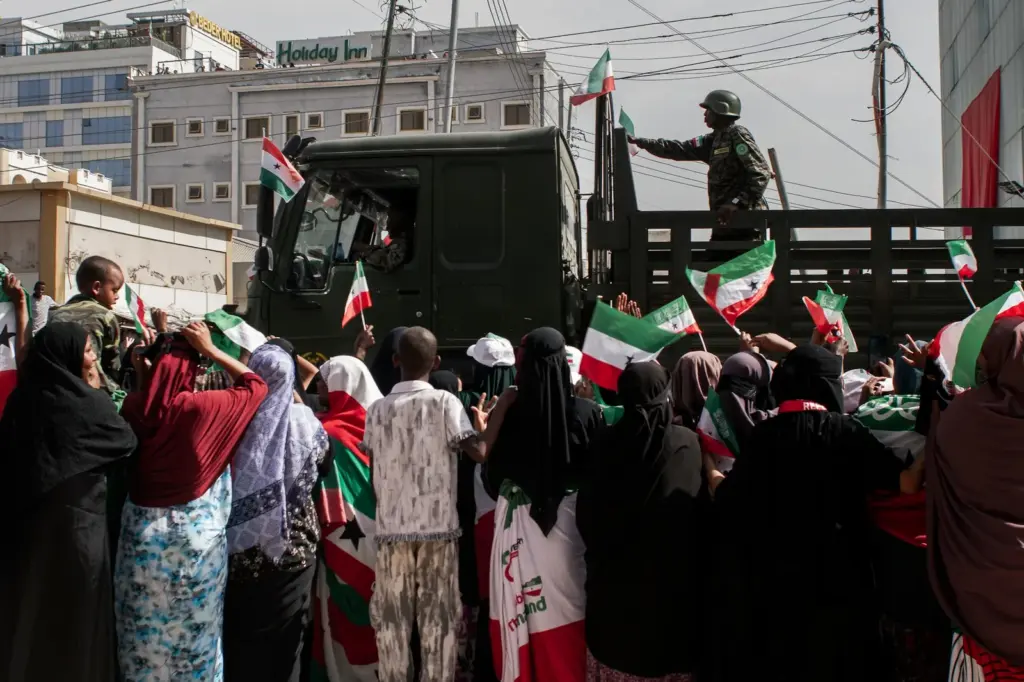
The war machine is barely distinguishable on May 18 due to the crowd of young people perched on its turret so as not to miss the military parade on Somaliland National Day. On a day like this, but in 1991, the separatist region declared its independence after the fall of the regime of dictator Mohamed Siad Barre and a bombing campaign that devastated Hargeisa, whose wounds are still present in popular sentiment today. Up to 200,000 people died, according to the authorities of this region, from a population that at the time was around three million inhabitants.
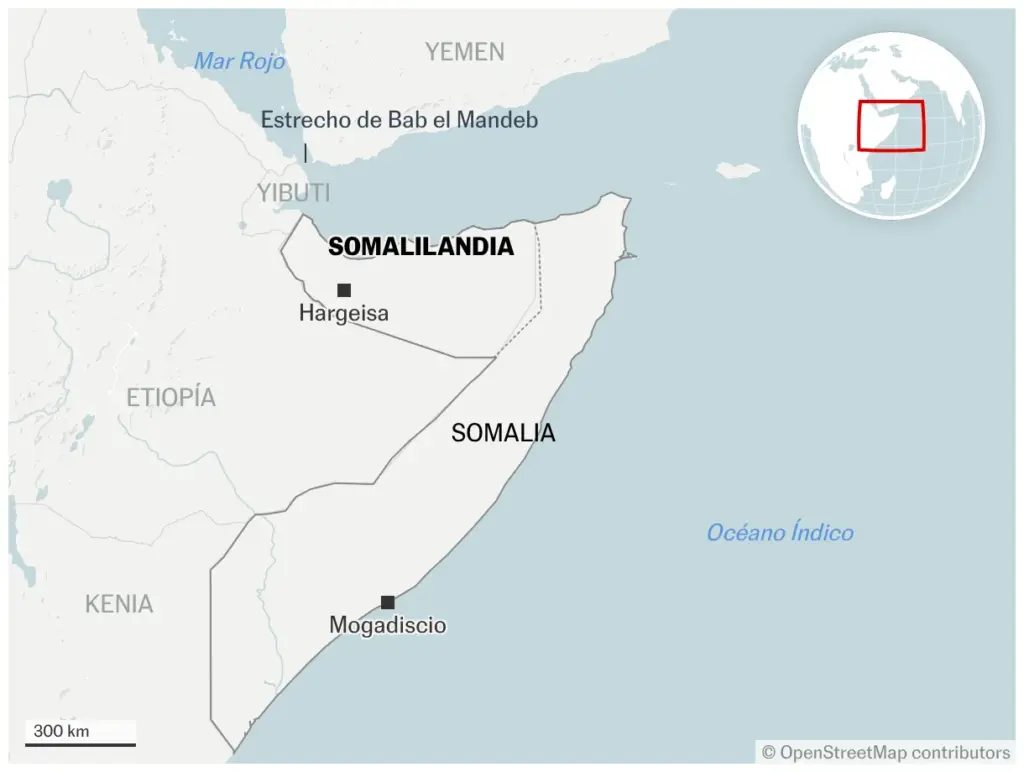
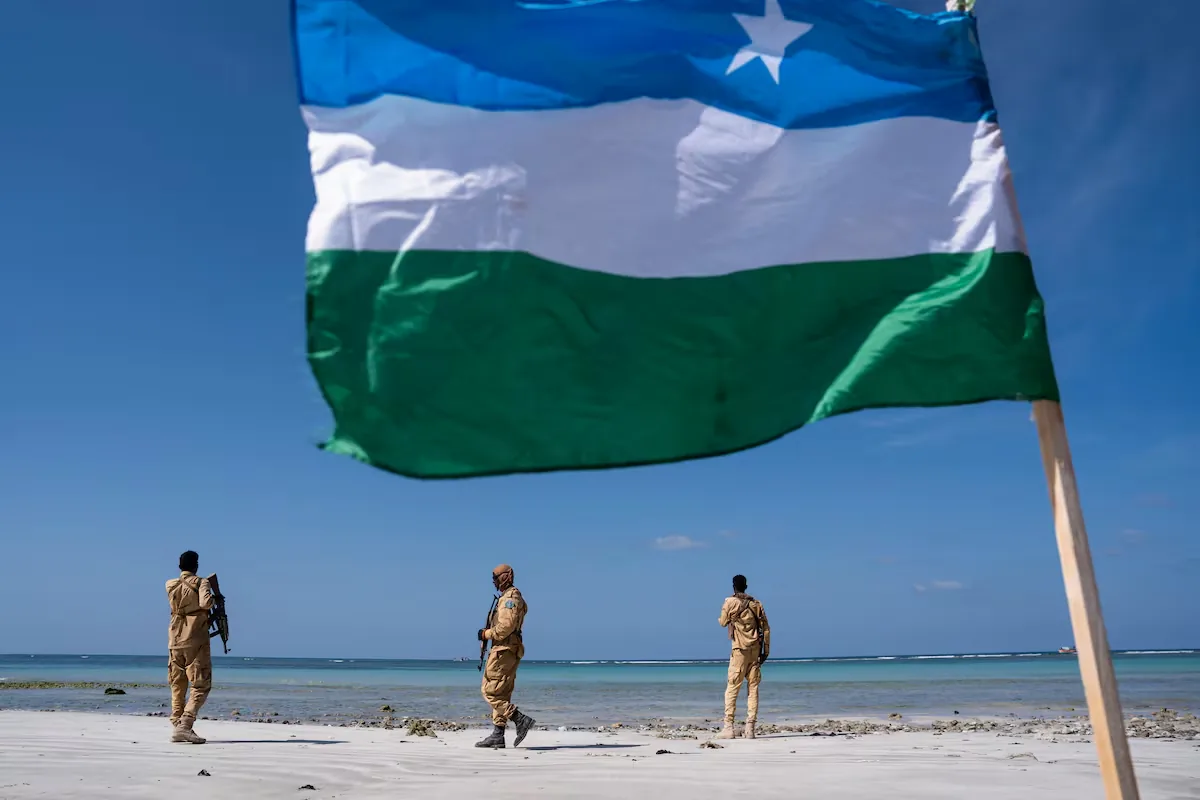
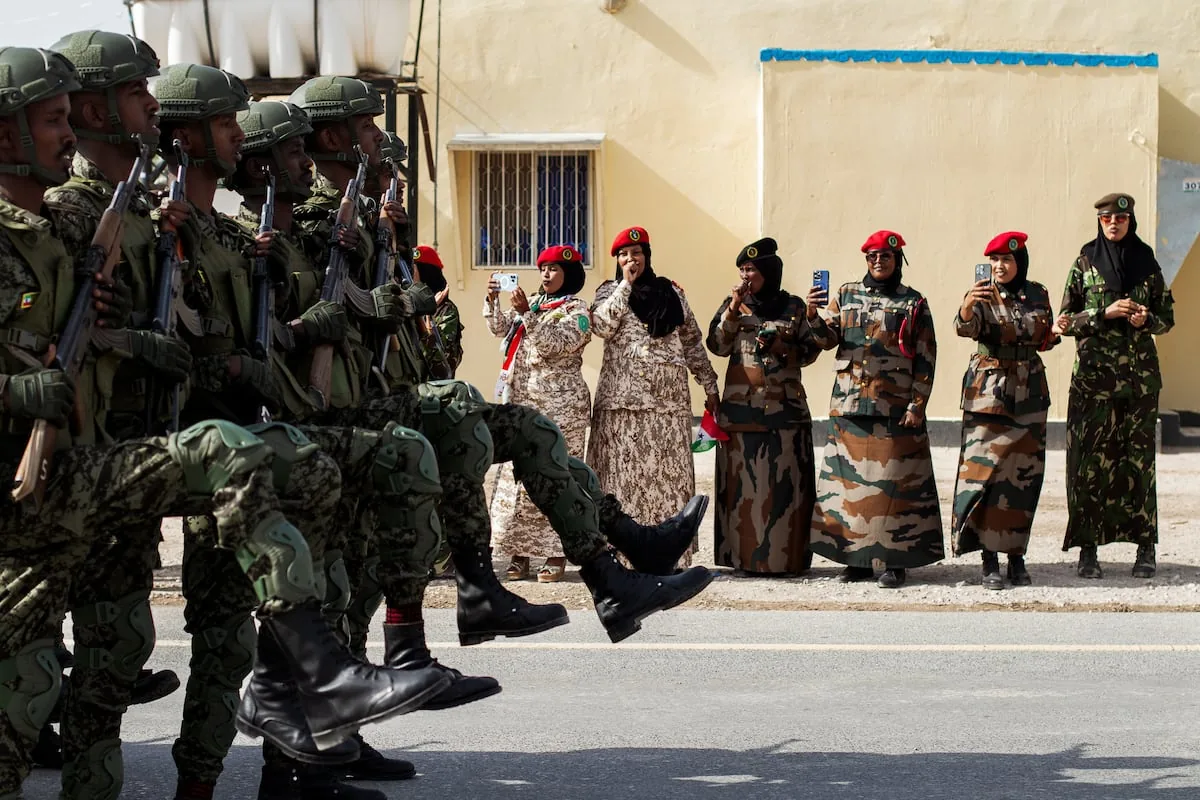
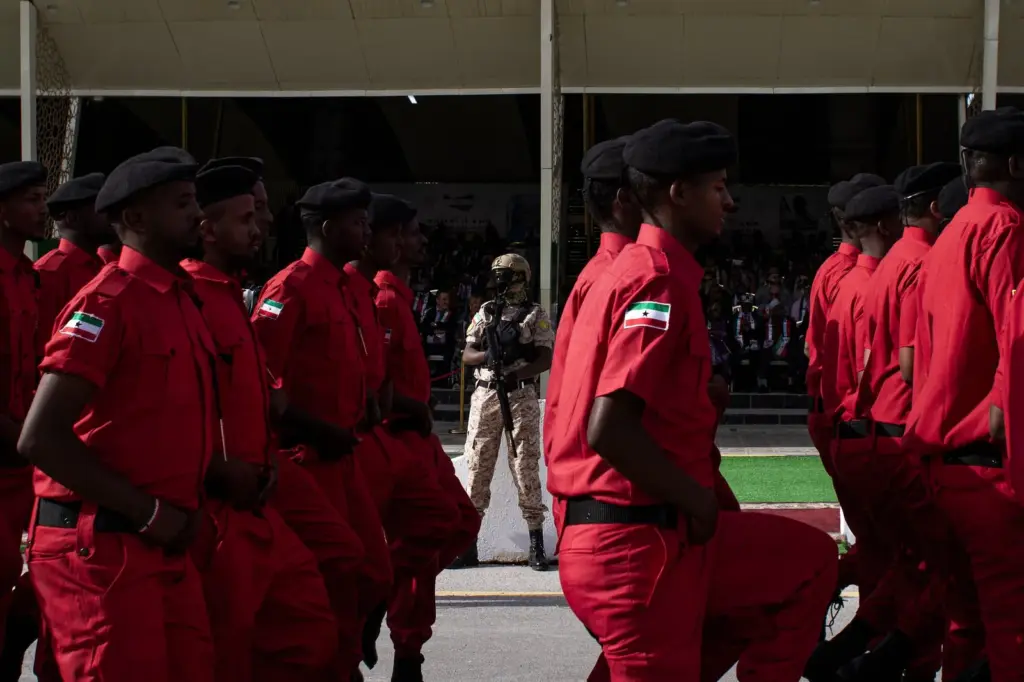
Since then, Somaliland —an independent state or separatist territory, depending on whom you ask— has built institutions and held elections, experienced peaceful political alternations, and has its own currency, flag, and army. All of this is displayed in the military parade on May 18 along one of the main roads crossing the city: down the center of the avenue, a display of the armed forces and law enforcement shows its modest military muscle ―between 8,000 and 12,500 personnel, according to the International Institute for Strategic Studies―.
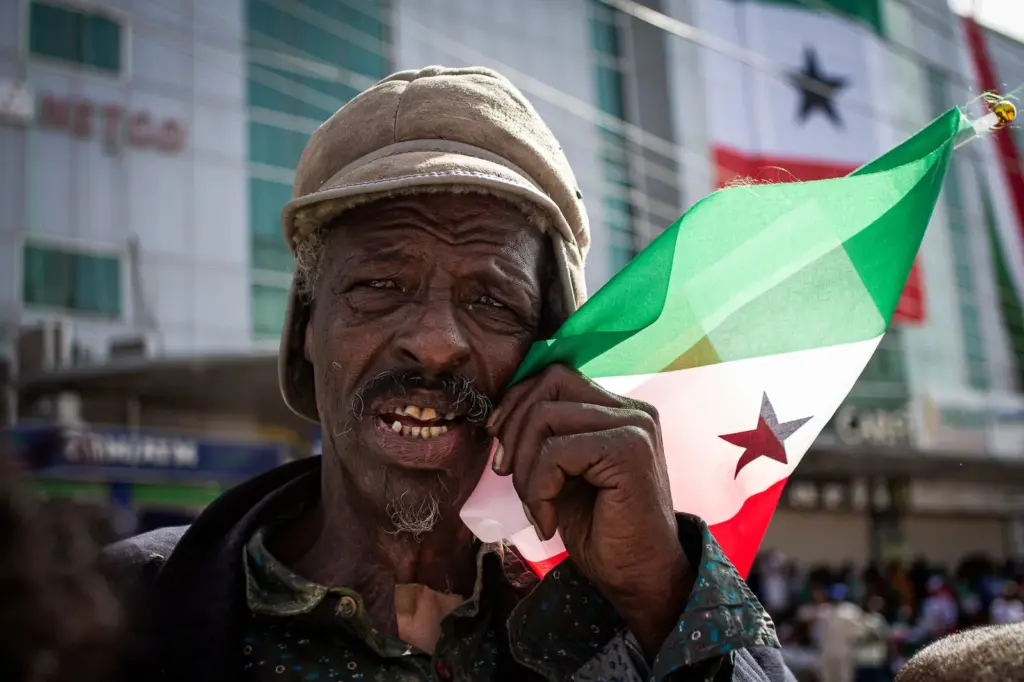
On the sidelines, devoted subjects wrapped in the omnipresent red, green, and white colors of the national flag: women’s dresses, men’s t-shirts, scarves (on them, this is a very conservative Muslim country), dyed hair and goatees (on them), glasses, umbrellas, and thousands of flags hanging from buildings and pennants waved by the crowd. “If there were a word bigger than love, I would use it to define what I feel for my country,” exclaims Mokhtar, an exuberant citizen.
On the institutional side, the most relevant national authorities and some foreign allies supporting this independence have gathered: Ethiopia, Taiwan —which has maintained official relations with Somaliland since 2020—, the United Arab Emirates, and, of course, Israel, the only country in the world to recognize Somaliland’s independence, just five months ago. In the stand sits President Abdirahman Mohamed Abdillahi, Cirro, newly arrived from Abu Dhabi after a visit marked by speculation about a new diplomatic recognition, something that has yet to materialize. “This is the first time we commemorate May 18 as a recognized Republic of Somaliland,” he proclaims during his speech.
In his address, Cirro announces that his Israeli counterpart will receive that day the credentials of Somaliland ambassador Mohamed Haji, “the first recognized ambassador of the Republic of Somaliland.” The alliance with Israel, in fact, runs throughout the celebration. Among the international guests is also a group of foreign journalists —including EL PAÍS— invited by the Ministry of Foreign Affairs and International Cooperation. The largest group is Israeli reporters, which is logical given the relevance of this new alliance: for Somaliland it represents a leap in international legitimacy; for Benjamin Netanyahu’s government, a strategic position facing the Bab el Mandeb strait and the coast of Yemen, in one of the most sensitive maritime corridors on the planet, now even more so due to the war in the Middle East and the closure of the Strait of Hormuz.
Among the crowd, recognition is experienced less as a strategic issue than an identity one. This is how Robo and Fatma feel, two of the many women trying to get close to the front row while a local policeman pushes them away with a branch. “We are Somalilanders, long live our country,” Fatma repeats while waving her little flag. On the opposite side, Mohamed, 44, recalls that he was eight when he saw Somali tanks enter Hargeisa. “I will never forget the fear,” he says. Like Mohamed, many express dreadful memories of that war in which Barre bombed the civilian population of the Isaaq ethnic group, the majority, and destroyed 70% of the city.
In 2026, the tide has turned. Somaliland boasts unprecedented stability in a turbulent region. While Somalia continues to struggle with violence from the jihadist group Al Shabab, no attack has been recorded here since 2008. There are border tensions and accusations of economic marginalization of some minority groups, but the disappearance of violence is one of the main arguments politicians and citizens use to defend their autonomy. “The separation from Somalia was not driven by hatred or emotion, but by lessons learned from the failure of the union between Somaliland and Somalia started on July 1, 1960,” Cirro asserts during his speech.
But despite the apparent harmony, not everyone agrees with the process Somaliland is following. Because these days a riskier step has been taken that has set social media on fire: the decision by the Hargeisa government to open its Israeli embassy in Jerusalem, not Tel Aviv. It is almost a provocation because most of the international community does not recognize this city as Israel’s capital; only seven countries have opened theirs there, including the United States in 2017, during Donald Trump’s first term.
The gesture seems to go unnoticed among the population less aware of international political developments, but not for others who do follow it and who are even in principle in favor of friendship with the Israelis, despite the hundreds of thousands of deaths caused in Gaza, Palestinian Muslims like them, if it serves national purposes. One of those concerned is Hamsa M. Jama, born in Germany to Somaliland parents and founder of Hargeisa Debates, a civil platform that promotes dialogue and democracy. “We need recognition, but this is going one step further; it may bring us more problems than solutions,” he ponders.
Read more The strategy of businessman Julio Martínez will shape Zapatero’s judicial future
The African Union, the Arab League, China, the European Union, Turkey, Egypt, and a bloc led by Saudi Arabia have rejected the strategic rapprochement between Israel and Somaliland, calling it a “dangerous precedent” and a “violation” of Somali sovereignty.
From Jama’s point of view, the population does not disagree because they do not understand the meaning behind it. “People only think about their country being recognized, they don’t look beyond,” he laments over a tea with milk in a hotel café in Hargeisa.
And so it is. Once the festivities are over, routine returns. Shops raise their shutters, schools and madrasas fill with students, traffic and honking take center stage, and busy neighbors stroll the streets mixed with dozens of goats, many with their owner’s phone number painted on their backs in case they get lost.
At the foot of the old MiG-17 that now stands as Somaliland’s national monument —the same model of plane used to bomb Hargeisa during the Somali civil war— Abdi, 53, says that a plane like the one suspended behind him killed his father. The fighter, placed on a column in the city center, pays tribute to the victims of the conflict and has become the true Somaliland national monument. “All we want is international recognition, it is what we deserve; horrible things happened and we just want freedom,” says the man, for whom the main problem of not being recognized by other countries is that it is very difficult to travel and interact with other countries, with the harm this causes to the economy, education, and development.
Everyday life constantly reminds of the limitations of existing in an unrecognized state, although here that normality, denounced by some as boring, is a source of pride. Somaliland lacks full access to the international financial system, its citizens have enormous difficulties traveling with their own passport, and many international transfers still depend on intermediaries or the enemy Somalia. Abdousalam, who sells sportswear, mainly international football shirts, including a rarity: the Somaliland football team’s shirt, knows this well. “Sometimes I make money, sometimes I lose money,” he sums up. Life in Hargeisa is, like anywhere else, sometimes difficult, “with its good and bad moments.”
In this capital, you can rent an apartment from dollars per month, but the average salary does not exceed 200 (172 euros) and huge inequalities and poverty persist. Most streets are unpaved, buildings rarely exceed six floors, and imported products reach prohibitive prices. A bottle of shower gel and a chocolate bar, both Western brands, cost around nine dollars (almost eight euros). “We even import onions,” says Jama. The only thing that comes from this arid land populated by bushes, rocks, and acacias is livestock, mainly goats and camels, whose milk is almost the national drink.
Somaliland continues to await more recognitions. For days rumors circulated about possible announcements from the United Arab Emirates and other African countries. They did not happen. But in Hargeisa many believe the door has already been opened and that Israel was only the first. The day after the May 18 festivities, the streets are deserted and the supposed military tank where the young people who wanted to watch the parade perched can finally be seen well. And it turns out it is made of papier-mâché; even the wheels are clumsily painted.
This could also be a metaphor for Somaliland: a fictitious tank in a fictitious country that separatism detractors compare to Narnia or Middle-earth, fantastic places from popular literature. But, in the end, there is also the option of comparing this territory to the MiG-17: a very real warplane, just as Somalilanders want the rest of the world to see them.
Read more The Milei Government agrees with the United States on joint patrol of the South Atlantic