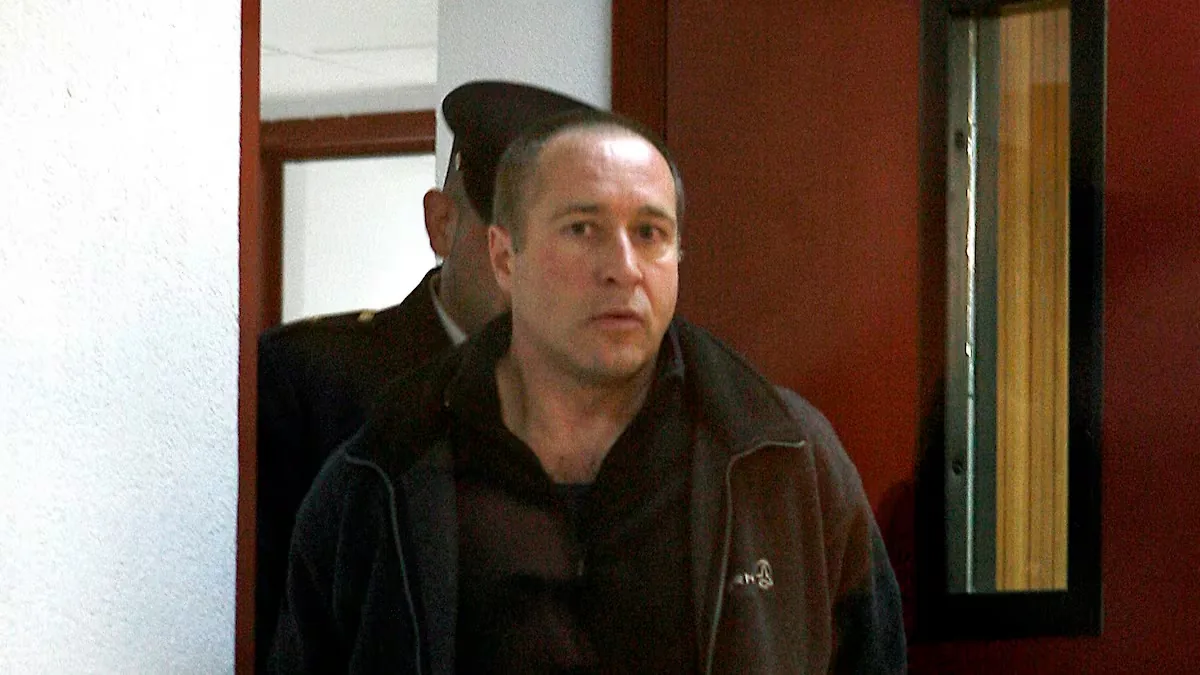










The collective of victims of terrorism in the Basque Country, Covite, has denounced the granting by the Basque Government of two new “fraudulent” permits to ETA prisoners. This time it concerns Juan Antonio Olarra Guridi and Xabier Zabalo Beitia. In a statement reported by Europa Press, the president of the organization, Consuelo Ordóñez, criticizes the regional government for once again approving “penitentiary benefits to ETA prisoners without demanding real, public, verifiable repentance accompanied by objective facts of disassociation from the abertzale left.” Therefore, she calls for the “resignation” of the Basque Government’s Minister of Justice and Human Rights, María Jesús San José.
Read more Chess analysis | Karpov turns 75 years old
For Ordóñez, these two new grants constitute “a new episode of the covert amnesty that the Basque regional government has been applying to ETA prisoners.” Thus, the collective denounced, once again, that “the Basque Government is using third degrees and article 100.2 of the Penitentiary Regulations as instruments to accelerate the semi-freedom of ETA prisoners without demanding sincere repentance nor a public, clear, and unequivocal break with the political and social network that supported, justified, and still today legitimizes ETA terrorism.”
“What we are seeing is a deliberate policy to empty prisons of ETA prisoners and to do so, moreover, following the instructions of Sortu, without demanding true repentance and without respecting the victims’ right to justice,” the statement emphasizes. After holding San José responsible for this penitentiary policy, the president of Covite describes the case of Juan Antonio Olarra Guridi as “especially serious,” “a member of ETA convicted of extremely serious crimes, including murders, attacks, devastation, injuries, possession of explosives, and membership in an armed group, with a sentence of 30 years in prison and a scheduled end date of the sentence in 2036.”
Furthermore, it indicates that Olarra Guridi “had already been enjoying since July 2025 an article 100.2, an exceptional path of penitentiary flexibilization that the Basque Government has practically turned into a prelude to the third degree for ETA prisoners who do not meet the legal requirements to access the third degree.”
Ordóñez also highlights that this ETA prisoner “continues to be publicly claimed by the abertzale left environment,” being presented as “a reference by that environment.” On the other hand, she has also considered it “significant” that the Basque Government now grants a new third degree to Xabier Zabalo Beitia, “after it had already been granted previously and that progression was revoked.”
The president of Covite recalls that Zabalo “was sentenced to 25 years in prison for terrorist crimes, including devastation, injuries, possession of weapons for terrorist purposes, and storage of explosives with terrorist intent.” “After the revocation of his previous third degree, Sare Sortu and the political environment of the abertzale left promoted a demonstration in his town to protest that judicial decision,” she points out.
“Judicial disavowal”
Ordóñez frames these two new grants in “a context of growing judicial disavowal of the penitentiary policy of the Basque Government.” Thus, she stresses that, “in recent weeks, the Central Penitentiary Surveillance Court has annulled the article 100.2 grants given to ETA members Soledad Iparraguirre, Anboto, and Juan Ramón Carasatorre Aldaz,” in rulings that, for Covite, “confirm that the Basque Government is forcing penitentiary legality to facilitate semi-freedom regimes to ETA prisoners without truly meeting the legal requirements.”
Likewise, she states that, “in the case of Carasatorre, the judge even found that the required specific treatment execution plan did not exist, an essential requirement to apply article 100.2.” For Covite, “that was an extremely serious administrative action that revealed how far the Basque Government is willing to use exceptional routes as shortcuts to semi-freedom.” Similarly, she highlights that this same week “the Central Penitentiary Surveillance Court dismissed the appeal filed by Carasatorre against the revocation of his 100.2, which was another judicial blow to the penitentiary policy of the Basque Government.”
Ordóñez warns that “this policy is based on the fraud of private letters of supposed repentance” and has recalled that “the recent rulings by Judge José Luis Castro have confirmed the instrumental nature of these writings, drafted in some cases immediately before the granting of penitentiary privileges.”