





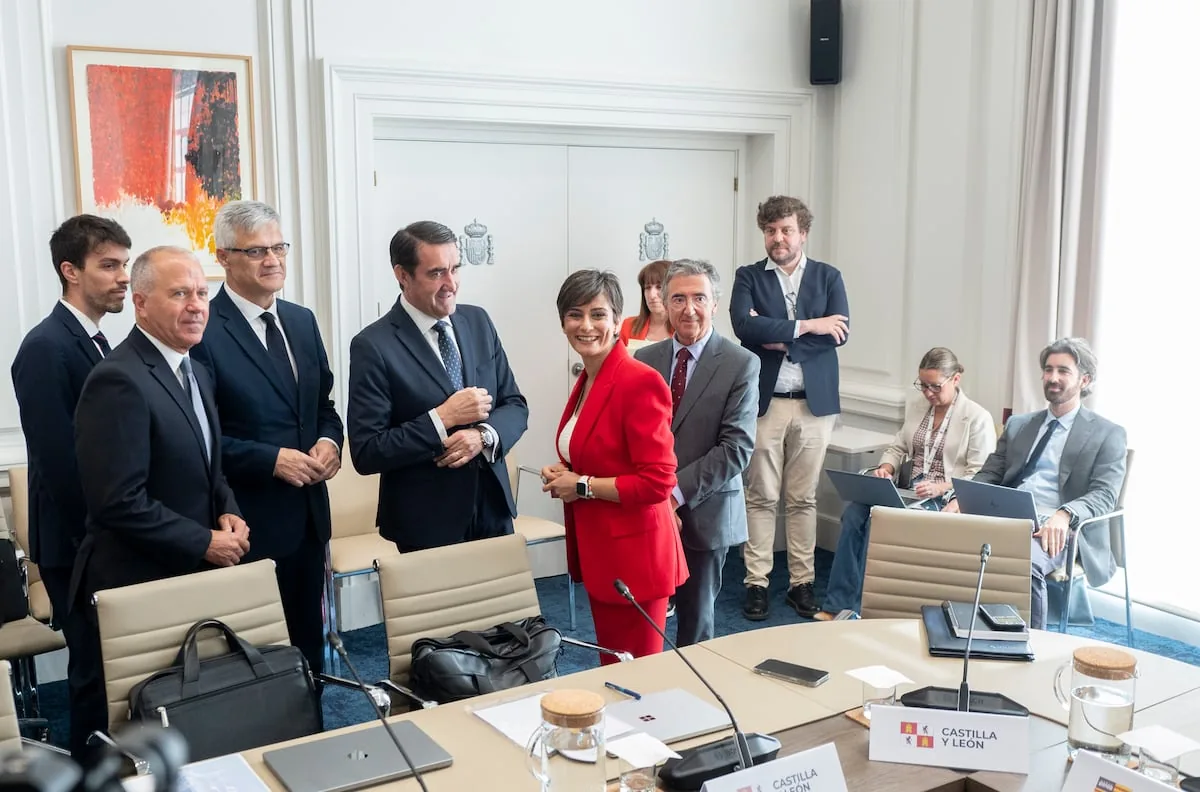
The Minister of Housing and Urban Agenda, Isabel Rodríguez, agreed this Thursday on the territorial distribution of the 7 billion euros that make up the 2026-2030 State Housing Plan at the sectoral conference alongside the regional housing ministers of the various autonomous communities. Despite the rejection expressed by the regional representatives of the Popular Party regarding the composition and deployment of the funds established by the plan, considering it infringes on competencies, none of them ultimately voted against receiving these funds. Once this procedure is completed, each territory must now sign a bilateral agreement with the State, and those who execute it earlier could have access to the funds from the second half of the year, according to the commitment previously made by the minister.
Read more OECD economies grow “moderately” by 0.4% in the first quarter of the year
“It is good news for the ministry, but above all for the citizens, who are waiting for effective responses,” Rodríguez celebrated. “There have been many months of work, of dialogue, in which we have not only spoken with public administrations, communities, and municipalities, but also with civil society, from which we have received 400 proposals from social entities,” she detailed. “Hopefully this example will spread and we will continue advancing in other necessary agreements,” she wished.
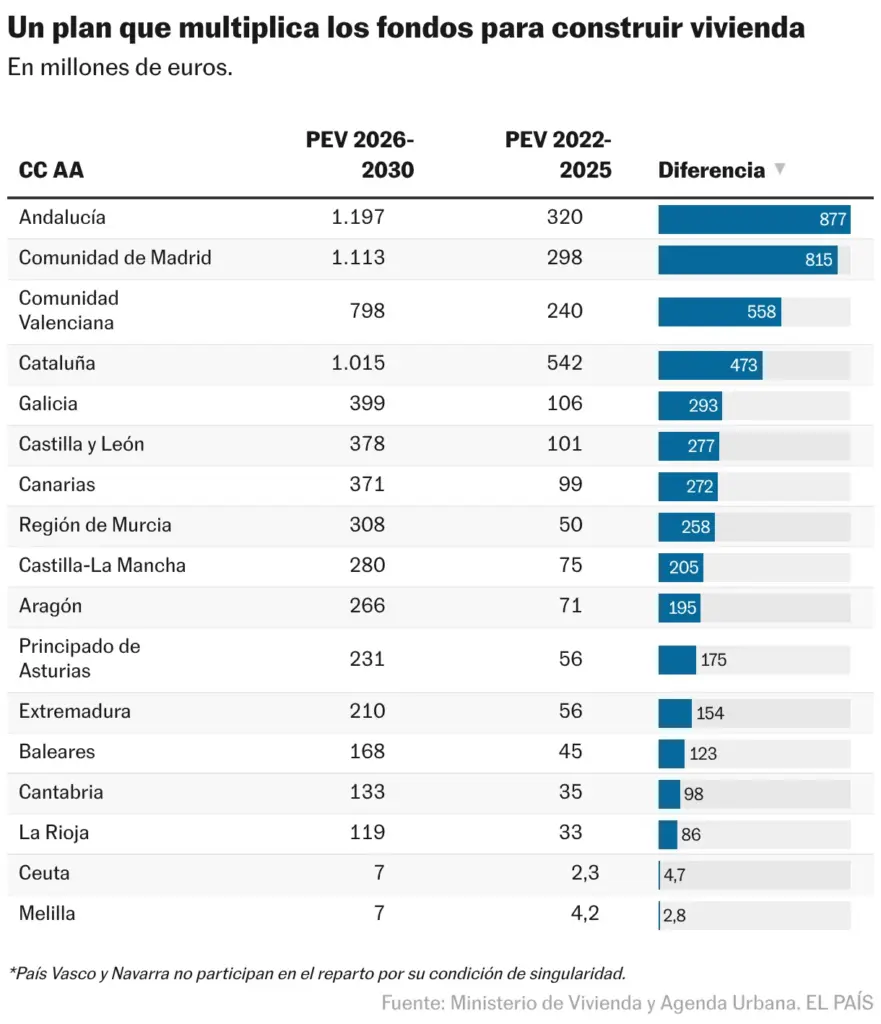
Despite the shared stance of all the regional ministers, the distribution of the 7 billion euros that make up the state plan — which far exceeds the funds of the previous one for 2022-2025 — did not formally require a majority (neither simple nor unanimous) vote result. It was enough that those communities willing to receive their corresponding share agreed on how to do so. However, as the minister has defended, her department’s intention was to reach “consensus” that would allow a joint deployment of the funds throughout the country.
Despite the final affirmative sentiment expressed during the ministers’ statements, prior remarks by some Popular Party leaders revealed their underlying discontent. “We consider it a propaganda act of Sanchism and that its only aim is to condition the autonomous communities without really solving the housing problem that all Spaniards, especially our youth, face,” said Jorge Rodrigo, Minister of Housing, Transport, and Infrastructure of the Community of Madrid. The Madrid representative, speaking on behalf of the other Popular leaders, again denounced that, in their opinion, the plan designed by Housing was made “behind the backs of the autonomous communities,” and that they learned about it through the publication in the Official State Gazette (BOE).
Minister Rodríguez denied this claim, detailing that “up to thirty meetings” have taken place over recent months. Rodrigo also accused the Government of “trying to impose” its “ideological agenda” and “disastrous housing policies” on the autonomous governments, and did not rule out the possibility of filing future appeals before the Supreme Court in each of their regions. The Ministry considers this illogical, as it would delay the agreed receipt of the funds.
Joint contribution
The plan, which was announced almost a year ago by the President of the Government, Pedro Sánchez, during the Conference of Presidents held in Barcelona, was approved on April 21 by the Council of Ministers. The new program has state funds but also requires contributions from the communities: 60% is borne by the State, while the remaining 40% must come from regional coffers. However, to facilitate its implementation, the Ministry has offered to cover the total amount corresponding to the first year alone, to make it easier for the communities.
The way to use the final 7 billion euros is also set in the plan: 40% must be allocated to the construction of affordable public housing, which will also maintain its protected status indefinitely; 30% will go to housing rehabilitation works (which can reach up to 30,000 euros) to incorporate into the public stock; while the remaining 30% consists of aid for vulnerable groups for rent (up to 300 euros) or acquisition in rural areas.
The fact that homes built with state funds cannot be incorporated into the free market in the future — in previous developments a clause usually allowed this after 20 or 30 years — has concentrated the most criticism from the Popular Party. They consider it infringes on housing competencies legally transferred to the communities. “This effort of billions of euros cannot disappear in a decade; it must be part of the heritage of Spaniards so that it is not sold to the highest bidder,” the minister justified in this regard.
The matter was already the subject of a ruling by the Constitutional Court when it had to examine the state housing law approved in 2023. The text of the law included the obligation that all protected housing built maintain that characteristic in perpetuity, something some communities have legislated for years. The judges annulled the provision, considering it an invasion of competencies, but showed another path to the Government: this condition can be imposed if state funds are involved in the promotion of those protected houses, but the communities have the final say when they promote them exclusively with their own resources.
If you have questions, suggestions, or simply want to tell us your case, you can send us an email at vivienda@elpais.es.
The data you provide will be processed by EDICIONES EL PAÍS, S.L.U., (C/ Miguel Yuste, 40, 28037-Madrid), for the purpose of managing your questions and/or testimonies and preparing informative content. You may exercise your rights recognized in data protection matters through the address dpo@prisa.com by accrediting your identity and identifying the right you wish to exercise. For more information, please consult the Privacy Policy.
Read more Covite denounces two new “fraudulent” permits granted to ETA prisoners by the Basque Government