
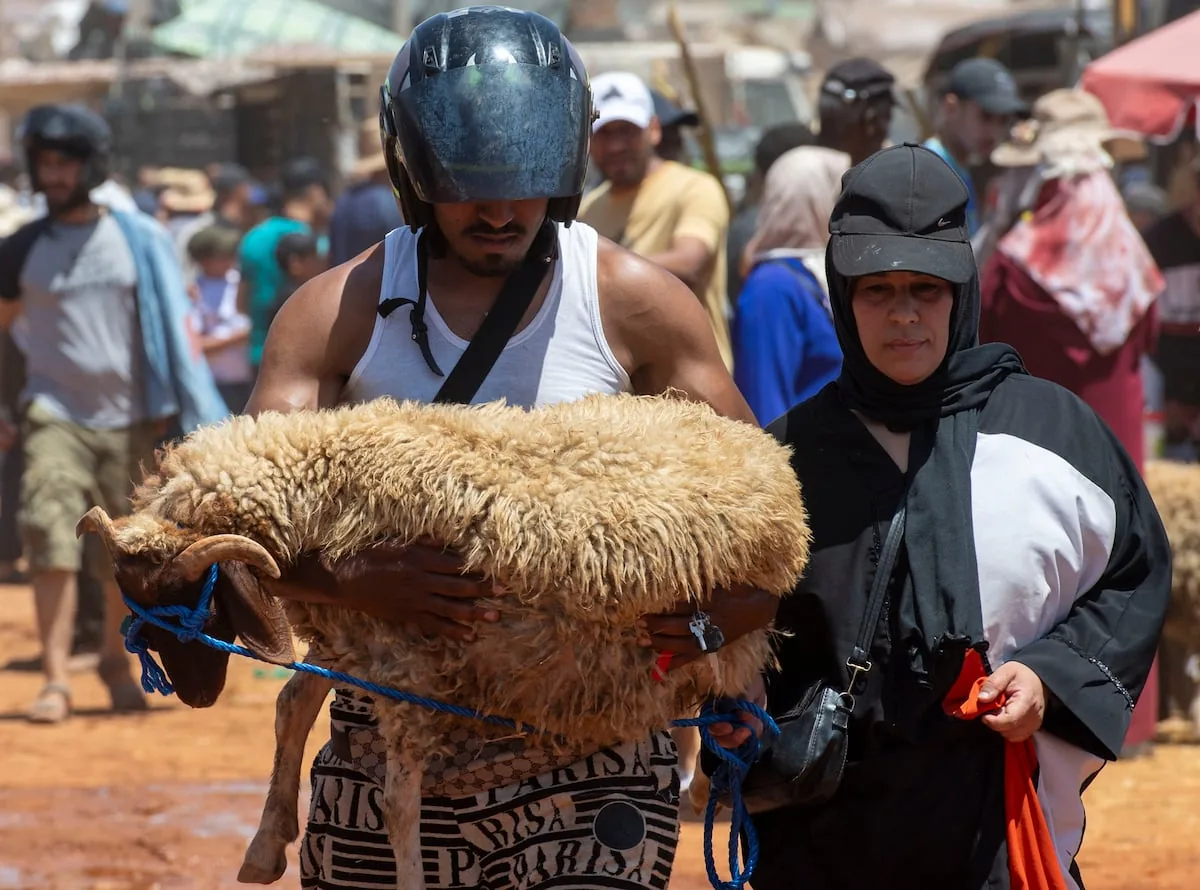
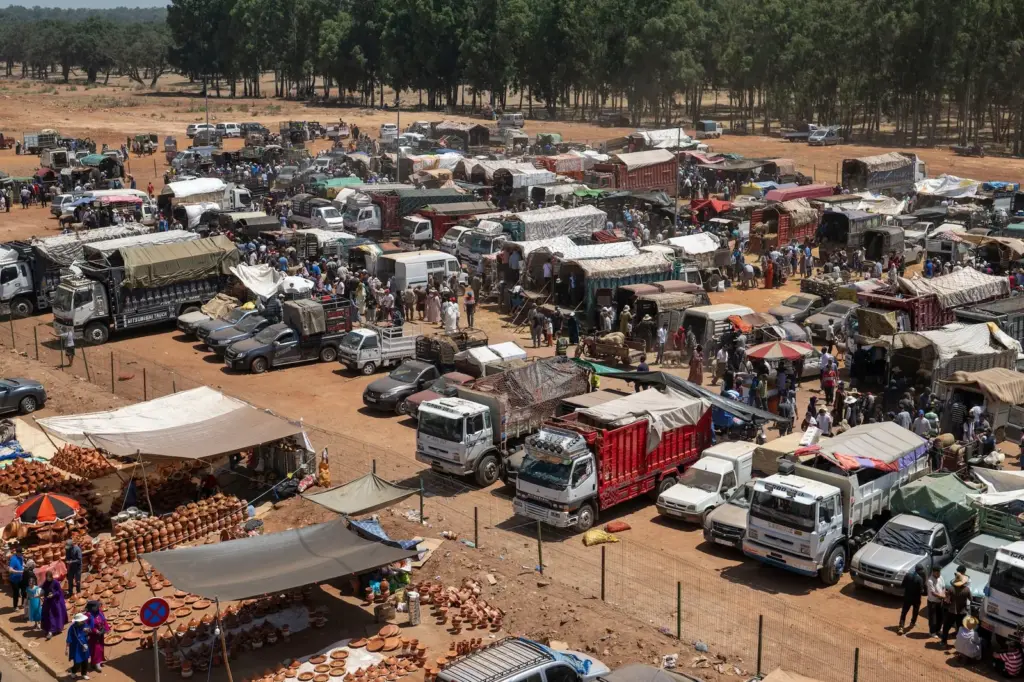
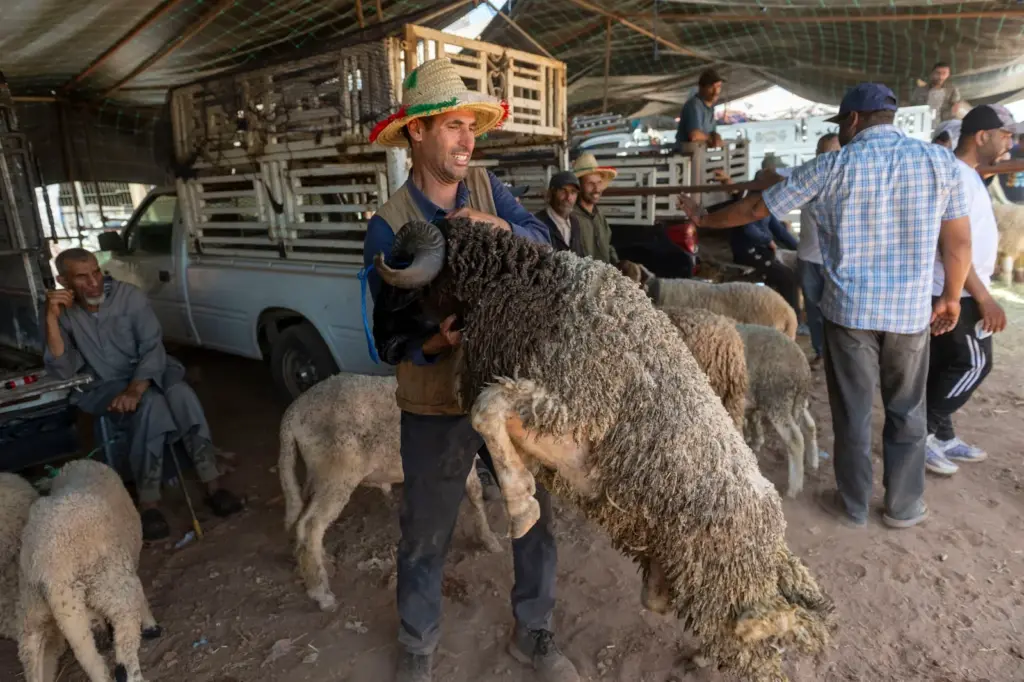
Lambs have returned in recent days to the streets of Morocco, a year after King Mohammed VI suspended the ritual sacrifice of the Feast of the Lamb due to drought in the largest religious celebration of Islam. Now, millions of lambs bleat cornered in popular markets in towns and the outskirts of cities, waiting to be slaughtered on Wednesday by every head of household with sufficient means. Each animal costs at least 3,000 dirhams (280 euros, equivalent to the minimum wage). And more than double depending on the breed, age, weight, and region of sale.
Read more United States attacks Iranian targets “in self-defense” amid peace negotiations
Just four months before the legislative elections, the Islamist opposition of the Justice and Development Party (PJD), which led the government between 2011 and 2021, raises the banner of the high cost of sheep livestock to mobilize its supporters against the conservative Cabinet of Prime Minister Aziz Ajanuch, who does not plan to run for re-election.
The Minister of Agriculture, Ahmed el Buari, shook the routine of Parliament last Monday by proclaiming before the Chamber during a debate on the festivity that “in the good souks” of Morocco it is possible to acquire lambs for an amount ranging “between 1,000 and 3,000 dirhams.” His Department estimates the available supply for Eid al Adha or Feast of Sacrifice at just over nine million heads, against a demand of less than seven million animals for the also known Eid al Kebir or Big Feast.
The wave of criticism from the opposition against the Government for ignoring the market reality was rising in tone in the Legislature, to the point that the vice president of the House of Representatives, Driss Chattabi, who was presiding over the session at that moment, labeled the PJD Islamists – who adhere to the Sunni majority of Islam and advocate a liberal view of the economy – as “Shiites” and “communists,” in one of the biggest parliamentary brawls of the legislature coming to an end.
The session was suspended for almost an hour until tempers calmed. The socialist Chattabi withdrew his words from the session record to regain his role as moderator of the debate, and Minister El Buari finally admitted that prices practically exceeded 2,000 dirhams per animal, despite official aid and subsidies.
On the afternoon of the same day, the 18th, Prime Minister Ajanuch approved an executive order to try to curb the “unjustified price increase” of sheep livestock. The government decree, which has been endorsed by the Competition Commission without setting maximum prices, intervenes in the lamb market for the Feast of Sacrifice with measures such as the obligation to purchase animals (except in rural areas) in official markets and the prohibition of animal resale.
Despite the apparent abundance of the Moroccan sheep stock and generous official aid to farmers, the average prices of live lambs in the livestock markets of Rabat and Salé (adjacent city) exceed 4,500 dirhams (1.5 times the minimum wage) per head and reach up to 7,000 dirhams for selected breeds as the Feast of Sacrifice approaches. The Allo Mouton portal, aimed at the Islamic community in France, which details reference prices in the main regions of Morocco, is a statistical tool used by several media outlets in the Maghreb country.
Read more Shoemaker faces years-long investigation with ramifications in Venezuela and China
Intensive agriculture versus pastures
President of the PJD parliamentary group and author of the book The crisis of the national livestock stock, deputy Abdala Buanu questions the agricultural policy of the Ajanuch Government, who was head of the Agriculture portfolio between 2007 and 2021. In an interview with the weekly Tel Quel, Buanu considers that the lamb crisis has become structural since 2008, when Morocco promoted intensive irrigated agriculture aimed at export, which has expanded to the detriment of free pasture lands for livestock. “The drought [of recent years] has only been the catalyst, but not the fundamental cause [of the livestock crisis],” he argues, while highlighting contradictions in official censuses.
On the eve of Eid al Adha, which culminates Muslim celebrations two months after Ramadan, this year there are again live lambs tied in rural yards and urban garages for sacrifice in each home in memory of Abraham, willing to cut the throat of his son Ishmael (according to Islamic tradition) by divine order. The generous subsidies granted by the conservative Executive to meat importers in recent years, in the form of tax exemptions and direct aid, do not seem to have helped alleviate the high cost of lamb.
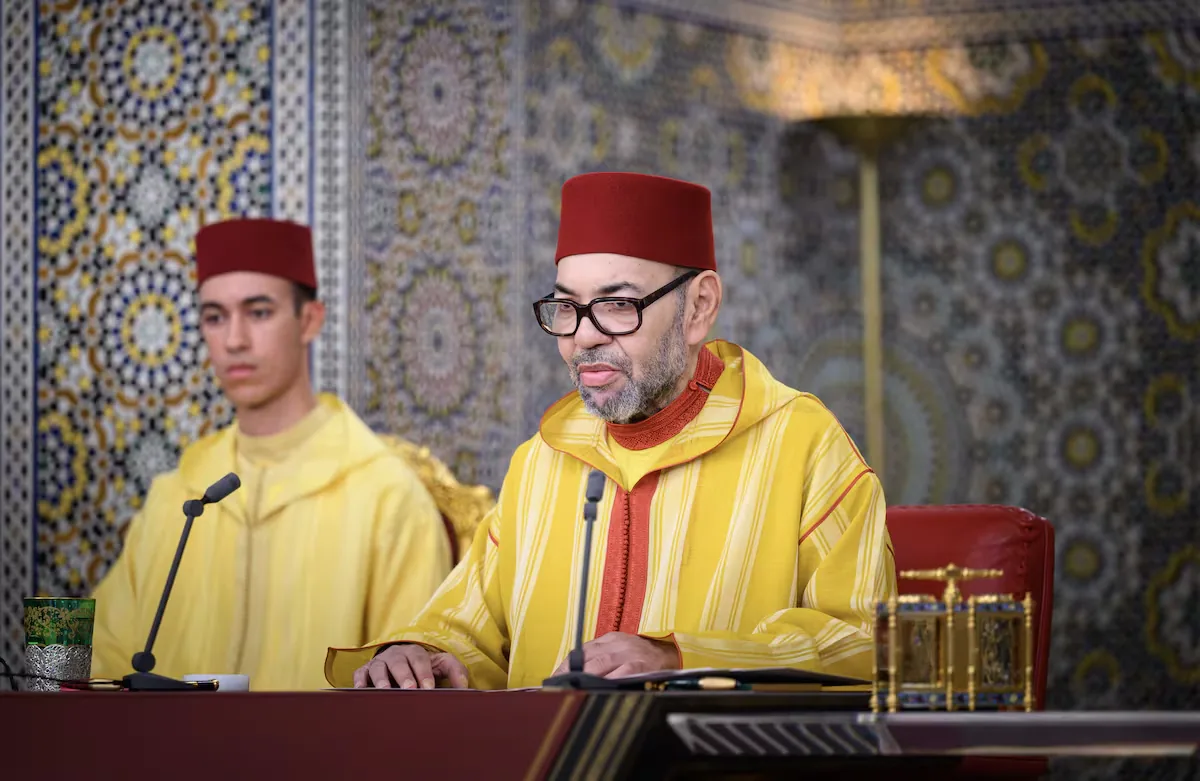
A year ago, the king presided over the Eid al Kebir prayer at the Hassan II mosque in Tetouan before carrying out the sacrifice on behalf of the entire people, in compliance with tradition. In his capacity as Commander of the Faithful, Mohammed VI canceled the Feast of the Lamb in 2025, one of the most identity-defining celebrations for Moroccans, due to “difficulties caused by climatic and economic challenges that have led to a substantial decrease in livestock,” according to an official statement, and to “not harm large sectors of the population with limited incomes.”
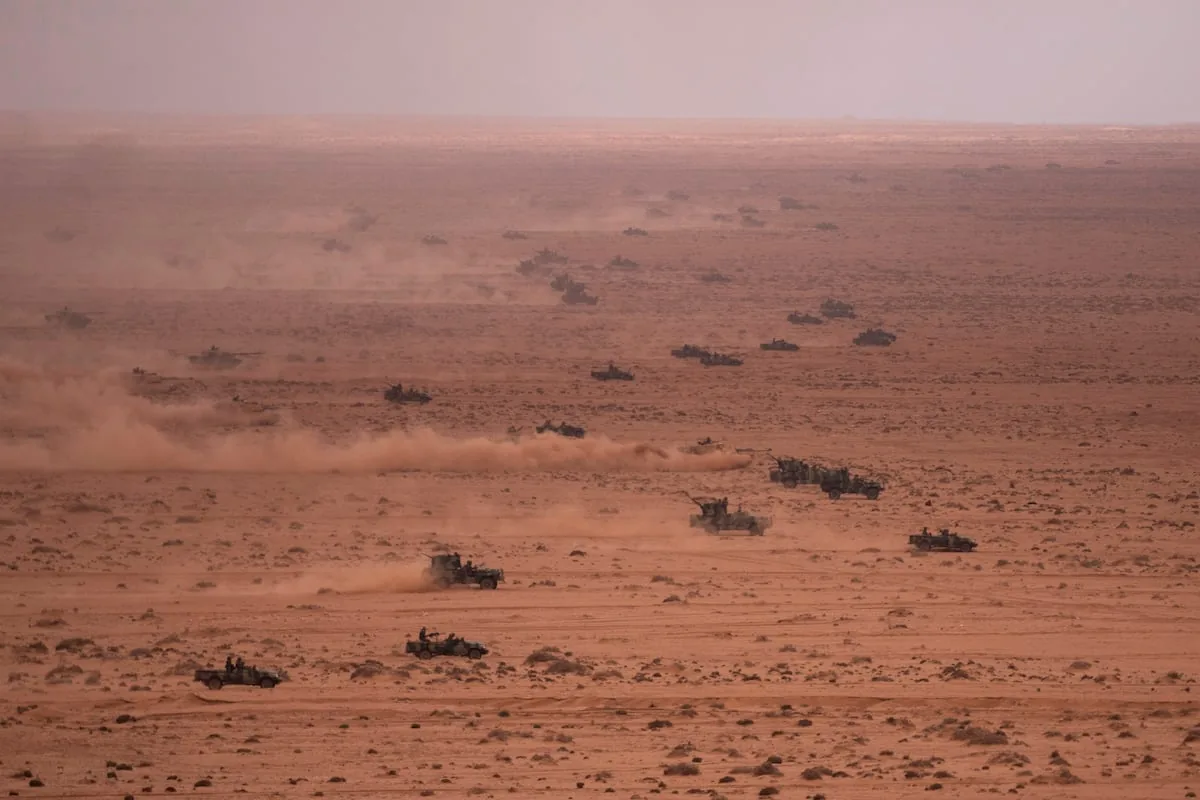
The Feast of the Lamb was also canceled in Morocco in 1996, when King Hassan II ordered the suspension of the sacrifice due to drought. The same happened in 1981, during the social outbreak of the Bread Riots in the major cities, and after the floods that preceded the Sand War in 1963, a territorial dispute with Algeria.
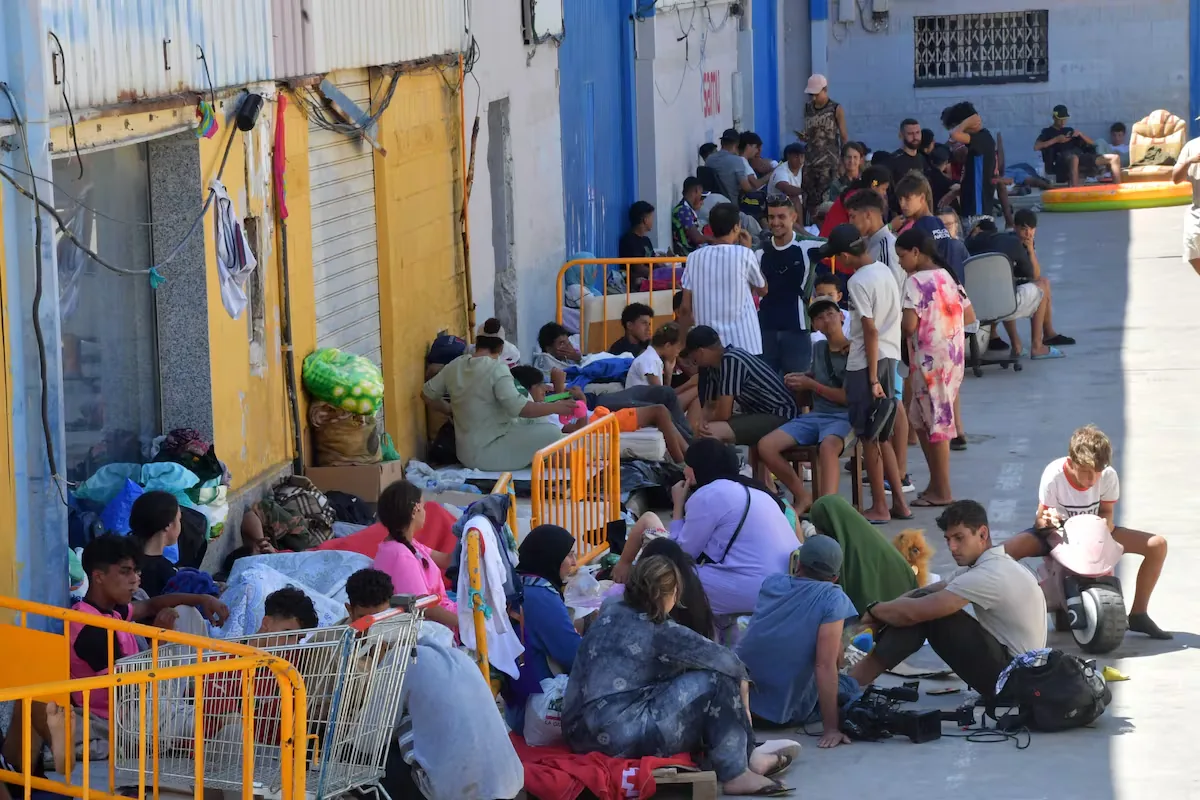
Discontent over the cost of living
After the religious holiday bridge of Eid, which will extend until the weekend, the climate of social discontent over the high cost of living will persist, affecting basic foods such as tomatoes or meat. In the orbit of the Muslim Brotherhood of the Middle East, the PJD also maneuvers to try to regain control of the Government in the September elections. In the previous legislative elections, the Islamist party collapsed to become a marginal force after losing 112 deputies in a Parliament of 395 seats.
Re-elected a year ago as secretary general of the PJD, Abdelilah Benkirane (prime minister between 2011 and 2017) tries to capitalize on citizen unrest against the economic policy of the current Cabinet. Benkirane also opposes the new reform of the Mudawana or Family Code sponsored by Mohammed VI, which expands rights for women, labeling it contrary to the principles of sharia or Islamic law. The legal amendment project has been frozen since December 2024, despite having been blessed by the council of ulemas or doctors of Islamic law. With the legislature nearing its end, it will be the new Parliament elected from the polls that must vote for its final approval.