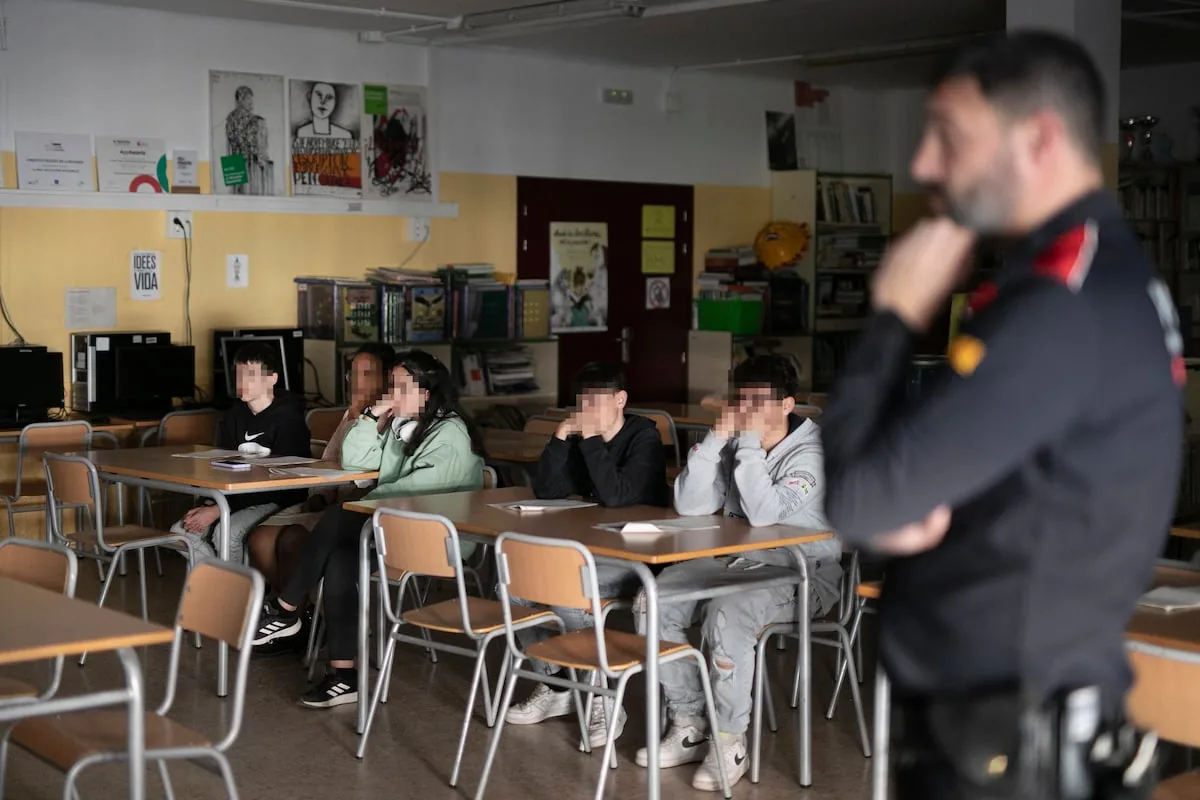









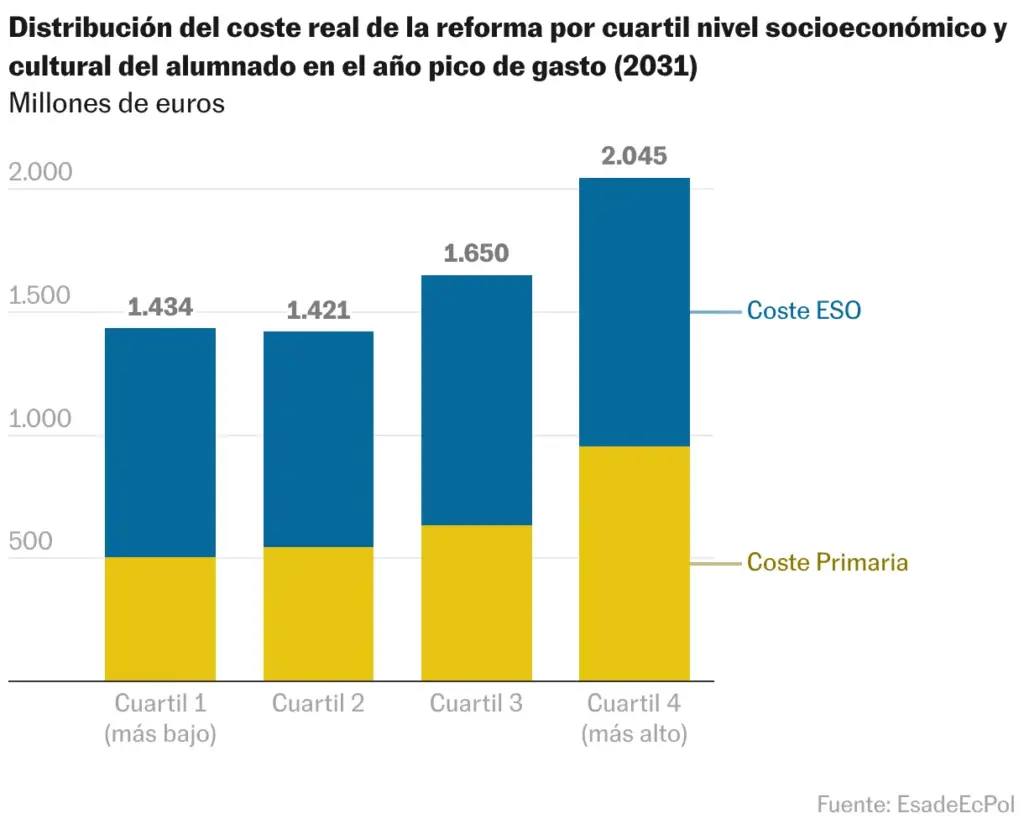
The general reduction in student-to-classroom ratios designed by the Government will disproportionately benefit public schools and, above all, charter schools where students with higher socioeconomic and cultural levels study, according to a report by EsadeEcPol published this Tuesday. Schools enrolling 25% of students from the most affluent social class will absorb 31.2% of the funds the measure will cost, while those hosting the 25% most vulnerable will receive 21.9%. The reason is that, by applying a linear reduction, the schools most benefited are those that currently have the fullest classes, which, in turn, are concentrated in urban areas with higher economic profiles.
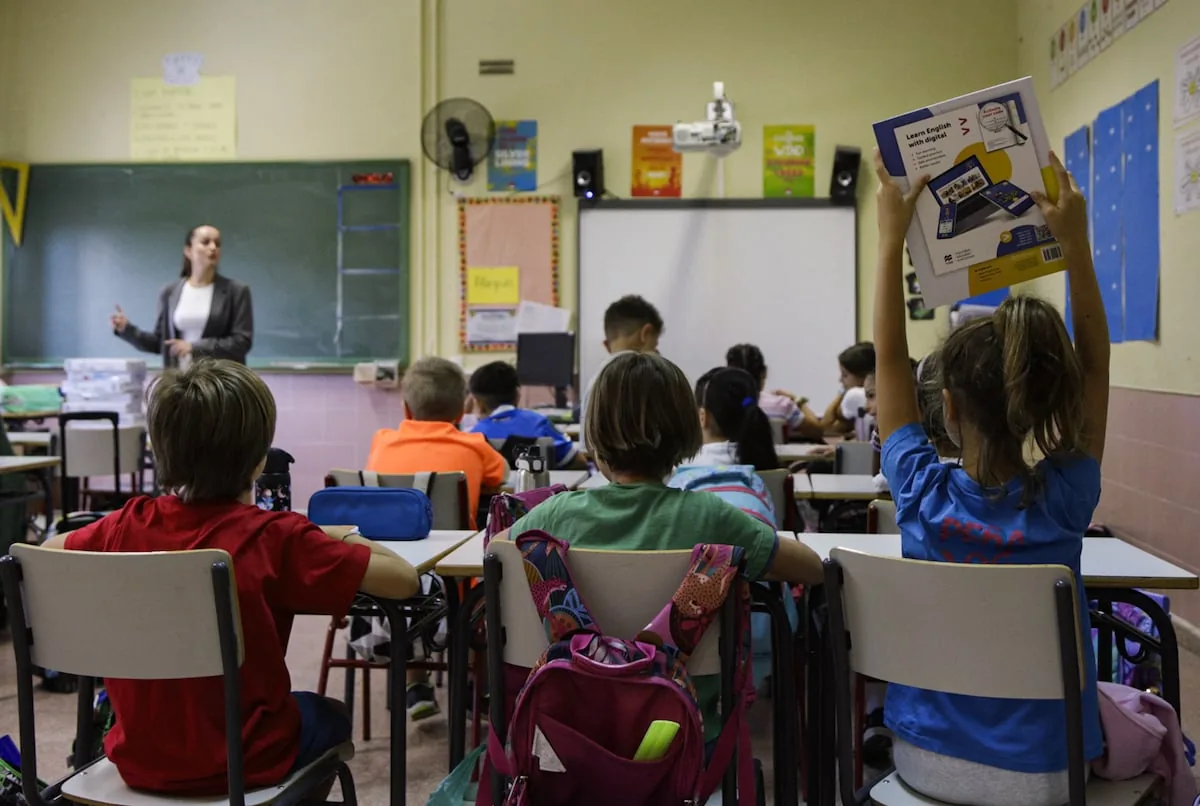
The reform, which is being processed in Congress, plans to set the maximum number of students per classroom at 22 in Primary (three fewer than now) and 25 in Secondary Education (five fewer than currently). Charter schools have a higher average number of students per class than public schools. According to official data, it is 23.2 in Primary (compared to 19.9 in public schools) and 26.3 in Secondary Education (24.1 in public schools). And just for that reason, it will already be especially benefited by the new system, having proportionally more classes to split. The socioeconomic and cultural profile of the families to which their students belong (which is the factor that most influences educational performance) is, on the other hand, clearly higher than that of public schools, according to data from the PISA Report, the international evaluation organized by the OECD; Save the Children showed in a 2024 study that Spain is the developed country where social segregation between both types of school networks is most pronounced.
The ratio reduction, which the bill plans to apply progressively until completed in 2031, will require allocating at least 28.18 billion euros over 10 years to hire teachers and carry out works in schools, according to the research, making it one of the most relevant educational policy regulations in recent decades.
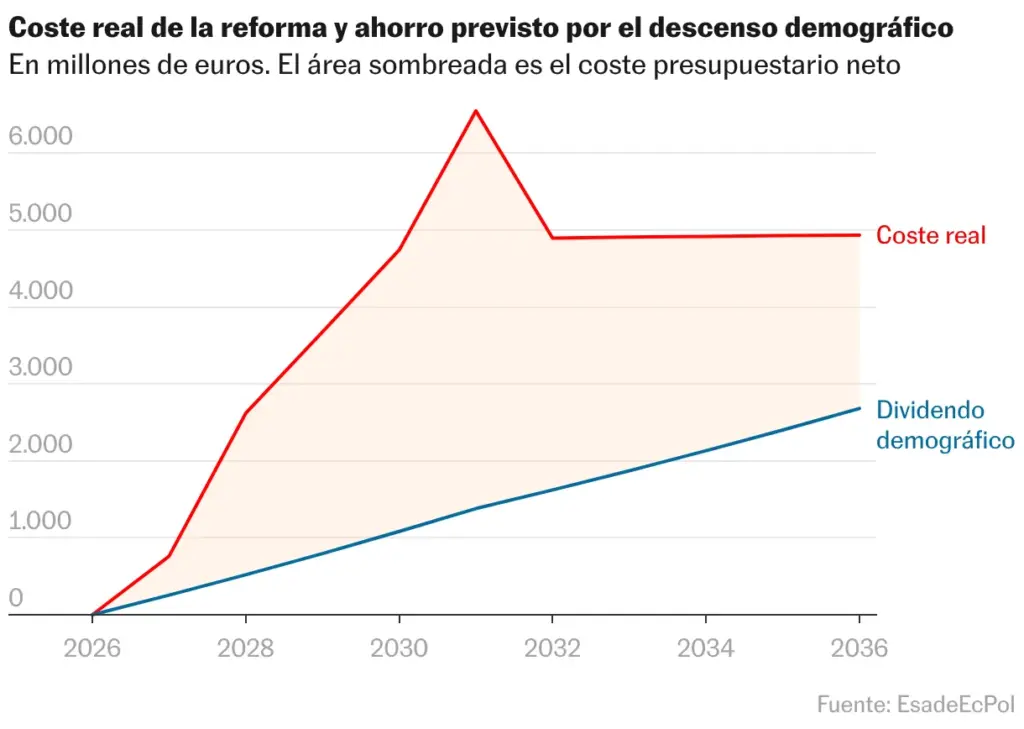
The real cost of the ratio reduction designed by the Government is higher, at 42.92 billion over 10 years, note the authors of the Esade study, Lucas Gortazar and José Montalbán. But it will be reduced by 14.74 billion euros over a decade due to the demographic effect. The calculations in the new report only include, moreover, the Primary and Secondary Education stages, which are detailed in the bill. But it also foresees that, within six months of the law’s approval, the Government will set by decree an additional ratio reduction in the second cycle of Early Childhood Education and in Baccalaureate, which will increase the cost.
To make the estimate, the Esade study uses, among others, data from the Ministry of Education, the INE, and the international evaluations of the PISA, TIMSS, and PIRLS Reports. The bill also contemplates that students with special educational needs, such as those with disabilities or autism spectrum disorder, will count double for the purpose of calculating the ratio, which the report considers justified.
EsadeEcPol presented another study in March, based on hundreds of thousands of data from students, teachers, and principals, which concluded that a ratio reduction like the one now proposed in Spain does not imply a significant improvement in learning (although it does moderately increase the well-being of teachers and families). A result that coincides with a meta-analysis of international studies published in 2025.
The new objection raised by the authors, Lucas Gortazar and José Montalbán, has the aggravating factor that, according to evidence, the students who benefit most from working in small groups are precisely the most socially disadvantaged. While hardly any results can be expected from a ratio reduction like the one planned in schools, whether charter or public, in the affluent neighborhoods of Spain’s large cities.
Read more The lambs return to Morocco in a Sacrifice Festival under political tension and social crisis
The bill on ratio reduction and teacher working hours, which the Ministry of Education negotiated with unions, includes, in an additional provision, the possibility of further reducing the number of students in schools with maximum social complexity. But, Gortazar and Montalbán indicate, “it remains a mere forecast, without a schedule or budget allocation, while the universal maximum is mandatory.”

Alternatives
The authors propose as an alternative to the general ratio reduction, to focus the decrease on schools enrolling the most disadvantaged students. And to redirect the rest of the funds to measures for which there is more robust evidence of learning improvement. Such as “intensive tutoring” (in groups of two or three students) concentrated on the 25% most vulnerable students, the introduction of salary supplements for teachers assigned to socioeconomically complex schools (to prevent, as happens now, that teacher temporality is especially high in them), or the expansion of reinforcement programs that already exist like PROA+.
For comparison, intensive tutoring for students belonging to the most disadvantaged quartile and the implementation of the so-called teaching MIR (a mentoring system for new teachers by expert teachers, inspired by the residency doctors do) would together cost, over a decade, the same as the planned ratio reduction, the authors point out.
The study highlights that, according to the economic memorandum of the draft bill on ratio reduction, the measure “would not necessarily imply an increase in costs,” because there are alternatives “that do not necessarily require a physical split” of classrooms, such as “co-teaching” (two teachers together in class) and the reduction of the school population due to declining birth rates. “However,” the Esade report points out, the economic memorandum “does not provide a quantitative quantification of its costs.”
The authors foresee, instead, that, in the peak year of public spending due to the ratio reduction, expected in 2031, the real cost of the measure will amount to 6.549 billion euros. Of these, 4.883 billion would correspond to hiring teachers and 1.666 billion to infrastructure, calculating that, of the new classrooms needed for splits, 65% would be achieved by using existing spaces, and 35% would need to be built (and they estimate their cost using the median of awarded bids between 2022 and 2024). The savings from the decline in students (which would act in parallel by freeing classrooms and teachers) would be 1.38 billion, so the net budgetary cost in that year 2031 would amount to 5.169 billion euros. From then on, they point out, the budgetary effort would decrease, because all the new necessary classrooms would already be built and the effect of demographic decline would continue to act. The teachers needed to implement the measure (in a calculation that includes both those not reduced to adapt staff to the birth rate decline and new hires) totals, according to Esade, 103,000 additional teachers.
Read more United States attacks Iranian targets “in self-defense” amid peace negotiations