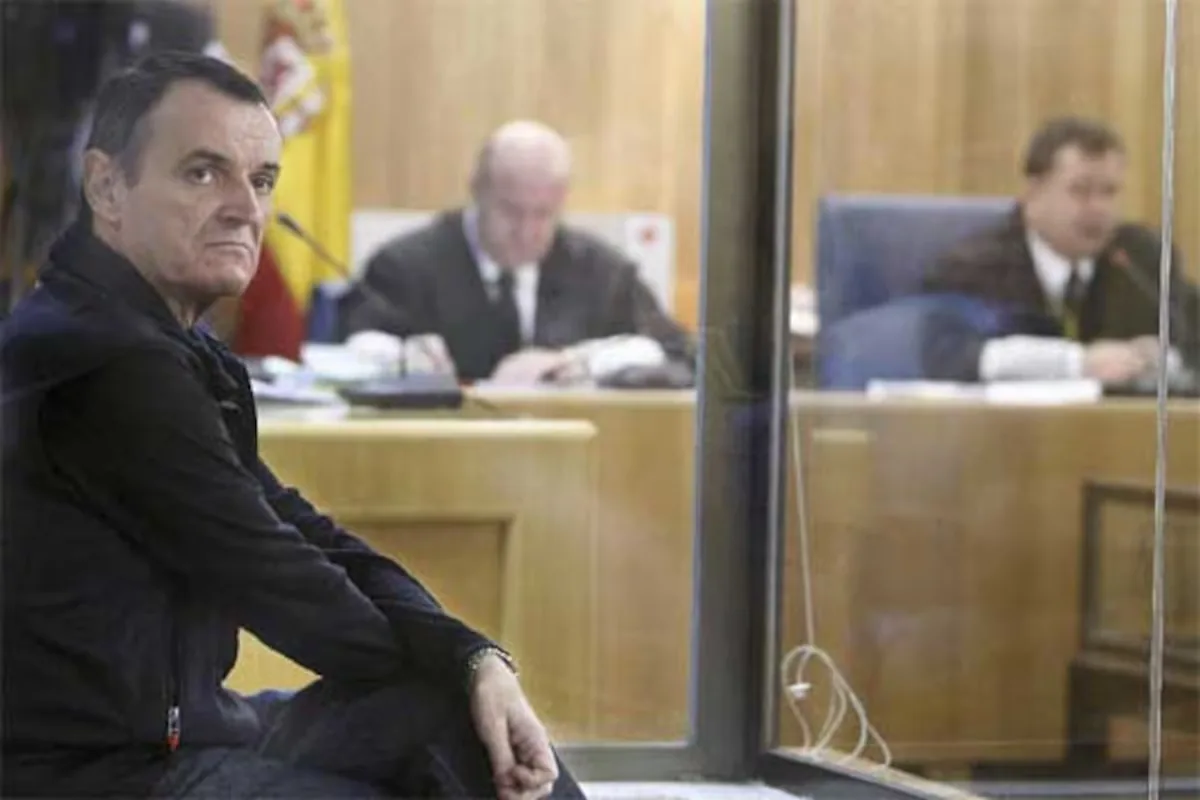






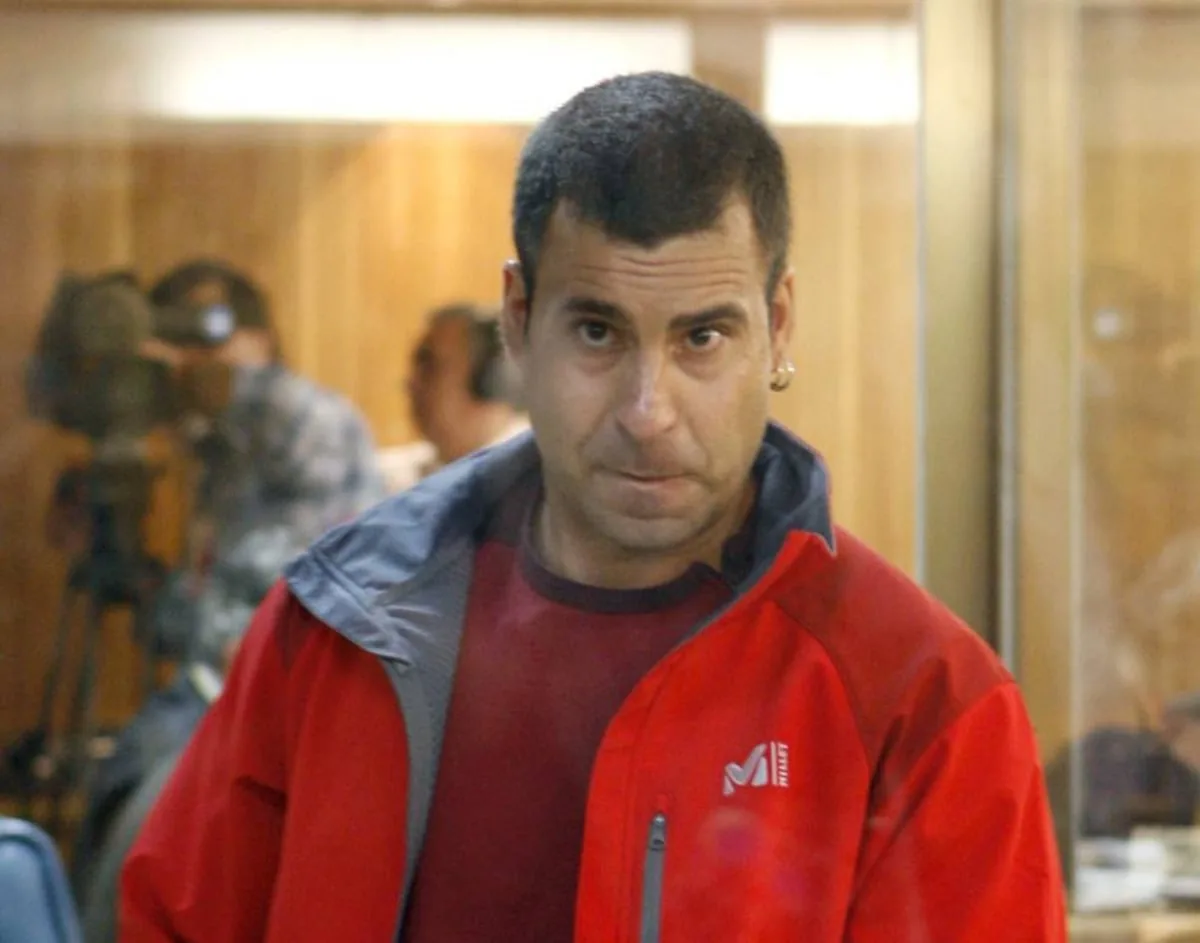
The National Court Prosecutor’s Office has decided to endorse the decision of the Basque Government’s Department of Justice and Human Rights to grant the third degree or semi-freedom to the ETA prisoner Jon Bienzobas Arretxe, alias Karaka, according to sources from the public ministry. Bienzobas was convicted for the murders of Rafael San Sebastián Flechoso, brother of an Iberduero executive with whom he was confused, and former President of the Constitutional Court Francisco Tomás y Valiente, in 1990 and 1996 respectively. The public ministry’s decision not to appeal the agreement of the Imanol Pradales Executive will allow Bienzobas to leave prison daily, only having to return to sleep from Monday to Thursday.
Read more Trump cancels a million-dollar contract with a Catholic charity in Miami that serves migrant minors
Karaka’s sentences add up to 266 years in prison, although the legislation sets a maximum of 30 years of effective compliance, which will occur next November 24. This fact is the main argument put forward by the Prosecutor’s Office not to oppose the semi-freedom of the ETA member, according to the same sources. Another is that last year Bienzobas began participating in restorative justice workshops in which he has met with victims of terrorism. The aim of these meetings is for the latter to achieve reparation, at least symbolic, for the harm suffered and, at the same time, to facilitate the reintegration of inmates, making them aware of the pain they have caused.
The Prosecutor’s Office also values that the report prepared by the prison psychologist highlights that the ETA member has shown himself to be “collaborative and receptive to the analysis of personal, social and family factors directly or indirectly related to his criminal activity.” Furthermore, it considers positive that he is in the prison’s respect module, intended for low-conflict inmates, and that he “accepts well the institutional regulations and those specific to this type of module, with a positive assessment.” It also highlights that Karaka has enjoyed several leave permits without incidents.
When the Department of Justice, headed by the socialist María Jesús San José, agreed last Monday to grant semi-freedom to Bienzobas, it also highlighted that the ETA member maintains “good conduct” in prison ―where he has had a “favorable evolution after periods of maladjustment,” according to prison reports― and that he had a “verified job offer” to start working when he began to enjoy the open regime, as well as family support. The Basque Government also highlighted that he was paying the civil liability to which he was sentenced, that he maintained a “favorable motivation for personal development” and that he had submitted several handwritten letters of remorse in which he asks forgiveness from his victims.
In one of these handwritten letters, Karaka states that he is aware that “the actions I personally committed caused very serious and irreparable consequences to the families of Francisco Tomás y Valiente and Rafael San Sebastián Flechoso.” And he adds: “I wish this suffering had not occurred. I personally assume responsibility for these losses, for which I want to express all my respect, that I feel their pain and also my commitment in this sense to heal as much as possible the damage caused,” he adds in his letter. Bienzobas, who has enjoyed a leave permit in the last year, assures that he has taken the step of asking for forgiveness in writing to “be able to rebuild the broken bridges within our society to be able to advance in peaceful and democratic coexistence.”
When the granting of semi-freedom to Karaka became known, the Victims of Terrorism Collective (Covite) issued a harsh statement in which it described the decision as “fraudulent.” Its president, Consuelo Ordóñez, sister of the PP councilor in San Sebastián Gregorio Ordóñez, assassinated by ETA in 1995, also questioned the credibility of the prisoner’s letters of forgiveness: “Victims do not have to believe what is said in those letters. We cannot be required to make an act of faith. As long as there is no public, clear repentance backed by facts, we have no reason to give credibility to those writings drafted solely to obtain semi-freedom,” Ordóñez insisted.