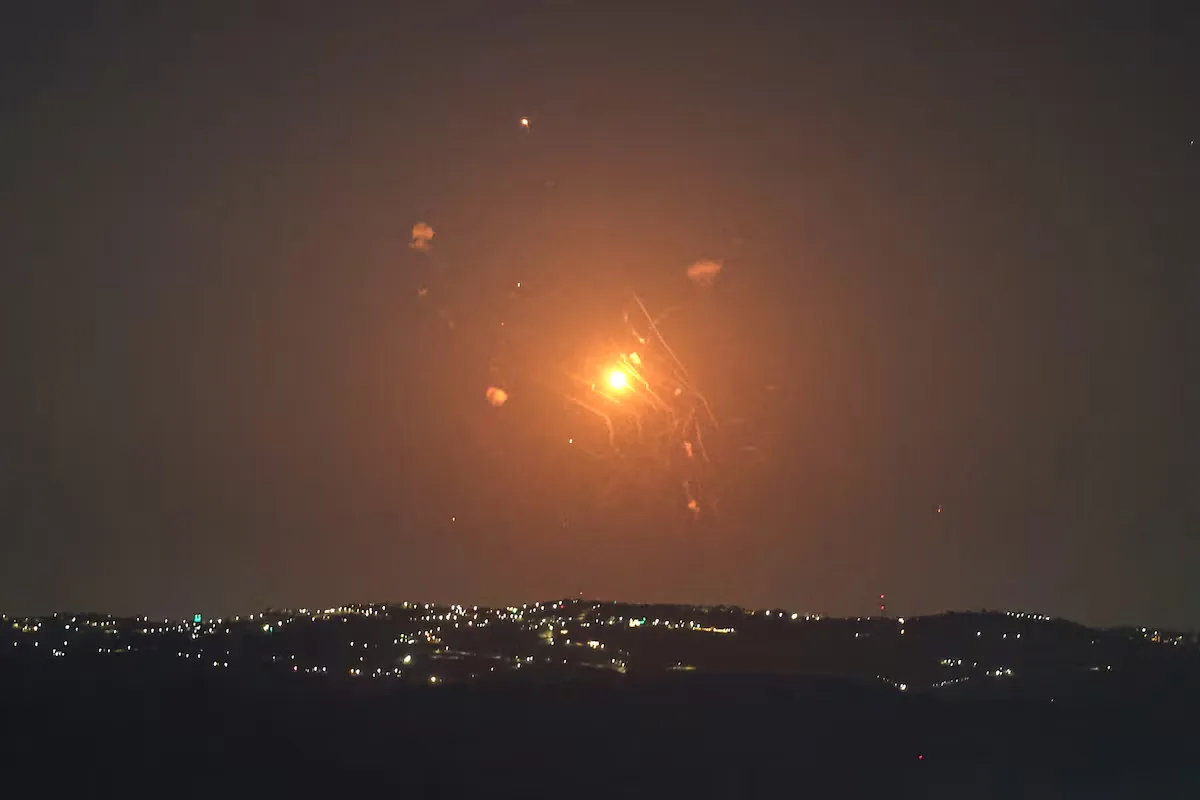









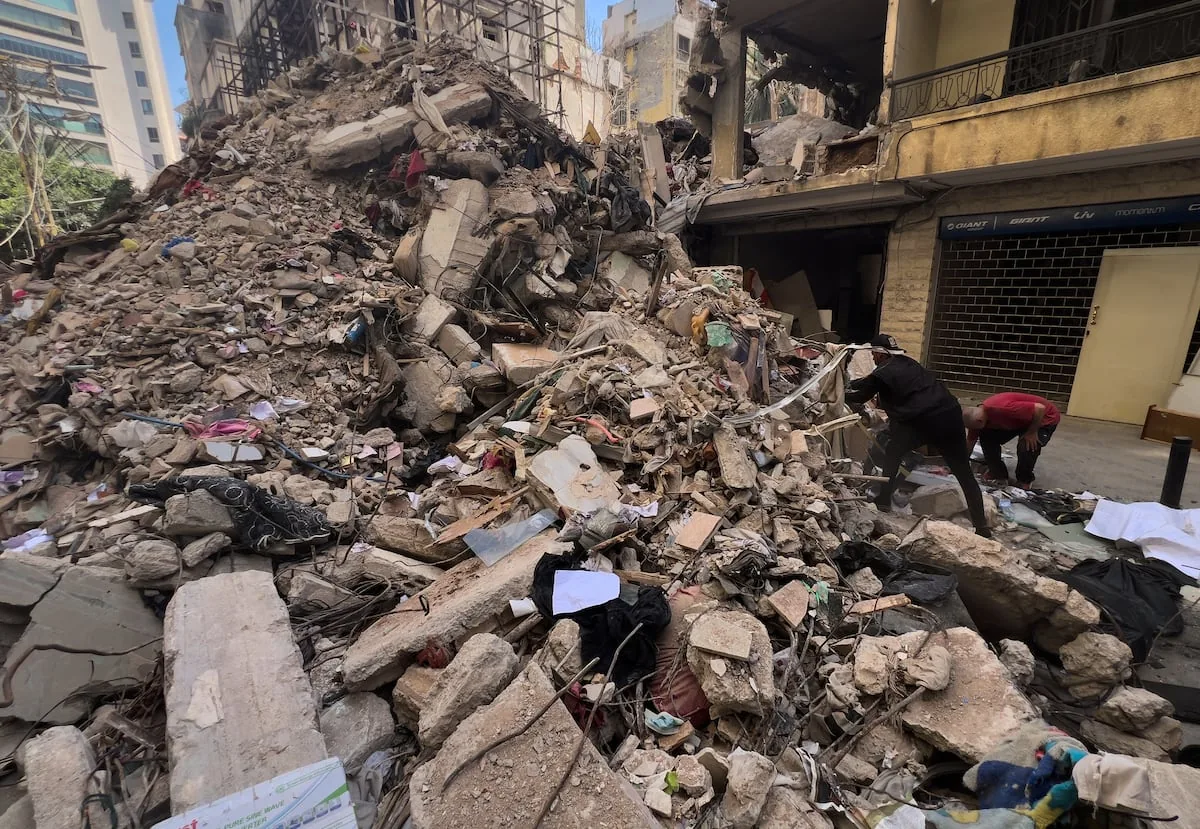
The conflict between Israel and Hezbollah will enter a 10-day ceasefire starting at midnight (11:00 p.m. in mainland Spain). This was announced by the President of the United States, Donald Trump, in a statement that temporarily halts an offensive on Lebanon in which Israel has employed the same tactics it has applied with impunity in Gaza since 2023.
During 46 days of fighting against the Shiite militia Hezbollah, Israel has publicized the destruction of entire villages and the bombing of healthcare workers, actions that international humanitarian law considers war crimes. In both cases, Israeli leaders have linked these actions to the war against the pro-Iranian organization, which has caused the death of 2,196 people and injured another 7,185. Among them, 172 children, 260 women, and 93 paramedics. These are figures from the Lebanese Ministry of Health, which records more than 250 bombings against medical personnel or infrastructure in six weeks that Israel accuses Hezbollah of militarily exploiting without evidence.
Israeli Defense Minister Israel Katz announced that the army would demolish “all homes” in border towns where it claims Hezbollah infiltrates. The strategy, Katz detailed, “follows the model” that Israel applied in Gaza against Hamas, turning towns throughout the Strip into a blanket of rubble. Israeli army spokespeople in Arabic have flooded social media with images of the blowing up of municipalities, making residents witness how the Israeli offensive blurs the line between civilian and military targets.
Verified images published this Thursday by the British BBC channel show the destruction of 400 buildings in Taybeh (west of the border area) and 460 in Aita el Shaab (center). They also record extensive destruction in Khiam, Qouzah, Deir Seryan, Merkaba, and Naqoura. From this municipality, which hosts the headquarters of the United Nations peace mission, the Blue Helmets spokesperson, Kandice Ardiel, described the destruction as “heartbreaking.” “They are not just buildings; they represent a community.”
The National Council for Scientific Research of Lebanon, a public body, estimates that Israel has partially or totally destroyed 38,000 homes since March 2. Since 2023, when Hezbollah opened a front against Israel in supposed solidarity with Gaza, the devastation reaches 230,000 homes in a country of five million residents.
Destruction of livelihoods
Israel has not sought military justification for other attacks on key infrastructure for civilian survival. Oxfam accused the Israeli army in March of “applying in Lebanon the attacks on water infrastructure used during the genocide in Gaza.” According to the organization, which recalls that the Geneva Convention “prohibits the deprivation of water as a method of war and may constitute a war crime,” Israeli troops had already damaged “45 water networks in Lebanon” during 2024.
Read more Freiburg kills Celta’s exciting European dream
“It is evident that Israeli forces are repeating the same pattern in Lebanon as in Gaza,” declared Oxfam’s director in Lebanon, Bachir Ayoub, in a statement in March. “They attack civilians, critical civilian infrastructure, and emergency services. Their goal is to maximize fear among the population,” he denounced.
Hostilities against water and sanitation networks foster outbreaks of diseases and the loss of agricultural livelihoods, on which many depend in southern Lebanon. Human Rights Watch denounced in 2026 the firing by Israel of white phosphorus, a chemical substance that ignites when exposed to oxygen.
Its deployment devastates the land and is illegal in inhabited areas. Ahmad Baydoun, a researcher at Delft University of Technology in the Netherlands, documented 248 shots of this substance in southern Lebanon — 39%, according to him in The Guardian, in residential areas — from 2023 until November 2024, when Israel and Hezbollah falsely agreed on a previous ceasefire.
“The massive evacuation orders,” which forcibly displace 1.2 million people, and the urban destruction that denies them a place to return “are consistent with the systematic destruction of homes applied during “the genocide in Gaza,” according to a group of experts from the UN Human Rights Office who warned this Wednesday. The practice, especially used in majority Shiite areas where Hezbollah obtains its main support, constitutes “collective punishment,” according to the experts, and “points towards ethnic cleansing.”