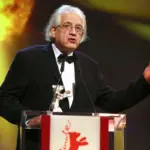




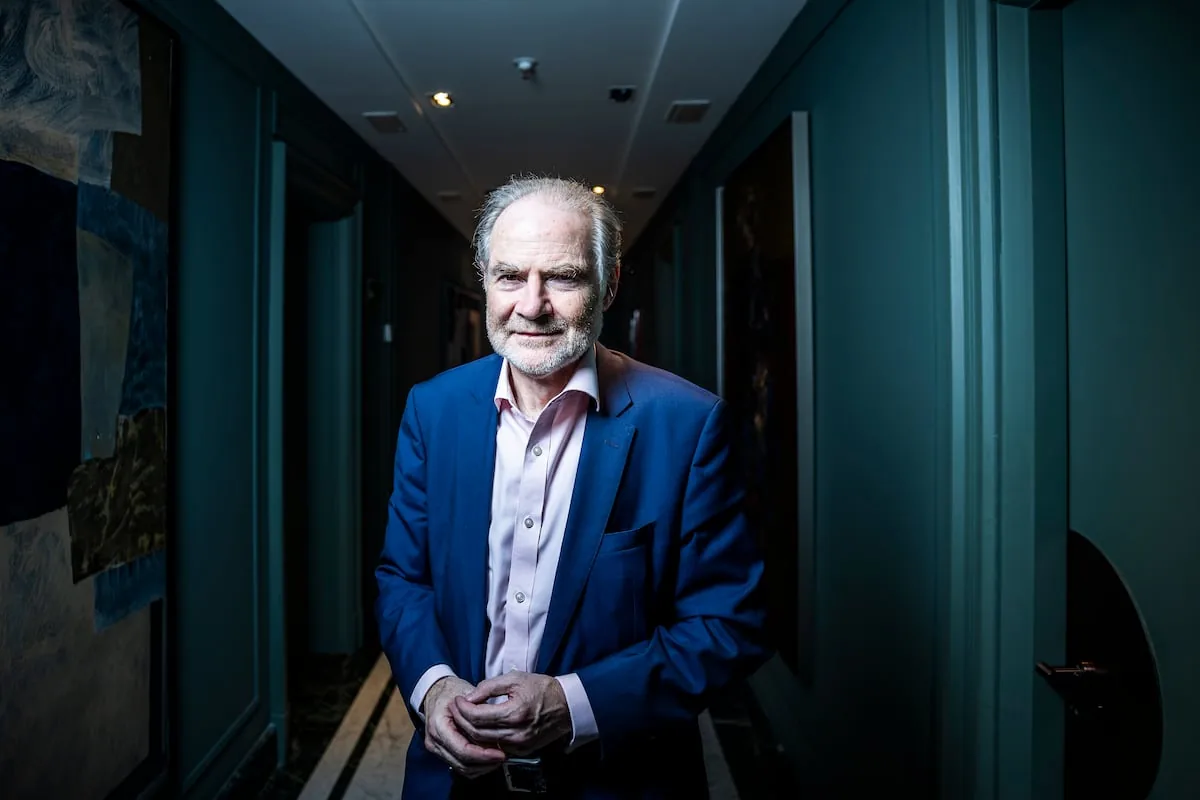
Timothy Garton Ash (London, 70 years old) faces a hectic day in which he must attend to the media and respond to the multiple congratulations for being awarded the Princess of Asturias Award for Social Sciences. He speaks by phone to EL PAÍS, the newspaper where he is a columnist, from his residence in Oxford, and he needs no preparation to offer sharp answers to the dilemmas and problems facing Europe today and, more broadly, the West.
Read more The Government awards the new state DTT license to the Siete consortium
Question. What is the state of the world today?
Answer. There is an old joke in which the interlocutor was asked to describe the state of the Soviet economy in one word. ‘Well,’ he replied. ‘And in two words?’ they insisted. ‘Not good,’ he answered [laughter]. If you ask me about the current state of the world, I would answer with one word, bad, or with two, very bad.
Q. You have been warning for years about the need to rescue liberal democracies from the wave of authoritarianism sweeping the world. To rescue their principles, yes, but also to correct their mistakes.
A. The Princess of Asturias is one of the most important European awards, and it is precisely we Europeans who must understand that the salvation of liberal democracy, the future of liberal democracy, depends fundamentally on us. If one looks at the latest Freedom House report [the think tank that since 1973 measures the state of rights and freedoms worldwide], 34 of the 83 countries that enjoy freedom are in Europe. Mark Carney [the Prime Minister of Canada] said the other day that the liberal order begins in Europe.
Q. What are the main problems that weaken us today?
A. There are two types of problems that free and open societies are suffering. Those we have created ourselves, such as the extreme inequality in our societies; the destruction of the public sphere of debate, due to the American tech giants; the 2008 financial crisis, whose consequences are still alive; or the fact that many young Europeans cannot find affordable housing. And that would be just the beginning of the list. Other problems are external. We suffer the military attack from Russia, the political attack from the United States, and the economic one from China. Democracies, and particularly European democracies, have never suffered such a number of external threats at the same time.
Q. You are a declared defender of the role of the European Union, but you have never hesitated to point out the problems and limitations of the institutions governed from Brussels.
A. First of all, it is not necessary to explain to you that Europe is something much bigger than the European Union. The EU is the central political community of Europe, and that is why when the current British Prime Minister Keir Starmer, who is about to cease being so, said he wanted to place the United Kingdom at the heart of Europe without mentioning at any time the idea of rejoining the EU, his statement was absurd. You cannot be at the heart of Europe without belonging to the European Union.
But if one looks at the key issue at this moment, which is the need to build a European defense capable of standing on its own, the EU can play an important role in that goal, but it is not the center of the effort. It is about ‘Europeanizing’ NATO, organizing seriously. It requires the participation of countries like the United Kingdom or Norway, even if they are not in the EU.
Q. Where has the EU failed?
A. European institutions are good at some matters, not so much at others. In their response to the war in Ukraine, they have been good. Their response to the tragedy in Gaza has been pathetic. The EU can only be effective when it has a broad degree of consensus among its member states. This is what happens with Ukraine, especially now that Viktor Orban [former Prime Minister of Hungary] is no longer there. But as you know very well in Spain, that has not been the case regarding other conflicts such as Gaza or Lebanon.
Q. You have defended for decades a freedom of expression inherent to liberal democracies. Do you think it is more threatened today? And worse, that citizens do not seem concerned about this threat.
A. The short answer is yes. A longer one would point out that freedom of expression has always been threatened in one way or another. Power hates freedom of expression. All powers. But if we analyze today in more detail where the threats come from, one of the main ones is that we are losing the public sphere that every democracy needs. Spaces like public broadcasters or important newspapers like EL PAÍS are necessary to host a wide diversity of opinions, different arguments contrasted in the same place, so that citizens of democracy can hear different points of view and disagree in a civilized way, until reaching some common position.
Today we are losing that dramatically because of American tech platforms and social networks. They are a very important part of the curse of our time and politics everywhere. There is simultaneously fragmentation and polarization. The worst of both worlds.
Q. You said at the time that Europe should have learned the lessons of Brexit. Has it?
A. I believe that the combination of Brexit and the war in Ukraine has awakened Europeans to the fact that this extraordinary Europe we have, in which we take its relative freedom, prosperity, and peace for granted, could disintegrate quite quickly if we are not more careful. And in that sense, the United Kingdom has been useful as a wake-up call. But, has the EU learned the most important and profound lessons, in the sense of becoming more attractive and dynamic again? It is something it could do simply by implementing the recommendations of Mario Draghi’s report to revitalize the European economy, the only way we can recover the dynamism that Spain currently enjoys within the EU. And I fear the answer to that question is clearly no.