









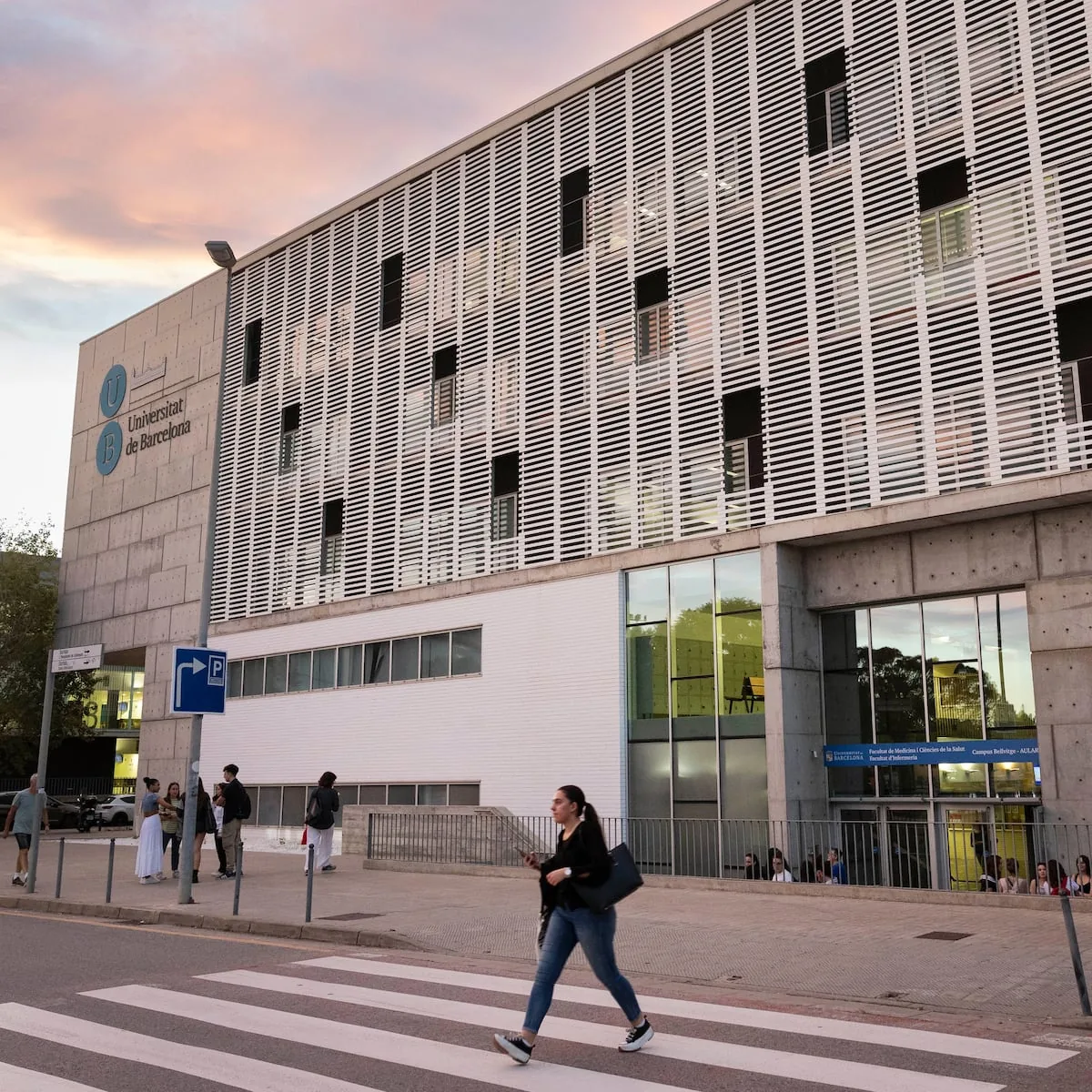
Public and private universities and research in public centers generated 44 million per day during 2023 in the metropolitan region of Barcelona, with a total turnover generated by companies in the sector of 16.249 billion euros, which represent 4.1% of GDP and 5% of employment. These amounts include everything from salaries to the profits they obtain or what they end up paying to the treasury. This is the main conclusion of the study on the economic impact of the entire university system and public research prepared by professors Jordi Suriñach, Esther Vayá, and Joaquim Murillo, members of the AQR-Lab of the UB (University of Barcelona).
Read more Timothy Garton Ash: “The salvation of liberal democracy depends above all on us Europeans”
Jordi Valls, deputy mayor of Economy, Housing, Treasury, and Tourism of the City Council, stated at the presentation of the work that “this city today cannot be understood without knowledge.” Valls claimed that knowledge and research exist “because there is a public sector that supports them.” “Many times we have this feeling about what the function of the public sector is: this is the function.”
Jordi Suriñach, Professor of Applied Economics at the UB and co-director of the study, was in charge of explaining the results. “The knowledge sector is key and strategic. It is a sector of the future,” he said. The aim of the analysis was to quantify the impact generated by the system of public and private universities, and public research centers in the RMB (Metropolitan Region of Barcelona, which has five million inhabitants), which has been expanded by adding the counties of Osona, Anoia, and Bages.
“We have analyzed the short-term impact it generates as another agent,” Suriñach explained. By analyzing only the implications in the short term, and not studying private research, Suriñach warned that the study is “biased downwards.” “We are underestimating the impact,” he insisted. What has been analyzed are university centers ―both public, private, and affiliated―, public centers specialized in R&D&I (Research, Development, and Innovation), companies linked to universities, students, and visitors who come because of university activity, such as congresses. “In total, 16.249 billion euros were billed,” Suriñach stated. In addition to creating or maintaining 147,826 jobs and generating 10.6 billion euros of GDP (Gross Domestic Product), which represents 4.1% of the RMB and 3.6% of Catalonia.
Read more The Government awards the new state DTT license to the Siete consortium
By agents, universities and other centers specialized in research rank on the podium of turnover with 34 and 37% respectively. Companies with 15, students with 11, and visitors with two, complete the list. The public sector has a greater contribution to the data (72%), although they specified that the study excludes private research.
Fiscal and public return
Who also benefits, they emphasized, is the treasury: more than three million in tax collections that end up being 1.388 billion that remain in Catalonia. 87% of this economic impact stays in the same RMB, although Suriñach wanted to value this 13% that is distributed throughout the rest of the territory.
All this means that for every million euros allocated by the Generalitat of Catalonia to the system, 9.2 million in turnover, six in GDP, 3.1 in wage income, 5.2 in tax income, and 3.3 million jobs were generated. “Investing in public universities is a decision that generates wealth,” Valls stated.