









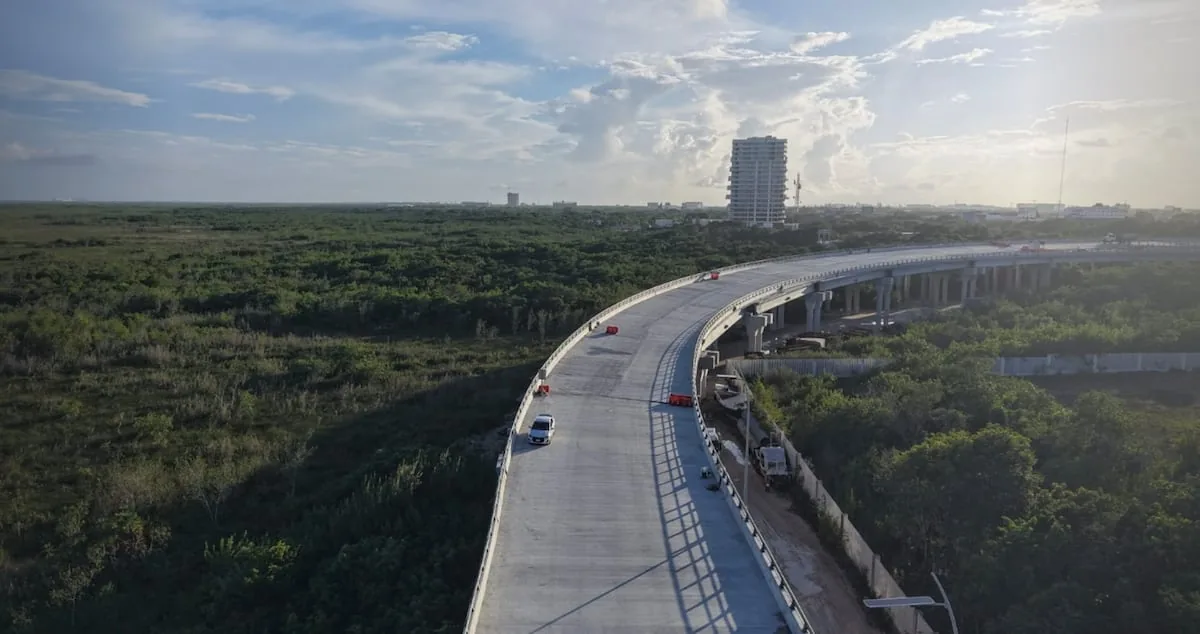
The Nichupté Vehicular Bridge in Cancún is approaching its operational launch with a schedule targeting this April, according to the latest official updates, although there is still no concrete inauguration date. The project is set to be the second longest structure of its kind in Latin America and aims to alleviate vehicular traffic in the tourist area, but its initial budget of less than 6 billion pesos has risen to a final cost exceeding 12 billion: an overcost that surpasses 100% compared to the original tender.
Read more El Rayo shows its courage in Athens and reaches historic European semifinals
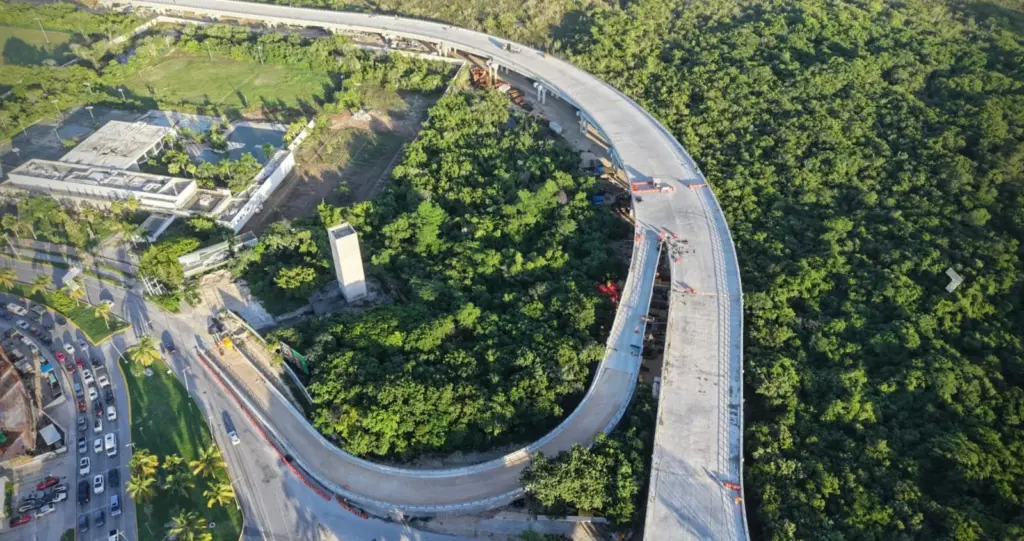
The project has a total length of 11.2 kilometers, of which 8.8 correspond to the elevated road over the Nichupté lagoon system and the rest to the road junctions with the urban area and the hotel zone. It will serve as a link road between Colosio Avenue and Kukulcán Boulevard, at kilometer 13, with an average speed of 80 kilometers per hour.
The project is part of the National Road Infrastructure Program and is presented as a new fully suspended urban road connection on pillars, with a land section and another crossing the lagoon body. The tentative date for its start of operation has been adjusted after numerous schedule delays, and its useful life is expected to be at least 30 years, with a view to extending it with proper maintenance.
Initial budget and overcost
The Nichupté Vehicular Bridge has seen a notable increase in its budget since it was proposed as an infrastructure project for Cancún. The investment amount went from an original figure close to 5.57 billion pesos, when the contract to build the work was awarded to the firm Ingenieros Civiles Asociados in June 2022, to a cost that already exceeds 12 billion pesos. This figure comes from the most recent update of the total cost of the work in federal and budget transparency reports, which sum the expenditure incurred up to 2025, amounting to 10.899 billion pesos, plus around 910 million scheduled for 2026, as detailed in March by Jesús Esteva Medina, head of the Secretariat of Infrastructure, Communications and Transportation (SICT).
This overcost has been linked to amount adjustments, deadline extensions and , which detected, for example, inconsistencies amounting to 494.8 million pesos in the execution of the work when reviewing a sample of 2.593 billion pesos from the 2024 Public Account. The combination of delays, scope modifications, and resource rescheduling has made Nichupté one of the most expensive infrastructure projects of the administration.
Read more Braga reigns in Betis’s gigantic collapse
Progress of the work and environmental impact
The most recent reports from the SICT and the government of Quintana Roo place the physical progress of the bridge at 97%, which puts it in the finishing, marking, and load testing phase. However, the exact inauguration date is still subject to the completion of the last junction sections, certification of the road by road safety authorities, and the definition of access and operation protocols. The initial uncertainty was due to factors such as weather conditions, coordination problems between contractors, and design adjustments in the hotel zone.
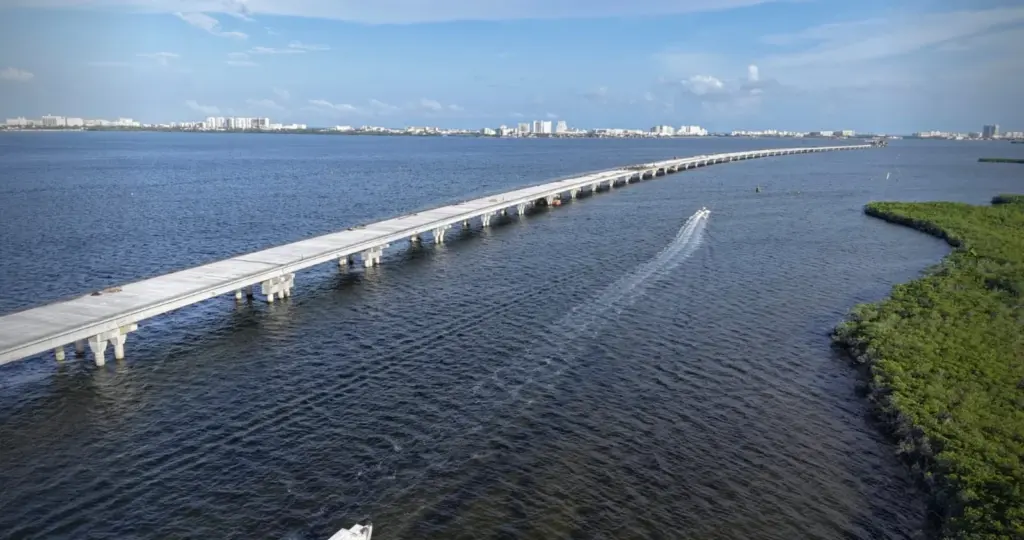
The project underwent a regional environmental impact study (MIA‑R) that recognizes a direct impact area of about 10.6 hectares, including 1.6 permanent hectares and nine temporary, with a significant portion installed over the Nichupté lagoon system. detail the loss of mangrove, jungle, and grassland fractions, mainly in the junction area with the urban zone.
In response to these impacts, the SICT and the Secretariat of Ecology and Environment of Quintana Roo have promised a compensatory environmental restoration program, which includes reforestation of the temporarily used areas and rehabilitation of 306 hectares of wetlands, as well as the donation of more than 300 hectares of state land to the federation to expand the conservation area of the flora and fauna protection area known as Manglares de Nichupté. Despite these mechanisms, local environmental organizations, such as the Mayab Ecologist Group and Semarnat, have warned about the indirect impact of the road’s shadow, hydrocarbon runoff, the possible release of accumulated toxic substances, and additional pressure on an ecosystem already highly transformed by urbanization.
Subscribe to the EL PAÍS Mexico newsletter and to the WhatsApp channel and receive all the key information about the current affairs of this country.
Read more Alejandro Burillo dies, businessman and influential football executive in Mexico