
Key moments
- Martínez denies having made Bárcenas’ life “impossible” in prison: “Absolutely not”
- Martínez denies having ordered García Castaño to look for Bárcenas recordings: “I thought they didn’t exist and I still think so”
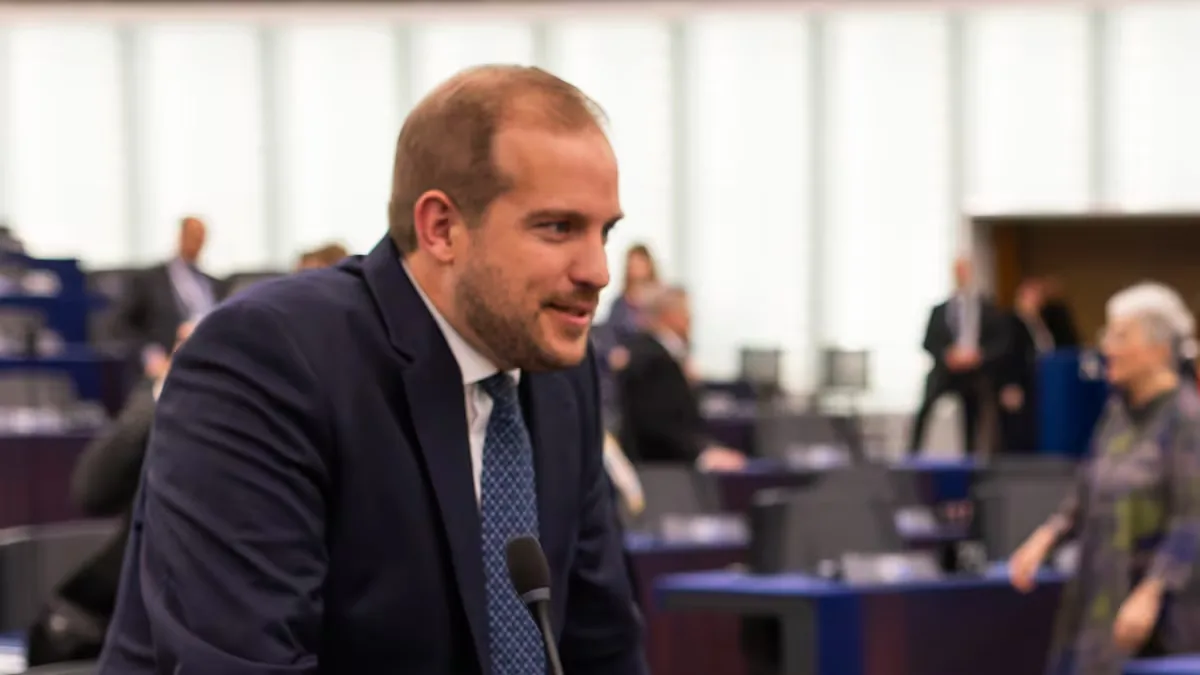
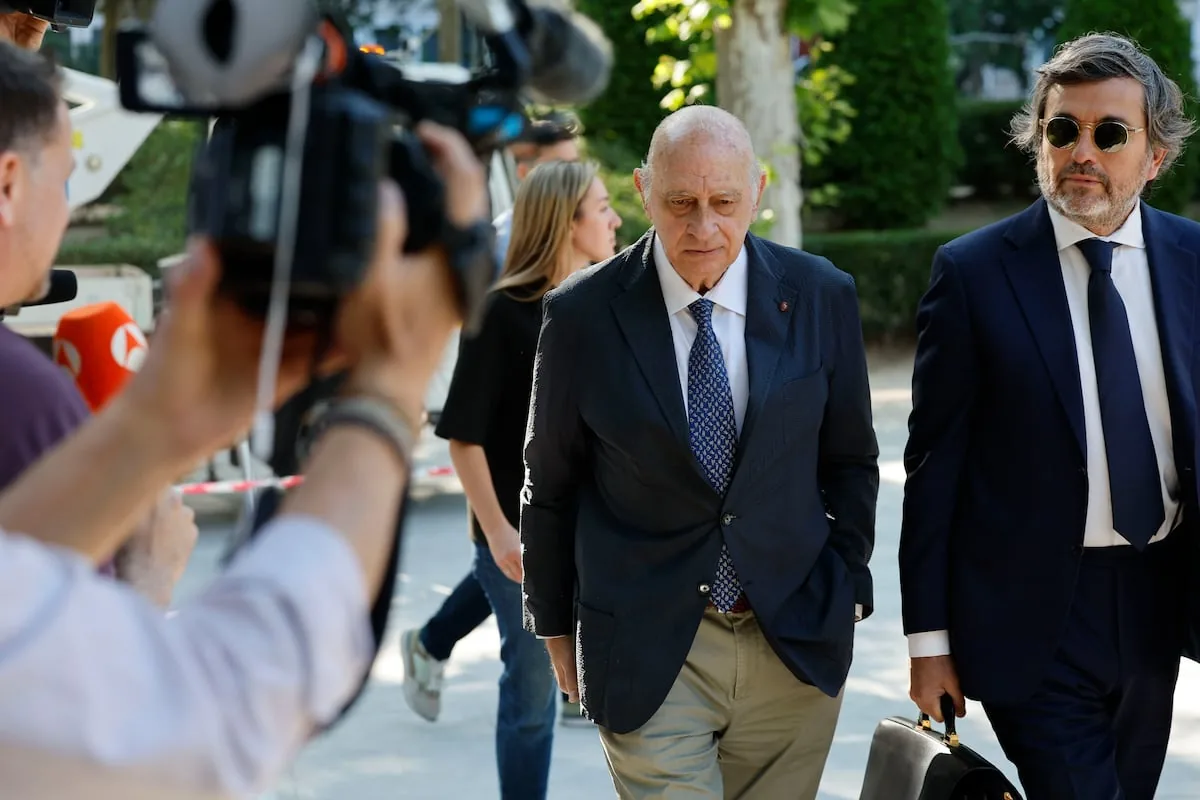
The trial for Operation Kitchen — the espionage on the former PP treasurer Luis Bárcenas to seize compromising information about the party — faces the defendants’ testimonies this Thursday. The main one, former Interior Minister Jorge Fernández Díaz, has just begun his testimony. Before him, former Secretary of State Francisco Martínez testified, categorically denying having ordered surveillance of Bárcenas or his wife or family. “No. Never,” he replied. He did affirm that there was an investigation into Bárcenas, but to find out if he had more hidden money or to expose his front men. He also insisted on his version of his main disagreement with his former boss, former Interior Minister Jorge Fernández Díaz, who is also accused. Martínez stated that the former minister knew about the recruitment of Sergio Ríos, who was Bárcenas’ driver, as a police collaborator. Fernández Díaz claims otherwise. Fernández Díaz will testify next.
EL PAÍS offers the latest trial updates for free. If you want to support our journalism, subscribe.


Session resumes: it’s Jorge Fernández Díaz’s turn
After Martínez’s testimony, it is now the turn of former Interior Minister Jorge Fernández Díaz. The Anti-Corruption Prosecutor’s Office is requesting a 15-year prison sentence and 33 years of disqualification for him for alleged crimes of concealment, embezzlement, and privacy violations.
The former minister has announced that he will only answer questions from his lawyer and the court. Thus, he will not respond to the Prosecutor’s Office or the other accusations and defenses.
15-minute recess
Francisco Martínez has finished answering his lawyer’s questions. The court president, Teresa Palacios, has agreed to a 15-minute recess.
For more than two and a half hours, the former Secretary of State for Security has distanced himself from any wrongdoing. He defended that he “never” ordered spying on former PP treasurer Luis Bárcenas. He assured that none of the police officers investigated conveyed any illegality to him. And he emphasized that all were respected commissioners within the National Police. However, he stated that Interior Minister Jorge Fernández Díaz knew about the recruitment of Sergio Ríos, Bárcenas’ driver, as a “collaborator” of the force.
Francisco Martínez: “I never had Mr. Rajoy’s phone”
Francisco Martínez recounted this Thursday how he tried to speak with Mariano Rajoy in 2019 because “he wanted to remain a deputy.” He said a fellow Popular Group deputy told him that if he wanted to be on the electoral lists, he couldn’t expect to be called but had to go directly and write to the president. “And I told her, look, I don’t have the president’s phone, I never had it. And she gave me a number,” he noted.
According to his account, he sent a message that “no one ever replied to.” Therefore, he believes it was not Rajoy’s phone. “With this message, I just wanted to explain that I had been an effective Secretary of State, that I had done my job well and also during my time as a deputy. And that I didn’t want to be left out of the political race,” he stated.
He explained that at that time the investigation was already underway, but he expressed his “interest” in continuing in political life and staying in the PP. “Above all, not to feel rejected and displaced,” he said. He specified that he even lost job offers.

Martínez denies meeting with Cospedal to talk about Villarejo’s audios
The former Secretary of State denied that the police report correctly reflects a message of his in which he supposedly told his wife that he had met with María Dolores de Cospedal to talk about audio files that Villarejo might have recorded. “That’s not true. I never met with Cospedal to talk about the audio files,” he stated.
Martínez defended that what really happened was that, both being opposition deputies after the no-confidence motion, they coincided in a small group in Congress where several deputies were commenting on the Villarejo audios that had been leaked and affected then Justice Minister Dolores Delgado. Cospedal approached the group and briefly participated in the conversation, barely two minutes. “I did not meet with her to talk about this. It’s a very different context,” Martínez emphasized.
Martínez admits Villarejo’s arrest made him nervous: “I had talked to him hundreds of times”
Former Secretary of State Francisco Martínez acknowledged during his testimony this Thursday that the arrest of Commissioner José Manuel Villarejo in 2017 made him “nervous.” His lawyer briefly showed messages the accused exchanged with his wife at that time. Martínez insisted they were private conversations but admitted he was nervous because he knew the commissioner and worked with him. “I had talked to him hundreds of times,” he added. Similarly, he stressed that the arrest of two police officers (Villarejo and Barajas Commissioner Carlos Salamanca) was always bad news for the force.
Martínez: “A message from the minister with Luis Bárcenas has never been published”
During the review of the messages intercepted on his phone, the former Secretary of State had to explain several compromising exchanges with Commissioner García Castaño that appear in the case. In one, the commissioner asked him in writing: “If I take out Bárcenas’ pendrive, what happens?” Martínez said he replied with a crying emoji and insisted it was a joke: “It was a joke,” he repeated before the court. He also clarified that another message reading “they will kill us all” was unrelated to the Bárcenas case but related to fear of losing the 2015 general elections.
In the same message review, García Castaño told him that Bárcenas’ wife, Rosalía Iglesias, claimed to have messages between her husband and Minister Fernández Díaz. Martínez emphasized that this information never materialized publicly: “A message from the minister with Luis Bárcenas has never been published,” he concluded.
Martínez rejects that Villarejo leaked information about ‘Operation Kitchen’: “It all sounds like a fairy tale to me”
The former Secretary of State recounted before the court his reaction when the first information about Operation Kitchen came out in November 2015. At that time, journalist Fernando Lázaro, then at El Mundo and with whom Martínez admits having had “not only professional understanding but friendship,” wrote to him directly with his interpretation that it was Villarejo himself who had leaked that information with a specific goal, “to whitewash” future leaks about Bárcenas by making people believe the documents had been stolen by police. Martínez explained he did not share that view and told Lázaro: “I don’t think so, it all sounds like a fairy tale to me,” according to his account before the court. The accused emphasized that at that time it was a widespread interpretation among those following the case that it was Bárcenas himself who leaked the information, not Villarejo. “I know many people thought so,” he said.
Martínez defends that the investigation into Bárcenas was legal: “The goal was to discover if there were more funds and front men”
The former Secretary of State defined what he believed was the goal of the police investigation into Luis Bárcenas after the existence of his Swiss accounts became known. “I have no doubt that the goal was to discover if there are more funds, if there are people involved as accomplices, front men, etc.,” he stated. Martínez insisted that all this activity was carried out legally and within the functions of each unit. “I assume everyone acted within their functions and within the law, and I had no reason to question it,” he added.
Martínez also emphasized that the investigation was known to the judiciary, which in his view reinforces its legal nature. He recalled that after the “qualitative leap” represented by the discovery of the Swiss accounts, police activity around Bárcenas intensified, always, according to his defense, within established channels and with knowledge of the competent judicial bodies.
Francisco Martínez: “I never heard Villarejo talk about anything illegal”
Francisco Martínez insisted that Commissioner José Manuel Villarejo never informed him of irregular actions within the National Police. “I never heard Villarejo talk about anything illegal,” he stated. He said Commissioner Enrique García Castaño also never did. “He joined the Police before I was born and had been leading a sensitive unit for counterterrorism for many years. (…) Therefore, I never heard him and had no reason to think Mr. García Castaño did anything illegal. Never,” he emphasized.
He recounted that the Police were “monitoring Mr. Bárcenas” within the law because he was being investigated by the National Court. “And I’m also clear that if Mr. Bárcenas or Mrs. Iglesias had fled, it would have been the minister’s responsibility. I’m very clear about that,” he added.
Martínez denies having made Bárcenas’ life “impossible” in prison: “Absolutely not”
Francisco Martínez also distanced himself this Thursday from having given orders to hinder Luis Bárcenas’ stay in prison. “Did you make Mr. Bárcenas’ life impossible in prison?” his lawyer asked. The former Secretary of State insisted: “Of course not, absolutely not.”
“I think the first time I saw the director of that penitentiary center was here, in this trial. I had no relationship with penitentiary centers, no such communication,” he noted. In this regard, he assured that he “never in his life” spoke with the director of Soto del Real about Bárcenas.
Martínez states that the minister knew about the recruitment of Bárcenas’ driver
Francisco Martínez insisted during this Thursday’s session that he confirmed to Interior Minister Jorge Fernández Díaz the recruitment of Sergio Ríos, then Luis Bárcenas’ driver, as a police informant. According to his account, his superior called him and asked if he was aware of “a collaborator” in the former PP treasurer’s environment. “He never used the word informant,” he noted.
Martínez explained that at that moment he told the minister he didn’t know if they had such a collaborator. “I had no idea. The minister, of course, neither,” he said. Therefore, he contacted the then deputy operational director of the Police, Eugenio Pino. Martínez explained that it was this police officer who told him that indeed there was a collaborator in Bárcenas’ environment and that it was the treasurer’s driver. According to the former Secretary of State’s account, Pino himself confirmed that Ríos was the collaborator.
Martínez indicated that after these arrangements, he confirmed to Fernández Díaz that Bárcenas’ driver was the police collaborator. The minister has consistently denied being aware of Ríos’ recruitment.
Martínez denies having ordered García Castaño to look for Bárcenas recordings: “I thought they didn’t exist and I still think so”
The former Secretary of State denied having ordered Commissioner García Castaño to locate recordings that Bárcenas might have about Mariano Rajoy or other PP leaders. “Never, ever,” he stated. Martínez explained that information about those supposed recordings was a recurring rumor in the press and that no one in the ministry’s environment took them too seriously. “What I perceived was that it wasn’t believed, it was joked about a bit: let’s see what they say tomorrow about Bárcenas’ recordings,” he recounted. “No one ever conveyed any concern to me about having been recorded by Bárcenas, not even the minister himself,” he assured. “I never asked Mr. García Castaño to find anything related to those recordings, simply because I thought they didn’t exist. And I still think so,” he concluded.
Martínez denies having ordered to look for Bárcenas’ hard drives: “It’s a media legend”
The former Secretary of State strongly denied having ordered Commissioner García Castaño to locate Luis Bárcenas’ hard drives or any documentation related to the PP’s accounting. “That is not only false but I think it’s a fantasy, it’s absolutely false,” he stated emphatically. Martínez went further and called the hard drives story “a kind of media legend that has had a lot of traction,” although he did acknowledge as an “objective fact” that in early March 2013
Bárcenas reported the theft of his computers and that later the so-called “famous speeches” were destroyed. The accused also emphasized that he had “very little relationship with the Popular Party,” except with Minister Fernández Díaz himself, and that he never perceived “any interest or pressure” regarding what was being published in the press about Bárcenas. “I never perceived any interest or passion,” he insisted.
Martínez, on whether he ever heard about Kitchen: “Never. Ever. It’s a journalistic term”
Asked if he ever heard about Operation Kitchen during his time at the State Secretariat for Security, Francisco Martínez answered: “Never. Ever. It’s a journalistic term.”
Read more The thermal bottle that keeps water cold for 24 hours and you can carry it hanging
During his testimony, he also explained that auditing the use of reserved funds was not among his responsibilities. “Audits had to be done by the specific units that knew what the funds were being used for,” he noted. His lawyer asked if Operation Kitchen was among those funds, and he said no.
Francisco Martínez, on whether he “ordered” Operation Kitchen: “No. Never”
Francisco Martínez’s defense continues with its exculpatory thesis. After almost an hour of testimony, his lawyer explicitly asked: “Did you order any kind of police operation or investigation device on Mr. Bárcenas, his wife, or his family?” The former Secretary of State answered categorically: “No. Never.” “Moreover, if you allow me, I never ordered investigations on anything, but especially not on this,” he added. Thus, he distanced himself from the alleged parapolice operation cooked up in the Interior Ministry to spy on the former PP treasurer and seize sensitive party information during the Gürtel investigation.
Martínez also distanced himself from the recruitment of Sergio Ríos, then Luis Bárcenas’ driver, as a collaborator of Operation Kitchen. Likewise, he distanced himself from the monthly payments he allegedly received according to the investigation. “I never authorized the payment,” he added.
Francisco Martínez denies having talked about Operation Kitchen with the accused police officers
After explaining how he met most of the accused, former Secretary of State Francisco Martínez took the opportunity to deny having had any communication related to Operation Kitchen with the police officers on trial.
Martínez describes his relationship with Cospedal as “strictly protocol” until he decided to enter politics
The former Secretary of State said his connection with María Dolores de Cospedal, then PP Secretary General, was minimal during his time leading the State Secretariat for Security. “If there was a Christmas party at the ministry or something like that, if I was there we greeted each other, but that’s it, nothing more,” he recounted.
The contact changed when Martínez decided to enter active politics and run on the PP lists for Madrid in the December 20, 2015 elections. It was then that Cospedal called him to her office to meet him and hear his project. “She told me frankly that she couldn’t offer me much,” the accused acknowledged, who finally was number 15 on the Madrid list, a position that did not get him a seat. When the elections were repeated, he ran again in the same position, which meant, in his own words, “a very long electoral campaign” in which everything related to his candidacy he dealt with directly with Cospedal.
Martínez points to García Castaño as “the living memory” of the General Information Police Station
Francisco Martínez now delves into another commissioner: Enrique García Castaño. “He was the living memory of the General Information Police Station,” he noted. García Castaño was one of the main accused in the case but is not on trial because the court exonerated him due to health reasons.
According to Martínez, he met him because “some member” of the government warned him that there was a commissioner who had to be dismissed for “his indiscreet relations with the press” and because he had “disloyal actions” with people who had been in previous PP teams at the Ministry. “And he was not dismissed due to the ‘intercession’ of Enrique Barón.”
Martínez also addressed his relationship with former head of the Economic and Fiscal Crime Unit (UDEF) of the National Police José Luis Olivera, when he was in charge of the Intelligence Center against Terrorism and Organized Crime (CITCO). He denied having had any conversation with him related to Operation Kitchen. He described him as one of his best “collaborators,” a “source,” and an “exemplary police officer.”

Martínez admits Villarejo “talked a lot, in code and with nicknames”: “Sometimes I didn’t even understand him well”
The former Secretary of State offered a striking description of Commissioner José Manuel Villarejo’s communication style. “He talked so much and often in code, used nicknames, and I admit sometimes I didn’t even understand him well,” he admitted before the court. Martínez described the information Villarejo conveyed as “very varied”: from intelligence that “even exceeded the Ministry of Interior’s competencies” to previews of compromising journalistic information for the ministry, including what he himself called simple “jokes.”
Martínez reveals that the ministry facilitated a meeting between Villarejo and the Chief Anti-Corruption Prosecutor
The former Secretary of State revealed before the National Court that in 2012 the Ministry of Interior itself facilitated a meeting between Commissioner José Manuel Villarejo and then Chief Anti-Corruption Prosecutor Manuel Salinas. “It made no sense for Mr. Villarejo to hoard information that could be useful and not share it in investigations,” Martínez argued to justify that meeting.
The accused explained that part of the information Villarejo conveyed “gave rise to judicial investigations” and that, in those cases, he always understood he had to make it available to the Prosecutor’s Office so they could decide whether to open proceedings. According to his account, the meeting with Salinas was not an isolated episode and such contacts between the commissioner and the Prosecutor’s Office repeated several times during his time leading the State Secretariat for Security.
Francisco Martínez says he warned Villarejo he had to inform the Prosecutor’s Office and the CNI
Francisco Martínez continues delving into the figure of retired Commissioner José Manuel Villarejo, who is also on trial in this case. The former Secretary of State for Security pointed out that after he started meeting with Villarejo, he asked about his “record” in the Police. “They told me he had decorations,” he emphasized. He also highlighted that the commissioner had “a respectable network of relations” and “good contacts.” And, in that vein, he stressed that Villarejo spoke “openly” about his work, so he understood it was not clandestine activities. “I told him to make notes (…) And I know he did. I don’t want to be the recipient of information that I can’t do anything with,” he said. And immediately added: “It was information that had to be made available to the Prosecutor’s Office.” Similarly, he said he also recommended the commissioner deliver his reports to the National Intelligence Center (CNI).
Martínez says the minister asked him to be “receptive” to Villarejo’s information
The former Secretary of State detailed how his first meeting with Commissioner José Manuel Villarejo, arranged by Minister Fernández Díaz himself, led to a stable information exchange relationship. Villarejo warned him at that first contact that the minister’s public statements labeling an investigation into Ignacio González, then vice president of the Community of Madrid, as illegal could backfire. The commissioner clarified that he had conducted that investigation under instructions from then DAO Fernández Chico and that it was “absolutely legal.”
Martínez conveyed the warning to the minister, who received it as “important” and reminded him that Juan Cotino had endorsed the commissioner: “He has never given me bad information, he is a reliable person.” With that backing, Fernández Díaz expressly told him to “be receptive” when Villarejo wanted to convey information. From then on, contacts became frequent: the commissioner called him often to provide “information on all kinds of matters,” from his own investigations to previews of compromising information for the ministry, including sources in foreign services and police forces of other countries.
Martínez emphasized that his role was simply to receive that information and pass it on to the minister when he considered it relevant, framing the relationship as something that came from before: “It was a way of working that Mr. Villarejo had always had in the Ministry of Interior, in previous stages,” with different interlocutors depending on the time.
Martínez says he met Villarejo on direct order from Minister Fernández Díaz: “I didn’t know that figure”
The former Secretary of State recounted that his first contact with Commissioner José Manuel Villarejo took place on April 20, 2012, a Sunday, while having lunch with his family. Minister Fernández Díaz called him to convey an urgent warning: Juan Cotino, former general director of the Police, had alerted him that a commissioner needed to give him information immediately because the minister was making a mistake in public statements.
Martínez called the number provided that same afternoon without knowing who would answer. On the other end was Villarejo, with whom he arranged to meet at a café. In that long conversation, the commissioner explained that he had been working for the Ministry of Interior for years as an intelligence agent, gathering information from various sources and making it available to the ministry. “I didn’t know that figure,” Martínez admitted, who had been in the ministry for just over a year. The urgency of the contact had a specific reason: Villarejo wanted to warn the minister that his public statements about an investigation related to Ignacio González were wrong. “He explained to me what he had been doing for years in Interior,” the accused summarized.
Martínez recounts his arrival at the State Secretariat for Security
Francisco Martínez explains to the court how he came to the position of Secretary of State for Security. “Jorge Fernández Díaz proposed me for the position,” he says. And he points out that he was dismissed by decision of Minister Juan Ignacio Zoido, who wanted to form his own team. At that time, he continued as a PP deputy, so he decided to join the party. He specifies that he left the party when he stepped away from political life. Asked by his lawyer, he emphasizes: “I have never held any position in the PP.” He also states that he has “never” been paid by the party.
The court will study a request from the Prosecutor’s Office
The court has agreed to suspend the session for five minutes to study the Prosecutor’s request to include Francisco Martínez’s testimony during the investigation phase in the trial. The public ministry explained that it makes this request following the accused’s decision not to answer its questions. The former Secretary of State’s defense opposed the request, considering it only relevant in case of contradiction and that, so far, there has been no contradiction because he has not even started testifying. The court finally decided to study the matter later.
It’s Francisco Martínez’s turn: he will only answer his lawyer and the court
After two months of trial and about a hundred witnesses, it is time to question the accused. The first to testify will be former Secretary of State for Security Francisco Martínez. The Anti-Corruption Prosecutor’s Office requests a 15-year prison sentence for him for alleged crimes of concealment, embezzlement, and privacy violations. Martínez has always denied his involvement in Operation Kitchen. According to what he has announced, he will only answer his lawyer and the court; not the other defenses or accusations.
Session begins
This Thursday’s session starts at the Génova Street headquarters of the National Court. The court presided over by Judge Teresa Palacios enters the final stretch of the trial on the alleged parapolice operation cooked up between 2013 and 2015 in the Ministry of Interior to spy on Luis Bárcenas with the aim of seizing sensitive documentation about the PP in the context of the Gürtel case.
Former Minister Jorge Fernández Díaz and his number two in Interior testify in Kitchen
The turn of the accused begins in the Kitchen case trial. This Thursday, former Secretary of State for Security Francisco Martínez will testify first, followed by Jorge Fernández Díaz, Interior Minister in Mariano Rajoy’s first government and accused of an alleged parapolice operation against former PP treasurer Luis Bárcenas. The National Court thus faces the final stretch of this oral hearing, which tries an alleged parapolice operation to spy on the former PP treasurer between 2013 and 2015 and seize documentation that could incriminate the PP, while the Gürtel and the B box cases were being investigated. Each testimony is expected to last several hours.
Francisco Martínez, who like the former minister faces a 15-year prison request from the Prosecutor’s Office, testifies first after the court accepted the defense’s request of the former Interior Minister, which considers that the “essential” incriminating element against him are the statements his former number two gave during the investigation and the messages notarized. As a precedent, this defense cited the Koldo case trial in the Supreme Court, where the commissioner Víctor de Aldama testified before former minister José Luis Ábalos, which led the Secretary of State’s lawyer to warn that “Mr. Martínez is not Mr. Aldama, he is not a confessed,” although without opposing the change.
During the investigation, the former minister and his former number two had a confrontation because both maintained contradictory versions about the operation, where the alleged recruitment as informant of the former treasurer’s driver, Sergio Ríos Esgueva, who was allegedly paid with reserved funds and is also among the accused, is key. (Efe)
Read more We test the best beach cars