









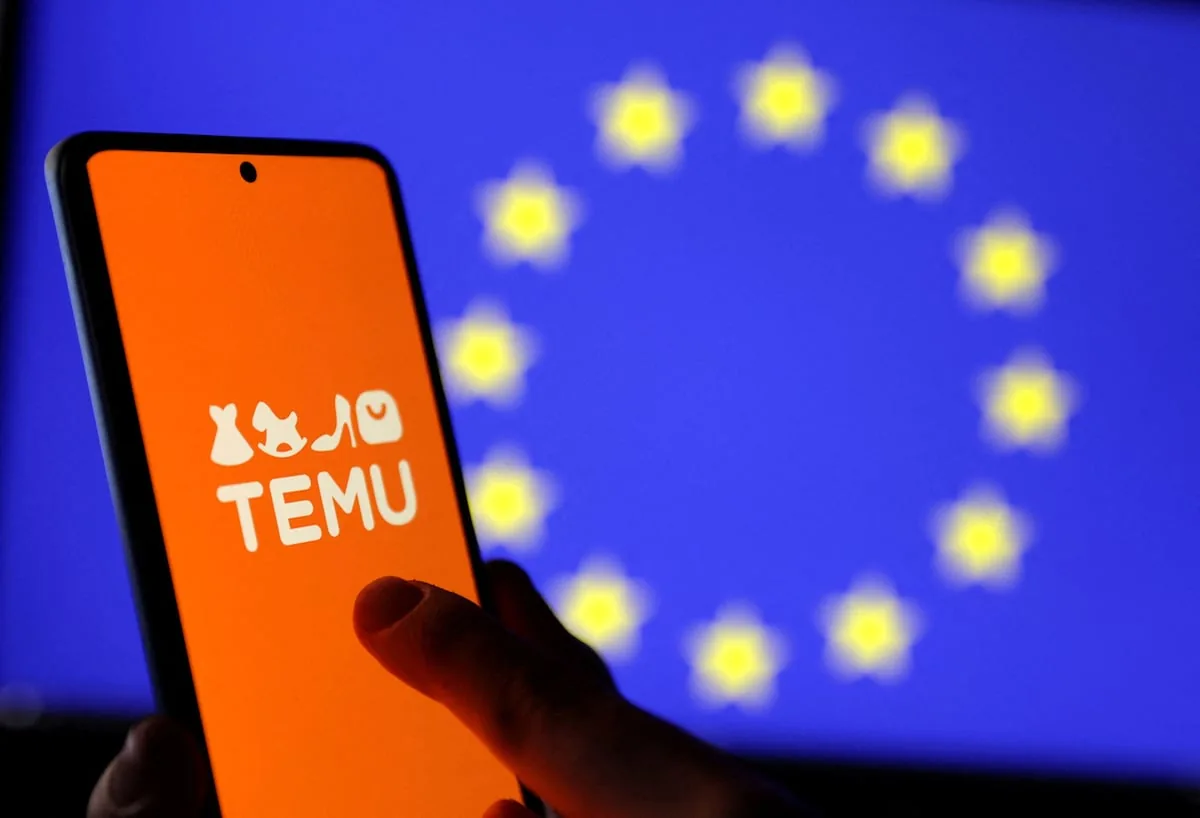
The European Commission has fined Temu 200 million euros “for failing to identify, analyze, and assess with due diligence the systemic risks” involved in the sale of “illegal products on its platform, nor the resulting harm to EU consumers.” “The evidence available to the Commission indicates that it is very likely that EU consumers encounter illegal items on Temu,” the community executive itself states when announcing the sanction. In addition to the fine, the Chinese e-commerce platform now has until August 28 to present the community executive with an “action plan” to correct the situation.
Read more The thermal bottle that keeps water cold for 24 hours and you can carry it hanging
With this sanction, Temu becomes the second company financially fined for failing to comply with the obligations imposed on large internet platforms by the Digital Services Act (known as DSA). The first was the American social network X with 120 million, a sanction close to the maximum, 6% of the company’s global annual turnover, which can be imposed under this regulation in case of recurrence.
Sources from the European Commission have indicated that, although the infringement committed is considered “particularly serious,” due to the risks it entails, among others, for the health of babies, the fine to Temu is “well below” the 6% cap allowed by the DSA. This is because, they have indicated, it is a “proportional” sanction to other elements still under investigation regarding the Chinese platform, which Brussels also has in its sights for the effectiveness of its mitigation measures, the use of addictive design elements, the transparency of its recommendation systems, and researchers’ access to data. Therefore, new fines are not ruled out if the European executive finds more faults in the implementation of the DSA rules.
The file that led to this sanction against Temu, which now has three months to pay the 200 million fine, was opened in October 2024. However, four months earlier, Brussels had requested the company ―also Shein, the other major Chinese e-commerce platform― to provide information about its internal procedures. Both had previously been designated as very large online platforms, which obliges these companies to comply with additional requirements due to their size (having a number of users of 10% or more of the European population, about 45 million users) because of the potential risk it poses to consumers.
After the investigation, Brussels technicians concluded that Temu “does not comply with the standards established in the DSA.” To begin with, the Asian e-commerce giant bases its mandatory risk assessments on “general information” and not on “concrete evidence about its own service, including public reports and tests.”
Read more We test the best beach cars
Another shortcoming, according to the Commission, is that it “severely underestimated the frequency with which EU consumers may encounter illegal items.” During the investigation, Brussels found, for example, that a percentage of baby products tested presented medium or high safety risks, as “they contained chemicals that exceeded legal safety limits or posed a choking hazard due to detachable parts.” In addition, “a very high percentage” of the electric chargers analyzed “did not pass basic safety tests.”
“Risk assessments are not mere bureaucratic formalities: they are the backbone of the DSA,” recalled European Commission Vice-President Henna Virkkunen, responsible for Technological Sovereignty. “Temu’s risk assessment underestimates specific risks, lacks detail, is not based on solid evidence, and is not comprehensive. It leaves regulators, users, and the public unaware of the true magnitude of the potential harm posed by illegal products sold on Temu,” summarized the Finnish commissioner. The aim of these investigations and procedures, Brussels emphasizes, is not punitive, but that “online platforms have active systems that filter products so that European consumers are protected,” community sources insist.
Flashpoint
The Digital Services Act has been one of the most prominent flashpoints between the EU and the United States since Donald Trump returned to power. One of the arguments often used from Washington is that these are rules made to discriminate against American companies (in the case of the DSA, they also claim it is an attack on freedom of expression). This was seen when X was fined. Now, however, this second fine falls on a Chinese company.
Once Temu presents its “action plan” with measures to “remedy the non-compliance with its risk assessment obligations,” the European Digital Services Committee, an independent advisory group created by the DSA, will have one month to issue an opinion. With this, the Commission must, also within one month, adopt its final decision and establish a “reasonable deadline” for its implementation. Failure to comply with the decision, Brussels reminds, may lead to more periodic coercive fines – daily, weekly, or monthly – until the company corrects its course and complies.
Read more ‘Leonard and Hungry Paul’ seeks to succeed with kindness and normality: “We wanted a series hug”