
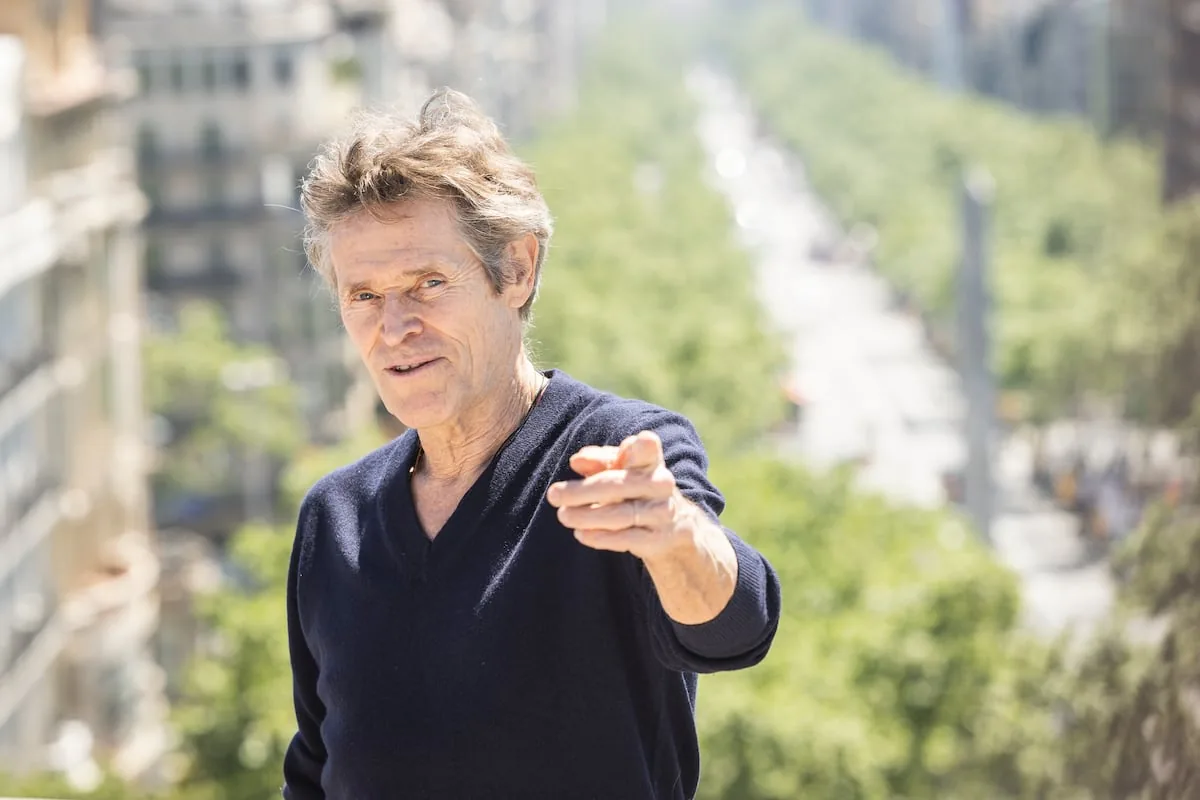
Before Willem Dafoe (Appleton, Wisconsin, 70 years old) it is impossible not to surrender. He displays all kinds of sympathies; he joins in the jokes and makes them himself; the teams of his shoots only speak well of Dafoe… Sean Baker recounted how the actor adapted to a project as small as The Florida Project, with inexperienced children and amateur actresses, to end up achieving the third of his four Oscar nominations.
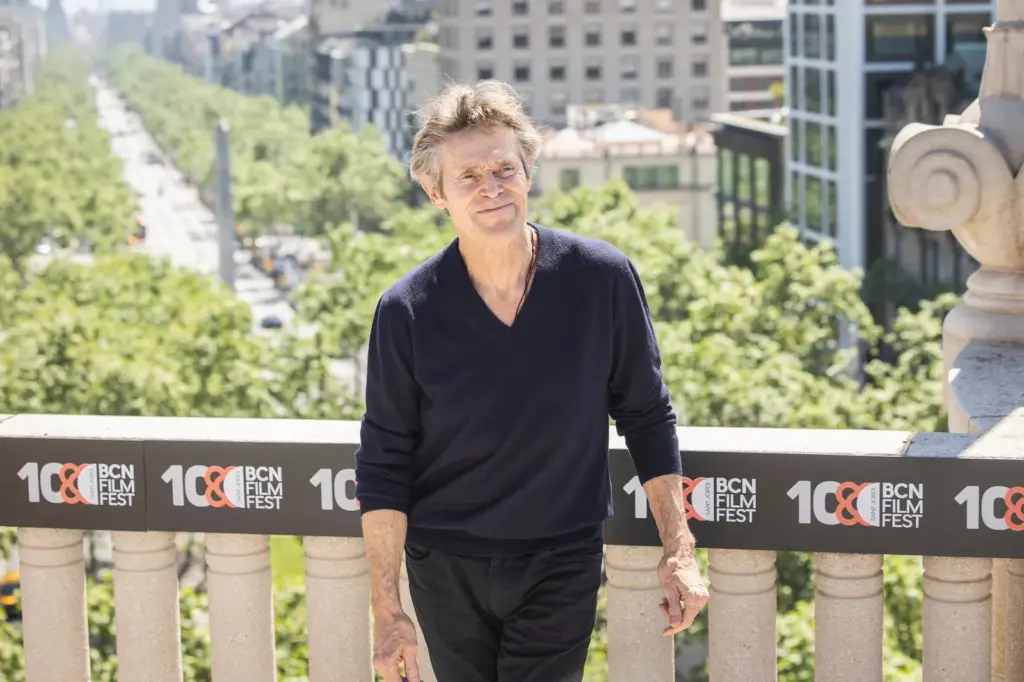
In Barcelona, at the BCN Film Fest, which opened yesterday Thursday, Dafoe has not betrayed Dafoe. Not even in his gesticulation. Years ago, he said in an interview, he discovered, going with his son — then a kid — on the subway in New York, the special nature of his face. “Honestly, I hadn’t noticed. Some kids sat in the car, in the seats opposite; I thought they were going to cause trouble because of their looks, and after a while of whispering, I heard them: ‘That face can only be Dafoe’s, no one looks like him.’” By the way, he starts the conversation with his son, because in The Host, by Miguel Ángel Jiménez (commercial release, July 24), Dafoe plays a Greek billionaire shipowner who in the summer of 1975 celebrates his daughter’s 25th birthday on his private island (the eldest son died in an accident, leaving his sister and father emotionally devastated). What could be experienced as a festive situation soon turns into a pressure cooker of commercial interests and family reproaches.
Question. I hope your relationship with your son is better than that of your character with his heir.
Answer. [laughs] I hope so too, I only have one.
Q. In the film, that dead son appears in a photo. Could it be a portrait of your real son? They look very much alike.
A. I don’t remember, really I don’t remember… but it could be, I like those details.
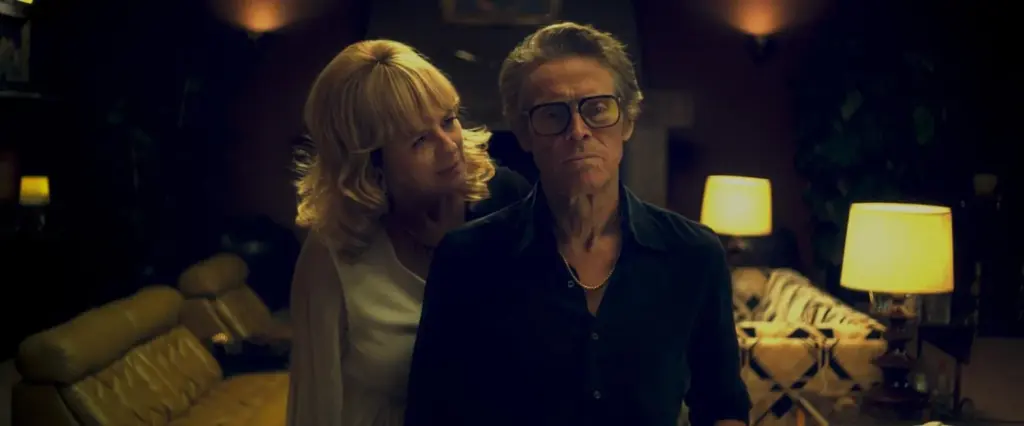
Q. The billionaire in The Host is very concerned about his legacy. And you?
A. Nothing at all. Thinking about that causes problems. Because I go from one job to another, I immerse myself in them. If you think about legacy, you have to step out and observe yourself from the outside for too long. I’m not like that. Actors have to navigate between the corruption that surrounds you and the one that comes from being self-aware. Let me explain: if you’ve had a long career, good or bad, with its ups and downs, like mine, people start having opinions about you and you hear them. You must have the willpower so that your own opinion about your work is not based on external comments. And I feel very strong in that regard. I think basically what happens is that you keep doing what you do. You pay a price, of course, because you stay in the moment, you don’t look back or forward, which is how a legacy is observed.
Q. On International Theatre Day, last March 27, a text of yours was read at the end of every performance worldwide, in which you spoke about the importance of this art “in a divided world” and especially when we are “social animals designed to connect” with those around us. You, who don’t have social media, do you think we are that bad at that contact?
A. Social contact is what will save us. Communities were created to share. Even to share concerns. And also in the context of theater. Theater is becoming more and more important because many people have virtual lives. Theater is the way to find life, to find other people and to find ourselves. You immerse yourself in something you don’t control. And when you go to a theater, that collective experience is fundamental. Doing things in groups builds empathy, builds a common proposal. And it also protects us from those few people who want to have everyone else under control. And we know that is a big problem these days.
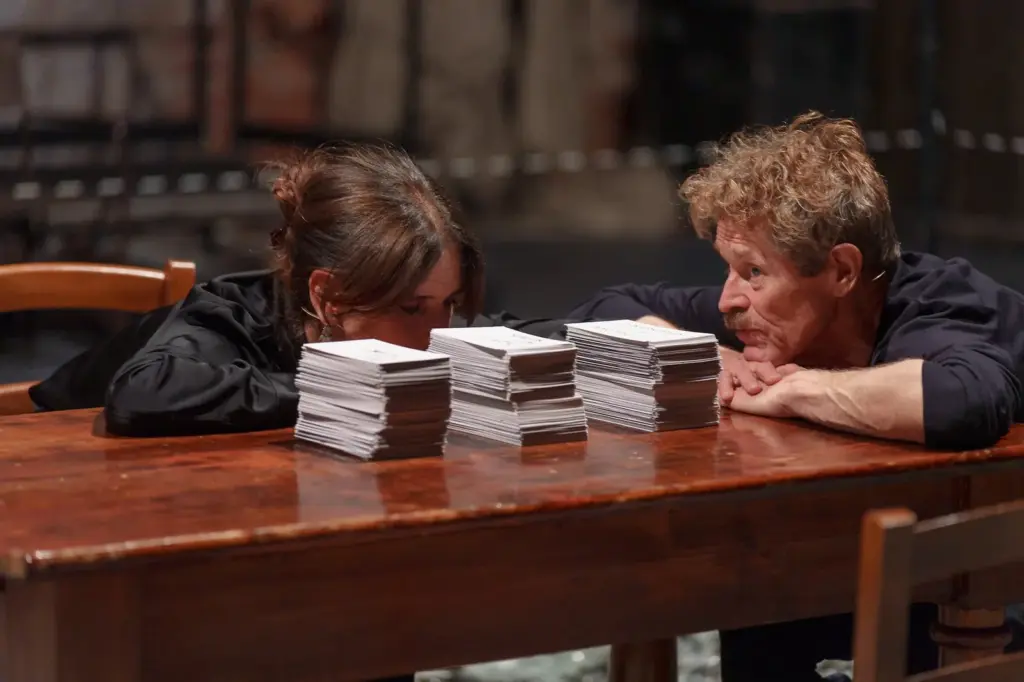
Q. How do you choose projects? Are you looking for adventures?
A. First I look at the directors. Not always, but often yes. And it depends a bit on what I have chained together. Sometimes, you get tired of doing historical films and look for balance. Recently I decided to look for contemporary scripts, I couldn’t handle another period costume and another strange accent. I say this not thinking about a career, but about enjoying and keeping my feet on the ground.
Q. Do you still live near Rome, with your alpaca farm?
A. It’s the best place to see the river of life. And observing nature is the best way to understand many of today’s problems.
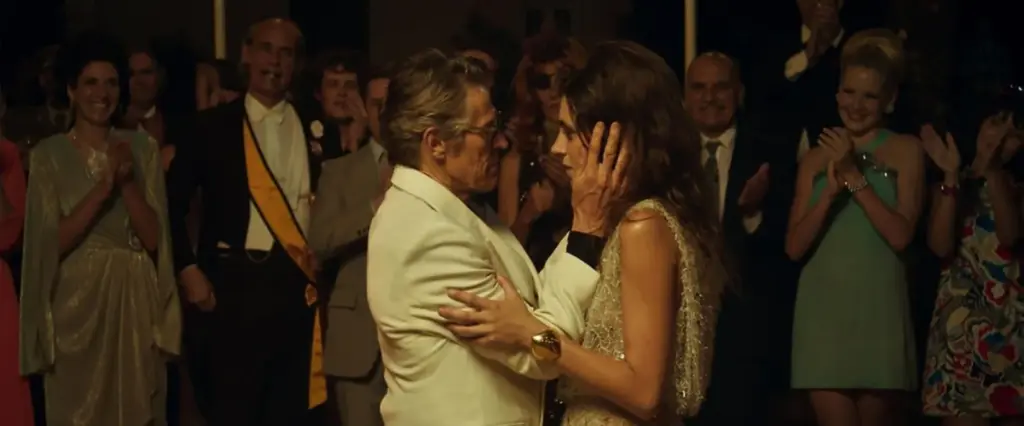
Q. At the 2018 Berlinale, when you received the Honorary Golden Bear, you said it was a color in the hands of artists. Really? You are Willem Dafoe!
A. Let’s see, yes, I’m not just a color. The concept is that as an actor you are a material. And I want to make a distinction. Thanks for the “Really?”, but if you are material, you are flexible. You are not a performer, but yourself. It’s a powerful position. Color in an oil painting holds a powerful position. Don’t say “just the color.” Color is strong. Color is reality. As an actor you embrace those things. And in relation to the director, you are an artist too. Color collaborates with the artist. I collaborate with the filmmaker. At the same time, I want to go against someone’s vision, especially my own, because I already know where it’s going. This is a way to surpass myself, a path to self-challenge. And it’s a way to have an interesting life. Director, tell me what you see and we will collaborate in that joint creation.
Q. Do you reject many scripts?
A. It depends on what comes in, sometimes I refuse up to four films a week. What I do know is that I will never direct. Too much responsibility. Sorry, just kidding. On the farm I have already learned to work with other people. I feel freer when I am doing what someone else gives me. And if that happens, generously on the filmmaker’s part, that’s enough for me. I love when they make me go for a clear goal, and I achieve it and in the process the spark jumps. I like restrictions when filming, because within them I find freedom. If there is too much freedom, you fall into laxity and self-indulgence. I see myself as someone doing ceramics. You see him focused on the technique, creating the vessel, without thinking, simply going through the technique to create. I like that feeling of doing something. It applies to any story, in film, in my position as artistic director of the Venice Theatre Biennale. That’s how I feel I contribute as a human being.