





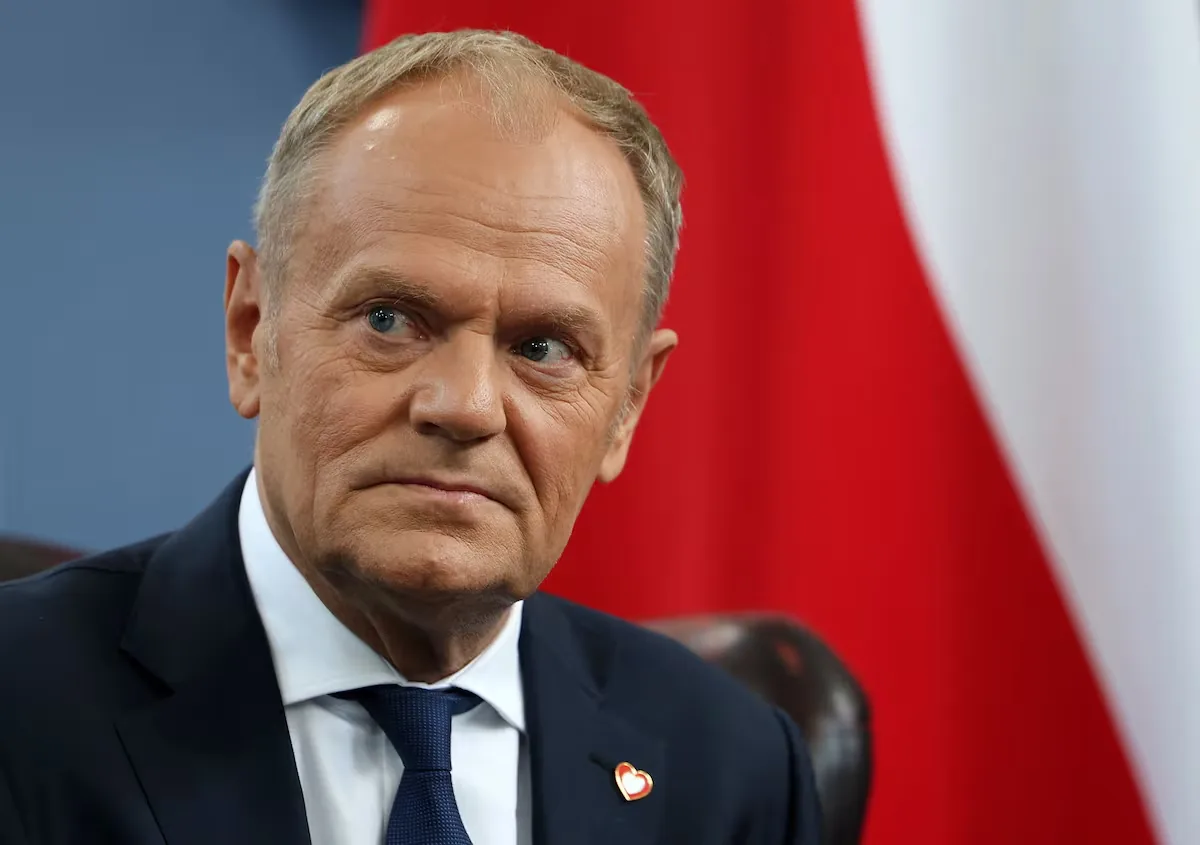
Poland remains on alert for the possibility of a Russian attack on NATO territory that would extend the war taking place in Ukraine to the EU. The Prime Minister, conservative Donald Tusk, warned at the end of April that it could happen within months. The impact of a drone last Friday in Romania, which caused two injuries, adds to an increasingly broad record of Kremlin provocations below the threshold of open conflict. The Polish leader has urged his partners in the Atlantic Alliance to take the threat seriously. The ambiguous nature of hybrid actions poses the allies with the dilemma of managing escalation and articulating a response.
Read more Rafa Jódar comes back against Carreño and toughens up on the way to the Roland Garros quarterfinals
“Poland, the Baltic States, now Romania. Increasing Russian provocations,” Tusk emphasized in a message on X on Saturday. “Yesterday, former president Dmitry Medvedev said that EU citizens can stop sleeping peacefully. Everyone in NATO should start taking these facts and words seriously once and for all,” urged the Polish leader. The former Russian leader, known for launching all kinds of threats to the West from his social networks, had written that day: “Stay alert and don’t be surprised by anything. The peaceful sleep is over.”
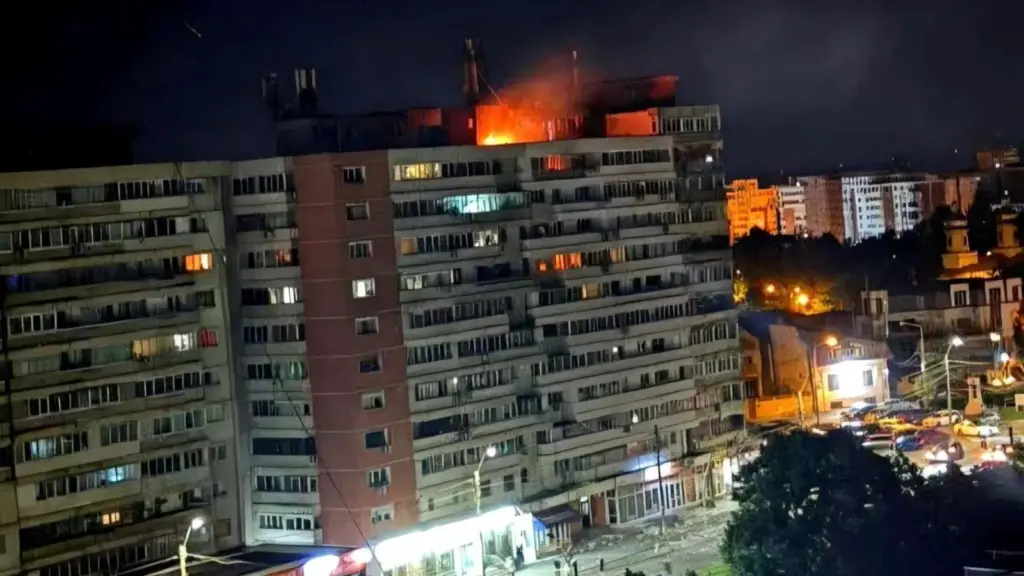
The drone incident in Romania generated the usual condemnation statements among NATO and EU leaders, which is working on a new sanctions package. As on previous occasions, it exposed gaps in European air defense. But this time it also came at a particularly delicate moment, after the United States announced reductions in troops and capabilities on European soil.
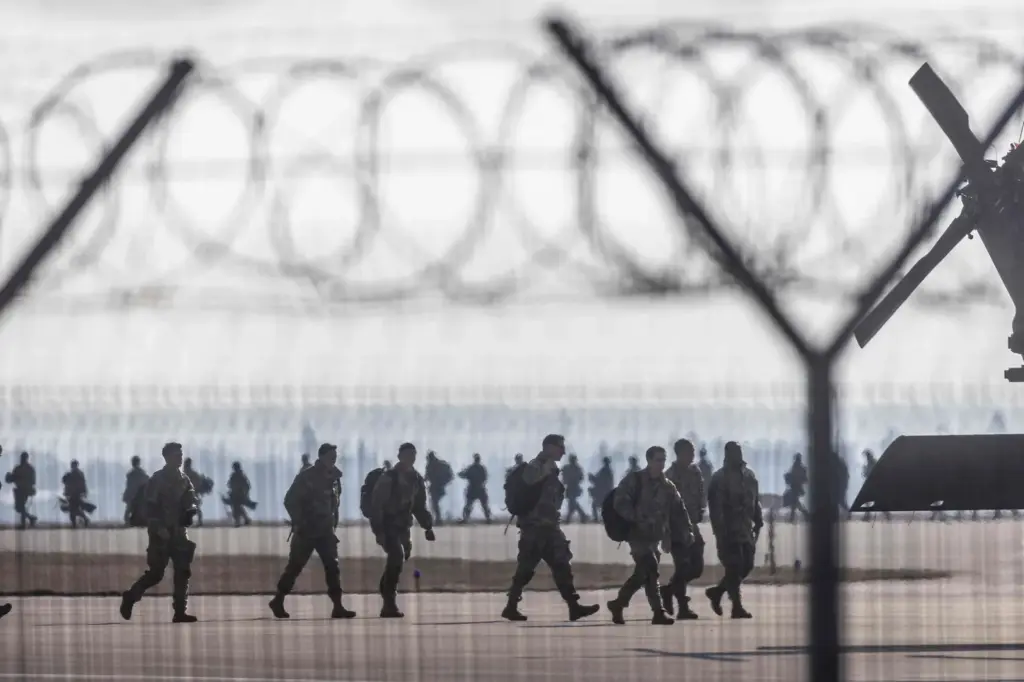
In Poland, one of the partners most aligned with Washington’s demands regarding burden-sharing among allies, the recent contradictory announcements about the suspension of the deployment of rotating US soldiers on the eastern flank have generated confusion and dismay. They also fuel the fear of Polish experts and senior officials that the Kremlin interprets President Donald Trump’s mandate and his decreasing commitment to European partners as a window of opportunity to launch an attack. They do not refer so much to a large-scale invasion, but to some kind of significant aggression below that threshold.
Piotr Szymanski, deputy head of the Security and Defense Department of the Center for Eastern Studies (OSW), considers that the chaotic management of the deployment of a brigade and the subsequent correction have consequences and weaken the Alliance’s “deterrence capacity” on the eastern flank. “We can accept US decisions based on their priorities in different regions, but we need to know them in advance,” emphasized the expert this week in his office in Warsaw. “Predictability, an overview, and a common understanding are fundamental.”
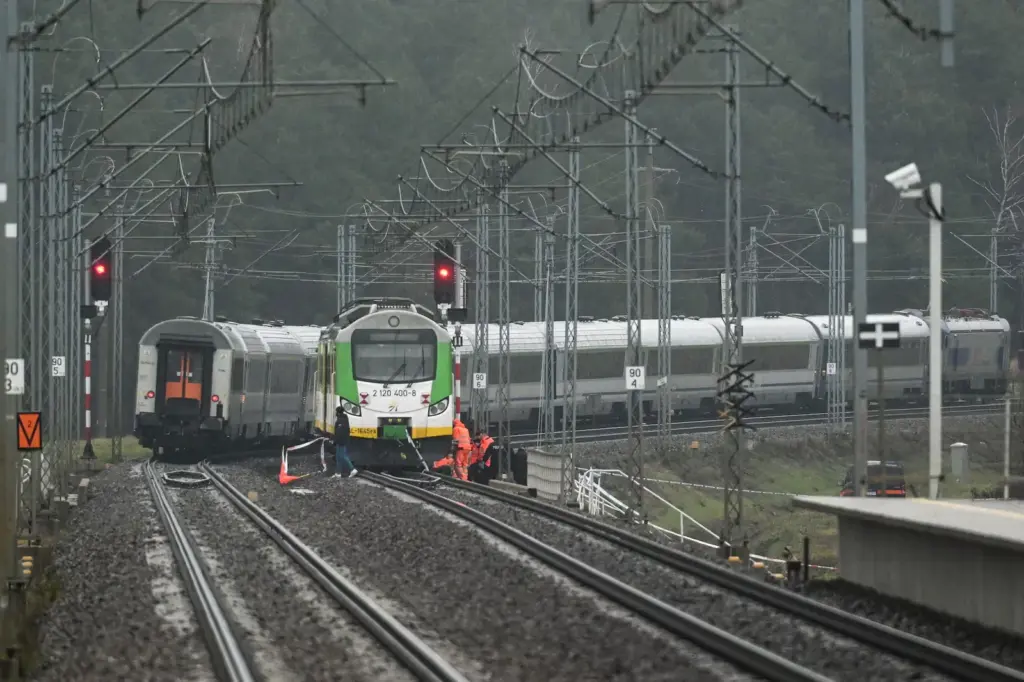
The sense of alarm in the region most exposed to the Russian threat worsens week by week with the accumulation of incidents. In addition to the drone that caused two injuries in Romania, in recent weeks Ukrainian unmanned aerial vehicles have penetrated the Baltic States and Finland after being interfered with and diverted by Russian electronic warfare. “Russia, for its part, resorts to hybrid tactics and seeks to intensify its hybrid conflict in the region, which is comprehensive: it is not only about drones, but also psychological warfare, threats, nuclear exercises and warnings about the possible use of nuclear weapons, cable cuts, disinformation, attacks on critical infrastructure, sabotage, espionage, and cyber activities,” lists Szymanski.
Poland is one of Russia’s main targets in this multidomain offensive. With actions occurring simultaneously at different levels, Moscow seeks “to systematically and continuously test the resilience of countries, the effectiveness of allied cooperation mechanisms, and their ability to influence societies,” as recalled in a late April report by Defence 24, a Polish defense-specialized media outlet.
The document emphasizes that “this does not constitute an escalation towards a large-scale open conflict” and proposes offensive responses, not just defensive ones.
Pushing the threshold
The gray zone operates below open war, but as Tomasz Szatkowski, former Polish representative to NATO under the ultra-conservative Law and Justice government, states, “the threshold is constantly being pushed.” “For the Russian-Soviet culture, there is no clear separation between peace and war,” he says. “It is a constant rivalry, and their secret services do not limit themselves to gathering information: they carry out provocations, assassinations, influence operations… In fact, intelligence gathering is almost the last of their functions,” continues the former diplomat, member of the Security and Defense Council of the Polish Presidency.
To maintain credible deterrence, the allies must prevent Russia from setting the pace and escalation. The problem, notes the defense expert, is that Moscow uses “means to which non-authoritarian states have difficulty responding in the same way.” “It is also difficult to deter hybrid threats when there is plausible deniability, because when imposing sanctions there can always be countries that say it is not clear that Russia is behind it,” he adds.
Ambiguity and difficulty of attribution, along with the lack of political unity within the EU and NATO, delay and complicate the response. Szymanski, from OSW, recalls that eight months after the drone incursions in Denmark in September 2025, “we still have not seen a report from Danish police or military authorities about what drones they were or from where they were launched, so for now, we assume it is something consistent with Russia’s interests, capabilities, and methods.”
The analyst emphasizes that the Alliance and the States have strengthened security in the Baltic and the border with Belarus, and have protected critical energy and transport infrastructure. Economic sanctions and diplomatic measures have been imposed, and there is room to undertake more actions against the Russian ghost fleet, the ships it uses to evade sanctions. Additionally, work is underway to strengthen society’s resilience. And military support to Ukraine continues, although with ups and downs.
“Asymmetric lateral deterrence”
At the same time, a debate is beginning about the need to implement bolder measures against the Russian offensive. Edward Lucas, author and security expert who directs the Baltic International Security Centre, lamented at a security conference in Warsaw in early May that fear of consequences and lack of political will prevent governments from doing “the right thing.”
The analyst advocated for “asymmetric lateral deterrence” to regain the initiative in escalation. It would mean that if Russia attacks a country in a specific domain, the deterrent response comes from several countries and not necessarily in the same domain. For example, if Moscow launches a cyberattack, the response could be financial investigations, legal actions against Russian assets, and measures directed at people close to Putin. “That is, several coordinated responses from different fronts. That unsettles Russia because it cannot anticipate or easily control them,” he explained to this newspaper.
Lucas also urged extending the Finnish model, based on social resilience. Last year, the analyst said, there was a large disinformation and propaganda campaign against the Nordic country that “completely failed because no one paid attention to it, it didn’t even become news.” “The greater the resilience, the greater the deterrence. This is known as denial deterrence: if a propaganda campaign has no effect, it loses its meaning,” he emphasized.
“If denial deterrence is not enough, there is punishment deterrence, which involves greater risks.” Regarding more aggressive measures, the British analyst pointed out that “some propose actions in cyberspace or the information domain to generate pressure inside Russia: operations that create uncertainty or expose sensitive information.” “The idea would be to act gradually and scalably, sending clear signals that pressure can increase if Russia continues its behavior,” Lucas concluded.
Read more Marco Bezzecchi and Aprilia conquer the Italian GP for the first time