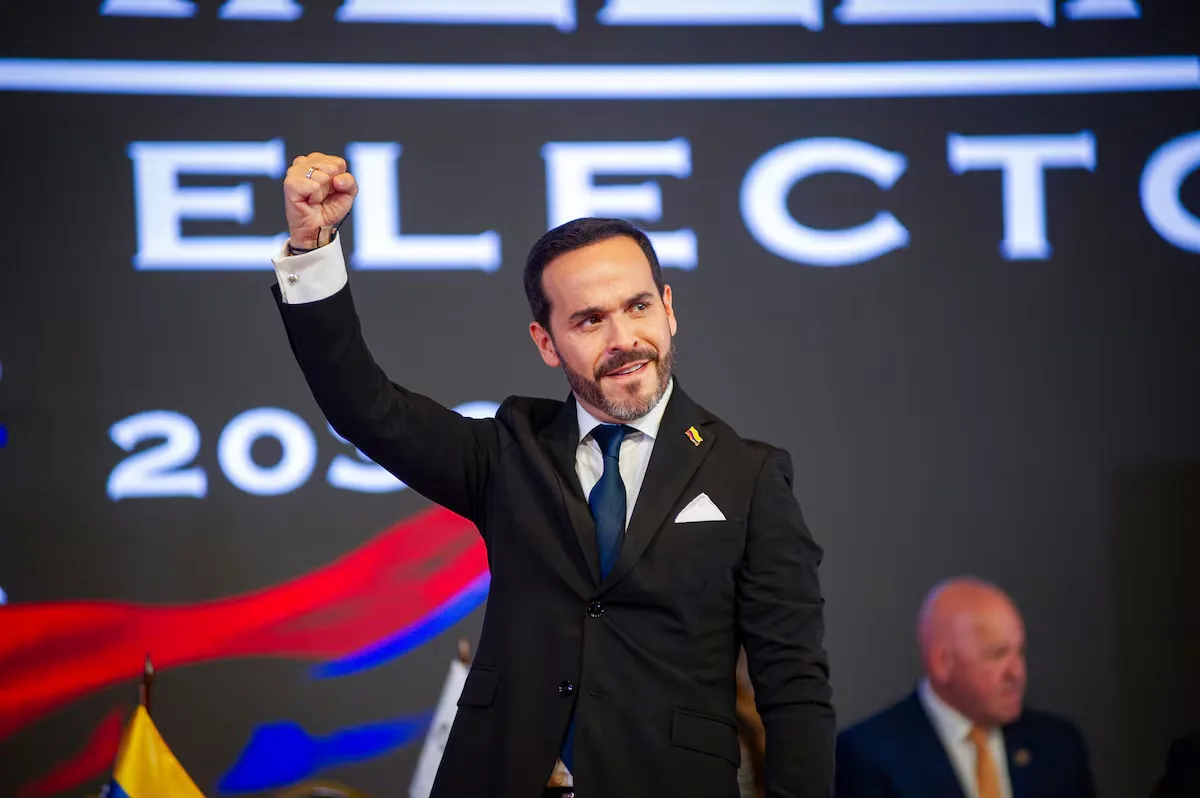



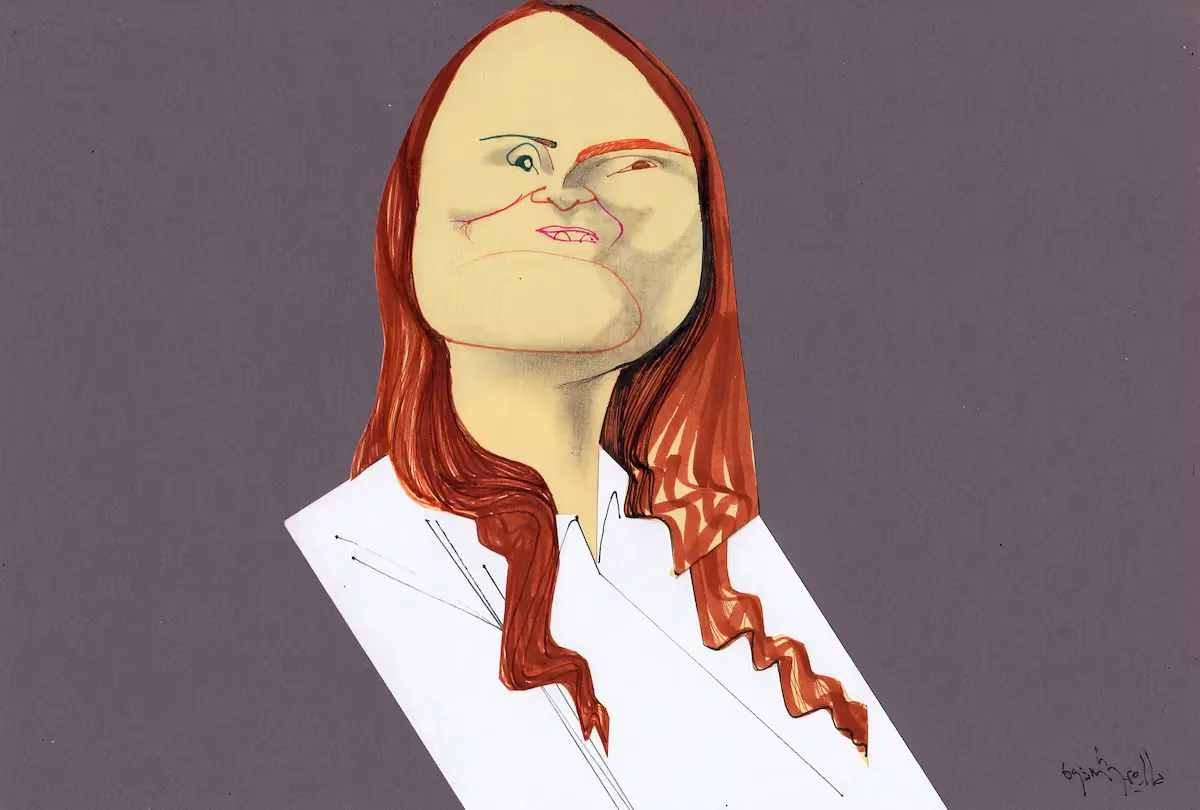
On a May morning, with the first round just around the corner, Paloma Valencia borrows an office in Congress — hers is farther away —. When she enters, she quickly disperses the army of advisors and collaborators surrounding her before giving an order: bring coffee. From the street, good coffee. The 50-year-old senator settles into the chair with her usual style — a shirt and colorful sneakers. They are purple and from Real Madrid — and starts talking as if she didn’t have two strangers in front of her. The strategy of the traditional Colombian right-wing presidential hopeful has been to show herself, be herself, without too many layers. A spontaneity that has sometimes resulted in missteps that contrast with the electoral calculation of her opponents. And that is, perhaps, what will cost her this Sunday.
Read more Electoral card: how it was formed
Valencia talks a lot about Álvaro Uribe. The Centro Democrático hopeful spent more than a decade earning her own name as a senator, but not even at her peak moment has she wanted to separate herself from the former president’s name. She, as her billboards announce, is Uribe’s candidate, whom she has called “dad” during the campaign. Not only has she not wanted to hide it, but she has not stopped showing it off. Her faith in him is such that Valencia even went so far as to suggest that the former president — marked by the scandal of executions of innocent civilians whom the military presented as guerrillas killed in combat — would be her Minister of Defense. “I am not going to undo the things President Uribe created,” she firmly defends. “That was a huge mistake,” disagrees a close friend.
Her husband, university professor Tomás Rodríguez, compares her to a painting apprentice who goes to museums to copy paintings before developing her own style. “Paloma goes to the masters, studies them, and imitates them. And for her, Uribe is a genius, but he’s not the only one.” Those who love her reject the idea that she is a puppet. “People confuse the respect she has for him with manipulation,” says a collaborator.
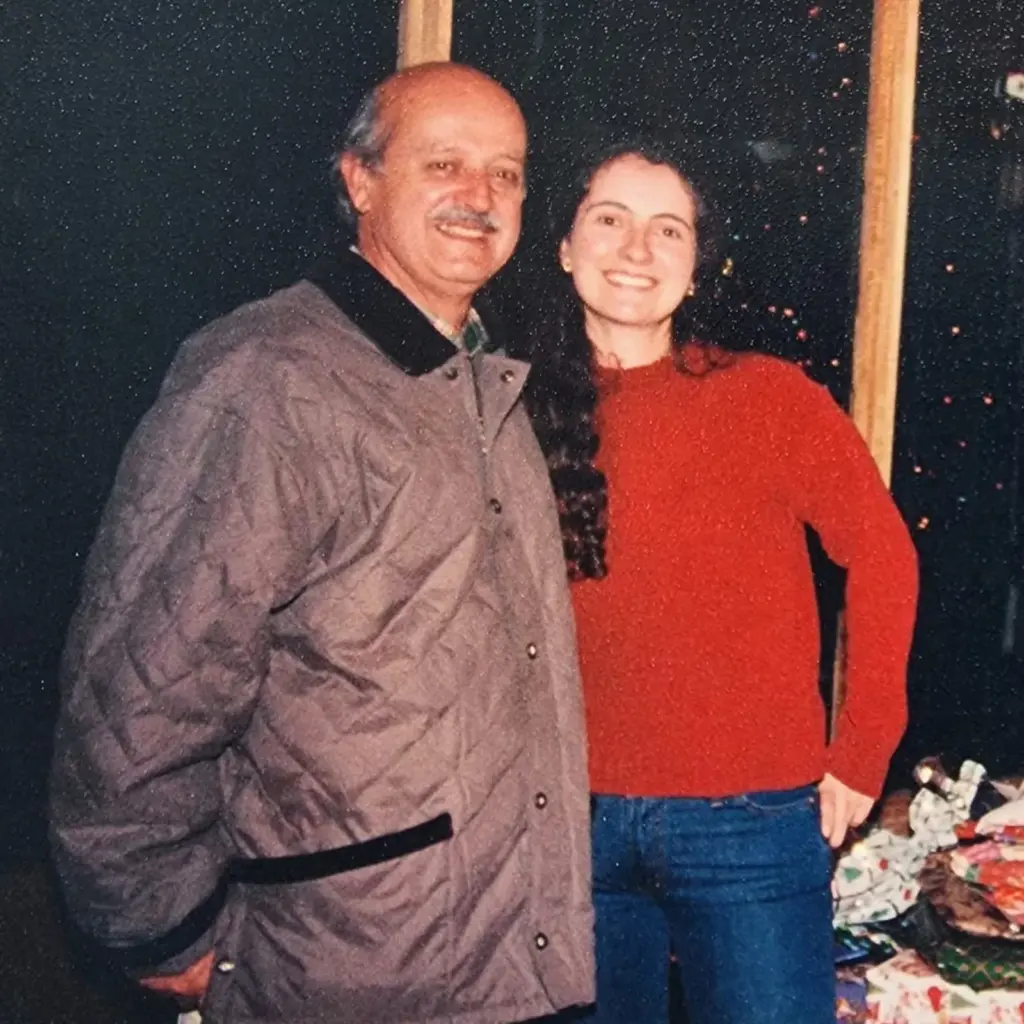
Loyalty is mutual. The former president has bet all his political capital on his student and friend. Uribe sees her as a transparent and “straightforward” person. Since she was officially chosen as the candidate by her party in a primary, the former president has supported her and presented her as a change of cycle. “Don’t make the mistake of attacking Paloma for my mistakes. She hasn’t made them, she doesn’t have my wear and tear,” Uribe said in March. Such is his bet on the senator that her defeat would shake the pillars of Uribismo.
Valencia, born into a family of landowners from Cauca and granddaughter of a president of the Republic, studied Law and Philosophy at the Universidad de los Andes, founded by her maternal grandfather Mario Laserna Pinzón, a journalist, senator, and center-left man. “She wasn’t one of those who sat in the front row,” recalls a classmate from that time, “but she was one of those who asked the question when everyone else already wanted to leave. You might not agree with what she said, but it made sense.”
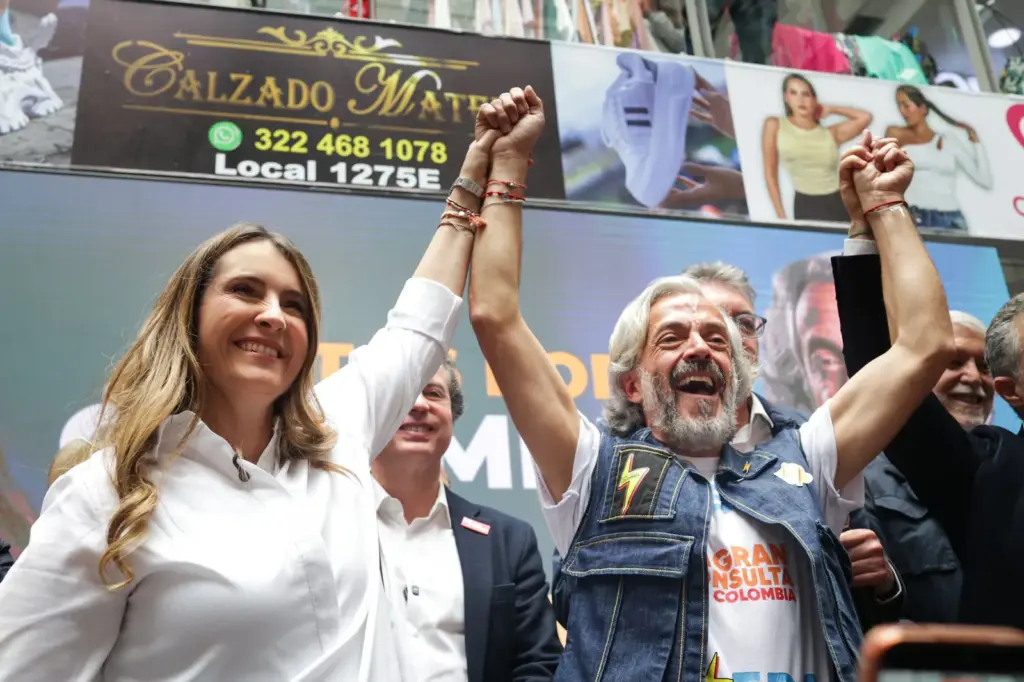
Her presidential campaign officially began in March, when she won the right-wing primary with about three million votes and suddenly became a phenomenon with real chances of defeating Iván Cepeda, the official candidate and leader in the polls. It was then that she made the decision that would mark her campaign: she chose Juan Daniel Oviedo — a centrist and openly gay man — as her vice-presidential running mate. Valencia had a dozen meetings in a single day before announcing it. “This meant giving the candidacy a completely new direction,” recalls a collaborator. “For many, marrying Oviedo was the end of Paloma; for others, the blessing to boost her aspiration.” It was the turn of a woman who says that, no matter what happens, she will die an Uribista, but with a warning, perhaps contradictory. “I’m not going to become centrist, nor do I intend for the center to become Uribista,” she concludes.
At home, her husband Tomás has been trying something similar for years. “He contradicts me on almost everything,” Valencia jokes. Her partner, a centrist, is the person who forces her to think about things she wouldn’t have thought of, the candidate assures. “He is a great advisor to Paloma. My son has moderated some views that were more radical,” says the father-in-law, who was Colombia’s first Minister of Environment. Tomás nuances his father: “I think she has influenced me much more than I have influenced her. My friends tell me that my shift to the right has been spectacular.”
Read more Iván Cepeda’s campaign: Uribe’s biggest adversary to unite the left
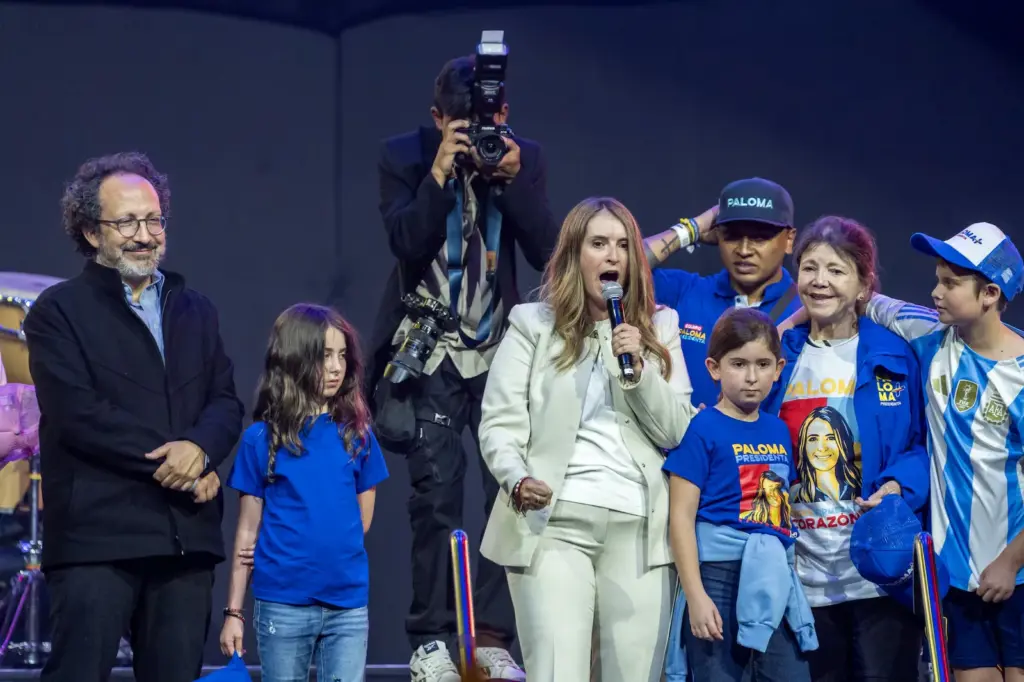
“She is caught in a sandwich between Uribismo and the center, and it has been very complicated to manage,” says her father-in-law, Manuel Rodríguez Becerra. “When Paloma moves a little towards the center, she is on a tightrope, playing the tightrope walker,” adds a collaborator. And the very virtue that everyone recognizes in her — her listening ability — ended up also being part of the problem. “Too many people have a voice in her campaign. She has lacked someone to give orders,” says one of her friends. That doesn’t mean Valencia does everything she is told. Campaign advisors have insisted on the importance of changing her haircut to wear it a little shorter. They have even tried to convince her with AI-generated images showing how it would look. She has refused: she doesn’t want to stop being herself.
Her capacity for dialogue has been, paradoxically, the point of greatest friction with the more right-wing voters, who have found in the far-right Abelardo de la Espriella the figure that best represents the opposition to Petrismo. Valencia, at first, did not see the danger the lawyer posed to her campaign. Both positions started from a common axis on security and economy, and in a possible second round, both candidates acknowledged they needed each other. But in the final stretch, she realized that her main adversary in the first round was not Cepeda, but the candidate who was ahead of her on the right. Now she has gone on the attack — accusing him of being an extremist and of making a “circus” of politics with radical proposals unlikely to prosper, such as imposing life imprisonment on child rapists — although it is already too late.
Valencia has focused her candidacy on several axes, but the main one is security. During Gustavo Petro’s government, she was one of the most critical opponents of total peace, the policy promoted by the Executive to negotiate with all armed groups in parallel. The candidate proposes breaking off the negotiations, many of which are stalled, and increasing defense spending to 4% of GDP, adding 30,000 soldiers, and building more prisons. Peace is the issue of greatest ideological friction with her husband. “I always stand much more to the left on that issue. She says dialogue is possible, but only after a lot of military pressure. I think it should be discussed beforehand,” Rodríguez says.
Very proper in manners throughout almost the entire campaign, Valencia has been subject to criticism for past comments. A decade ago, she proposed “splitting” her native department of Cauca in two. It is one of the areas most affected by the armed conflict and home to a dozen indigenous communities, among the largest in Colombia. “One would be indigenous, so they can carry out their strikes and invasions; the other with a vocation for development.” In October, she struck again: she proposed blocking food and water to communities that supported road blockades. Statements that became ammunition from all sides.
That’s when Amapola arrives. Valencia and Rodríguez’s nine-year-old daughter is a major protagonist in her mother’s campaign. Since she was a baby, she went to the Senate in her mother’s arms and now attends rallies and work meetings. But she describes these last months as a loss. “The campaign started when my mom left,” she says. Her mother corrects her: she hasn’t gone anywhere. But the girl has her own accounting and her own argument: they used to draw together. Not anymore.
Read more The world and our magnificent humanity
The girl is, of the whole team, the one who speaks most clearly to her.
— Would you be excited if your mother became president?
— No. I’m excited for the campaign to be over.