The open case in Argentina for alleged crimes against humanity committed by Chavismo has taken a key step: at the request of the Argentine court, Spain is studying the extradition order issued against former Chavista lieutenant colonel Ephraín Verdú Torrelles, one of the high-ranking officers in charge of repressing the 2014 student protests in Naguanagua, near the Venezuelan city of Valencia. The lawsuit filed in 2023 before the Argentine Justice accuses Verdú Torrelles of the murder of Venezuelan student Geraldin Moreno Orozco, 23 years old, when she was participating in a pot-banging protest against Nicolás Maduro at the door of her house. She was shot from the front and the back, the last shot to the face, when she was already lying on the ground. She died in the hospital after agonizing for three days.
Read more The femicide of a teenager shakes Argentina days before the Ni Una Menos march
After receiving information from the Interjust organization that Verdú Torrelles was in Spain, federal judge Sergio Ramos requested his extradition via diplomatic channels in February. According to the lawsuit, the Council of Ministers approved the continuation of the process in March and the decision is now in the hands of the instruction court number 2 of the Central Court of the National Audience. “The initiation of the extradition process is very important,” says lawyer Ignacio Jovtis. “We are watching how it proceeds. What we ask is that Spain continues collaborating with Argentina, that it fulfills its international obligations, either to judge or extradite, and that it continues processing the extradition,” adds Jovtis, director for Latin America of the Interjust organization.
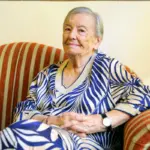
Geraldin’s mother, Rosa Orozco, has been fighting for 12 years to bring those responsible for her daughter’s death to court. “We have no justice in Venezuela and we have to seek it wherever it is,” she tells EL PAÍS by phone. “Every February 19, on the anniversary of my daughter’s murder, I go to the Public Prosecutor’s Office of Venezuela and denounce who were the chain of command that ordered the repression, they mock me. It is very painful, I have no words to describe it,” she continues.
This mother trusts that the justice denied to her in Venezuela will now come from Argentina. The case opened for alleged crimes against humanity against the Chavista security forces under the principle of universal jurisdiction allows Argentine courts to investigate and judge these types of crimes regardless of where they were committed or the nationality of the accused or victims. This does not imply that other countries must collaborate, which is the problem similar cases have faced, such as those investigating Franco-era crimes.
Colonel Verdú Torrelles was the second commander of an Urban Security detachment of the Bolivarian National Guard in Valencia, the third most populous city in Venezuela. From that base, motorized squads of soldiers went out to repress protesters with tear gas and rubber pellets like the one that killed Moreno Orozco in Naguanagua, on the outskirts of Valencia. Her mother recalls what happened. “A detachment of 24 motorized national guards arrived and began shooting at the protesting neighbors. There were adults, children, elderly… They shot my daughter from behind and when she fell they shot her in the face, very close, 10 centimeters away. When I saw her she was like a sieve from pure pellets,” she recounts. That same day, in that place, there were two other deaths due to the repression.
Moreno Orozco is one of the 43 fatalities of the fierce repression of the first massive mobilizations against Nicolás Maduro’s government in 2014. The protests began in Caracas when students took to the streets to protest insecurity and on February 12, when they marched to the Public Prosecutor’s Office, they were attacked by police and military forces and armed collectives. Three young people were killed that day. These deaths fueled outrage throughout the country in a cycle of protests and street riots that lasted more than three months.
In addition to the fatalities, the repression also caused hundreds of injuries and thousands of arrests. From the Judiciary and the Prosecutor’s Office, a persecution was unleashed against opposition mayors, who were held responsible for the damage and deaths during the protests. Verdú Torrelles gave testimony in the trial against one of the mayors of Valencia, Enzo Scarano, who was removed, disqualified, and imprisoned that year. The soldier stated that the protesters used a municipal police module as a “logistical center for the protests.”
Verdú Torrelles remained in the military and was promoted in 2017, along with other officers accused of human rights violations. Years later he left the country heading to Spain, from where he could now be extradited. “Finally, we can have a little hope and light in this ordeal over my daughter’s case and many more people murdered,” Orozco hopes about the progress of the case.
If the extradition is carried out, Argentine justice will be able to summon the former lieutenant colonel for questioning and assess whether there are grounds to start a trial for crimes against humanity. “It would be historic,” says Jovtis hopefully. For Venezuelan victims, he continues, “it is the first real opportunity to see how an alleged perpetrator of the crimes committed against them is brought to justice.” It also serves as a reminder that crimes against humanity cannot go unpunished nor “should there be safe refuge” for those who commit them.
Read more A Bluetooth named “bomba” forces a flight from the United States to Spain to turn back