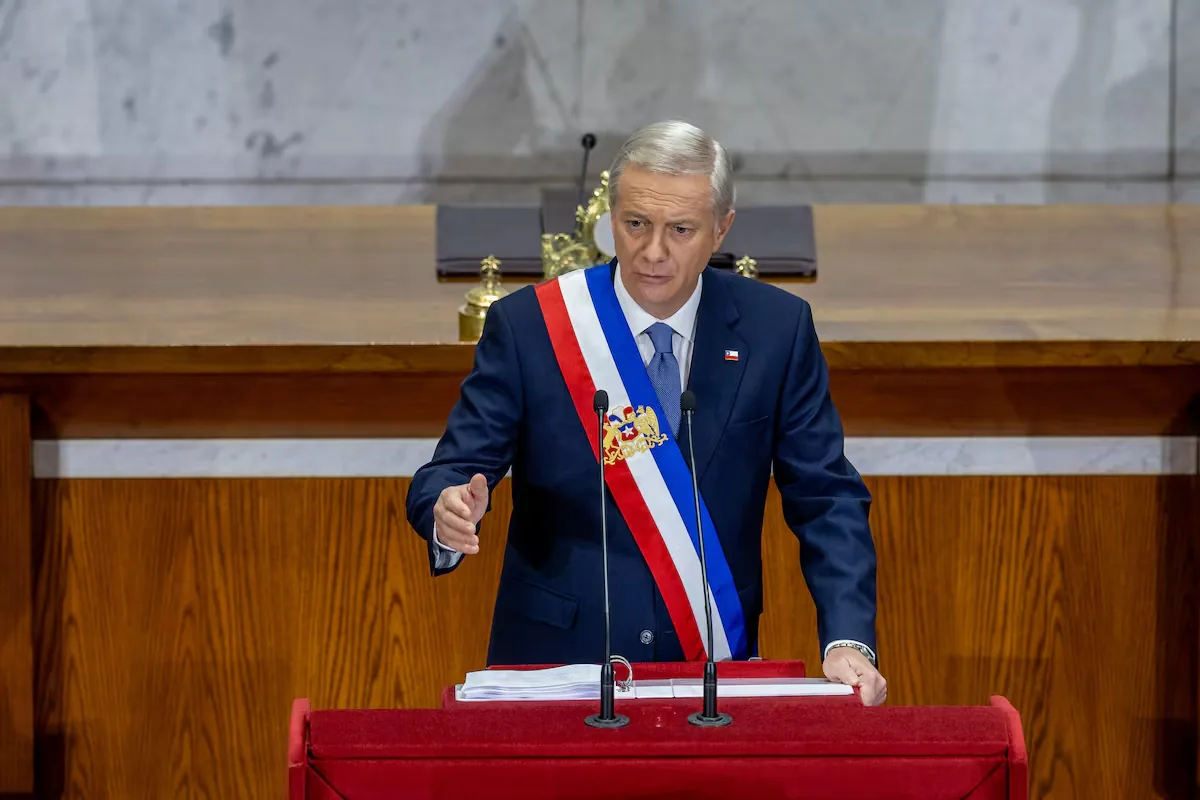

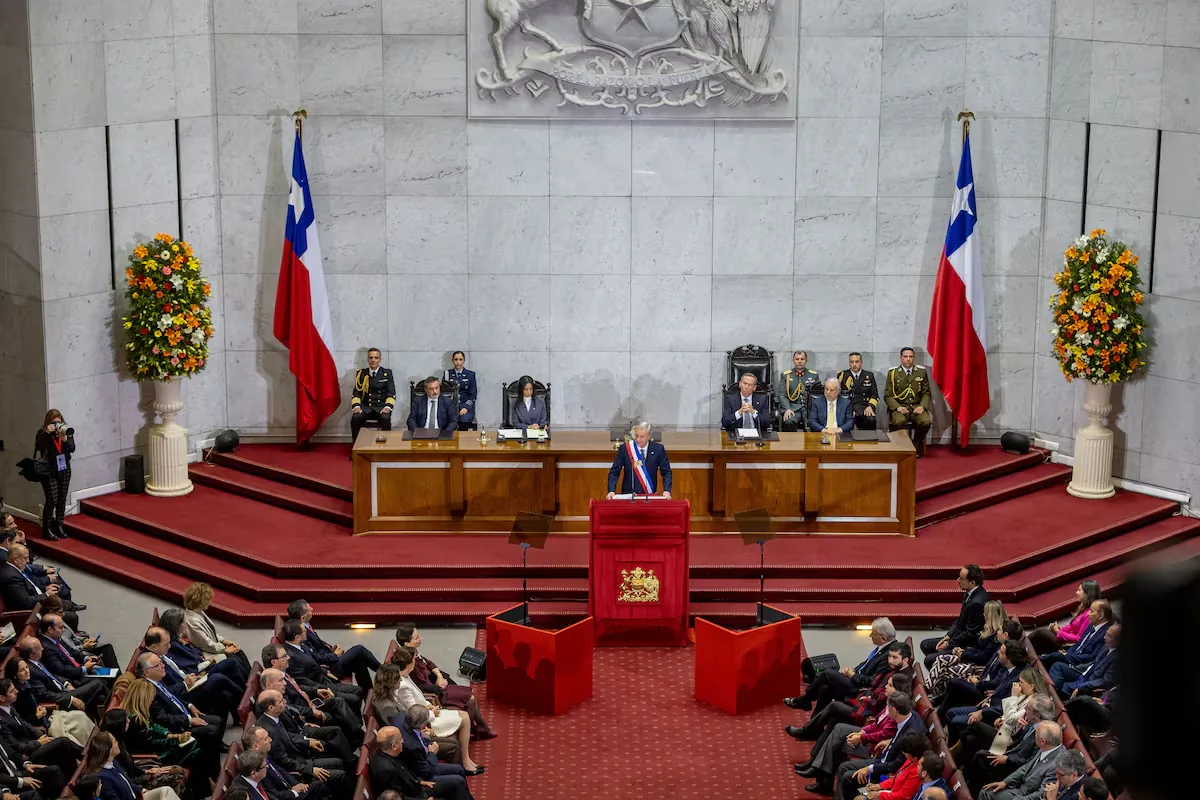
Chilean President José Antonio Kast gave his first Public Account this Monday in the Honor Hall of the National Congress, 82 days after his arrival at La Moneda. In a speech longer than expected—two hours and 25 minutes—he reinforced the idea that Chile is experiencing an emergency in security, economy, irregular migration, and social issues. “We do not want to paralyze or scare the public, but rather to expose the difficult reality we are facing,” he said before delivering a message of hope and moving away from the negative rhetoric with which he won the campaign. “Our country has everything it needs to get back on its feet,” he pointed out. In his bid to project what his mandate will be until 2026, he announced a series of measures aimed at reducing the size of the State and improving its efficiency. Among them, reducing ministries and merging the Interior Ministry and the General Secretariat of Government (Spokesperson’s Office).
Read more A Bluetooth named “bomba” forces a flight from the United States to Spain to turn back
In his style, the president took responsibility for passing on to Chileans the increase in oil prices due to the war in Iran, just weeks after assuming the presidency. Since then, public support has progressively fallen, reaching 38% approval—18 points less than in mid-March, according to Cadem. “I know it hit hard. I do not minimize it, and I will not minimize it. I acknowledge that we have not always managed to explain in time, nor with the closeness required, the decisions we have had to make,” he stated, taking the opportunity to thank the public for the “responsibility” they have shown in facing those decisions. The president mentioned responsibility more than twenty times. The need for leaders, institutions, and measures to apply it. “Faced with the dilemma between popularity and responsibility, we have already resolved it: we always choose responsibility,” he said.
Since taking office, President Kast has blamed several of the problems faced on the administration of leftist Gabriel Boric (2022-2026). In his speech, he spoke of “years of frustration” and “deterioration of quality of life,” but shook off the confrontational rhetoric that marked the first period, except in the economy, where he said they inherited a country with “disordered accounts,” emphasized that unemployment has been above 8% for 40 months, and acknowledged that the nation’s economic state is more complex than they had anticipated. “We want to show that politics, the kind done here, must and can rise to the occasion,” he added, emphasizing the idea of restoring hope to a public that elected him with high expectations due to his campaign promises but has quickly become disillusioned.
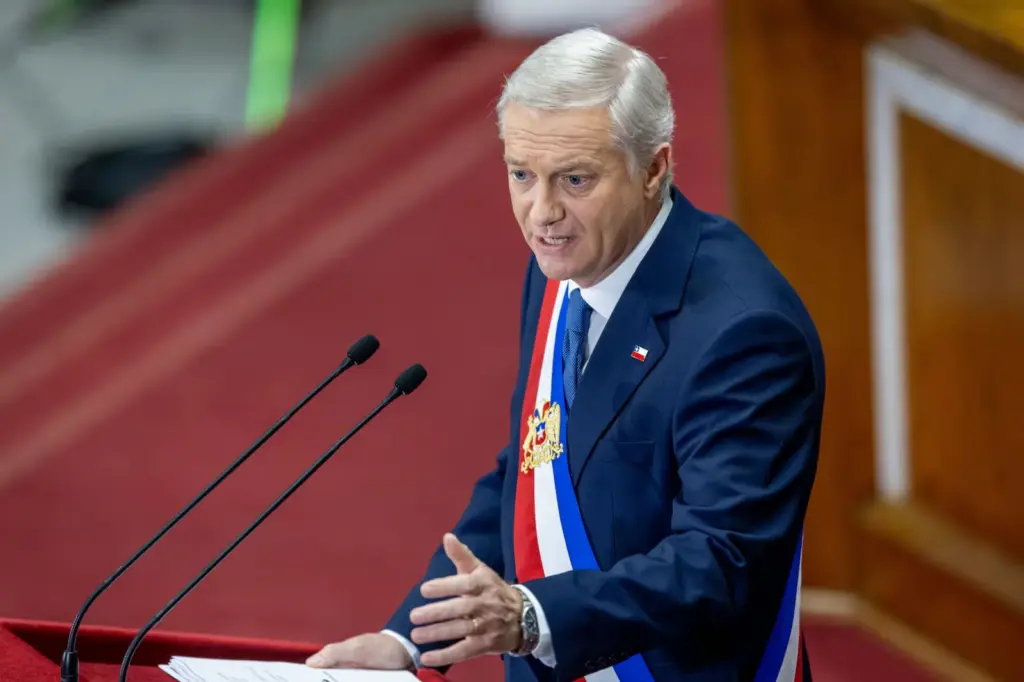
The Public Account comes on the verge of Kast’s mega reform, with a tax focus, entering the Senate to discuss the idea of legislating. In his speech, the president called for unity among all political forces, which in matters such as security, employment, education, health, and housing, put the country first. “Let us maintain unity on the essentials and not get lost in superficial debates or personal disqualifications,” he requested. “Chile can once again be a model country in security, freedom, and prosperity. That is not an impossible dream. For a Chilean who truly sets their mind to it, nothing is impossible. And we will achieve it in the only way a country achieves great things: all together,” he added. The message of unity was accompanied by the need to approve the mega reform, which the left-wing opposition rejects, considering it a disguised tax reform that benefits the rich. “Approving the Reconstruction Project is essential to grow again, to undertake, and to generate the jobs Chileans need,” Kast said.
Read more Carlsen can still win the Norway Chess chess tournament with three rounds remaining
Chilean President José Antonio Kast announced in the 2026 Public Account that he will present a project to merge the Interior Ministry and the General Secretariat of Government (Spokesperson’s Office). He also announced that he will convene a commission of experts to renew the architecture of the Chilean State. “A more rational ministerial structure that reduces the number of portfolios, eliminates overlapping functions, and reallocates resources. Based on their proposals, we will send Congress initiatives that over time will allow a real and orderly reduction of ministries,” he said. Kast also announced a renewal of the Senior Public Management system, which selects appointments in some leadership roles in the State through competition.
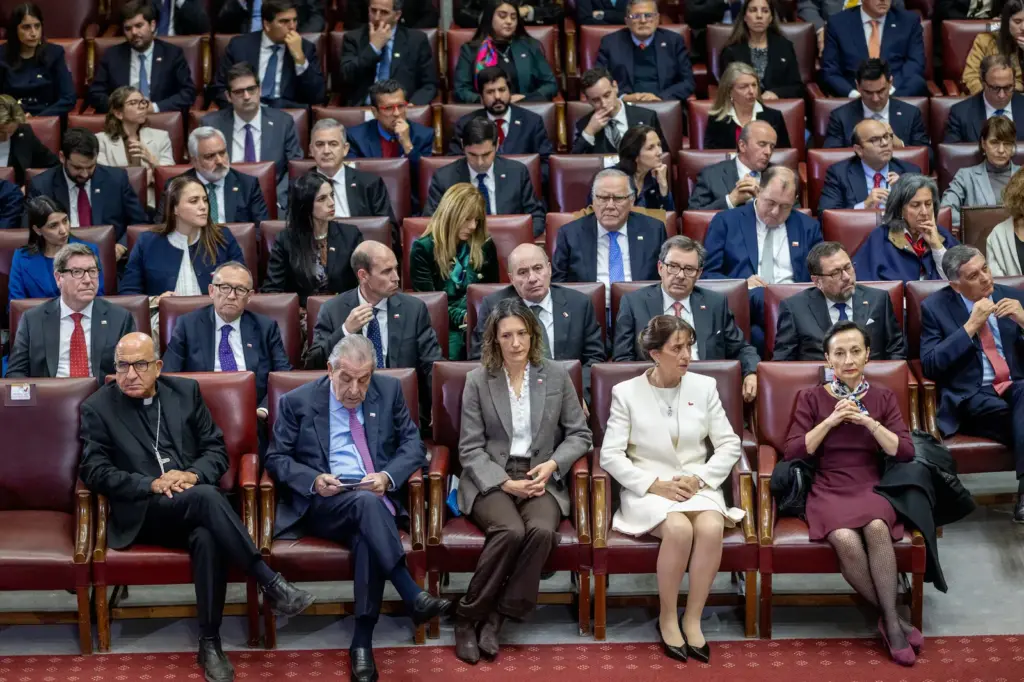
During the speech, the ultra-conservative president emphasized his idea of reducing the size of the State during his government. “For years, we were led to believe that a bigger State was automatically a better State. That every urgency was solved with more structures, more bureaucracy, and more spending. Experience proved otherwise,” he said. “The State grew, but lost effectiveness,” he added. Among the announcements he made, the president said he will present a project to merge the Interior Ministry and the General Secretariat of Government (Spokesperson’s Office) and will convene a commission of experts to renew the architecture of the Chilean State. “A more rational ministerial structure that reduces the number of portfolios, eliminates overlapping functions, and reallocates resources. Based on their proposals, we will send Congress initiatives that over time will allow a real and orderly reduction of ministries,” he stated. Additionally, he announced a renewal of the Senior Public Management system, which selects appointments in some leadership roles in the State through competition.
One of the focal points was what he would say about security, the president’s great promise that has not convinced the public—two weeks ago he removed the head of the portfolio, Trinidad Steinert, who admitted she had no plan. Kast started with homicide figures as of May 31: 378 victims, while last year, in the same period, there were 444. “These are still very high figures because security is not something that changes overnight. But the figures show that better results are beginning to consolidate,” he said. The president made only a few announcements because Martín Arrau, the government’s second Minister of Public Security in less than three months, will present his strategy to the Senate on June 2. Also, on Monday afternoon, the president will meet at the Cerro Castillo presidential palace in Viña del Mar with the La Moneda Security Committee, headed by Arrau. He did announce that he will send Congress a bill to create the Registry of Vandals and Incivilities and an Intervention Plan in 50 critical neighborhoods.
Read more Trump backtracks on the $1.776 billion fund to compensate his allies “persecuted” by Biden