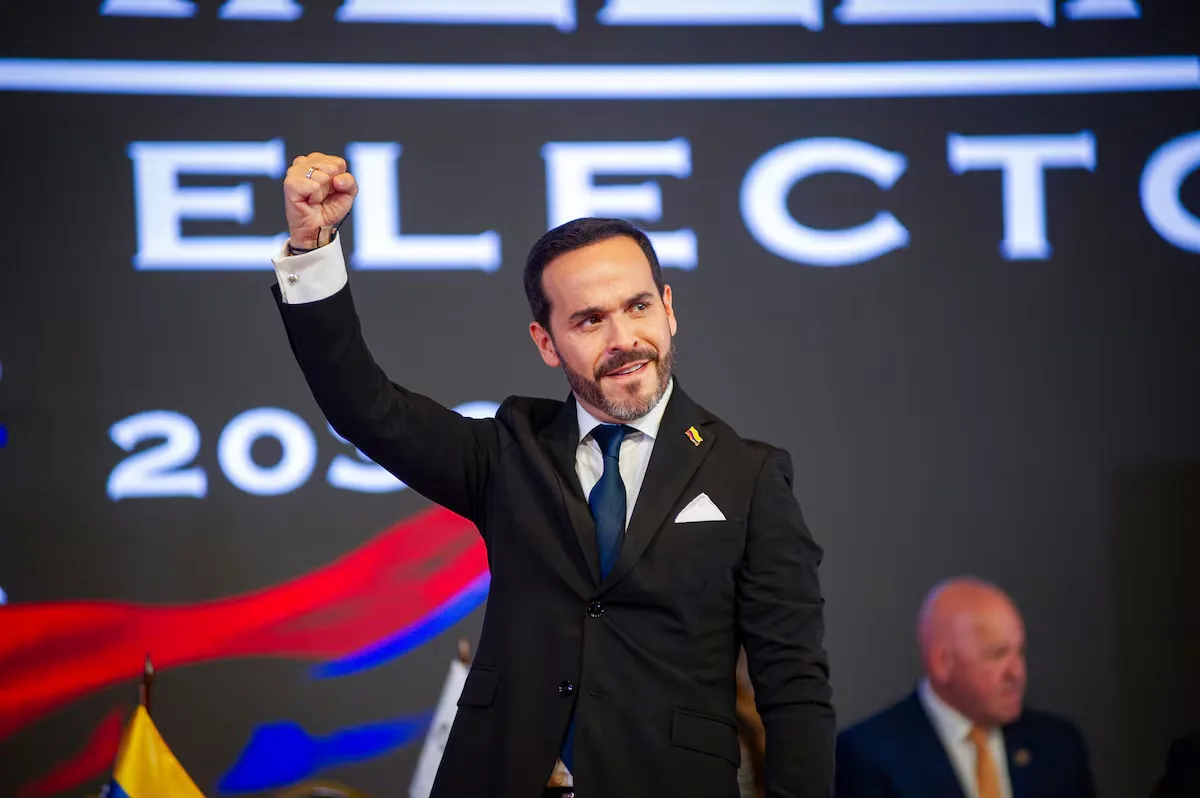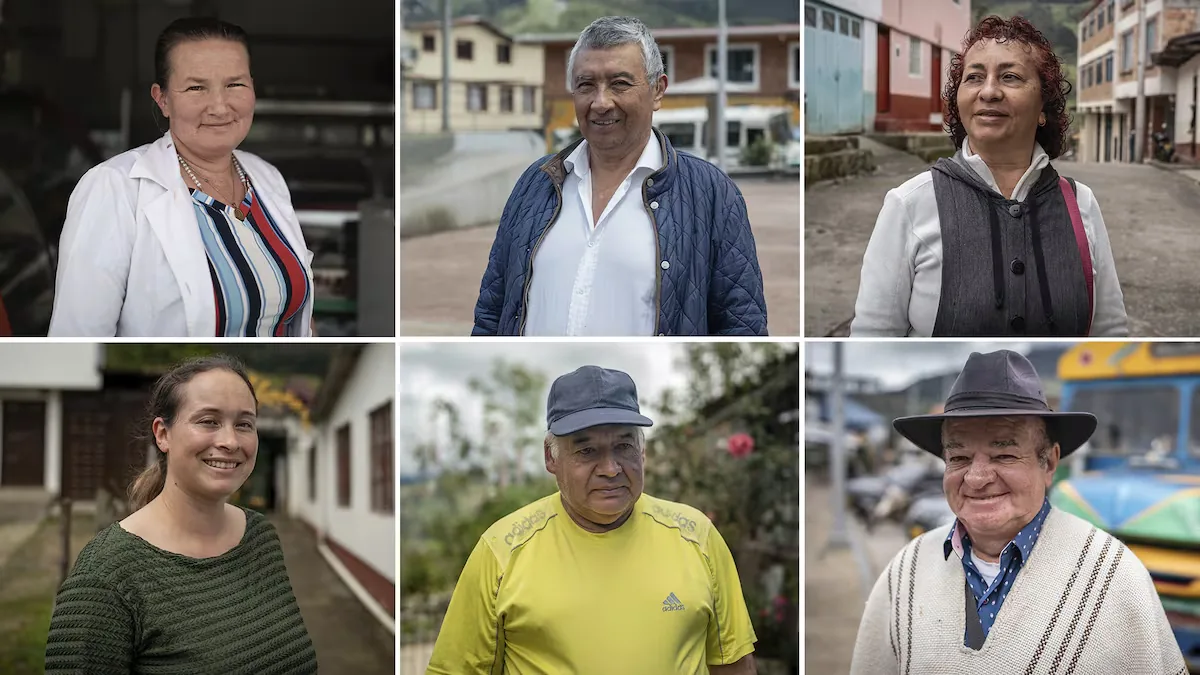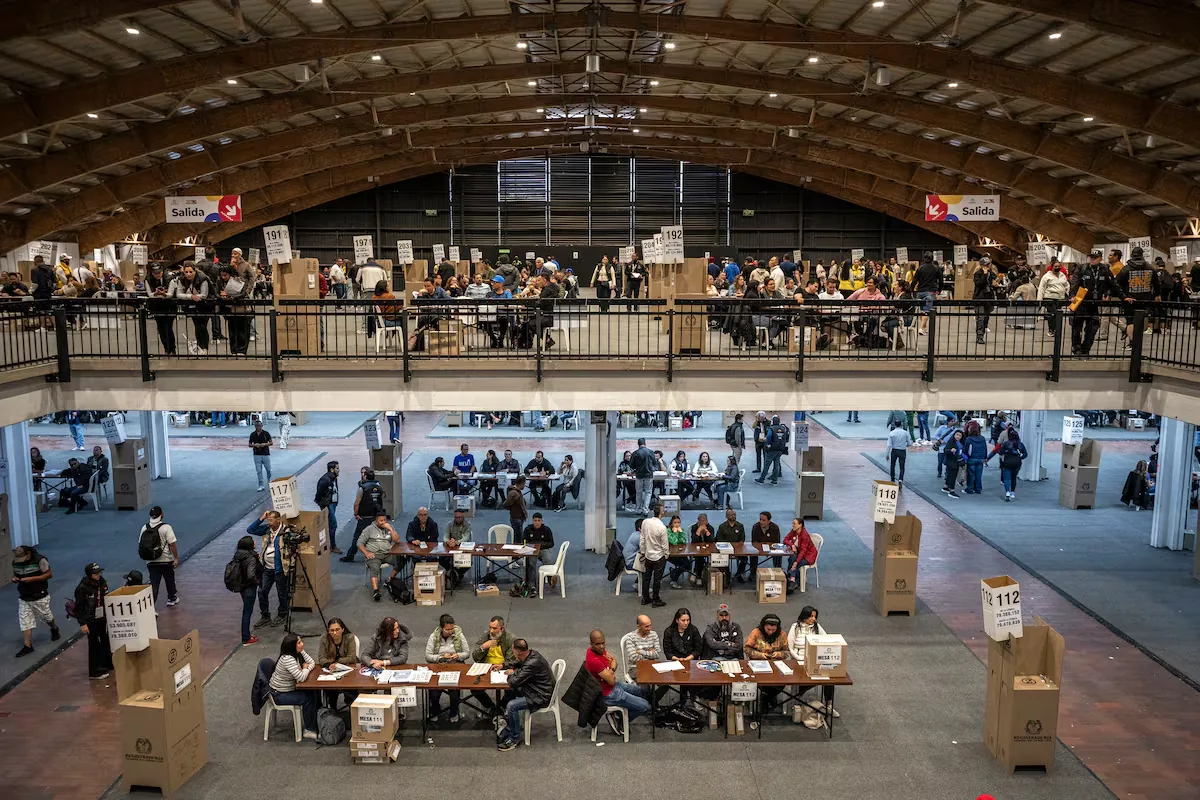

Colombia took a turn to the far right this Sunday, massively voting for a candidate who gained the support of 10 million citizens, Abelardo de la Espriella, the most voted in the first presidential round. The criminal lawyer, who has never held an elected office and once defended Alex Saab, Nicolás Maduro’s frontman, promises a shake-up for individual and collective rights: from putting God back in schools to taking Colombia out of the United Nations. He still needs to mobilize votes for a second round on June 21, against a left that represents the continuity of Gustavo Petro’s government. De la Espriella will arrive backed by very local flags, such as the anti-Petro sentiment, and very global ones, like the promises already made by far-right leaders around the world. His first victory has already been embraced by Javier Milei from Argentina and Santiago Abascal from Spain.
Nayib Bukele’s prisons and Javier Milei’s chainsaw
Abelardo de la Espriella knows the global wave of the far right very well: he admires Nayib Bukele’s mega-prisons in El Salvador and promises to build 10 of those with the help of companies that would manage them. He is also an admirer of the Argentine Javier Milei’s chainsaw and promises to cut 40% of the state bureaucracy: eliminating the positions of about 700,000 officials and contractors. Like his far-right colleagues worldwide, he dislikes international organizations and has already said he is not interested in Colombia having an embassy at the United Nations: “The UN is a political directory of the left,” he claims.
Jair Bolsonaro’s military patriotism
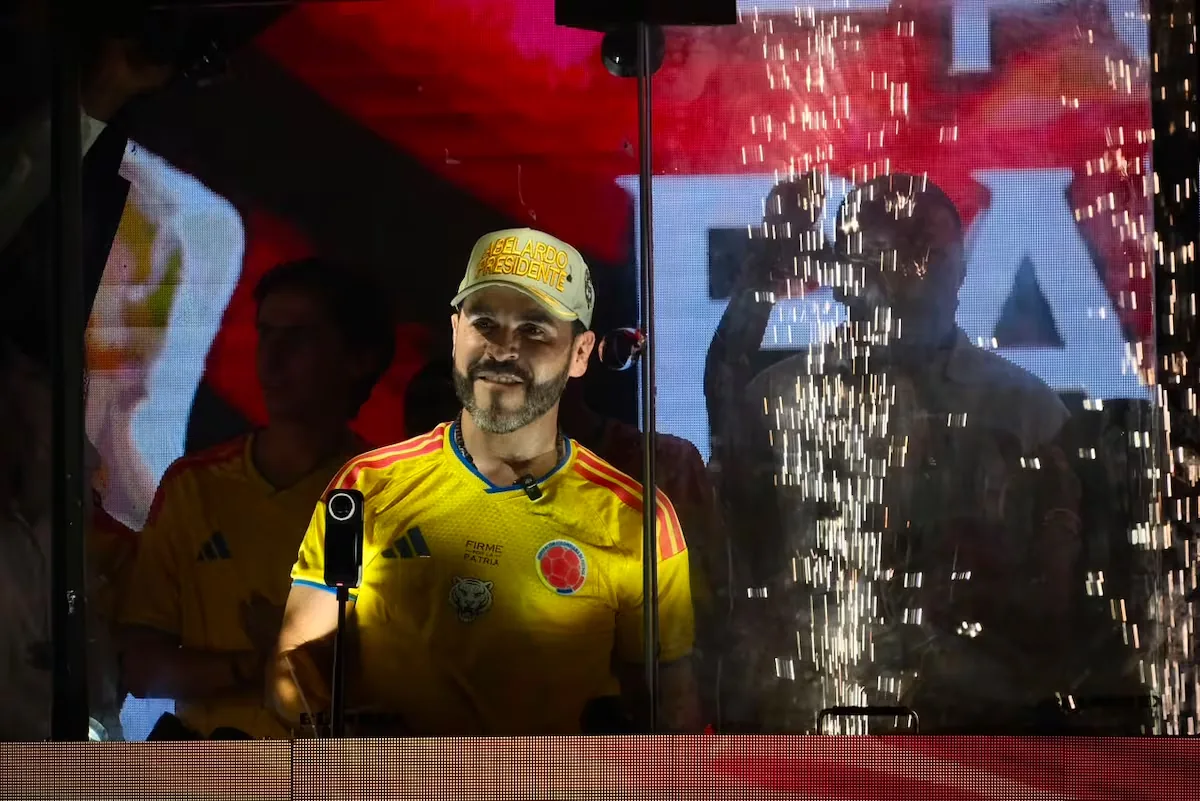
The echoes with the global far right are also aesthetic. Like Jair Bolsonaro in Brazil, he has appropriated the national football team jersey for political campaigning: thousands attend his events wearing the yellow jersey, more beloved as the World Cup starts in a few days. He repeats an evident patriotism in each of his slogans: the “defender of the homeland” is “firm for the homeland,” and wants to build a “Miracle Homeland.” Also with a clearly military tone for someone who comes to fulfill his “military service” and has made it popular among his followers to imitate the military salute with the right hand on the forehead.
Donald Trump’s ‘outsider’ businessman
Like Donald Trump, he likes to show the luxurious life he lives and repeats that he has been a successful businessman supported by his law firm, “which has never lived off the state’s teat.” That is perhaps the most important key he shares with the global far right: selling himself as an outsider, an anti-establishment candidate who comes to change the face of those he calls “the usual ones” ― what Milei would call “the caste.” De la Espriella, he repeats in every speech, represents “the never,” an echo to those who do not feel represented by woke flags as Trump managed to convince when he won in 2016. “The never,” in the Colombian context, would be those who do not feel represented by Petro’s progressivism nor by the traditional right-wing parties.
Against abortion and LGBTI
Although for years he identified as an atheist, De la Espriella converted to Catholicism after the death of an aunt, and now raises the conservative flags of several Christian churches that support him: he says the Constitutional Court ruling that decriminalized abortion up to week 24 in 2022 must be “subject to debate,” since he “is a defender of the life of the defenseless.” He has not taken a position against same-sex marriage, “since they should have some property rights,” but he is against the possibility that they can adopt: “I know what a child needs, because I have four children, a child needs a father and a mother, those roles.” He also repeats the international hoax that schools want to impose a “gender ideology” on children. “I do not accept that our children are conditioned, contaminated with gender ideology to try to change their view of sexuality,” he has said. “We have to put God back in our children’s classes,” he assured when launching his campaign.
Read more Sánchez questions the justice system’s treatment of the PSOE before his leadership
A misogynistic and homophobic tone for the campaign
De la Espriella, who often talks about the supposed enormous size of his testicles, has been recognized in the campaign for both misogynistic and homophobic comments. When he was on a radio program, he asked one of the hosts to zoom in on the genital area in a campaign photo to boast about the size of his penis. “With that photo, I won some really cool votes from the female electorate,” he said. In another interview, when a reporter asked him a question about ethics and law, he called her ignorant for not having studied law. And when referring to the only openly gay candidate in the race, economist Juan Daniel Oviedo, he showed his homophobia: “His thing can’t be fixed,” he said laughing in an interview. Oviedo, for his part, has denounced that De la Espriella’s followers have shouted homophobic insults at him on the street.
Hardline against peace policies
Thousands of Colombians vote for Abelardo de la Espriella tired of Gustavo Petro’s government, especially because of the security crisis that is partly the responsibility of a ‘Total Peace’ policy that has not managed to negotiate with all armed groups for their demobilization. On the contrary, almost all armed groups, guerrillas, and paramilitaries have found ways to strengthen themselves during the current government, increasing child recruitment, clashes that leave hundreds of civilians dead, and drug trafficking.
Abelardo de la Espriella offers the security promised by all far-right hardline leaders, but that is not a completely new flag for Colombia: it is the same argument of Álvaro Uribe Vélez, the former president who came to power in 2002 promising a hardline against the then FARC guerrilla. In Colombia, the post-Uribism is already spoken of, since De la Espriella did not need Uribe to be the right-wing candidate (as happened in past elections) but he is an admirer of the Democratic Security policy that prioritized funding the Ministry of Defense over other agendas (education, culture, or health): he wants to prioritize war policies over peace policies again. Now De la Espriella, like Uribe, speaks out even against the institutions that came out of the peace agreement between former president Juan Manuel Santos and the former FARC guerrilla, such as the JEP, the special justice tribunal that tries guerrillas and military personnel. “That is not a court of justice, it is a political directory of the radical left, which was instituted to persecute the heroes of the homeland,” he said, referring to the military judged there for killing civilians. If he wins, he has already said he will seek to prevent the JEP from extending its working periods.
Read more Frederiksen reaches a government agreement in Denmark for a third term