







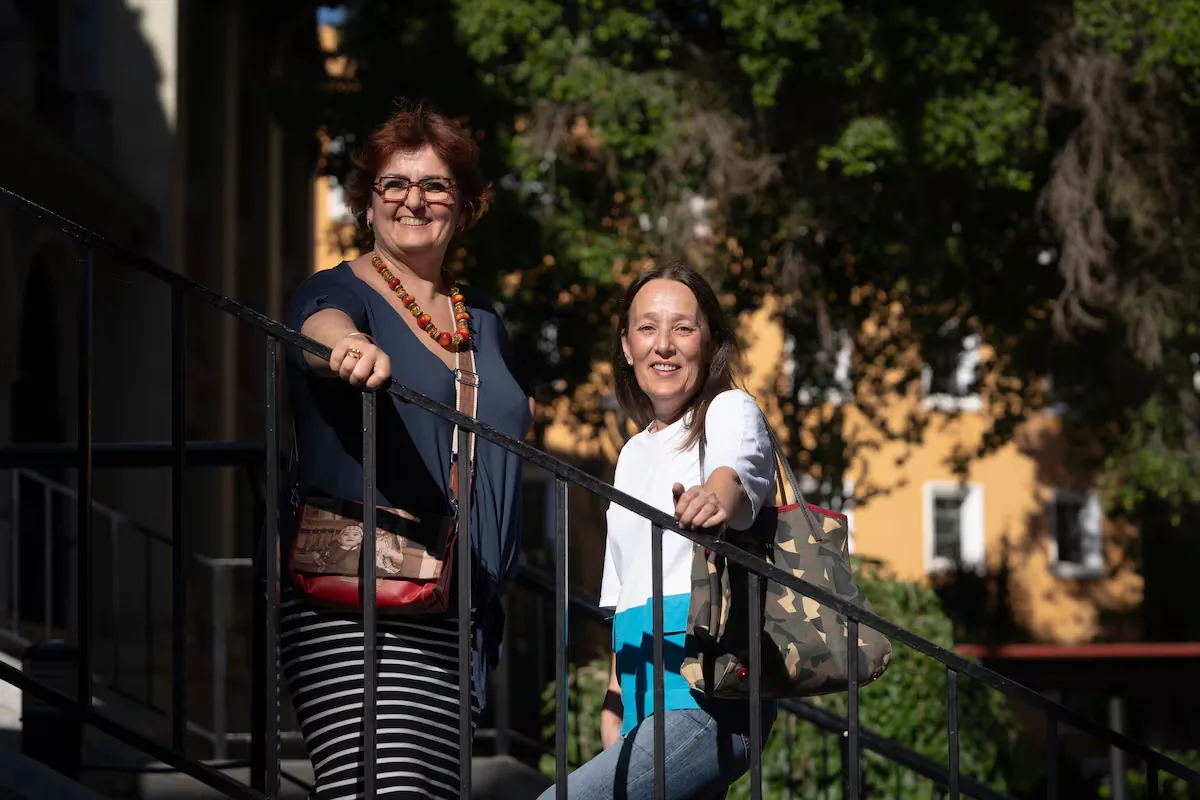
Lucía Martínez is 55 years old, an accountant, and has been so focused on the start of the Selectividad, which begins this Tuesday in 14 autonomous communities, like her daughter, María, who hopes to study Medicine in Murcia. “Second year of Bachillerato has been nerves, stress, anxiety, and fear. Horrible. I can’t wait for it to be over. I don’t even care about the grade she gets anymore. I just want it to end and for her to rest,” she says. “I never imagined,” adds Leticia Fierros, a childcare educator, whose daughter started taking the University Entrance Exam (PAU) this Monday in Madrid, “that the year would be so emotionally tough: now up, now down, now up again…, and that several friends who have been through it had warned me. My daughter has had a hard time and we have lived it with her.”

Search engine: check the cutoff score for each degree in Spain
Teachers have been warning for years that the concern students show during Bachillerato has grown alongside the rise in cutoff scores, which have increased by one and a half points in the last decade. Last year, nearly 300 degrees required the equivalent of a 9 or higher on a scale of 0 to 10. And the ordeal many students experience, especially those who want to enter those highly demanded degrees with few places, often extends to their parents. “Many times families arrive with anxiety levels equal to or even greater than the kids,” says Maitane Ormazabal, a psychologist specializing in adolescence. “Selectividad has become a kind of decisive moment where it seems like the entire future of a son or daughter is at stake, and that generates a lot of emotional pressure at home.”
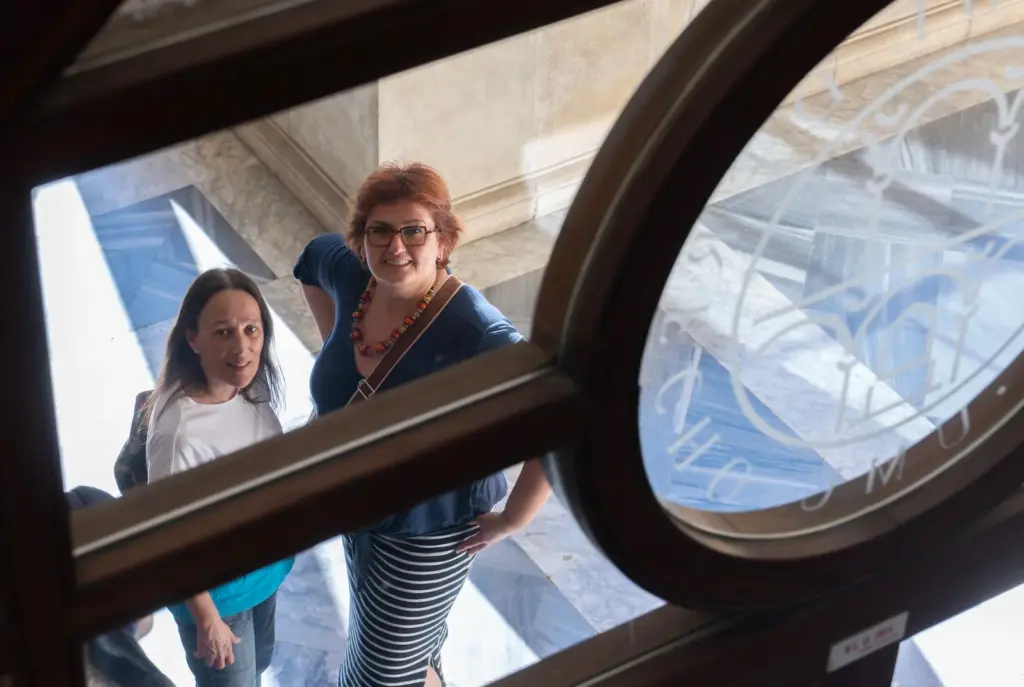
Ormazabal says that parents usually experience “the process from their own fears, expectations, and personal wounds, and that, even if done out of love, can become a very heavy burden for young people.” The anxiety of parents about the PAU also intertwines with a material problem, adds the psychologist, in line with what family federations warn. “Getting into a public university means, for many, a very big difference compared to a private one. So the pressure is not only academic: it is also social, economic, and emotional.”
This is the case of Rocío Romero, 48, a hairdresser in Toledo, whose daughter aspires to study a health-related degree and will start taking exams next week. “There are kids who go very relaxed because they can enter private universities, where just taking the PAU and passing is enough. That’s not the case for my daughter. She spends the day doing calculations. And if she doesn’t get the grade, her plan B is to enroll in a higher vocational training degree.”
“An enormous wear and tear”
Paying between 60,000 and 95,000 euros to study Dentistry at a private university, the degree that Mónica Sierra’s son has always wanted to study, a laboratory technician at a public hospital in Seville, is also not an option on the table. “His access to the degree depends exclusively on achieving an almost perfect grade. He can’t afford a single mistake. And that implies a level of pressure that I think does not correspond to their age.” Her son, Sierra adds, is very organized and has followed a “meticulous” schedule for months. “But behind that discipline, there is enormous wear and tear. He has had constant headaches, back and neck pain from sitting so many hours for weeks.”
Like other parents interviewed for this article, the mother says the year has changed routines in their home, located in a town near Seville. “We have given up, for example, family plans, and we don’t go out to dinner. During this time, we have even stopped watching series or turning on the TV at night. We go to bed early so there is silence and so, if he has to keep studying, he can, and if not, he can simply rest. Everything revolves around the PAU,” she says.
Sometimes, the horizon of Selectividad threatens to jeopardize family stability, admits Lucía Martínez, the mother of the Murcia student with whom this report begins. “She ends up exploding because she has to release the nerves somehow, and if she is in a bad mood, we all end up in a bad mood. And you also end up with arguments in the couple. For example, my husband worries a lot and pressures a bit more. I tell him to leave her alone and in the end there is tension, the atmosphere becomes strained.” Juan Manuel Ortiz, a 47-year-old nursing assistant and resident of Berlanga, in Badajoz, whose daughter also wants to study Medicine, adds: “These months she has been more reactive because she experiences everything with a lot of sensitivity. And especially with her brother, with whom she is usually always arguing, things have gotten worse and they are even more irritated.”
Losing all the hair
Mari Carmen Morillas, president of the federation of mothers and fathers associations of Madrid FAPA Giner de los Ríos and member of the State School Council, warns that the growing anguish over the PAU sometimes leads to other types of problems. “The son of a federation colleague, from the stress he had over Selectividad, lost all his hair, and in the end he dropped out and enrolled in a vocational training program. It is not normal to have our young people with that tension and uncertainty. We must think about what kind of society we want to head towards.”
At this point, Mónica Escudero is not very worried about Selectividad, which her son starts this Tuesday with the Spanish Language and Literature exam. The boy finished Bachillerato with an average of 9.83 at a public high school in Murcia, and initially wants to be an agronomist engineer, for which he does not need a high grade. What does keep the woman awake at night is the self-demand that the boy has always had and which has intensified recently. “He goes out very little. He has friends, but we spend our lives telling him: ‘But, son, go out, rest more… It’s better than having to run after him because he fails everything, but seeing him stay up late in front of the books worries me. At these ages, mental health problems and depression can show up, and in the end what you want is for your child to be happy. If he has a great professional future, wonderful, but a degree is not a guarantee of anything now.”