









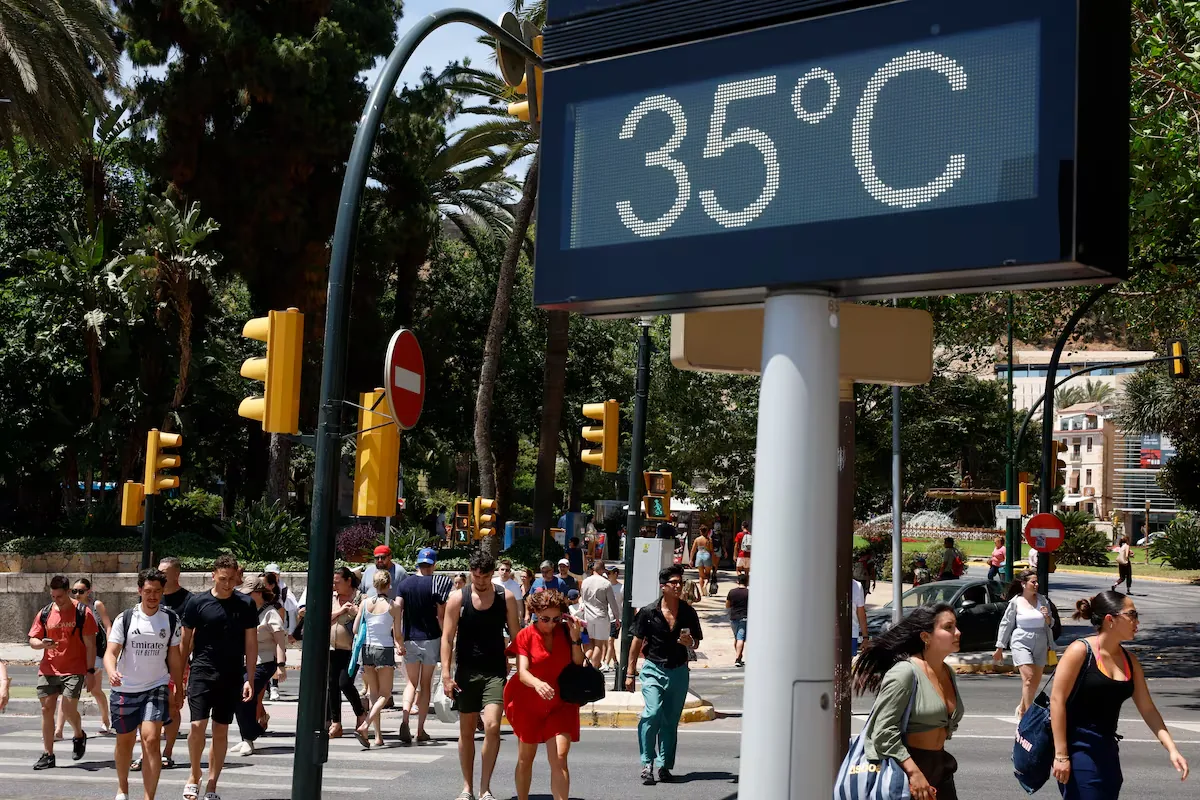
The high temperatures recorded in May have had a direct impact on health: 101 people have died from the heat, according to the Daily Mortality Monitoring System (MoMo), which has never since it began to be used (in 2015) recorded such a high figure in a month of May.
The hundred deaths last month, which is three times the average of the last decade, is not a count of heat-related deaths, but a statistical estimate that takes into account the number of people who have lost their lives and crosses it with temperature thresholds.
Most of these deaths do not occur from heat strokes, the most direct consequence, but from the deterioration of the body’s functions when the thermometer rises, usually in very vulnerable people: the body becomes dehydrated and vital functions degrade. Most of the deaths in May correspond to elderly women (over 85 years old) and were concentrated in northern Spain: Asturias, Galicia, and the Basque Country.
This is not necessarily because it was hotter in these regions, but because the health impact threshold occurs at lower temperatures than in other places that are better adapted and more accustomed.
The Ministry of Health calculates these thresholds each year to activate alerts for the impact of heat on health, which vary greatly depending on the 182 Meteosalud zones into which Spain is divided: in A Coruña it is estimated that the significant increase in mortality occurs from 27.8 degrees, while in Córdoba it rises to 41.3.
In the National Plan of Preventive Actions for the Effects of Excess Temperatures on Health of 2026, which was presented this Wednesday, these thresholds have risen in Spain by an average of 0.58 degrees. The calculation comes from a refinement of data in recent years and means that the increase in mortality occurs at a slightly higher temperature.
This is a sign that “some areas of Spain are adapting better to temperatures,” according to Héctor Tejero, Head of Health and Climate Change in the Office of the Minister of Health.
The basis of the plan is a warning map where these 182 zones with similar climatic characteristics are collected, and to which citizens can subscribe to receive a text message on their mobile. It is updated daily before 10:00, with the risk of that day and a forecast for the next three.
“Heat makes people sick and kills, but it does not do so equally to everyone,” Tejero emphasized. Each person’s vulnerability depends on factors such as age, pregnancy, medications taken, illnesses, or socio-labor conditions.
For the same temperature, different groups will have different levels of vulnerability. It increases as age advances, especially if there are other risk factors such as illnesses or poor housing conditions.
Health problems due to heat have only just begun. Every year it claims thousands of lives. The MoMo system estimated that 3,832 deaths were due to high temperatures last year and rose to 4,813 in 2022, the most brutal summer in recent years.
These statistics are probably underestimated. Other studies conducted later raise heat-related deaths in each summer to more than double.
Read more Becerra and Hilton take the lead in the race for California governor heading to a runoff