






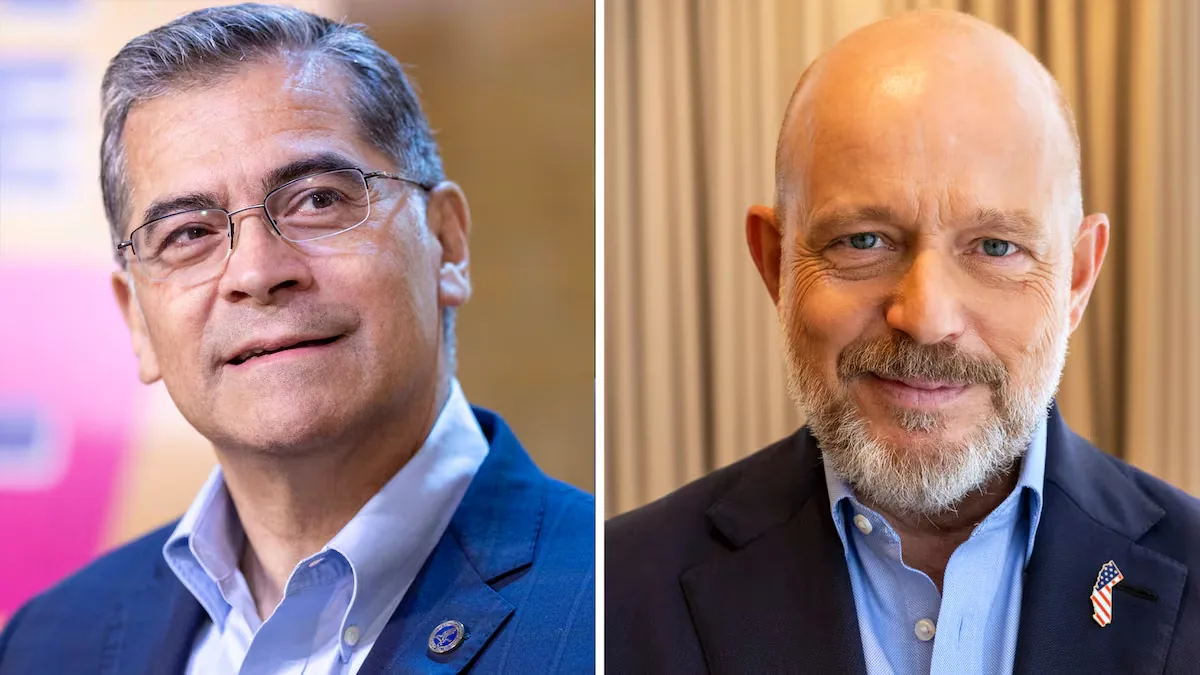
The first results of the California primary elections indicate that Democrat Xavier Becerra and Republican Steve Hilton will compete for the governorship of the most populous state in the country in a runoff in November. Both candidates emerge from a tight race that marks the political direction of the state following the departure of Gavin Newsom, one of the most visible figures in the opposition to President Donald Trump. Since 2011, California has remained under Democratic control and has established itself as a laboratory of progressive policies that often clash with the White House agenda.
With about 50% of the votes counted in the slow Californian tally an hour and a half after the polls closed, Becerra (Sacramento, 1958) and Hilton (London, England, 1969) are neck and neck —26.7% and 25.8%— and are positioned as the candidates most likely to advance to the general election on November 3. The confirmation of the result is expected on Wednesday morning. There were 61 candidates on the ballot. Under the system known as jungle primary or open primary, only the two contenders with the highest number of votes proceed to the next round, regardless of their political party.
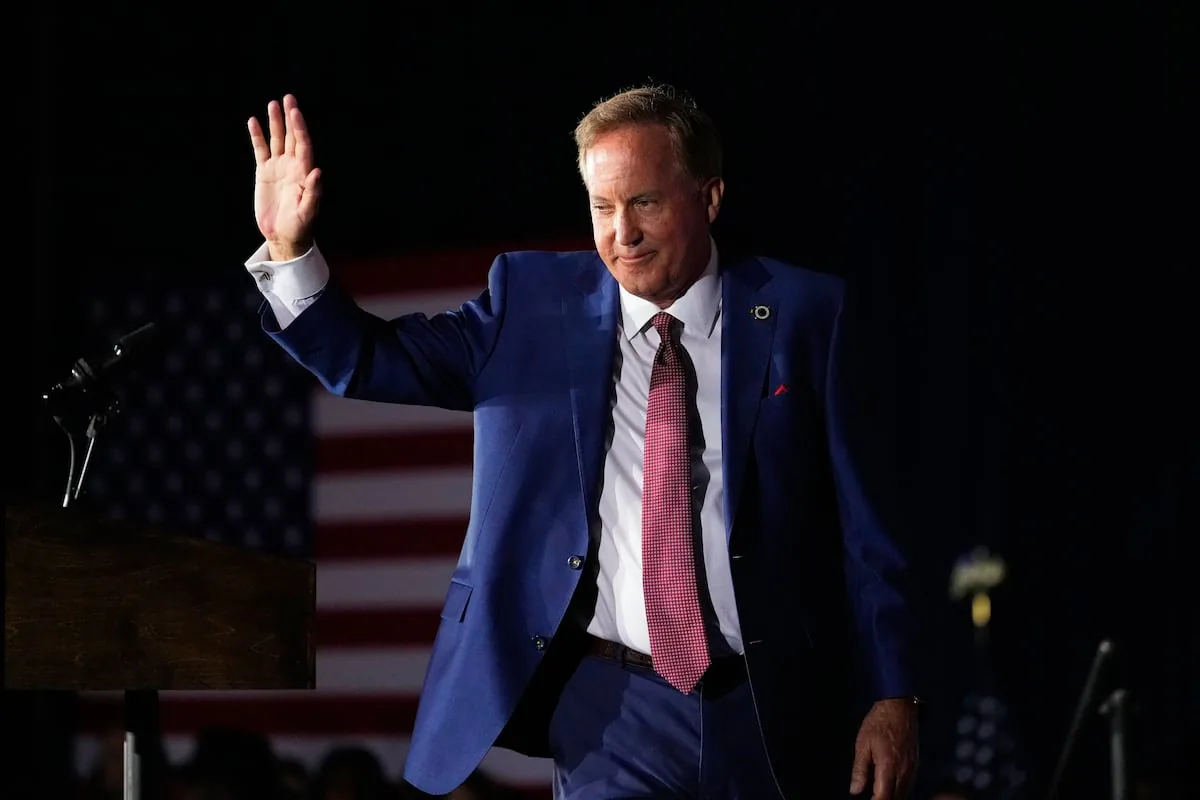
Trump’s influence was present in these elections and, through Truth Social, he urged his followers this Tuesday to vote for Hilton. “He will work with me and the federal government; money will flow because I trust him (but not any of the others!), and we will make California great again!” the president wrote. Meanwhile, Vice President J. D. Vance joined the praise for the candidate, whom he described as a “good guy,” and emphasized that the state “needs better political leadership.”
This is considered the most expensive gubernatorial race in the country’s history, surpassing spending of $315 million, most of which went to advertising, according to data collected by the firm AdImpact. The figure was inflated because billionaire Tom Steyer (New York, 1957), a billionaire who founded one of the largest investment firms in San Francisco, invested more than $200 million of his own money. But it was not enough to secure the Democratic candidacy, as everything points to him finishing third with just under 20% of the votes.
A victory for Becerra in the November elections would point to the continuation of the confrontational line with Trump that characterized Newsom’s administration. A win for Hilton, on the other hand, would mark a shift toward a conservative agenda, aligned with the president’s political priorities on issues such as immigration, public safety, economy, and government regulation.
Read more Weleda birch oil drops to 17 euros: the best seller against cellulite
With the backing of Trump and the Republican Party apparatus, Hilton has set out to turn the state red again. The former political commentator managed to make his way in the race driven by two promises: to reactivate an economy hit by the rising cost of living and to toughen public safety actions, also supporting the operations of the Immigration and Customs Enforcement (ICE). Hilton began his career in British politics, linked to the Conservative Party during Margaret Thatcher’s era. In 2012 he moved to California and started a career as a Fox News presenter. His plan is, in his style, to repeat the feat of another migrant who became governor: Arnold Schwarzenegger. Since the movie star finished his second term in January 2011, no other Republican has held the office.
Becerra, for his part, seeks to become the first Hispanic governor of California in more than a century. Son of Mexican immigrants and former Secretary of Health during the Joe Biden Administration, he has focused his campaign on defending the “California way of life,” protecting immigrants, and expanding social programs that, he claims, have been affected by policies promoted by Trump. Becerra has a 35-year political career that also includes the state Assembly, Congress, and the California Attorney General’s office. He highlights among his achievements that, with more than 120 lawsuits, he restrained Trump during his first term and proposes to repeat the formula.
What happens in the November general elections could have repercussions beyond the state’s borders and influence the Democratic strategy heading into the 2028 presidential contest. Outgoing Governor Newsom continues to send signals of a possible candidacy to reach the White House.
During Trump’s first term (2017-2021), California positioned itself as the main force of resistance on issues such as immigration, climate change, reproductive rights, and social justice. Although it remains one of the most favorable territories for the Democratic Party, Republican influence has grown in recent years: it was the third state that voted most for Trump in 2024 (six million votes), only behind Texas and Florida.