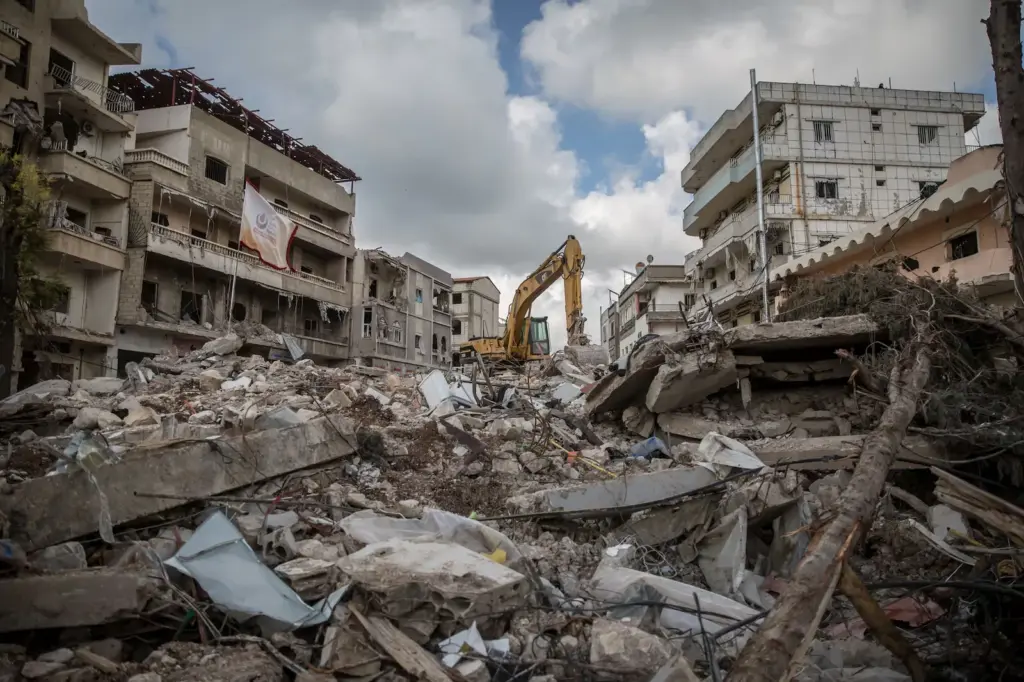









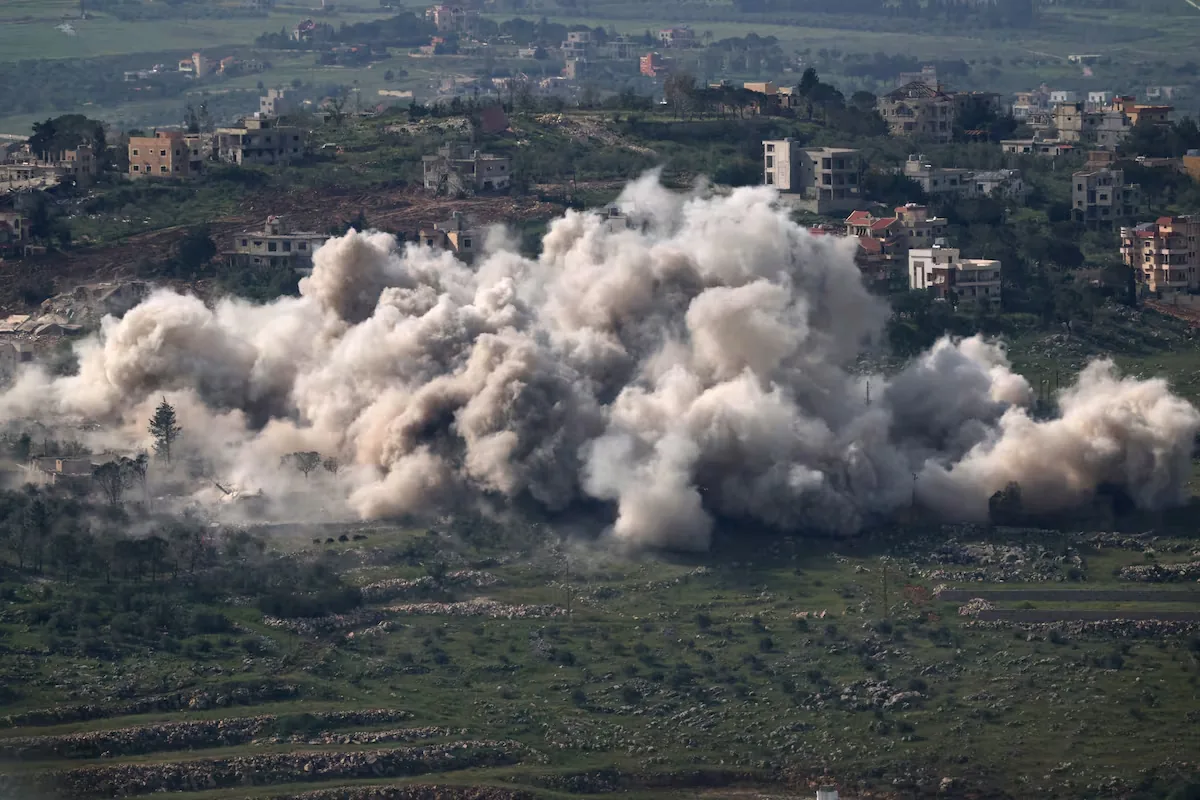
Southern Lebanon, which has been a battlefield between Israel and the pro-Iranian militia Hezbollah since 2023, has suffered a new wave of devastation since February 28, when the Israeli and US governments declared war on Iran and Hezbollah once again took up arms in solidarity with its ally. Israel then focused its response against Lebanon, intensifying the military offensive and the occupation of the neighboring country.
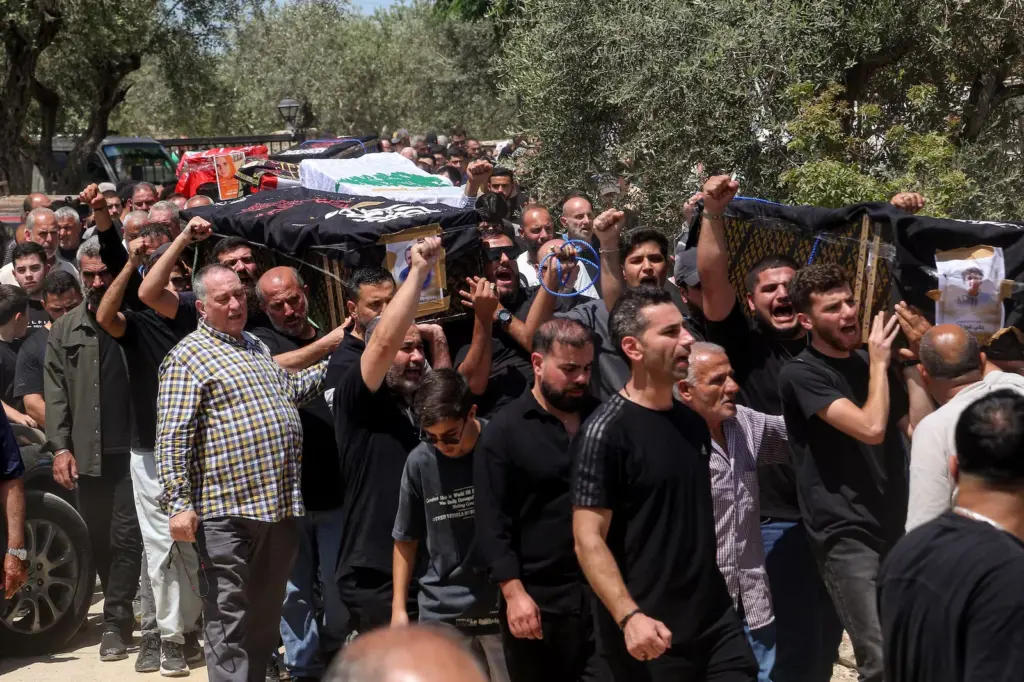
In these three months, even with a supposed truce in effect —extended this very week—, the Israeli campaign has killed 2,914 people in that southern area (83% of the 3,516 fatalities in all of Lebanon), destroyed 36,000 homes (72% of the total), and demanded the evacuation of 300 municipalities, causing panic and isolation among the population and driving into exile those who claimed they would never leave.
The unpredictability of the attacks, which Israel launches against residential blocks and roads without making the slightest attempt to justify them to its international allies, reaches medical teams daily and nullifies almost all commercial activity in the south of the country.
All of this has resulted in the forced displacement of 1.4 million Lebanese. The figure, provided last Wednesday by Lebanon’s Ministry of Health to EL PAÍS, represents a quarter of the national population (which is about 5.5 million people) and equals the number of displaced persons recorded during the autumn of 2024, the worst to date.
The campaign that Israel began against Hezbollah in March, and which Benjamin Netanyahu’s government presented as the definitive one, has involved the forceful occupation of a border strip on Lebanese soil that the Israeli army describes as a “security zone,” encompassing about 600 square kilometers (almost double the entire Gaza Strip). This invasion, which extends over 6% of Lebanon’s territory, has 68 villages under occupation, according to the count of Lebanese Prime Minister Nawaf Salam, who on Sunday accused Israel of implementing a policy of “total devastation.”
Before the truce declared in April —and never respected by Israel—, the Netanyahu government had already imposed an evacuation order for all territory up to the Litani River, about 30 kilometers north of the border. Israeli Defense Minister Israel Katz announced it, stating that the measure would affect some 600,000 people and specifying that Shiite Muslims —the majority in the area and professing the same faith as Hezbollah— would not be able to return until Israel’s security was guaranteed.
This led many families from the border villages to take refuge just north of that waterway. Although the ceasefire annulled the order and allowed return, most of these families refrained from going back, because Israel continued to bomb in practice.
Last Wednesday, despite the existence of a dialogue process with the Lebanese government to try to bolster the truce, the Israeli army again imposed the expulsion order on southern Lebanon. And in this case, it extended it to the Zahrani River, 10 kilometers above the Litani, warning that it would use “extreme force” in the area.
“That territory between the Litani and the Zahrani hosted many people previously displaced from further south,” laments a humanitarian worker who speaks on condition of anonymity, as she does not have permission to speak to the press. “The situation there was insecure, but there were also thousands of residents who remained in their homes,” she adds.
Now, the displaced are forced to move even further north, where public shelters are saturated. Many remain in their vehicles or in the open; others stay in areas frequently bombed by Israel, as they “cannot afford to pay rent.”
14% of the country, forbidden territory
The area south of the Zahrani River that Israel currently presents as forbidden territory for the population, almost 2,000 square kilometers in area, accounts for 14% of Lebanon, and hosts large cities such as Tyre (the fourth Lebanese city, with 200,000 residents) and Nabatieh (about 50,000 inhabitants, but today practically deserted). In proportion, it would be similar to demanding the emptying of all of Castilla-La Mancha in Spain.
The fireballs caused by Israeli bombings these days among the buildings of Tyre and the continuous deaths of innocents —such as those of the two students killed by a missile alongside their father last Monday, as they were returning home from their final exams— are emptying the southern region of a country where 80% already lived below the poverty line at the start of the conflict in 2023, according to Oxfam.
Read more Cultural activities of the Social World Cup: venues, schedules and activities
They are fleeing an offensive they fear they cannot avoid: only between midnight on Monday and 4:00 PM on Tuesday, United Nations peacekeepers recorded 478 shots fired between Israel and Hezbollah. Of these, 468 were perpetrated by Israel (97%). The vast majority were south of the Zahrani River, a territory equivalent to three times the size of the city of Madrid.
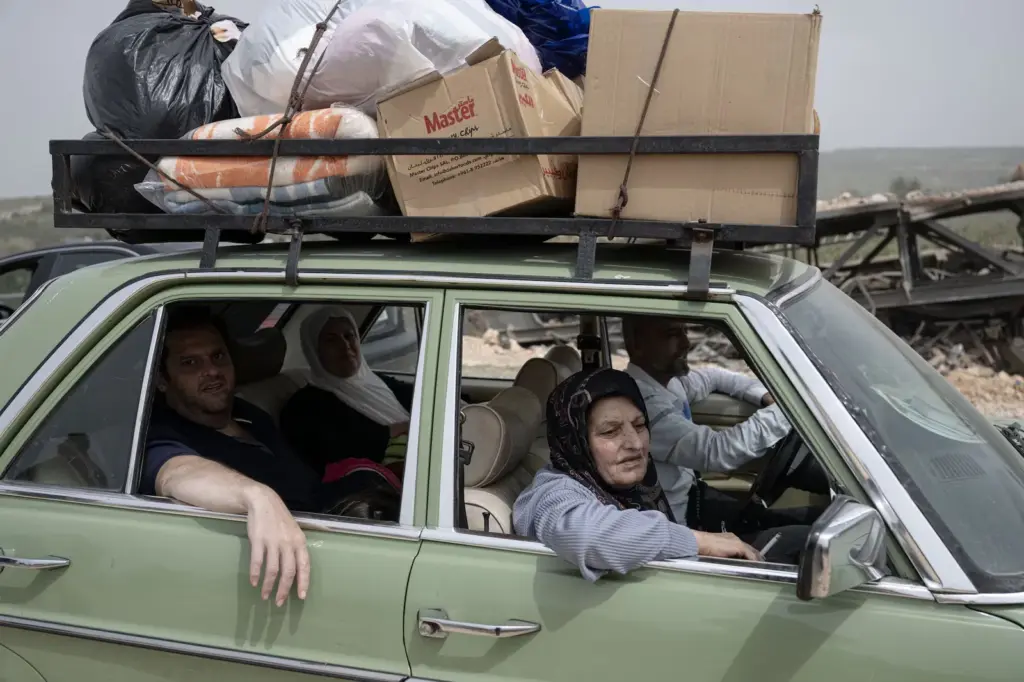
Although Israel presents these bombings as strictly targeted attacks against Hezbollah, the daily launching of missiles causes widespread destruction, adding to that already caused between October 2023 and November 2024, the repair of which the World Bank estimated at 3 billion euros.
Today, 80% of markets and businesses in that southern territory of Lebanon are out of service, according to the UN World Food Programme, either because roads pass through conflict zones or because transporters are displaced.
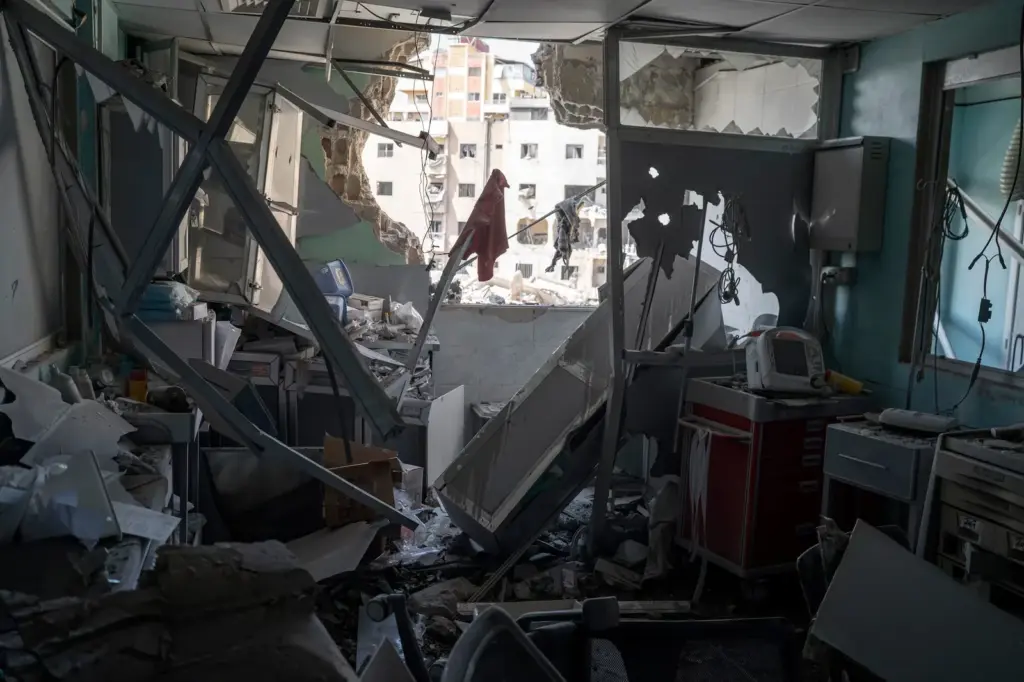
The Ministry of Health, which accuses Israel of applying “the law of the jungle” in its attacks against the health network, denounces the “severe damage” caused to at least five hospitals in the south. “These are direct attacks,” Dr. Joseph el Helou, advisor to Minister Rakkan Nassereddine, assures this newspaper. One hospital in Mais el Jabal and two more in Bint Jbeil —both border areas— had to close before falling under Israeli occupation.
Working in the health system is a risky activity in the territory, where Israel fires at ambulances, accusing them without proof of transporting militants. On Wednesday, separate attacks on medical vehicles killed two paramedics in Chehour and another in Zabdine, in addition to ending the lives of the two injured people they were transporting, according to rescue teams.
The World Health Organization, which has denounced the attacks Israel launched this week against the vicinity of the two largest hospitals in Tyre, records 191 hostilities against health infrastructure since March.
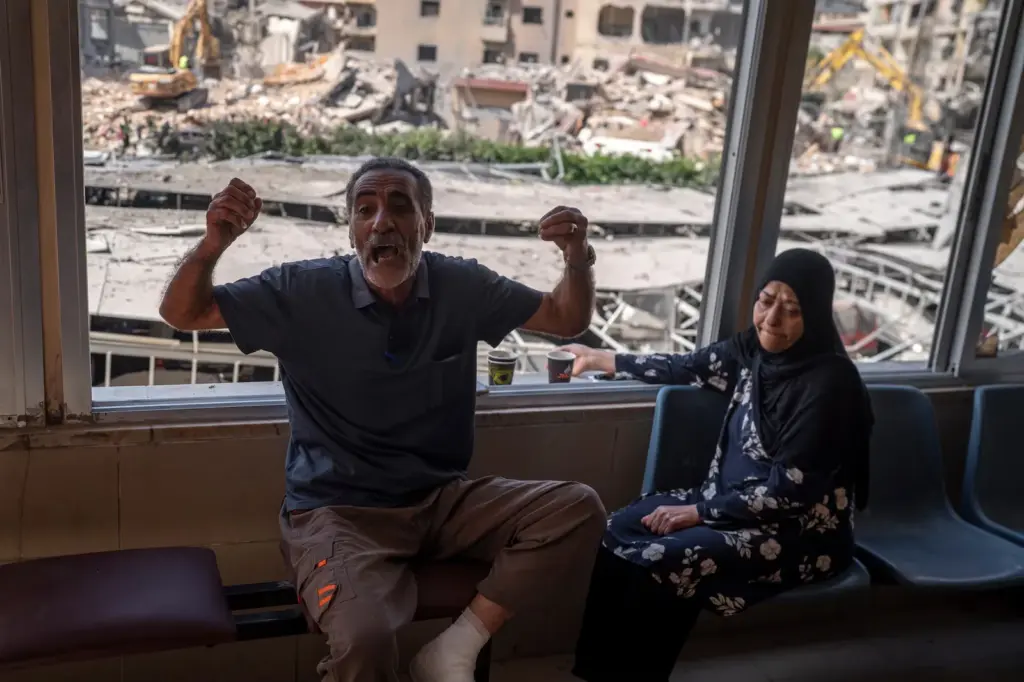
The Israeli escalation subjects water networks to increasing pressure. The Taybeh treatment plant has closed again, after already being attacked in 2024, when another attack cut off the water supply to 72,000 residents of Tyre. Six months after the 2024 truce, 150,000 people in the south still lacked running water, according to an investigation by Oxfam and Action Against Hunger.
All of this makes the treatment of agricultural land difficult. Israeli attacks, on the other hand, have burned more than 1,900 hectares of territory since March, according to Lebanon’s National Council for Scientific Research, linked to the government.
According to that institution, many Lebanese would have no place to return to in the south of the country even if the war ended tomorrow. Some 36,000 homes, the bulk of the 50,424 houses that the government estimates Israel has totally or partially destroyed in the country since March —more than 240,000 since 2023— are located in the south, where Israeli minister Katz warned that Shiites would not return until Israel deemed it appropriate.
The areas registering “maximum” devastation, according to their records, are Naqoura, a border territory where peacekeepers are headquartered; Marjayoun, east of the border; Nabatieh, where Israeli troops are already a few kilometers away; and Bint Jbeil. “My village is now like Hiroshima,” a resident of Bint Jbeil displaced in Beirut laments to this newspaper, while showing images of his village before the war.
Read more Chess analysis | This Gukesh is not the world champion