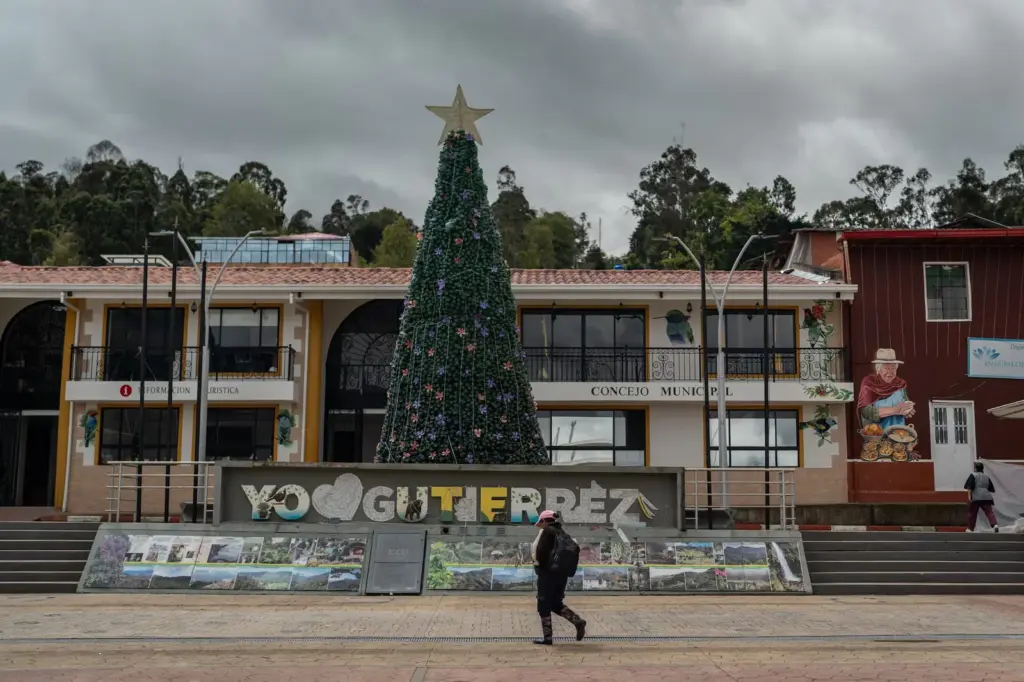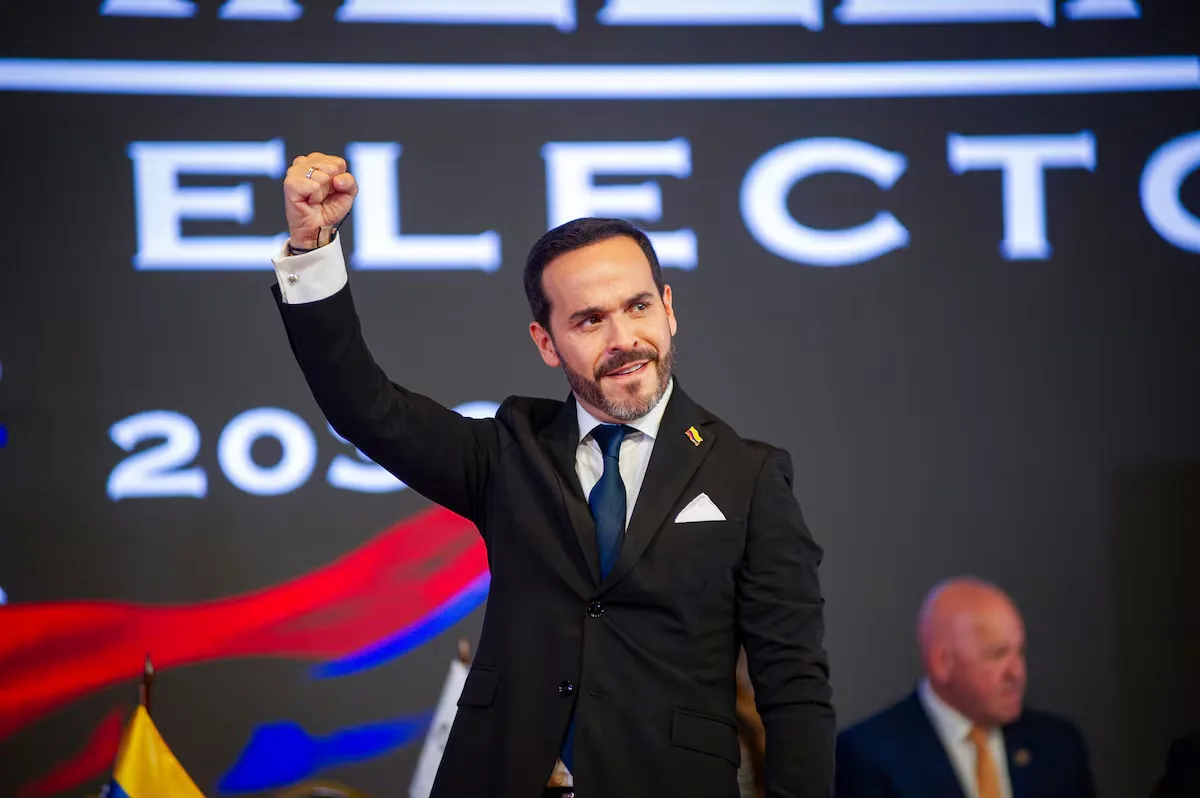
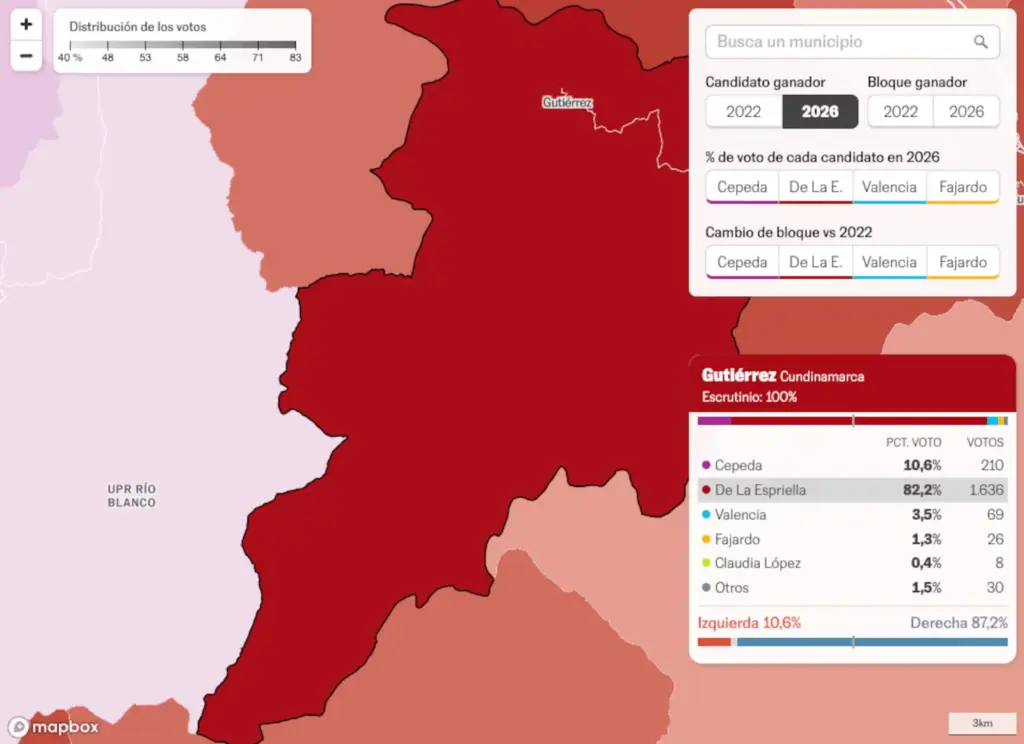
In Gutiérrez’s main square, there’s a Christmas tree. It’s June. No one has taken it down yet. Nor will they. It’s made from recycled plastic bottles, painted green, with its star still at the top. Gutiérrez, four hours by road from Bogotá, is not a place you pass through on your way somewhere else. Those who come here do so looking for something. Its residents know this and scrutinize visitors. There’s no distrust, but there is curiosity. They wait for the outsider to finally say what she wants, in this case, to answer a question: Why did 82% of its inhabitants vote for Abelardo de la Espriella, a candidate representing the most radical right, on May 31st?
Of Colombia’s 1,103 municipalities, Gutiérrez is among the 15 that concentrated the most votes for De la Espriella in last Sunday’s first round. It is the first in Cundinamarca, the department in the center of the country that surrounds Bogotá, the capital. It is neither a large nor a rich municipality: its little more than 4,000 inhabitants are distributed between the surroundings of the central square —where the mayor’s office, shops, restaurant, butcher shop, and Christmas tree are located— and the labyrinth of hamlets connected by dirt roads, houses with chickens in the yard, hills where cows graze, and farms where beans, potatoes, and avocados are grown. Not a trace of Iván Cepeda’s voters.
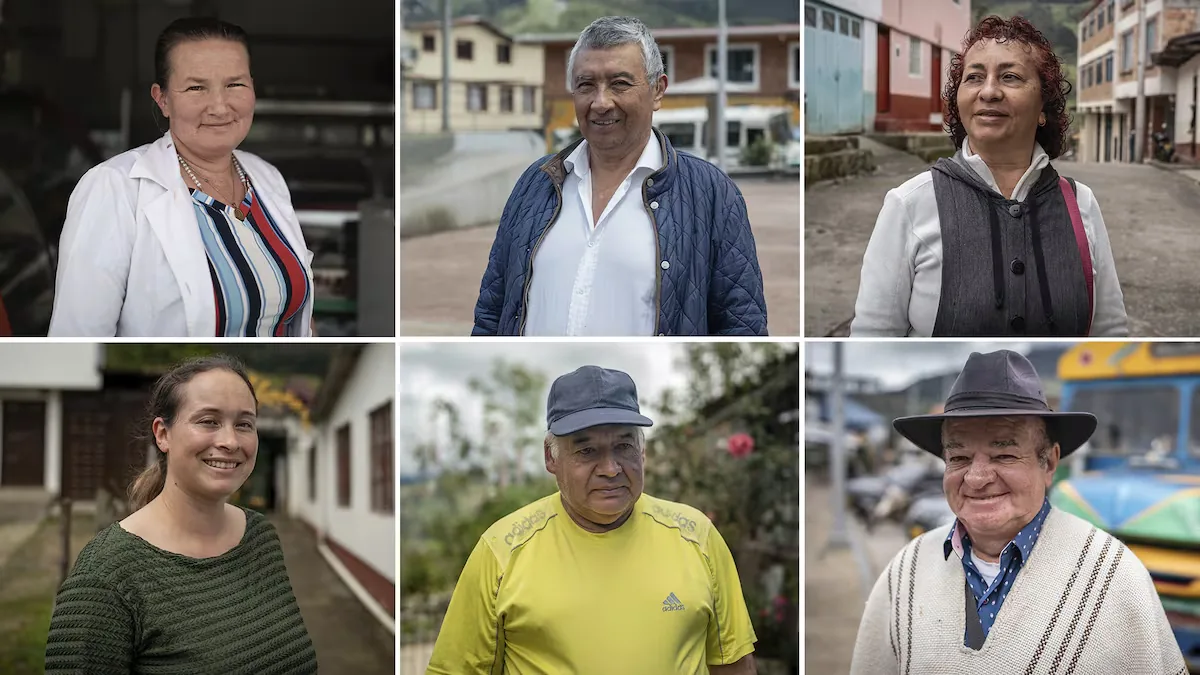
Yanira Pardo has been serving meat non-stop since early morning. She is 54 years old, petite, with blue eyes, and wears a virgin pendant around her neck. She has been behind the counter of her butcher shop in the center of Gutiérrez for years and had no doubts about her vote: “Abelardo promises security, and we experienced harsh violence: bombings, guerrillas, and murders of townspeople. One doesn’t want to repeat that horror. We’ve already lived through it.” The conversation is interrupted every two minutes. A customer enters, asks for a cut. Pardo attends and returns. One of those customers, an older woman, listens to the conversation while waiting for her order and exclaims before leaving:
—Let the guerrilla give me back my dead brothers! That day I will vote for Petro
No one answers her. Pardo wraps the meat. The woman pays and leaves, leaving a certain uncomfortable silence.
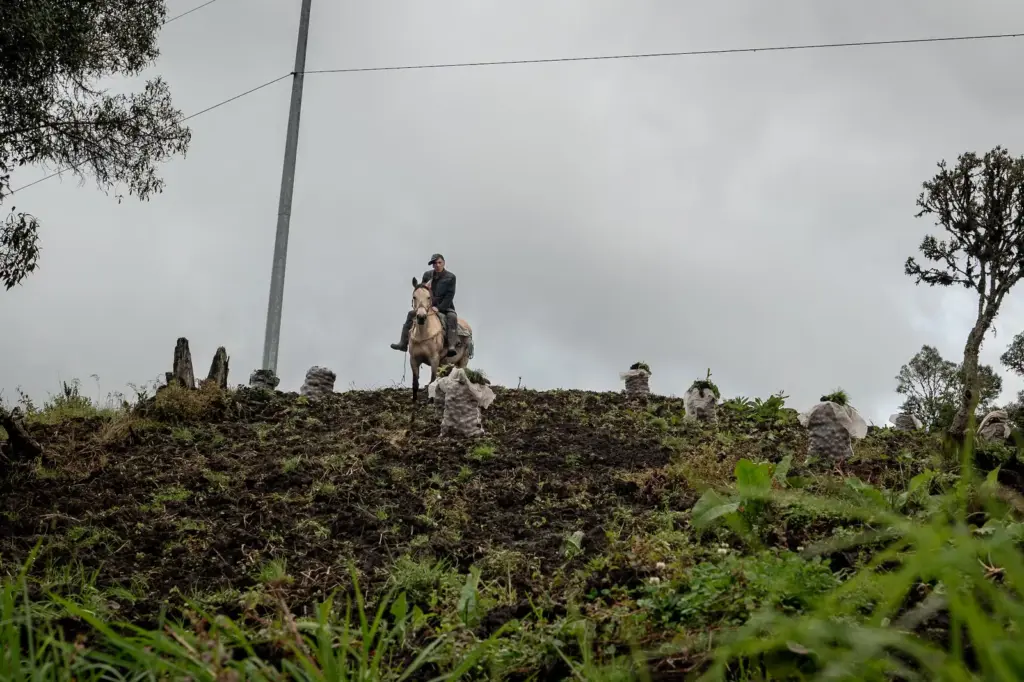
Today’s peaceful Gutiérrez carries a history of violence that continues to mark its residents’ votes. For more than a decade, from the late nineties well into Álvaro Uribe’s government, FARC sought to turn this corner into one of its strategic corridors in its goal of surrounding Bogotá. On the morning of July 8, 1999, half a thousand guerrillas attacked the municipality. There were fewer than 60 soldiers, most of them young men aged 18 and 19 serving in the military. 38 died. More than 20 were executed after surrendering. It was the bloodiest blow FARC dealt to the Army in the center of the country.
“The problem with the guerrilla ended here when Uribe became president. He came and swept all those people away from here. He brought in the army, and thank God…”, says Raúl Acosta, 64, a farmer and driver who lives an hour from the town square.
Acosta gives a clue as to why Gutiérrez historically votes for the right. First for Uribe and now for De la Espriella. But the electoral results are also explained by the fact that millions of Colombians associate the left with the guerrillas who have marked the country’s history. An imaginary that has fueled the vote against President Gustavo Petro, a former M19 guerrilla militant and a proponent, like Cepeda, of negotiating with criminal groups to achieve peace.
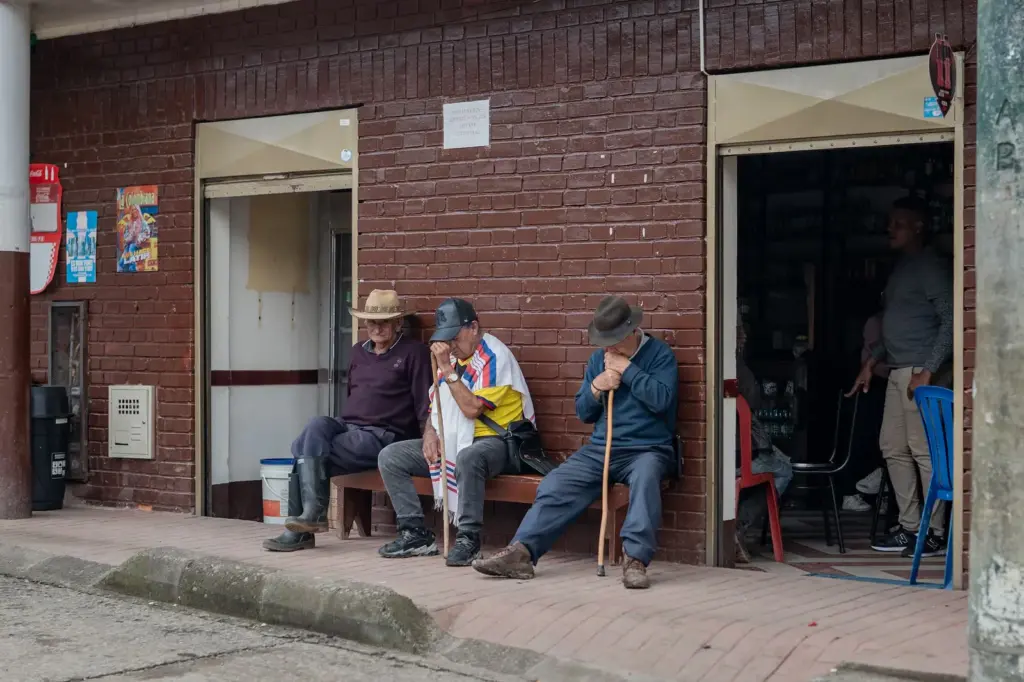
In one of the cafes in the square, a small shop with three tables and chairs brought out onto the street, Pedro Moreno, 64, dissects the anti-Petro, anti-Cepeda, and anti-left vote. His own and that of his neighbors. But first, he asks: “Are you going to write this with bias?” A minute later, he relaxes.
“My version is personal and may not be the real one. But I presume that the majority voted for Abelardo because they associate Iván Cepeda with the guerrilla. And we don’t want to know anything more about that here,” he explains.
Read more The summer accessory is this straw visor to protect you from the sun with style
—So your vote is more against Cepeda than in favor of Abelardo?
—Exactly. Colombians almost always vote against something, not for it. And now, even more so.
Although the official candidate is far from being an accomplice to criminals, De la Espriella has promised a magic formula to recover territories dominated by weapons in just 90 days. It’s an unfeasible proposal, according to experts and the Minister of Defense himself, but people believe him.
Moreno smiles when asked about those plans. “His program is three little pages. In other words, nothing, but it represents the complete opposite of Cepeda. And that, here, is enough,” he says. He says his candidate is a bit “cantinflesco” and “machista”, “not perfect,” but he’s their best option.
Luz Dary González, a four-time councilwoman for the Conservative Party, recounts that she couldn’t go to her farm during the hardest years of violence. “The guerrillas were going to take my daughter,” she asserts. Today, she protests against the Petro Government for the cadastral value update that skyrocketed property tax: her eight hectares went from 31 to 599 million pesos. “Where am I going to get the money to pay?” She voted for De la Espriella because she doesn’t like Petro and doesn’t want to return to anything that reminds her of her town’s past, but she has advice for the candidate: to handle Álvaro Uribe with caution. “When the other candidate [Paloma Valencia] said she was going to make him Minister of Defense, everyone abandoned her.” Her vote is also against “the usual suspects,” another leitmotif of the ultra-right.
In the courtyard of a house that is also a restaurant, beside a dirt road with a hill of cows in front, appears Francisco Efrén Mallorca, 62 years old. Two police officers eat lunch in silence at a table while watching the midday news. The man, who works the field and milks cows, says he doesn’t have much to tell because he doesn’t know about politics, but how he voted and why he did so also tells a story about how this town —and the country— moved electorally.
“I don’t understand politics. But my friends said we had to vote for him, that he was the only candidate who could get us out of this crisis,” he says. What crisis? “If you own a farm, under this government, one hectare has been valued at over a hundred million pesos. And who is going to buy it?” Do you like Abelardo? “I don’t know much. But I will vote for him again.
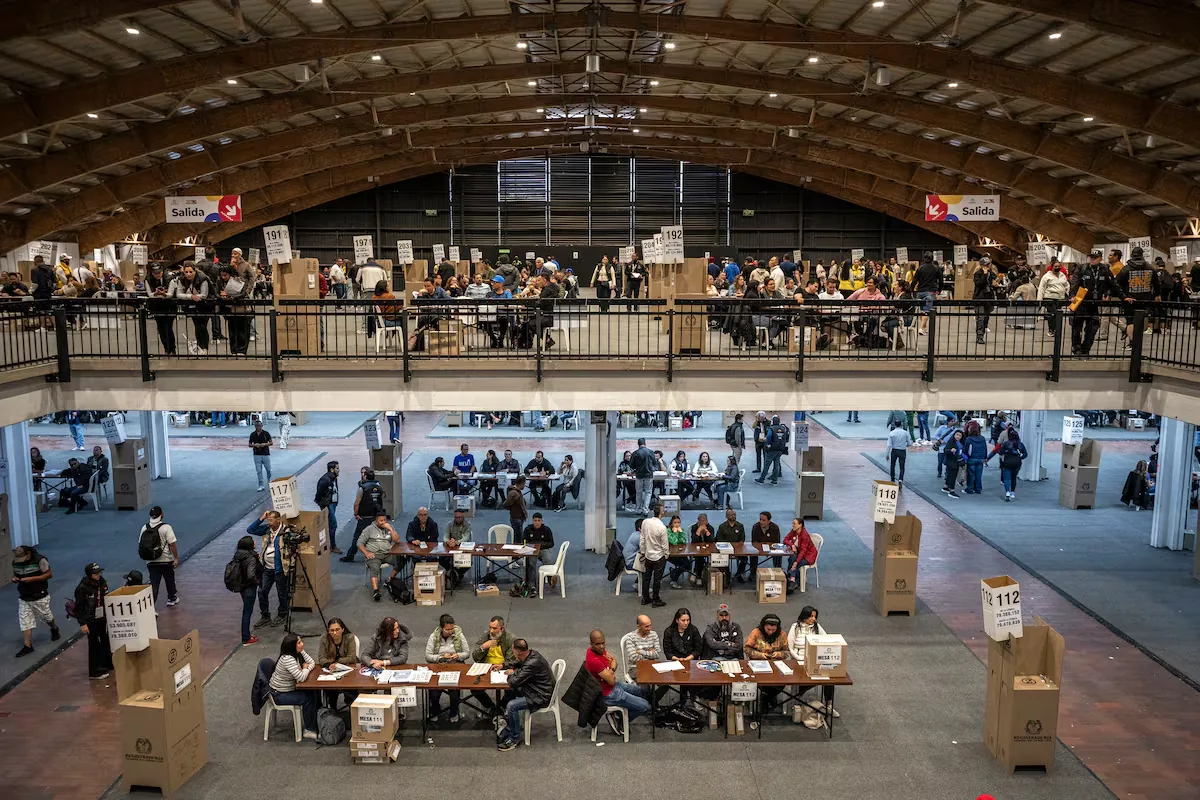
On June 21, Colombia returns to the polls. Abelardo de la Espriella won the first round with 43.7% of the votes —more than 10.3 million— and Iván Cepeda came in second with 40.9%, almost 9.7 million. Less than three percentage points separate them, and they have just over two weeks to win over the almost three million votes that were left without a candidate and many other millions of Colombians who decided not to vote.
In towns like Gutiérrez, there will be no surprises. The butcher and the councilwoman will vote for De la Espriella again because they have already lived through the alternative. Francisco Efrén because he trusts what his friends say. And Pedro Moreno, because even if the program is just three little pages, it represents the complete opposite of Cepeda. In Gutiérrez, that is already enough, even though there is still a game to play.
Read more PVC pool patches: industrial-grade adhesive resistant to chlorine and UV rays