
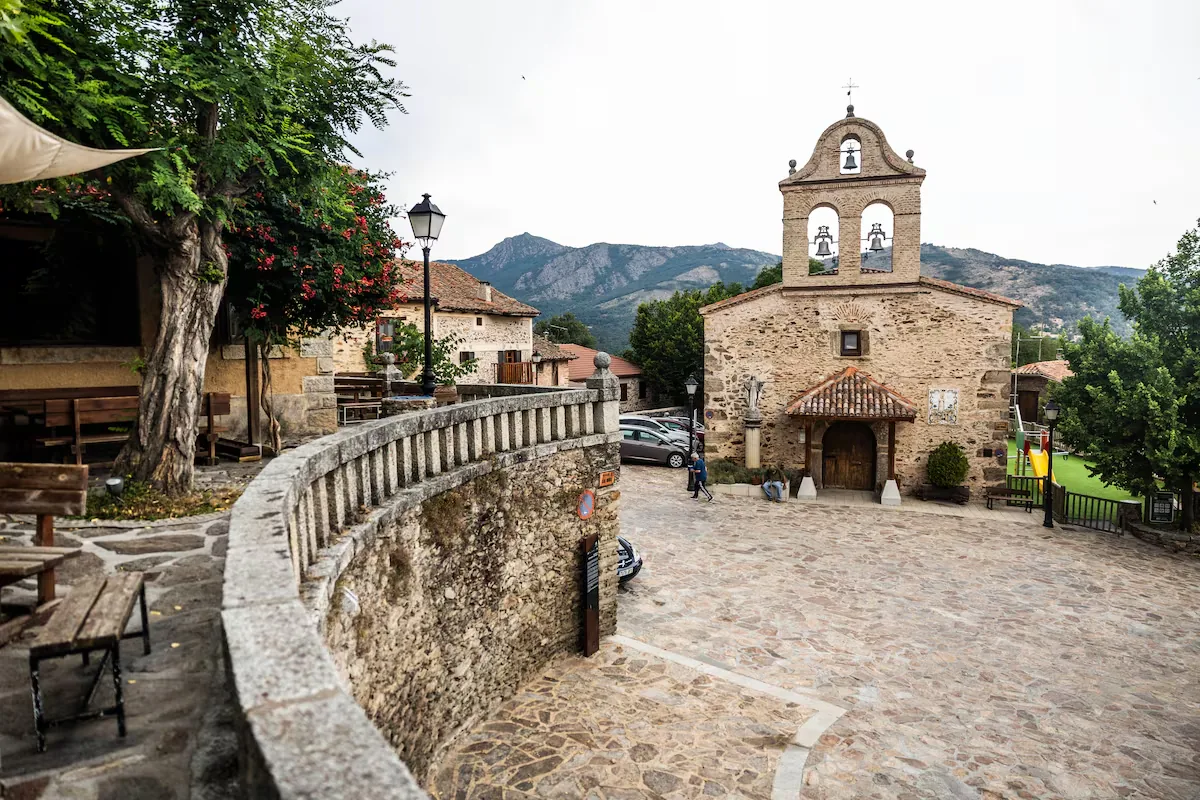
It took just one sentence. Barely 21 words to put an end to the open council of La Hiruela. There was no call, no explanation, no further details. Just one sentence published on July 1 in the Official Bulletin of the Community, and the medieval-origin political representation model that governed the town was abolished. The Government of the Community of Madrid ended last week with the last town hall in the region governed by an open council.
Read more The New Delta: the conquest of the desert that is redefining Egypt’s agriculture
Until last Wednesday, the 88 residents of La Hiruela, on the border with the province of Guadalajara, prided themselves on being the best-preserved town in the Community, having the lushest beeches, and being the only town where all residents are councilors. It is a peculiar form of government incorporated into Spanish legislation in 1985— inherited from the medieval era, based on rules of customs and traditions— that allowed municipalities with fewer than 100 inhabitants and isolation problems to self-govern without political parties.
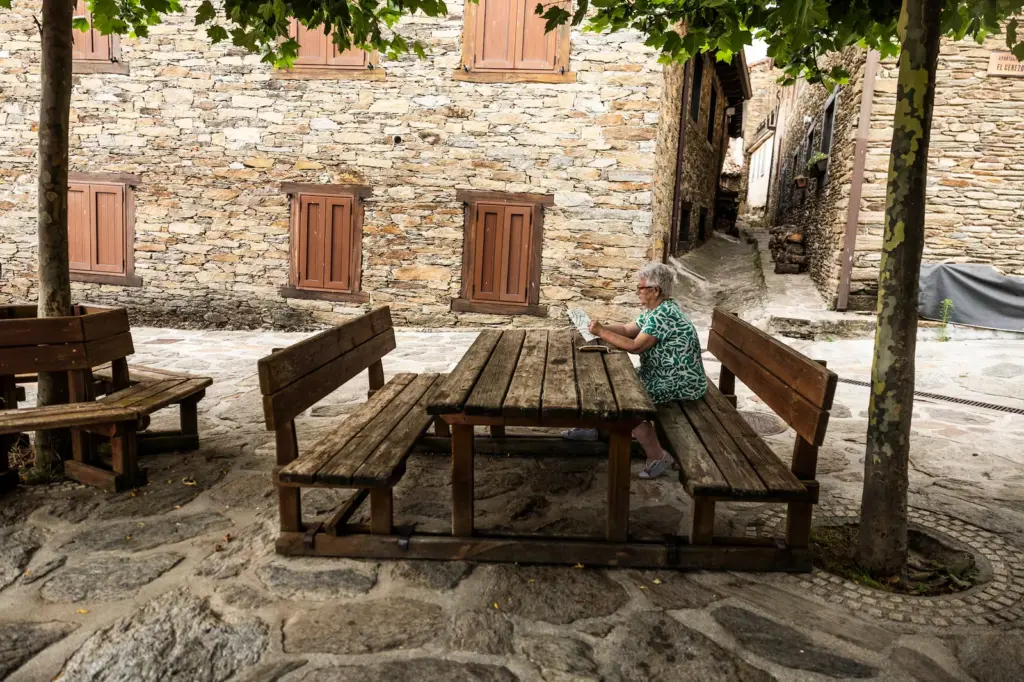
“I like to give my opinion and participate in town matters just as we have until now,” says Celia Martín, a 72-year-old resident reading in the square under the shade of the vine. Celia was born in La Hiruela, lived most of her life in San Sebastián de los Reyes, and since retiring, has returned to the town she left half a century ago. She is one of those who tries not to miss a single government meeting. For example, Celia is interested in ensuring that the social worker who takes their blood pressure or brings medicine to the elderly spends as many hours as possible at the clinic contracted by the Town Hall. “The meetings are intense and sometimes quite a scene unfolds…,” she says, waving her hand in the air. Celia refers to the last plenary session that lasted four hours.
A few steps away, another resident about to start a card game is also unhappy. “I don’t like that they made that decision. I don’t know much about politics, but here we can talk about what can be done in the town,” he says next to a table where a game of brisca is about to begin, from which he sees the imposing green of the Sierra del Rincón. “This hill is Madrid, that one Guadalajara, and over there Segovia,” he points out.
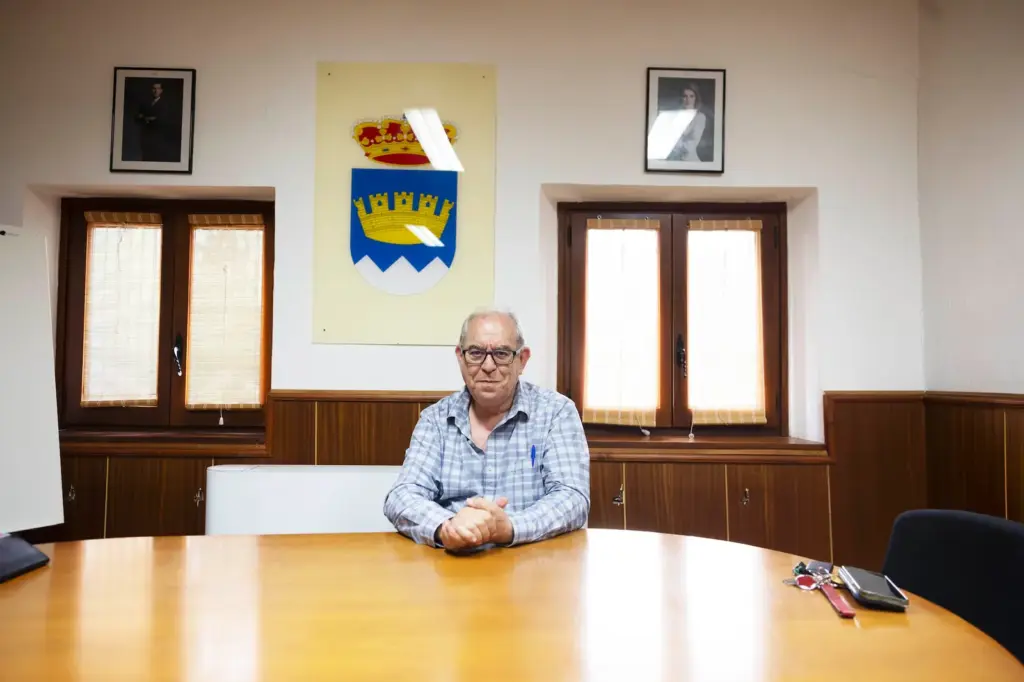
Both the residents and the mayor admit that it is much more laborious to push decisions forward in an open council system because it requires greater consensus, total transparency about public accounts, and everyone supervises each decision. Among other things, says Mayor Antonio Viedma, the agenda of the plenary session is sent in advance to each resident so they can prepare. “It’s very difficult to know which points will pass or not, but one feels more supported in decision-making. People want to participate and identify more with their town,” he says sitting in the meeting room. In La Hiruela, decisions are made by simple majority, and all registered adults can participate in the plenary sessions. “There is an ordinary meeting every three months, but we also call many extraordinary ones. Here we don’t go to the ballot box every four years, here we are voting all day,” he jokes.
In Spain, 104 town halls, most of them in Aragón, Castilla y León, or Catalonia, are governed by open council. According to tradition, assemblies can only be convened on Sundays or holidays so as not to interfere with work obligations.
Read more Europe drags its feet again on sanctions against Israel for the massacre in Gaza and the West Bank
In a town where neither the PP, PSOE, Vox, nor Más Madrid have any say, political coalitions have nothing to do with right or left and are formed differently. Thus, alliances, for example, are between the elderly who will not yield to the mayor if he proposes reducing some hours of the social worker’s presence to save a few euros in the budget. Or among younger ones who would like to install solar panels for a garden. In political debate, residents come loaded with arguments to try to attract votes from the opposing side and push forward projects that reach the plenary: buying a snow machine, unifying aesthetic criteria in houses, allowing the opening of a rural house. “It’s difficult to reach the plenary with prior agreements. There is no legal possibility to impose a decision unilaterally taken by the mayor and his councilors.” Here, says Viedma, “the only way to push proposals that reach the plenary forward is to convince,” the mayor sums up as if he had said anything. And he gives as an example a newly built paddle court: “The discussion about its construction makes many residents see that there are more people in the town. To realize how complicated it is, first you have to approve its construction, then present the accounts, and finally discuss its use. Something seemingly simple requires three votes, but it makes everyone committed to their town.”
The decision of the Community of Madrid to end the open council was communicated with a single sentence appearing in the Official Bulletin: “Agreement denying the request for authorization of the open council regime in the municipality of La Hiruela,” says point three of the BOCM.
Five days later, the Community of Madrid sent the mayor an official communication with the reasons. According to a spokesperson, La Hiruela does not meet the requirements to be an open council since neither isolation nor population loss is met, as the population increased by 34 people in the last ten years, going from 54 to 88 inhabitants, including the pandemic. “La Hiruela is growing in population and has economic and technical means. It is also not isolated because it belongs to the Sierra Norte Commonwealth and the regional head is Buitrago de Lozoya, just minutes away,” says a spokesperson. 108 kilometers from Puerta del Sol, the mayor of La Hiruela recalls that Buitrago is half an hour by car but during winter, it is only possible to get there after the snowplows have passed. “The machines clear the road, but the streets are impassable and it is difficult to leave home in winter,” the mayor clarifies.
In the document sent, the Community insists on “denying a request for authorization,” which, according to the mayor, was never made, as the town has been operating this way for almost four decades. The legal nuance lies in that a 2011 law reform stopped making open council automatic with fewer than 100 inhabitants and added an exception if there was unanimous agreement of the three elected councilors and the majority of residents, as was the case. Despite the displeasure, the mayor neither has the desire nor the resources to appeal the decision and hopes to convince the authorities: “It is incoherent and ungrateful to litigate against the Community,” he says resignedly. “We depend on them for everything.”
The democratic overdose of La Hiruela that the Community has ended is a paradoxical case at a time when polls confirm the distancing of citizens from politics. The latest CIS survey places political parties as the worst-rated institution, with three points out of ten. A year earlier, in April 2025, another CIS survey highlighted that 14% of the population answered “none” when asked which party was closest to their ideas. In La Hiruela, it was not at all liked that those worst rated in these surveys come to tell them the joke is over.