








Hours before the European Union leaders’ summit last June, dozens of members of solidarity flotillas who in recent months have unsuccessfully tried to reach Gaza to deliver humanitarian aid gathered at the doors of the European institutions in Brussels. The message from activists like the Swedish Greta Thunberg and several participants in the Global Sumud — whose mistreatment and humiliation under the laughter of the far-right Israeli minister Itamar Ben Gvir caused a wave of outrage in many European capitals in the spring — was concise: “EU, stop buying what Israel steals,” they demanded. They echoed a broad international call to halt trade with illegal Israeli settlements in the occupied Palestinian territory of the West Bank.
But not even on a seemingly clear point like this can the Twenty-Seven make decisive progress, despite the fact that exactly two years ago the United Nations International Court of Justice (ICJ) ruled that Jewish settlements in Palestinian territory “violate international law” and many experts say that maintaining trade with these colonies means Europe is also breaching it.
This Monday, EU foreign ministers will discuss possible “options” to ban that trade, but no one expects this meeting to result in much more than a request to further specify one of the alternatives later. By the time they can meet again to review those proposals — the next formal meeting is scheduled for October — Israel will already be in the midst of an election campaign, which will likely cause the EU to once again avoid making a decision, arguing that it does not want to influence the process.
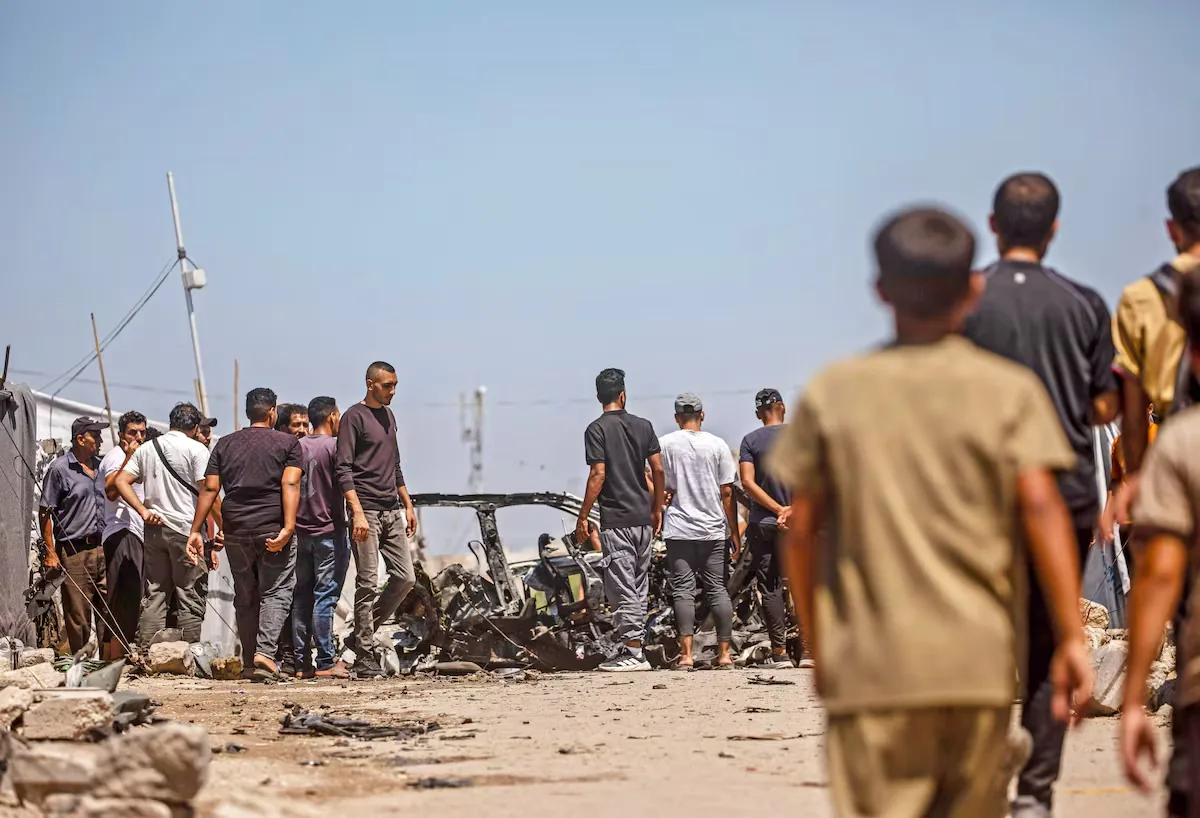
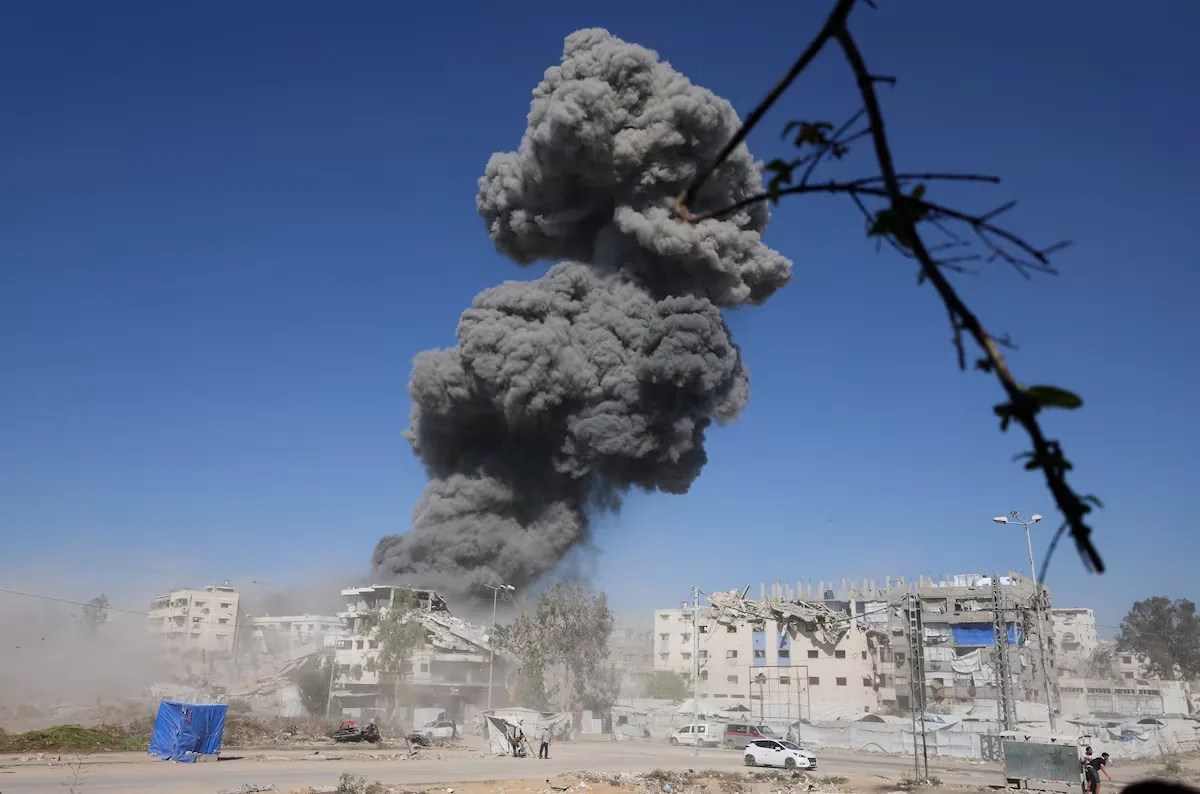
That is what many diplomats contacted by EL PAÍS fear, expressing frustration with the slowness the EU bloc has shown in issuing a serious warning to Israel since the start of the war in Gaza in October 2023, and the massacre it caused and continues. In two and a half years, the Israeli army has killed more than 73,100 people; a third of them children. The Gaza Strip is destroyed and without basic supplies.
“For many, it is a cause of deep and justified sadness and outrage that Europe has not done enough to pressure Israel over its atrocious actions,” warned Irish Prime Minister Micheál Martin last week in the European Parliament, whose country holds the rotating EU presidency this semester. Ireland has been, along with Spain, one of the countries that has most pressured the EU to act decisively against the disproportionate military actions of Benjamin Netanyahu’s government in response to the brutal Hamas attack on October 7, 2023. So far without success.
“I fully respect and understand that this is a sensitive issue for many countries and that it is testing many long-standing relationships and policies, but we simply must do more,” Martin insisted, referring to the small but key group of states, including Germany, Austria, and Hungary, that have so far blocked any concrete action — except for some targeted sanctions against violent settlers — against Israel or its government.
Foreign ministers will analyze in Brussels this Monday the three “options” that the European Commission reluctantly developed — it took the open mandate of European leaders to assign the task — to respond to the challenge of how to stop trade with Israel’s illegal settlements. Something that countries like Spain, the Netherlands, or Ireland have already agreed to unilaterally, but which will have no real impact unless done as a European measure.
The “options” range from creating a special licensing system (to ensure that Israeli products imported into the EU do not have an illicit origin) to imposing very high tariffs and the “total or partial” ban on importing products originating from illegal settlements. None of these measures would have a very significant economic impact on Israel — the Commission itself estimates that EU trade in settlement products last year amounted to around 75.6 million euros out of a total import volume with Israel of 15.3 billion — but Brussels does believe it would “send a clear message.”
In any case, the “options” are nothing more than very preliminary ideas in a long process that the European executive led by German Ursula von der Leyen — pointed out by many inside and outside European institutions as another major obstacle to any European measure against Israel — has already complicated. How? By opening the way, in its legal argumentation for the measures, for them to be considered political sanctions and not merely commercial.
This is a key nuance, because while commercial measures only require a qualified majority to pass, political ones require unanimity. And in a bloc like the European one, where countries like Germany carry a historical burden that, in order to protect Israel’s security as a “reason of state,” makes them oppose any action that could punish that country, if it is already difficult to gather a sufficient majority, requiring unanimity is almost impossible.
It is, therefore, a sign that the initiative will likely go nowhere and will return to the drawer of oblivion where, since the bloody conflict between Israel and Gaza began, practically all the demanded and even formally proposed measures have ended up.
That suggestion that sanctions will be debated as “political” measures has outraged many member countries — up to 18 of the 27, according to internal counts — who demand at least action against illegal settlements, although it is also unclear whether, when the time comes, they are all willing to vote in favor of a concrete measure, diplomatic sources acknowledge.
Read more “In summer we make more friends as social barriers fall”: why do adults socialize more on vacation?
The argument behind this demand, shared by at least part of the Commission that looks with suspicion at the maneuvers of its leadership, is that Israel’s settlement policy threatens to make the two-state solution (Israeli and Palestinian) that the EU supports to end the historic conflict in the region impossible.
“It is a mistake,” say several diplomats on the eve of Monday’s meeting. An opinion shared by the hundred international experts who in a recent open letter to the Commission argue that the “correct legal basis” to ban trade with illegal Israeli settlements is the qualified majority stipulated for common commercial policy in Article 207 of the Treaty on the Functioning of the EU.
“Claims that this ban can only be adopted unanimously are incompatible with the case law of the EU Court of Justice and are based on political, not legal, considerations,” the experts emphasize. Among them is Ignacio García Bercero. The Spaniard headed the Commission’s Directorate-General for Trade and was also responsible for the EU’s trade relations with the United States during Donald Trump’s first term.
Treating this ban as a political sanction “is a totally incorrect reading of the EU Treaty and, moreover, would contradict a series of measures that have been adopted by the EU, even by the Von der Leyen Commission,” García Bercero confirms in a telephone conversation with EL PAÍS, recalling among other things the recent ban on importing products associated with forced labor or the ban on importing Russian gas into the EU.
But Berlin, in a move suspiciously well choreographed with Brussels for many, has already made clear that it will cling to the unanimity argument that the Commission has enabled it to use to block any collective measure beyond targeted sanctions on settlers.
“Von der Leyen is making a serious political mistake,” says a former senior EU official on condition of anonymity. “She is protecting the German position when the direction of the member states’ discussion is clearly evolving towards the conclusion that action must be taken (…) and she is putting the Commission in a politically very vulnerable position,” the source points out, referring to other moments when the German leader has also “dragged her feet” in proposing sanctioning measures.
That was the case, for example, with the proposal to suspend the commercial part of the EU-Israel Association Agreement that Brussels finally did present in September. “[The proposal] was appropriate, but it was presented very late and when the situation in Gaza [with the famine declared during the summer due to Israel’s blockade of aid entry] was reaching such dramatic levels that Von der Leyen finally realized that if she did not present a proposal, she would also find herself in a very delicate political situation,” analyzes this former senior official.
It is true that this proposal has also not progressed because, as the EU High Representative for Foreign Policy, Kaja Kallas, noted in April, there was no qualified majority — 55% of countries representing at least 65% of the total European population — due to opposition from Germany and Italy, another country that has so far blocked measures against Netanyahu, although recently it has also been critical of his government.
The Commission has clung to this to insistently argue that it is not trying to block measures, but rather seeks to avoid proposing things that will then not pass and further expose the deep division the response to the Middle East conflict causes among the Twenty-Seven. “It is not about blaming others, but the ball is in the Council’s court,” Mediterranean Commissioner Dubravka Suica reminded this week.
It is true that Germany “is not alone,” European diplomatic sources acknowledge, fearing that the new discussion about the voting method will overshadow Monday’s debates. “There will surely be a bloc of states clinging to unanimity,” laments a diplomat frustrated by this Brussels maneuver that many did not see coming. “But it is nothing more than another purely delaying strategy to do nothing. Call it what you will,” he condemns.