





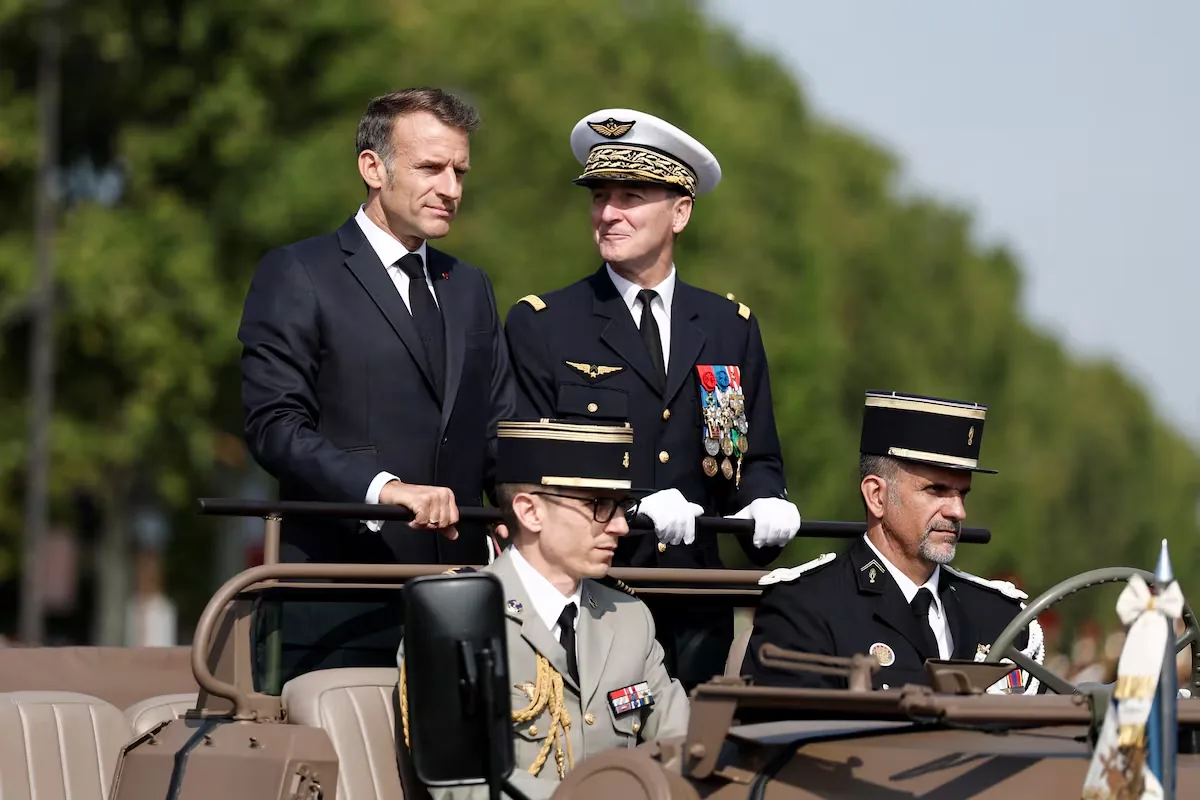
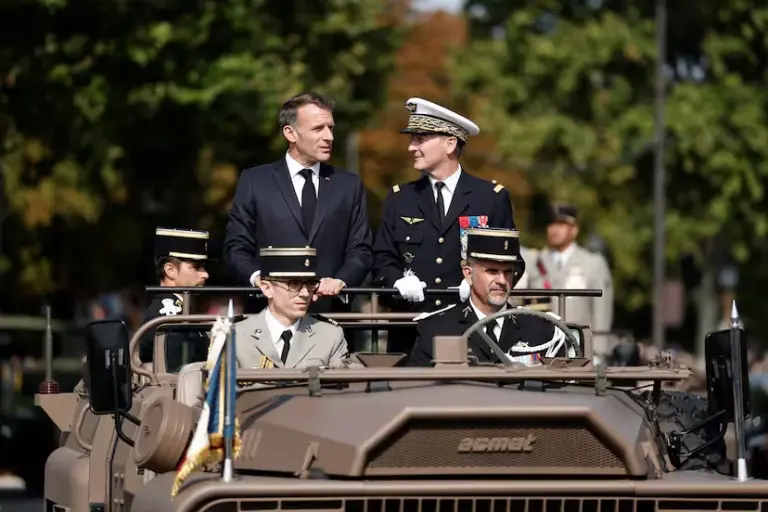
Emmanuel Macron, those close to him say these days, does not want anyone to evoke the scent of the end of the party. But everything in his universe, in his public appearances, already exudes an air of farewell less than a year before the presidential elections that will end his ten years in office and open the door to the unknown. Also the celebration of this July 14, 2026, with the traditional military parade that this time has been the largest in history, with 6,700 infantry soldiers on the Champs-Élysées and troops from all allied countries in the so-called coalition of volunteers collaborating in the mission in Ukraine. The head of state wanted to say goodbye just as he arrived: invoking the unity of Europe and the “strategic awakening” that the continent needs to face new threats.
Macron, standing at the rear of the military convertible SUV with which the head of state usually parades, sought with this kind of political testament to send a message of unity and strength supported by the Ukrainian president himself, Volodymyr Zelensky, and by up to 24 European heads of state or government, including the German Friedrich Merz, the British Keir Starmer, the Polish Donald Tusk, the Danish Mette Frederiksen, and the Spanish Pedro Sánchez.
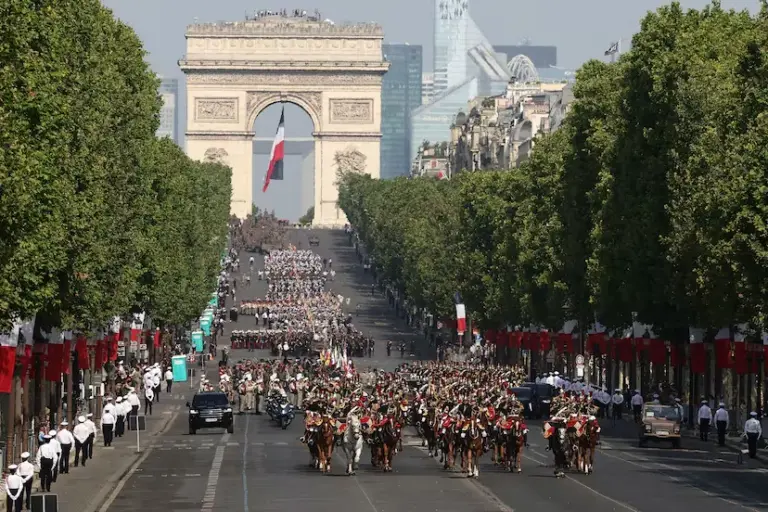
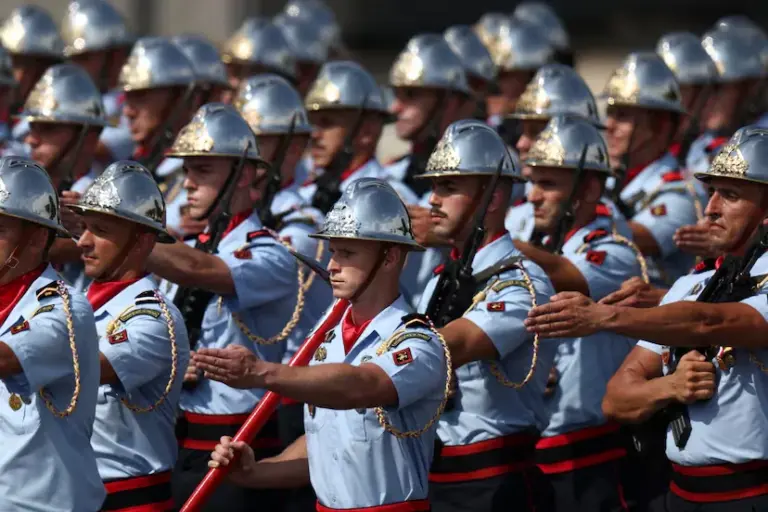
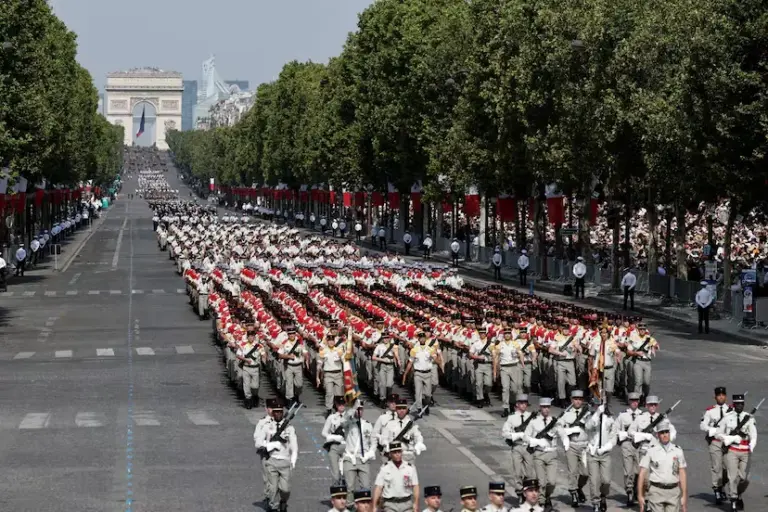
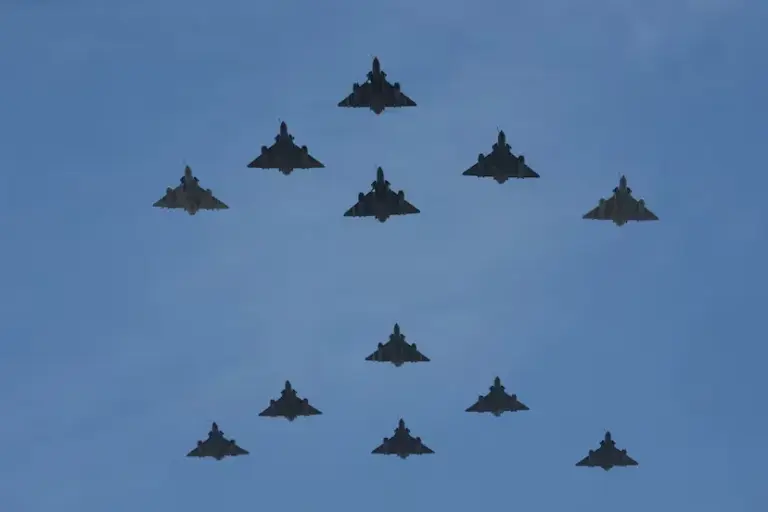
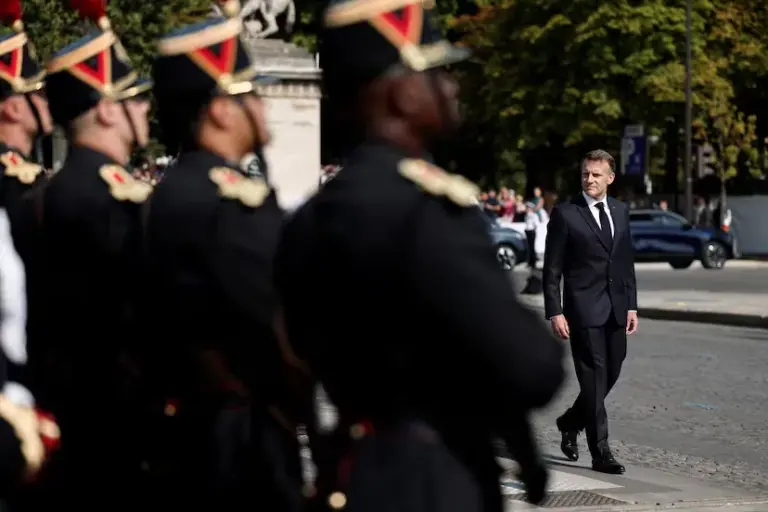
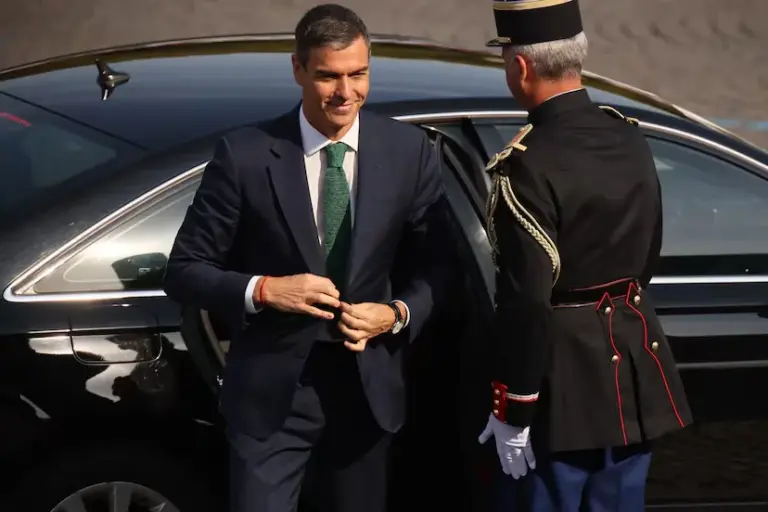
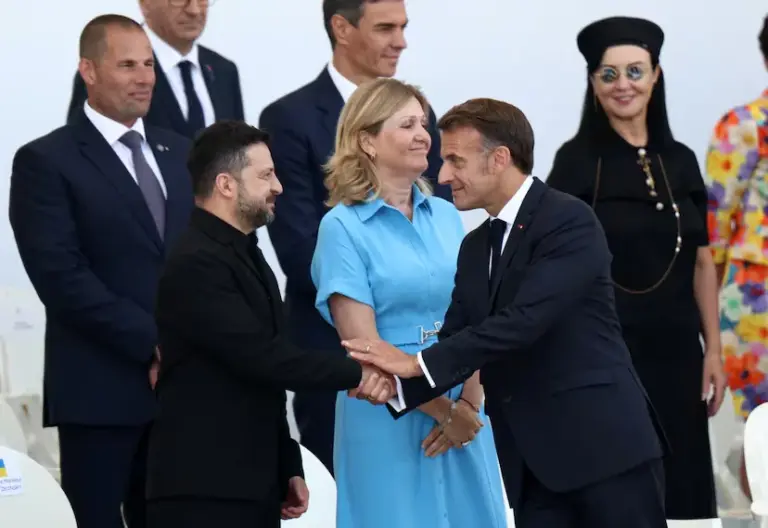
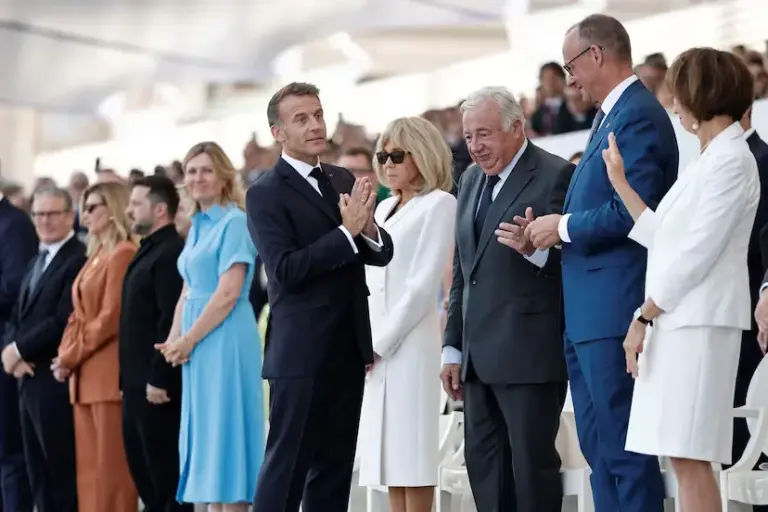
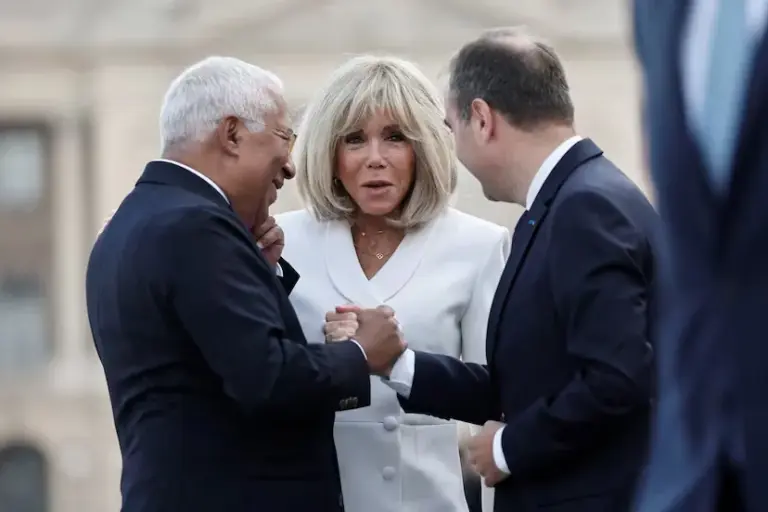
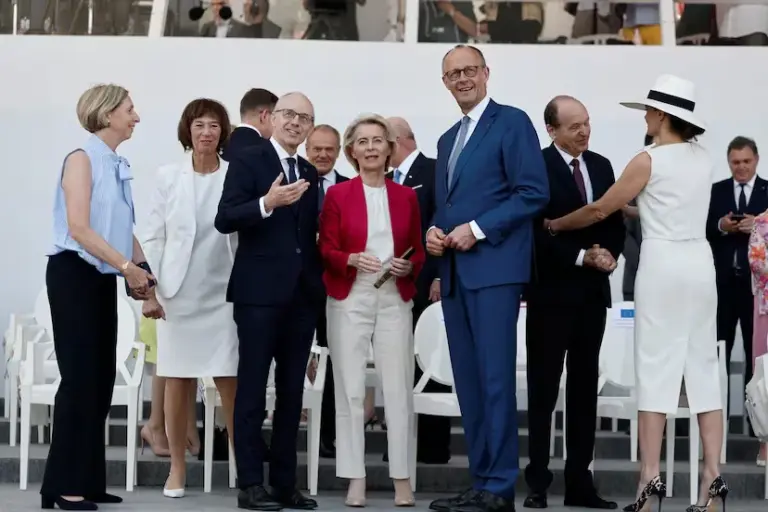
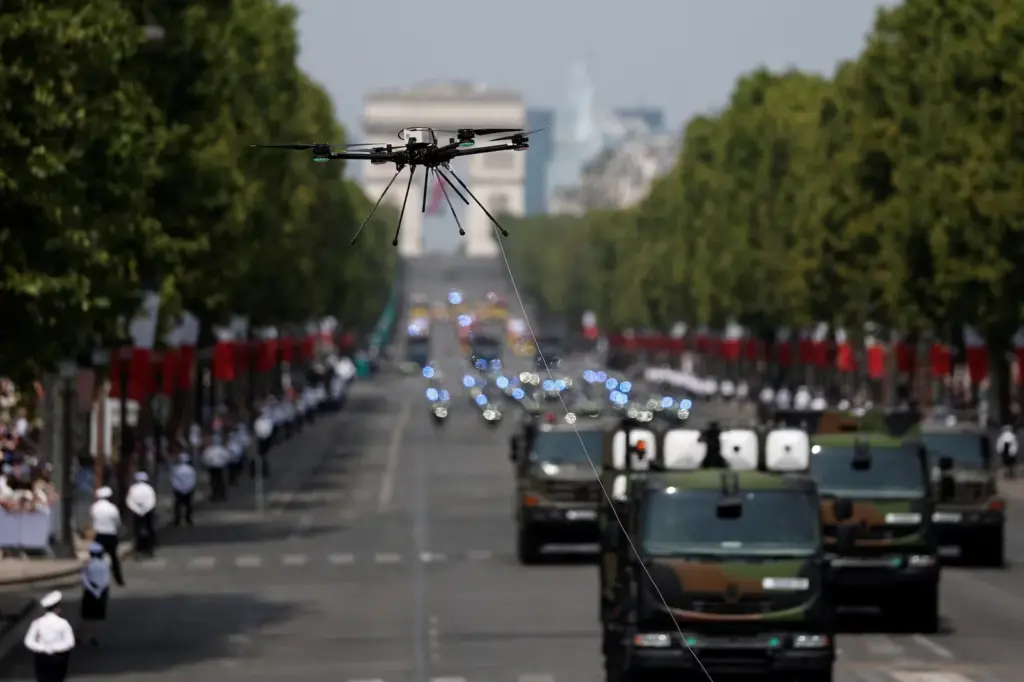
The military demonstration put 6,700 soldiers and 315 vehicles on the asphalt of the Champs-Élysées, while 98 planes and 31 helicopters crossed the clouds of the Paris sky. “We all fight together and stand by the Ukrainian people,” the French president had declared on the eve of the national holiday, at the end of a new coalition meeting held at the Hôtel des Invalides.
More than 500 foreign soldiers marched down the Champs-Élysées from Germany, Australia, Canada, Romania, the United Kingdom, Poland, and Ukraine. The Spanish armed forces were also present. A show of strength and unity that sends a direct message to Russia and Vladimir Putin: Europe is united alongside its allies to face the Russian threat.
The European deployment, and this is the paradox that allows a smile in Paris, comes just two months after Putin, fearing for his security, drastically reduced the May 9 celebrations, commemorating the victory over Nazism. France is willing to defend freedom “at the price of blood, if necessary,” the head of state had warned in his traditional speech to the Armed Forces.
Read more United States and Iran return to open war after a week of clashes in Hormuz
Anti-ballistic coalition
Many of the heads of state who participated in the event were in Paris the night before to attend the founding meeting of the coalition that, at the request of the Ukrainian president, formed an “anti-ballistic coalition.” The new group is made up of Germany, Spain, France, Italy, Norway, the Netherlands, Sweden, the United Kingdom, and Ukraine, and aims to coordinate the efforts of the different countries and their defense industries to produce interceptor missiles capable of shooting down Russian projectiles aimed at the Ukrainian civilian population.
This new coalition, which could be a first step towards increasingly close cooperation between European countries in defense matters, would allow the continent to gain autonomy from the US Patriot system, which dominates missile defense in Europe and on which Kiev heavily depends.
The coalition founded this Monday in Paris complements the possibility raised in recent days by the US president, Donald Trump, of allowing Ukraine to manufacture Patriot systems under license, of which Kiev suffers a severe shortage. However, the feasibility of starting that production in a short time remains uncertain.