





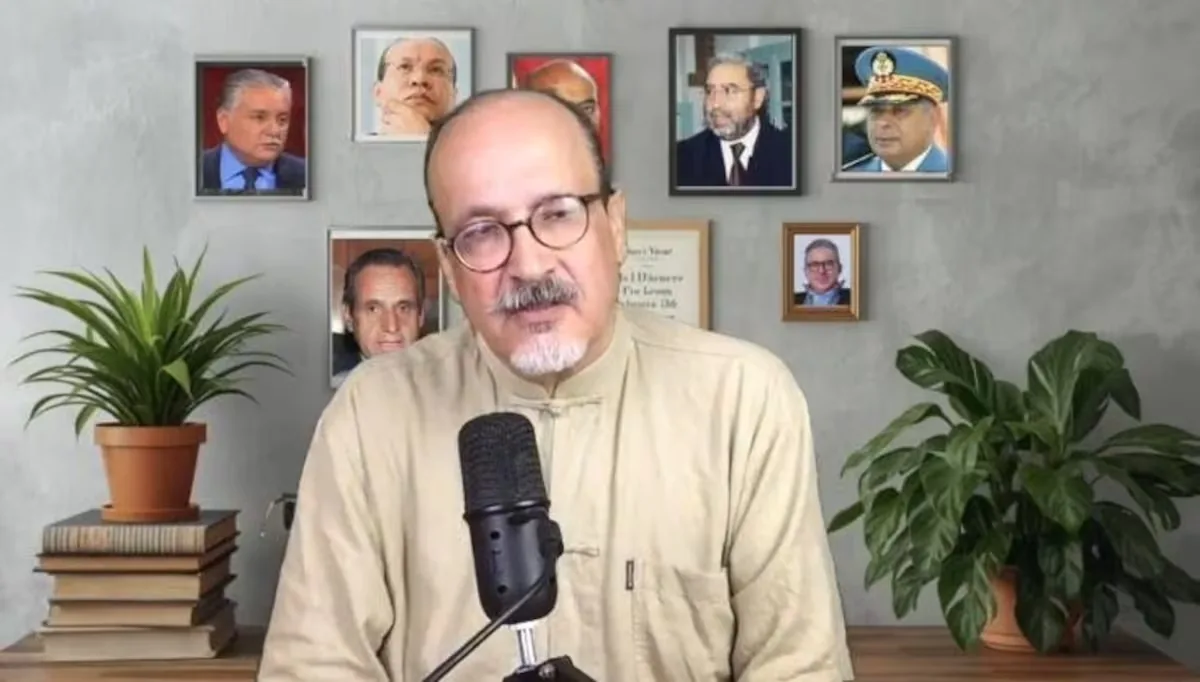
The Moroccan dissident journalist Alí Lmrabet, 66 years old, detained on Sunday in Tangier, was released this Wednesday in Casablanca, according to his family from Barcelona, where the reporter has lived in exile for two decades after having been imprisoned and disqualified in Morocco. Lmrabet had traveled to the Maghreb country and was immediately arrested on charges of committing offenses of insults, defamation, and false information through social networks.
Read more Sánchez after the disappearance of the Gibraltar Fence: “The last wall of continental Europe falls”
The Casablanca Prosecutor’s Office specified on Tuesday in a statement that the police detention had taken place so that the reporter could be “interrogated” about “defamatory and insulting statements against people and institutions” and “offensive expressions directed against State bodies.”
The Prosecutor of the Casablanca Criminal Court announced this Wednesday that Lmrabet has been released while the investigation continues, according to the state news agency MAP. The journalist has been interrogated by the Prosecutor’s Office and has undergone a medical examination. The Public Prosecutor’s Office has ordered the return of two computers, a USB memory, and a mobile phone that were seized from him upon arrival on Sunday at Tangier airport.
The release of Lmrabet, who also holds a French passport, took place a few hours before the official visit to Rabat by the French Prime Minister, Sébastien Lecornu, scheduled from this Wednesday for a high-level bilateral meeting.
Following the request launched on Monday by the Moroccan Association for Human Rights (AMDH) in favor of the journalist’s release, the NGO Reporters Without Borders (RSF) had expanded the demand on Tuesday, calling for his immediate release.
RSF, which ranks Morocco 105th on a list of 180 countries according to its level of respect for press freedom, has questioned “the use of the judicial system to silence critical voices.” “Criminalizing journalistic work cannot correspond to the application of the law: it is the perversion of justice in the service of repression,” emphasizes this organization defending persecuted reporters.
Read more The PSOE increases the gap with the PP despite corruption scandals, according to the CIS
Upon returning to his country after at least five years of absence, Lmrabet faced accusations and complaints filed by both “constitutional” authorities and officialist-profile associations.
A pioneer of informational openness at the beginning of the reign of Mohamed VI in 1999, the independent journalist was imprisoned in 2003 for questioning the figure of the monarch and chose exile in Spain from 2005 after being disqualified from practicing his profession.
Active on social networks with critical comments about the political current affairs of Morocco, Lmrabet has collaborated with Spanish and European media, including EL PAÍS. In Morocco, he directed the magazine Le Journal and founded the publication Demain, as well as various satirical weeklies in Arabic and French. All of them were closed by the Justice after complaints from authorities and officialist associations. Among many other professional awards, in 2005 he received the José Couso Prize for Freedom of the Press.
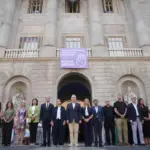
Entities such as the Federation of Journalists’ Associations of Spain (FAPE), the College of Journalists of Catalonia, a professional association to which he belongs, and the Autonomous University of Barcelona, with which he is linked through his participation in academic activities related to information, had also demanded his release on Tuesday.