








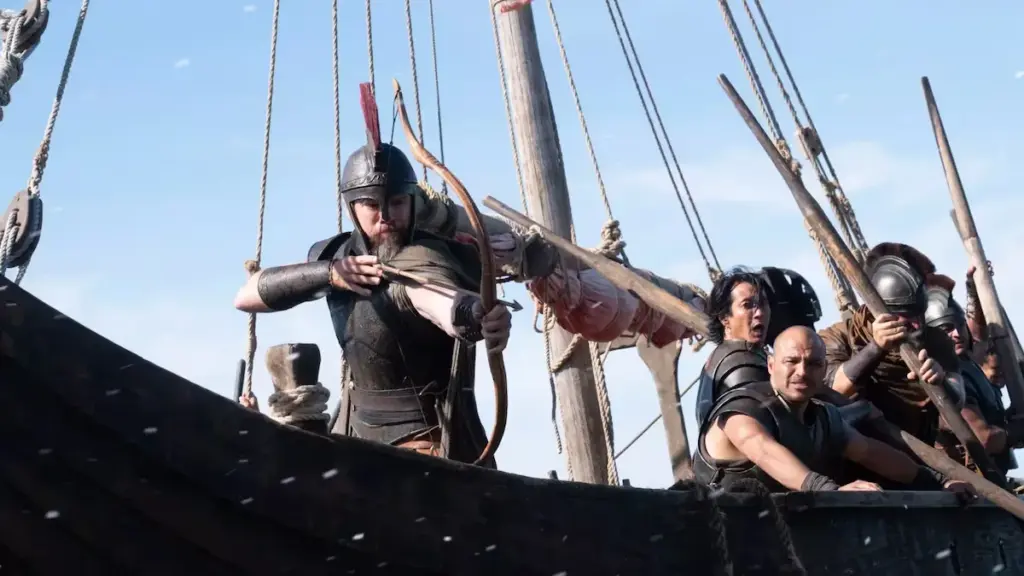
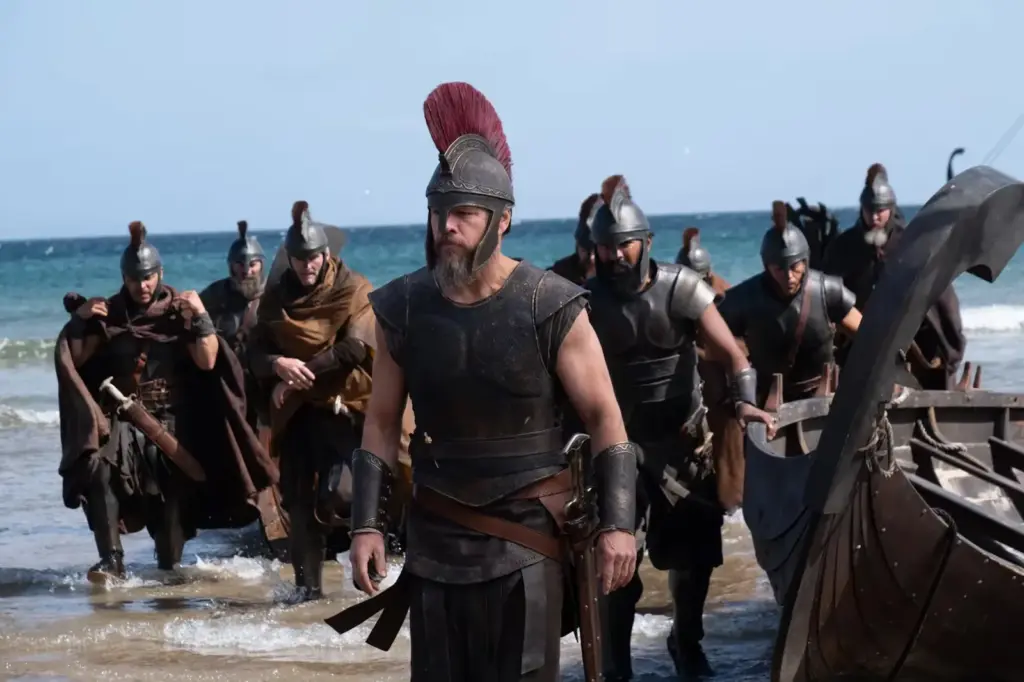
With Christopher Nolan’s The Odyssey, Matt Damon becomes the new face of Ulysses, a character who has had numerous portrayals from the earliest artistic representations of the ancient Greeks to his penultimate incarnation in film —Ralph Fiennes in The Return of Ulysses (2024), by Uberto Pasolini—, passing through the iconic Kirk Douglas in Ulysses (1954), by Mario Camerini, or Armand Assante in The Odyssey (1997), by Andréi Konchalovsky. Giving the exact face and body to the hardworking king of Ithaca, Ulysses or Odysseus, is not easy.
The physical descriptions of that clever man, “of many wiles,” that Homer makes in the Iliad and the Odyssey are not very precise. We know he has “broad shoulders,” a wide and strong chest, and that he is of medium height: Priam describes him in Book III of the Iliad in the passage where from the walls of the Scaean gates the king of Troy asks Helen to identify the Greek leaders, like a fan wanting to know the rivals of the opposing team. Helen compares him in the ranks of the Achaeans to a ram with thick wool moving among a flock of sheep. He is not handsome, unlike in the enemy camp, the “godlike” Paris, “the best in appearance” of the whole war. Agamemnon is a head taller.
But Ulysses has charisma, he commands respect, as a warrior and, eloquent and persuasive, when he speaks. Tanned skin (that’s what you get from going by ship, fighting outdoors, and, of course, being in the Bronze Age), we are told in Book VI of the Odyssey that he had thick hair, similar to the flower of the hyacinth (?). And he possesses an eroticism of what is today called chad, “sexually active alpha male,” with a quarterback-type build.
If anyone could see Ulysses well, apart from Circe, Calypso, and Penelope — all of whom, goddess, nymph, and mortal respectively, slept with him — it was the Phaeacian princess Nausicaa, with beautiful braids, who found him stark naked lying on the beach (he took a leafy branch to cover “his manly shame”). He made a good impression on the maiden and she thought he resembled “the gods who rule the wide sky”: love at first sight.
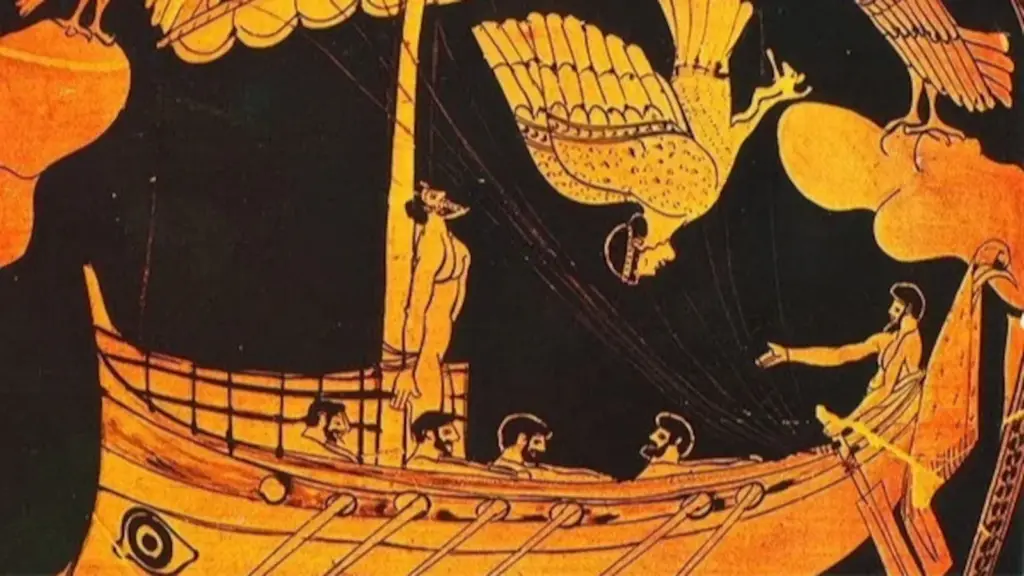
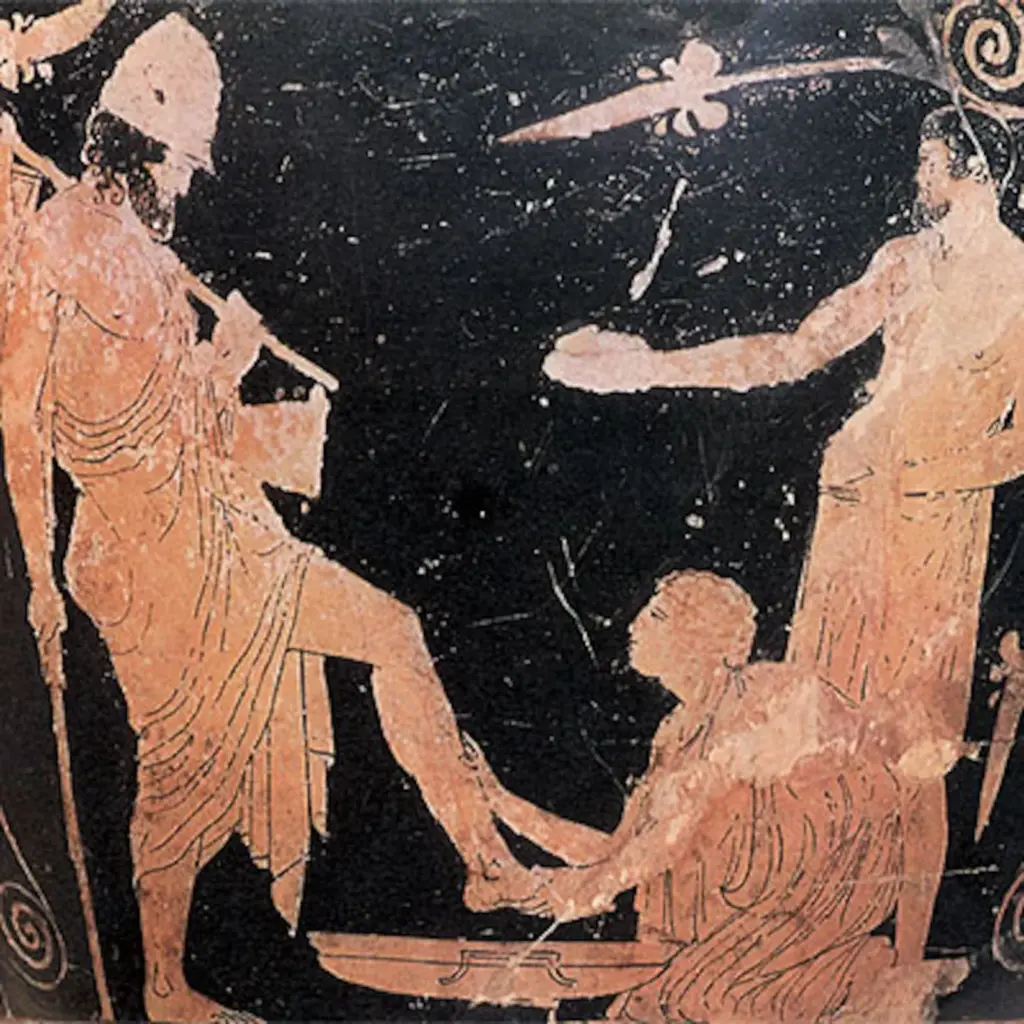
Essentially, you can imagine Ulysses with quite a bit of freedom as long as you give him long hair tangled by the sea air and the helmet (preferably Corinthian), a beard — although Assante does not have one at first and lets it grow: a rare beardless Ulysses before leaving for Troy — and wit. Matt Damon’s, with a sharp beard, quite chad if we move from the Homeric frame to the manosphere, seems inspired by the very well-known representation of the hero tied naked to the mast of his ship in the episode of the sirens painted on an Attic vase (stamnos) from 480 BC exhibited at the British Museum. A cup (skyphos) from the same period and museum shows Odysseus drawing the bow to massacre the suitors with curly hair, and on another jar he is seen stabbing the pole into Polyphemus’s eye and wearing short clothing that exposes the aforementioned “manly shame” (not epic, little thundercock).
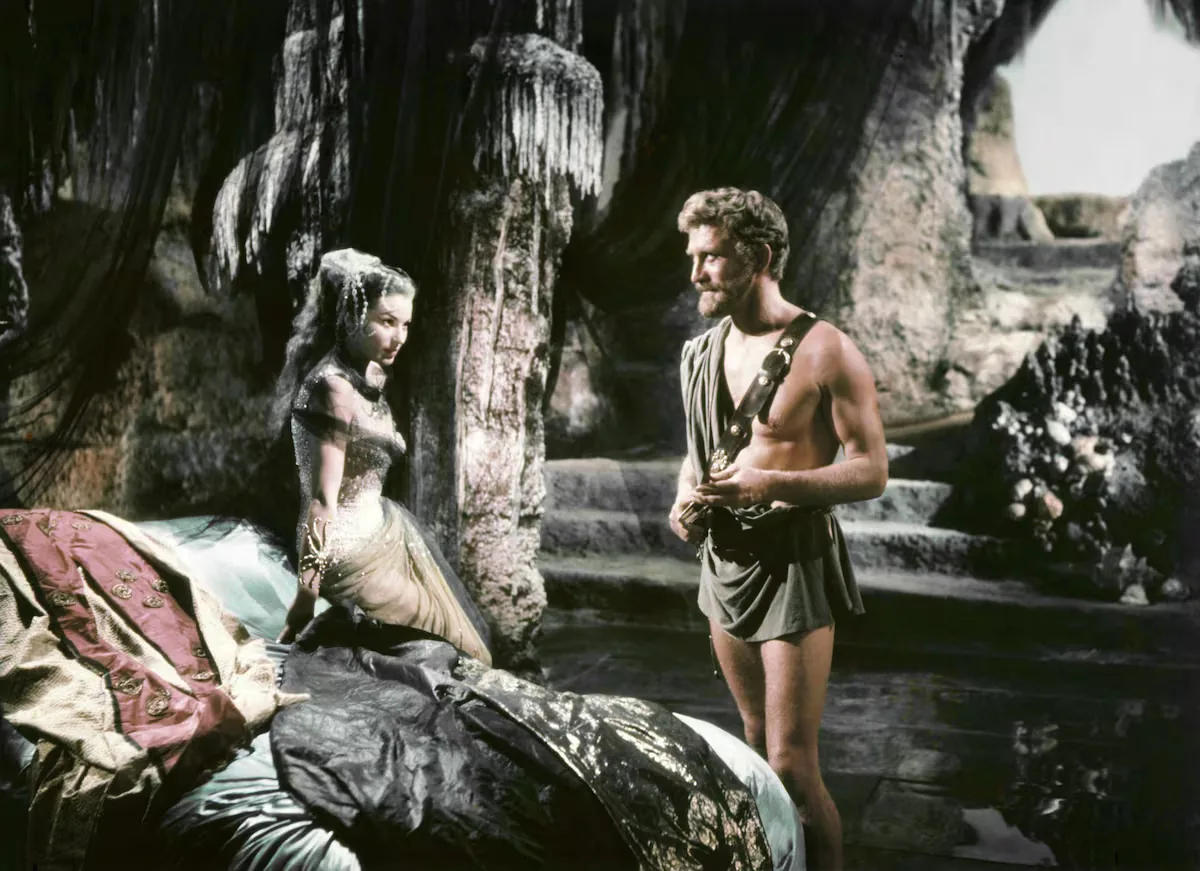
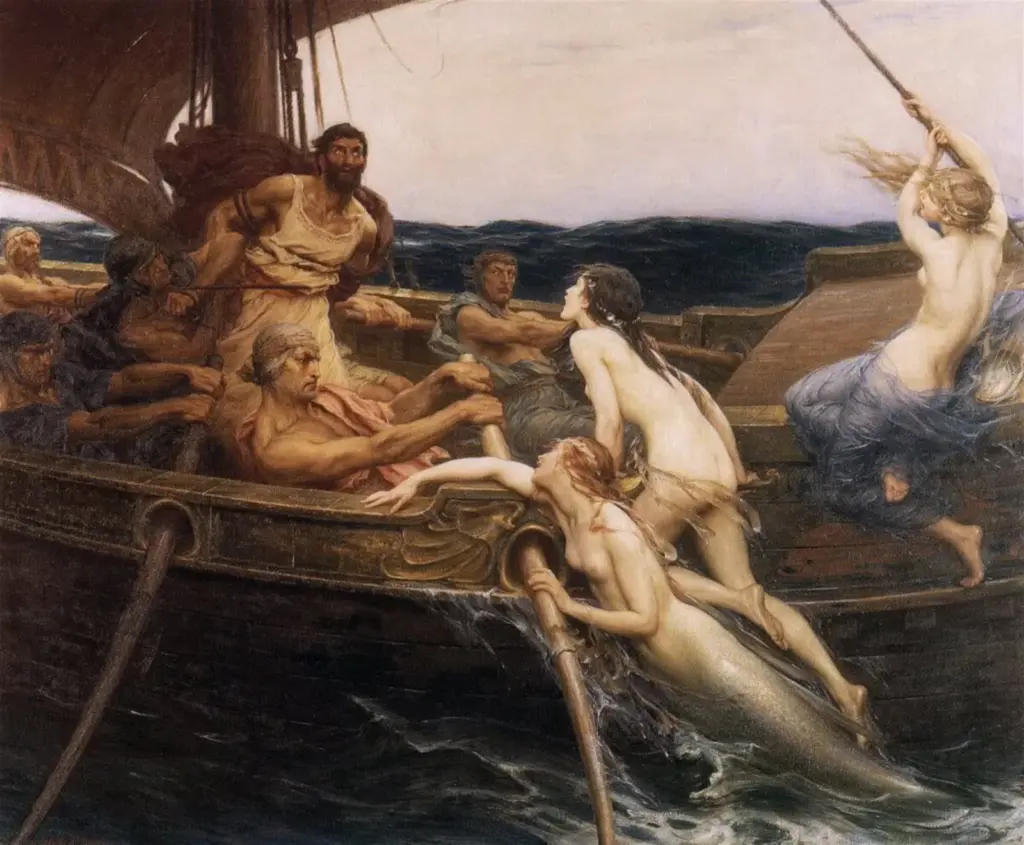
In the sirens sequence, Kirk Douglas’s Ulysses resembles quite a bit the famous painting by Herbert Draper Ulysses and the Sirens, in which the fabulous creatures are true mermaids, Andersen-type sirens, much more attractive than those on the Greek vase, where they were canonically depicted as unattractive birds with human heads. The film, whose script involved Ben Hecht and Irwin Shaw!, holds up very well despite some blunders like making Polyphemus’s sheep life-sized (which made it impossible to properly show the passage where Ulysses and the other survivors escape clinging to the fleece of the animals’ bellies) or the cyclops himself shouting when the pole is stabbed “my eyes, my eyes!” in plural, when he only has one. This Ulysses, produced by Carlo Ponti and Dino de Laurentis, and considered by some experts like Rafael de España (The Epic Screen, the Heroes of Antiquity Seen by Cinema, T&B editions, 2009) the best adaptation of the Odyssey and “one of the best films about the ancient world,” had other great attractions besides Kirk Douglas, such as Silvana Mangano in a double role — and the image is worth it — as Penelope and Circe, Rossana Podestà (Nausicaa), who would later rise as the lead in Helen of Troy (1956), by Robert Wise — a film with one of the best wooden horses seen on screen — and Anthony Quinn (Antinous, the worst of the suitors) who would reprise as a Greek ten years later dancing the sirtaki in Zorba.
“Kirk Douglas’s is my favorite Ulysses,” writer Carlos García Gual, a Hellenist and academic with an extensive bibliography dedicated to the classics including titles featuring Ulysses such as Sirens and The Death of the Heroes, and author of an excellent translation of the Odyssey published by Alianza, tells this newspaper. “I think that adventurer look and that rascal face the actor has suit the character very well.” Certainly, Matt Damon will have The Martian and Jason (sic) Bourne to prove his survival skills away from home and his fighting prowess, respectively. But Kirk Douglas, who grew fond of the sword-and-sandal genre and later made Spartacus, has portrayed skilled sailors like Ned Land and Einar, and the resourceful lighthouse keeper Will Denton, not to mention, on dry land, the brave Rolf in The Heroes of Telemark. García Gual has not yet seen Nolan’s The Odyssey, but he likes what he has perceived in the trailers and that the director “has a sense of the epic” and that way of creating landscapes and fantastic worlds like in Interstellar.
Does he find it difficult to bring Ulysses to the screen? “Well, you have to know how to give and reconcile the two central aspects of the character which are the adventurer, the polytropos, the one who takes many turns, and the narrator, the man with an extraordinary sensitivity for storytelling. Ulysses is the great storyteller, much more than Gulliver or Sinbad. And we must not forget that he is an individual who enchants women, he is charming.”
There is something sinister about him sometimes: one of his epithets is “destroyer of cities,” and the merciless way he kills the suitors — including Eurynomos, whose brother, a travel companion of Ulysses, was one of those eaten by the cyclops — and has the twelve palace maids who fraternized with them hanged. “He can be, he is a warrior but what characterizes Ulysses is his wit and not the use of force.”
The scholar is very eager to see how Nolan has represented the Sirens. In Kirk Douglas’s film, they were not seen, only their voices were heard, spectral like a Penderecki choir (“you are in Ithaca”), while Ulysses’s ship — much better than Nolan’s, which looks like a Viking drakkar — passed by their desolate rocks worthy of Böcklin’s island covered with skeletons like a dreadful guano. They were also smelled (“a strange smell in the air, like dead flowers”).
Read more Dying on the fifth floor of Gregorio Marañón: “Here they give me peace and love”
Since we’re at it, how was translating the Odyssey? “A whole experience. For me, it is the great adventure book and I tried to be very faithful and avoid the overly sentimental and archaic tone of other translations. The Odyssey does not have the tragic weight of the Iliad. It is adventurous, fantastic, and women have a great role. How many women are in the Odyssey!”
García Gual quite liked Ralph Fiennes’s incarnation of Ulysses, sober, restrained, focused, the look of someone who has seen cities burn and the athletic but worn body, with muscles like strong ship ropes, of someone who has fought savagely and faced thousands of dangers. Besides the connection between The English Patient and the patient Ulysses, there is another with T. E. Lawrence: Fiennes played him in Lawrence of Arabia: A Dangerous Man (1992), and Lawrence, it is known, made a very good translation of the Odyssey praised for its naturalness.
The academic is pleasantly surprised by the excitement sparked by Nolan’s adaptation. “It’s curious because it seems like it’s going to rediscover the Odyssey for us, which is a book that has always been widely read, but well, all for the dissemination of the classics.”
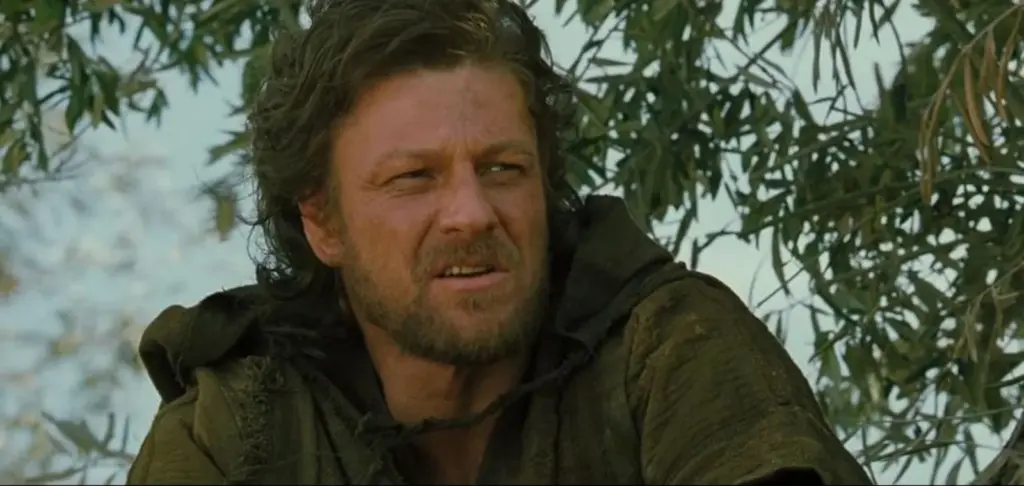
Another good Ulysses that cinema has given us is Sean Bean’s in Troy, and it has been joked that it is one of the few roles in which the actor does not die. And it is not because Wolfgang Petersen did not disregard Homer and made people die in the Trojan War who did not die there like Menelaus (we would not have the scene in the Odyssey where he and Helen receive Telemachus) and Agamemnon (we would be left without the entire Oresteia). Bean is very good as Ulysses, with a touch of pessimistic skepticism that suits him well and lines like “you have your sword and I have my tricks” (to Achilles), “war is young men dying and old men talking,” “fear is useful,” or “sometimes you have to serve if you want to lead.” We are left wanting to see him embark on the adventures of the Odyssey, from which Troy took the episode of the wooden horse and the fall of the city that does not appear in the Iliad (in the Odyssey Menelaus tells Telemachus, Ulysses’s son, when he stops in Sparta looking for information about his father’s whereabouts).
Assante’s Ulysses is somewhat soft, although Konchalovsky’s adaptation, with Pasolinian tones, is very good and even shows the episode of the snake killing Laocoön, which is not easy even in sculpture. The hero’s ship sail looks like that of the Kon Tiki and the flying Hermes, Peter Pan. The wonderful Greta Scacchi played Penelope and Isabella Rossellini, Athena (the role Zendaya plays now). Irene Papas appeared as Ulysses’s mother.
Of course, Ulysses, who has appeared in films since the very beginnings of cinema — the short The Island of Calypso (1905), by George Méliès, with the filmmaker himself as the protagonist or The Return of Ulysses (1908), where he was played by Paul Mounet, a member of the Comédie Française, no less — has had other faces besides those mentioned. In 1911, Giuseppe De Liguoro played him with a Nabuchodonosor air in the silent Italian film Homer’s Odyssey, whose floating sirens with raised tails are a sight to behold and which featured costumes and sets created by La Scala of Milan. Yugoslav actor Bekim Fehmiu played Ulysses in Odissea (1969), by Franco Rossi, Mario Bava, and Piero Schivazappa, with Papas as Penelope, Barbara Bach as Nausicaa, and the voluptuous Scilla (!) Gabellini as Helen of Troy. We can add George Clooney’s face in the Coen brothers’ adaptation of the Odyssey set in Depression-era Mississippi, O Brother, Where Art Thou? (2000). And we have seen Ulysses in operas and theater, very amusingly played by Joglars (the group members shared the role), by Rafael Álvarez El Brujo, by Alberto Closas in Why Do You Run, Ulysses, by Antonio Gala, or by Manuel de Blas in Last Landing by Fernando Savater, among many other works.
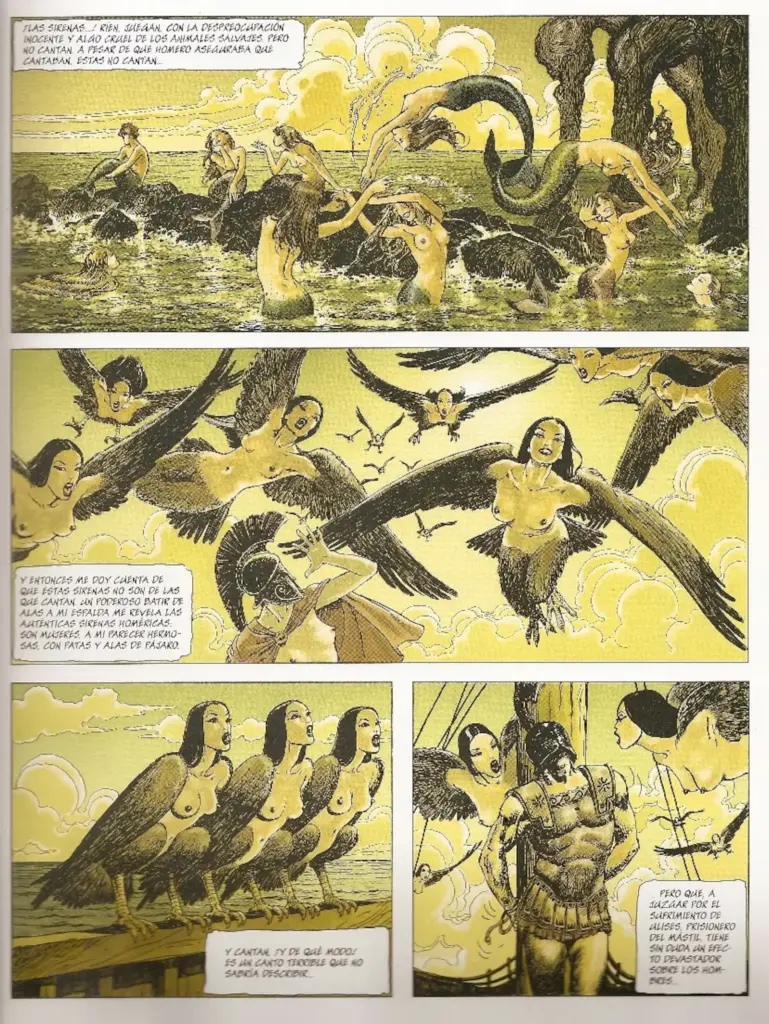
A special mention deserves the portrayal of Ulysses in comics. Milo Manara made him appear in The Odyssey of Giuseppe Bergman (Planeta): an impressive black silhouette taken directly from Greek ceramics that gives his helmet to the modern traveler character of Manara to live his experiences. Noteworthy are the sensual flying sirens. Lumen has now published, in the midst of odisseamania, a volume with panels from The Odyssey of Giuseppe Bergman and other fascinating illustrations about Homer’s poem by Manara, who directed an animated film for young people focused on Telemachus’s travels.
In another style and in striking black and white, Martín Saurí drew, with a script by Pérez Navarro, his formidable version of the Odyssey (Norma, 2012, 25th anniversary edition), in which Ulysses appears with a triangular beard and a flag-worthy body that no real actor could give without AI or special effects like 300. The women of the story, including the sirens, are equally impressive. Not forgetting the classic comic Age of Bronze, A Thousand Ships, A History of the Trojan War, by Eric Shanower (Image, 2001), in which Ulysses is depicted with a very high forehead and large receding hairline.
To finish, an emergency kit to approach Nolan’s The Odyssey: the aforementioned García Gual translation of the Homeric poem, the very complete issue (67) dedicated by the magazine Desperta Ferro Archaeology and History to the Odyssey, the illustrated book from the same publisher The Legend of Odysseus, by Peter Connolly, which collects the historicist reconstructions of the great mythic illustrator of Homeric myth, Stephen Fry’s rereading (Odyssey, Anagrama, 2026), and the delightful Crossing the Wine-dark Sea (Profile, 2026), by classicist and translator of the Odyssey Emily Wilson, with an indispensable chapter on that task (Translating the ‘Odyssey’) and another beautiful and enlightening one on Helen of Troy in which she debates her responsibility in the war and compares the woman for whose face a thousand ships were launched (Marlowe dixit) with Cinderella. And of course, we must always carry one of the small metal figurines of Greek warriors sold at the British Museum: Ulysses in the pocket, to be able to look at his face all the time.