







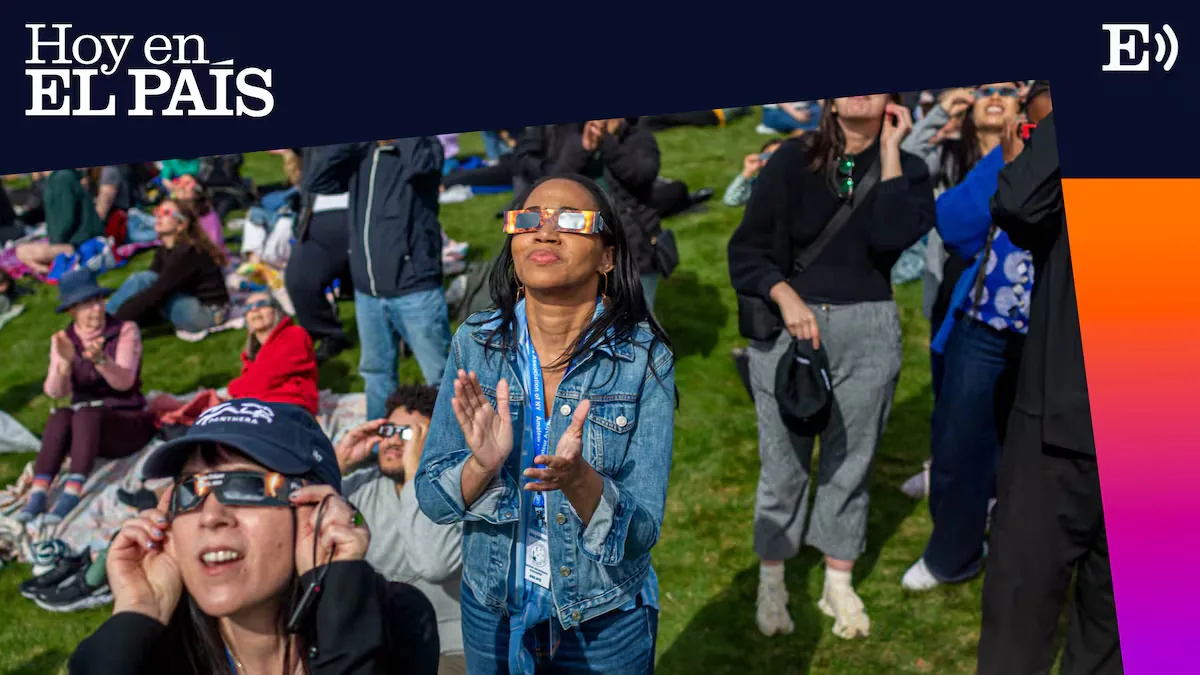

This Sunday, July 19, almost all of Spain will be looking at a screen to watch the Men’s National Football Team play the World Cup final. In less than a month, another event will also have the effect of uniting almost the entire country, but it will be by looking at a very different place: the sky.
Read more 15 ideal noir novels for summer analyzed and reviewed to choose well
On Wednesday, August 12, around 8 in the evening, the first total solar eclipse visible from the Iberian Peninsula in more than a century will begin. Another will be visible in the south in 2027 and another annular one in 2028, but what makes this summer’s special is that its path of totality covers many places. From west to east, from Coruña to Palma, it will pass through Oviedo, León, Zaragoza, or Valencia, and through many towns and cities of depopulated Spain. There are hardly any hotels left and prices and events have skyrocketed. Over the centuries, an eclipse has been used to carry out astronomical measurements, to awaken scientific vocations, or even to demonstrate the theory of relativity. In 2026, the main function of a phenomenon like this is to live a collective experience.
This podcast is a conversation between Eva Villaver, deputy director of the Canary Islands Institute of Astrophysics and member of the National Eclipse Commission, and Pampa García Molina, science journalist and director of the Science Media Center.
Read more The many faces of the clever Ulysses
How to listen to Hoy en EL PAÍS?
- You can listen to it every morning on the EL PAÍS website:
Hoy en EL PAÍS
- On your favorite podcast platform:
Spotify | Apple Podcasts | Youtube | iVoox |Podimo
- You can also ask your smart speaker for it:
Alexa
If you have complaints, questions, or suggestions, write to defensora@elpais.es or send an audio to +34 649362138 (does not answer calls).