


The war against Ukraine has claimed hundreds of thousands of lives in Russia, but the casualties of the conflict unleashed by Vladimir Putin are not evenly distributed across the country’s geography; rather, they are proportionally more numerous in poor and depressed territories and especially affect vulnerable non-Russian national minorities.
Read more Loyalty, telegenics, and testosterone: Hegseth’s extravagant career at the head of the Pentagon
A minimum of 230,624 Russian combatants died from February 24, 2022, to last July 2 in the war against Ukraine, according to the nominal count carried out by the BBC and the Mediazona platform based on open and verified sources. These are the most modest estimates, as the Russian administration does not publish casualty data, which can, however, be partially gathered from local reports, obituaries, burials, or social networks.
By region, the Republic of Bashkortostan (more than 10,000 dead), followed by Tatarstan (8,800), lead the highest number of lethal casualties on the front, according to BBC data.
The population of Bashkortostan was just over four million people in 2025, and according to the 2020-2021 census (the last conducted), 36.89% were Russians, 31.01% Bashkirs, and 23.82% Tatars. Meanwhile, Tatarstan had four million inhabitants in 2025, and according to the latest census, Tatars made up 53.6% of its residents.
Unlike Soviet passports, ethnicity does not appear on Russian passports, but citizens can declare it voluntarily when censused. Between 2020 and 2021, more than 105.5 million (almost 81% of Russia’s population) identified as “Russians.” Tatars—more than 4.7 million—were the country’s second-largest ethnic community.
The BBC and Mediazona counts do not indicate the cultural and ethnic affiliation of the dead, only their residence. By way of comparison, in Moscow, populated by more than 13.2 million in 2025 and 70% Russians, casualties, according to the British media data, were 5,926. In the Siberian Republic of Tuva, on the borders with Mongolia, with a population of just over 338,000 in 2025 and almost 89% of residents identified as Tuvinians, casualties were 2,037. The difference in proportions (5,926 dead out of 13.2 million inhabitants in Moscow and 2,037 out of 338,000 inhabitants in Tuva) is telling.
On the problems of minorities, a video circulated from the town of Samilaj, populated by members of the Avar ethnic group, in southern Dagestan, illustrates this. From there, a group of neighbors asks the leaders of that Caucasus republic for help. They form 400 families, have 75 young people fighting in Ukraine, and feel abandoned. The road, school, clinic, social club, and village library are in ruins, and their boys, from the front, send them money to help. The authorities, they say, remember them “on election days or when someone has to be sent to war.”
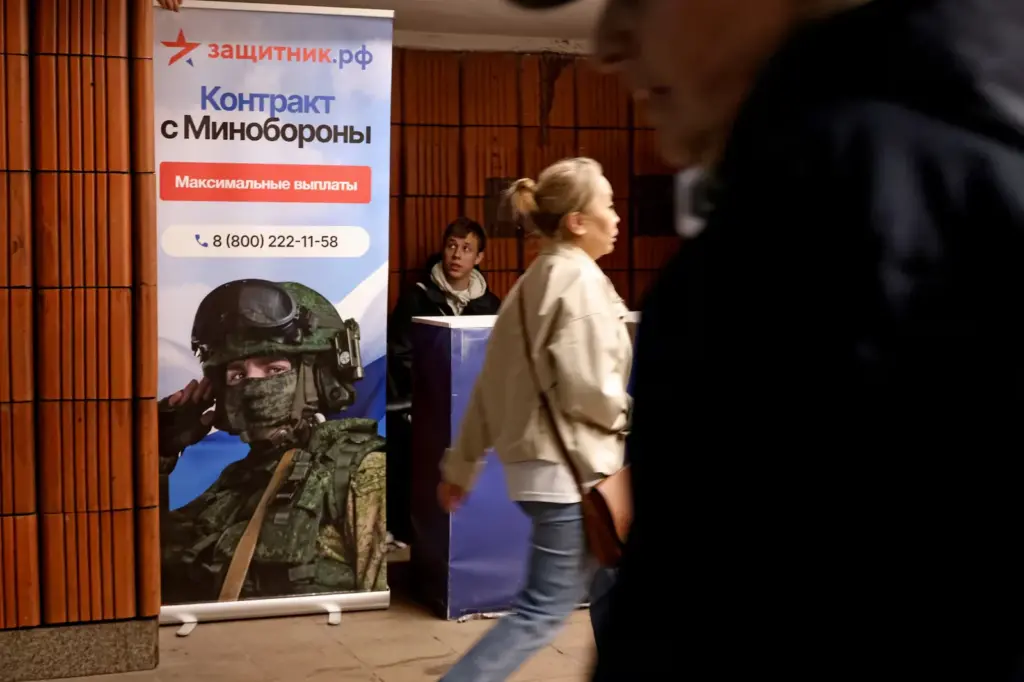
In theory, Russian legislation gives indigenous minority populations the possibility to perform alternative civil service, but this protective measure “is not implemented,” explains Pavel Sulyandziga, an activist from the Far East belonging to the Udege community, from exile. “We are about 1,800 people, a total of four villages in the Usuri taiga,” he specifies.
“The war harms indigenous populations a lot, especially those in Siberia, not only because a disproportionate number of these minority populations are sent there, but also because many of ours volunteer, as they live in depressed areas where there is no work or opportunities to earn money,” explains the activist, “Moreover, docility, willingness to comply with authority’s orders, and also complexes worsen the situation,” explains Sulyandzhiga.
Read more Spain, country in arms: how the Civil War was told in United States newsreels
“Members of ethnic minorities lived for a long time as if they were second-class people, of an inferior race, and the war appears as the possibility to prove they are equal to Russians,” he adds. Russian authorities declared this activist a “foreign agent” and labeled the Batani foundation for indigenous solidarity, which he directs, as “undesirable.”
Sulyandziga is a member of the platform of Russian interlocutors in exile appointed by the Assembly of the Council of Europe. The activist believes it is necessary “to educate the exiled Russian opposition about the rights of indigenous minorities.” “We will always be in the minority, whether in Russia or China or any other country that forms if Russia disintegrates,” he says.
“Minorities do not suffer the war more because of their nationality, but because of their economic situation, poverty, or lack of work,” says Alexandra Garmazhápova, founder of the Free Buryatia entity, also from exile. Russian authorities included this political scientist on their list of “extremists and terrorists” and have sentenced her to more than seven years in prison in absentia.
“Our count of Buryatia residents killed in the war is 5,032 people (more than the 4,800 estimated by the BBC), and that number is proportionally very high for a territory with less than half a million people,” she says. “The economic situation pushes people regardless of their nationality. The biographies of the deceased, both Russians and Buryats, are very similar: they were born in the countryside and in large families, were the eldest among their siblings, and did not finish secondary education. Besides being poor, they have responsibilities with other family members and, for the most part, no possibility of social advancement,” concludes the political scientist.
Buryatia is one of the poorest regions of Russia, despite its proximity to Lake Baikal, which could make it a great tourist destination, explains the activist, but it is not even gasified. “Imagine how it sounds to the ears of a Buryat, who has felt belittled by Russian chauvinism and heats with firewood, the argument of ‘denazifying Ukraine’ and the threat of leaving Europe without gas,” she exclaims. The Buryats, close to the Mongols, are of Buddhist culture, and their religious leader, Lama Damba Aiusheev, stated: “Our Buddhists fight today for the Russian world, for the Slavic world, to preserve our [Mongol] world.”
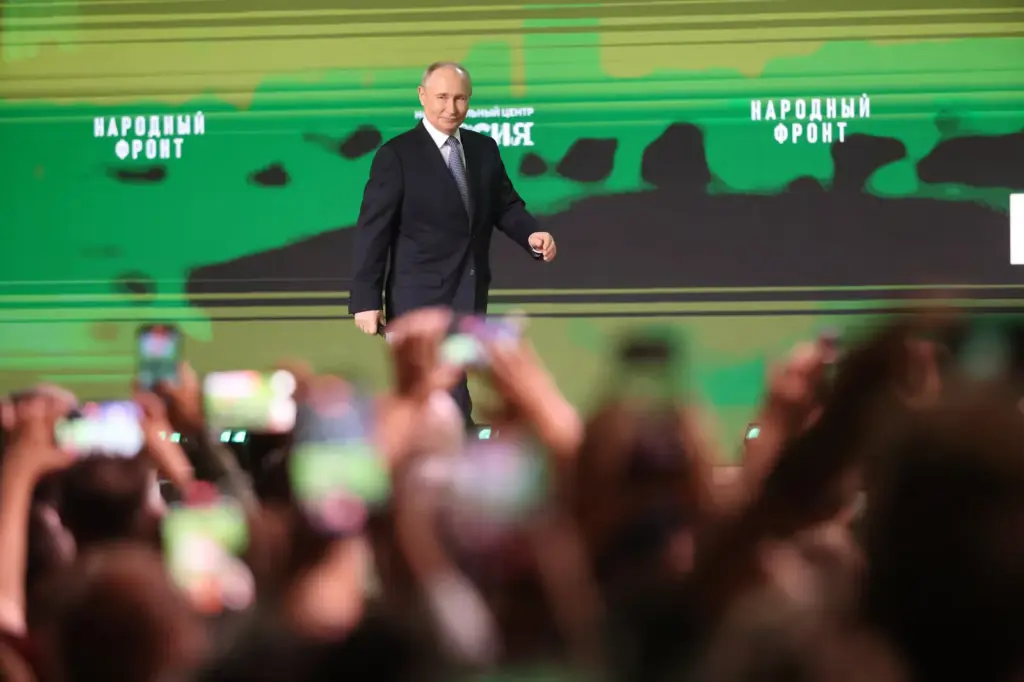
Those who seem to be suffering the war especially are the indigenous minorities, communities of up to 50,000 inhabitants. In total, Russia has 47 such communities, and Putin met with a group of their representatives last April, after establishing for the first time by decree an annual day dedicated to them. The meeting between the president and the selected, dressed in regional costumes or military uniforms, was grotesque, judging by the video released on the official Kremlin page.
After emphasizing the unity of the peoples of Russia and calling them a “single family,” Putin went on to talk about local gastronomic specialties. Determined beforehand to emphasize the continuity between Soviet soldiers of World War II and fighters in Ukraine, the Russian leader even thanked a representative of the Khanty ethnicity, who recounted the difficulties in finding her grandfather’s grave, who died on the front in that conflict, because her grandmother burned her husband’s letters, including the death certificate, when she remarried. “Our future is built on reverent respect for the memory of our ancestors,” the president concluded, without paying attention to the story.
Among the president’s guests was also a woman of the Besermyan ethnicity, a widow with three children of a fighter killed in Ukraine; two veterans of the invasion of that country, and the aunt of a young man fighting on the front. And all thanked Putin.