





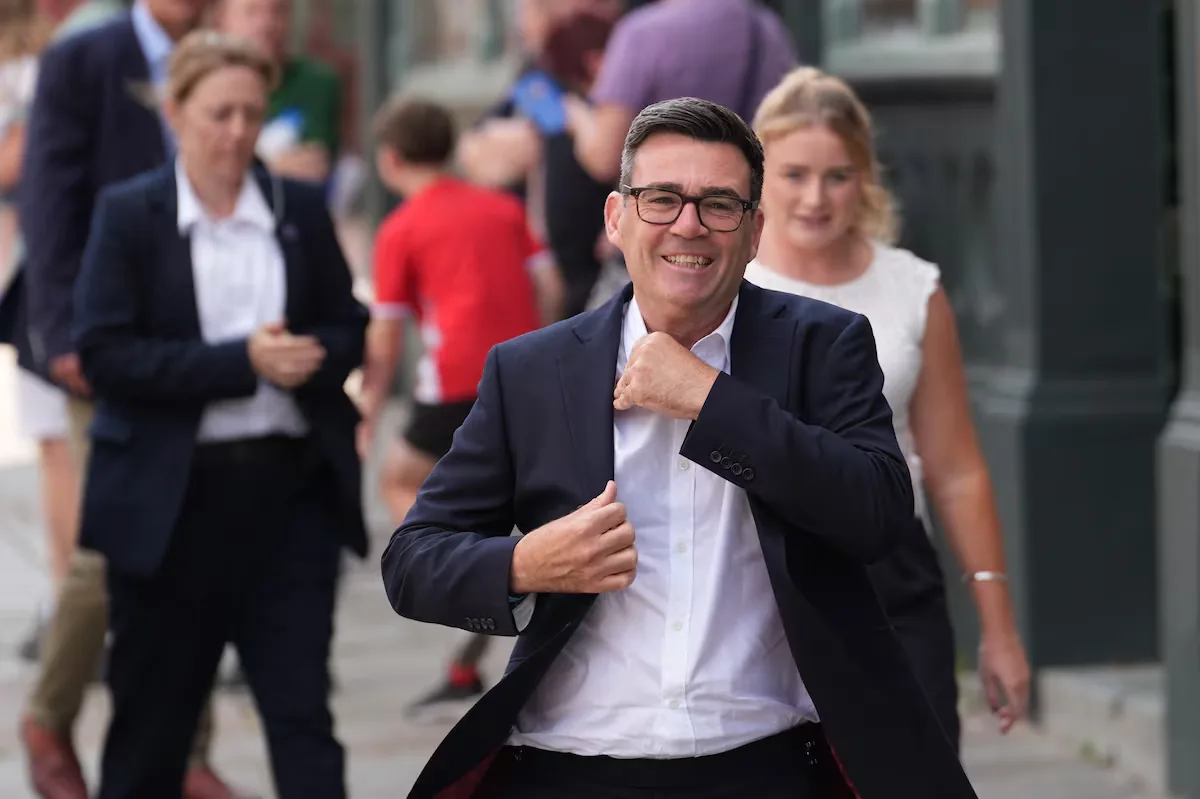
Andy Burnham has so far demonstrated that he has a great political instinct. The priority, as he has made clear, will be national politics, and the few clues he has given about what his international strategy will be suggest that he will not change much the path set by his predecessor, Keir Starmer. But before setting foot this Monday in Downing Street, he has already made a splash on the issue that has caused the most concern and mistrust among Labour members and voters in recent years.
Read more Trump approves new 50% tariffs on Canada amid ongoing USMCA negotiations
The party’s most progressive wing was greatly frustrated by Keir Starmer’s tepid initial reaction to the Israeli offensive in Gaza. The then prime minister even justified the government of Benjamin Netanyahu cutting off water and electricity in the Strip as a pressure tactic.
“I know many believe my party did not respond well at the start of Israel’s military offensive in Gaza and I apologize for that. The response was not good enough. We must do better,” Burnham said, in a complete amendment to Starmer. “We have to increase pressure on the Israeli government (…) We were very slow to demand a ceasefire,” he lamented.
But this first statement on such a thorny issue has also served to reveal that the new UK prime minister is more calculating than he appears. He has consistently avoided defining what happened in Palestine as genocide, limiting himself to speaking of “war crimes,” leaving the legal definition of that conflict in the hands of international courts.
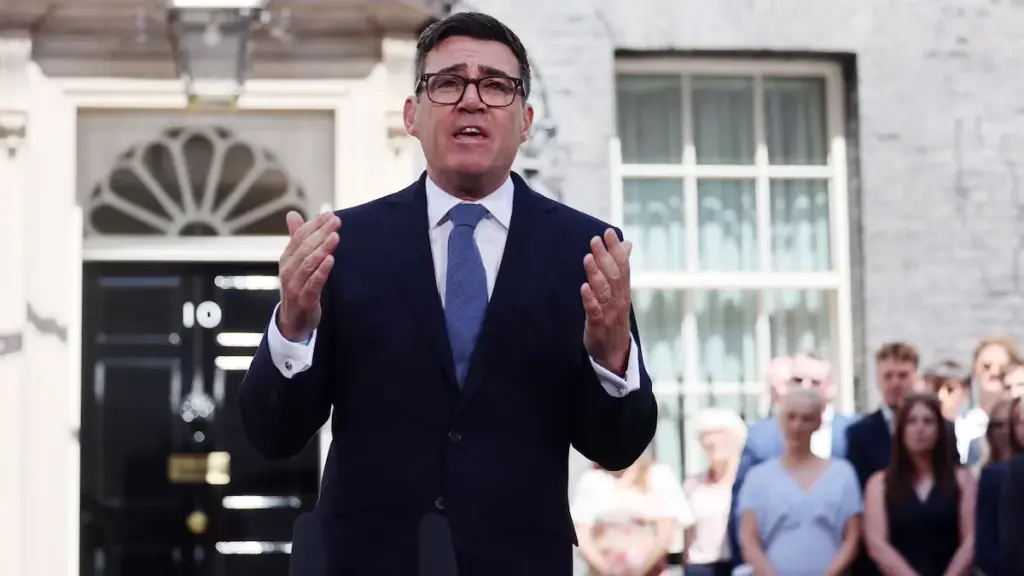
The relationship with Europe
Something similar may happen with relations between the United Kingdom and Europe. Brussels unilaterally decided to postpone the bilateral summit scheduled for July 22, just after Starmer announced his resignation. There is still no set date for that meeting, which was expected to see progress on issues such as youth mobility or the relaxation of phytosanitary customs controls. Nothing particularly ambitious, but it responded to the priority set by that British government, which, although late, understood that the only way to revive a sluggish economy was to push without complexes for closer ties with its main trading partner.
Burnham, until recently an open supporter of a future UK rejoining the EU, has now decided, like his predecessor, to shelve the matter discreetly. He barely mentioned it during the Makerfield by-election campaign, where he competed to win the necessary parliamentary seat that later allowed him to run in the primaries and take Starmer’s place. And, like the latter, he has also tied his decisions on Europe to the red lines of the 2024 election manifesto: no to the common customs area, no to returning to the single market, and no to free movement of people.
“I want to consolidate the progress made so far in ongoing negotiations between the UK and the EU, and achieve further progress quickly. That includes strengthening cooperation in the fight against illegal immigration [Burnham also prefers the term ‘illegal’ to ‘irregular’ suggested by humanitarian institutions], economic security, and greater resilience of our societies against external threats, from terrorism to misinformation generated by Artificial Intelligence,” Burnham wrote last week in an op-ed for The Times.
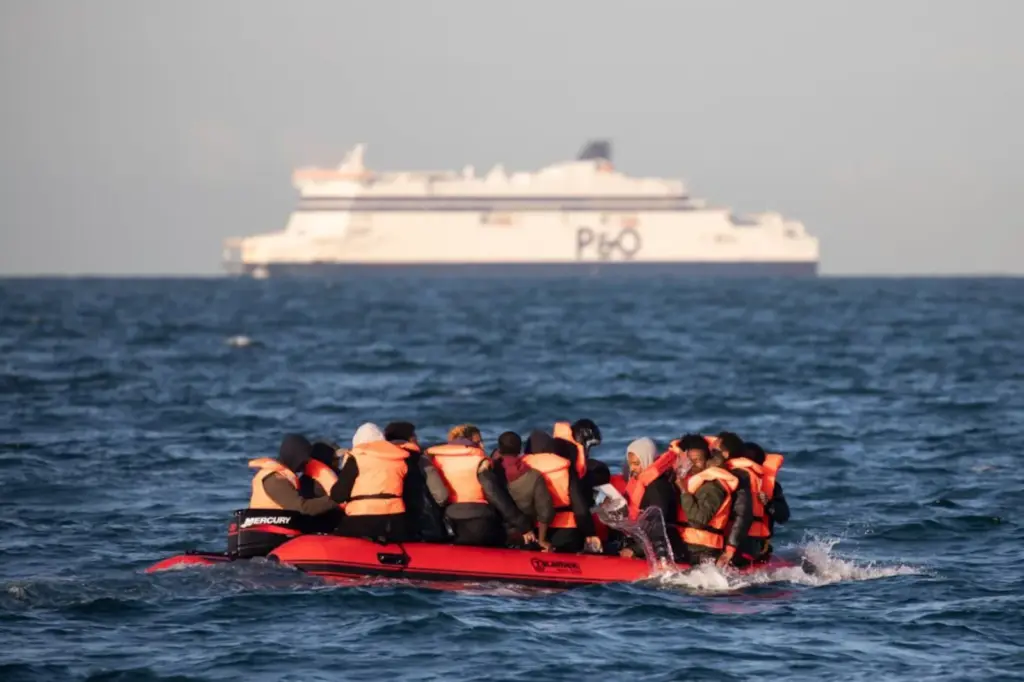
By ignoring in his text issues such as EU university students’ access to British faculties, with tuition fees equal to those of UK students (a Brussels demand), youth mobility, or even greater regulatory alignment with the Union (“dynamic alignment,” as Starmer’s team called it), Burnham returns to the starting point of two years ago, when Starmer’s greatest obsession regarding Europe was strengthening cooperation on security or border control.
“The EU is more interested in securing the UK as a security ally than as an economic ally. And it is already very clear that the Labour government is trapped by its ‘red lines,’ so the European Commission has little willingness to promote greater economic integration in many areas,” writes Joël Reland, senior researcher at the think tank UK in a Changing Europe.
It is possible that Burnham’s team will devote more effort to securing the UK’s final access to the EU’s SAFE defense investment program, urged like other European countries to increase their military budgets, rather than accelerating the mobility of young Europeans and community members.
Ukraine and Trump
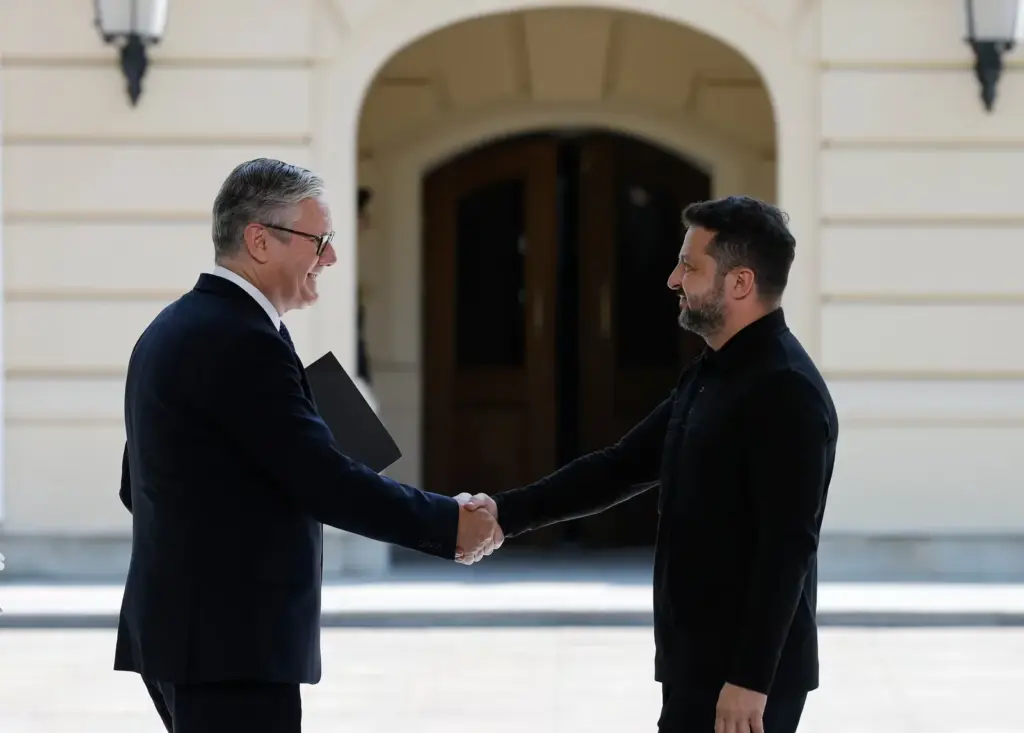
Burnham inherits a very solid position of unconditional support for Ukraine against Russian aggression. It was initiated by Boris Johnson and consolidated by Starmer, whose last visit as prime minister was to Kiev, to say goodbye and receive the tribute of his friend Volodymyr Zelensky. His successor will not change that policy, and everything suggests that, if he prioritizes specific meetings, a meeting with the Ukrainian president and another with NATO Secretary General Mark Rutte would top the agenda.
Ahead lie the United Nations General Assembly in September, a meeting of the European Political Community in Dublin a month later, COP31 in Turkey, and a G-20 meeting. If Burnham decides to send the foreign minister to some of these events instead of attending himself, he will make clear his political priorities for the first 100 days.
Finally, the big question will be how he handles the traditional special relationship with the United States. Starmer, despite the final disagreement with Donald Trump over the then prime minister’s refusal to participate in the offensive against Iran or allow the use of British bases by the US military, knew how to deal with the president. He flattered him with official visits and pompous ceremonies, alongside King Charles III and Camilla, and knew how to appease him when he exploded in anger against Zelensky and wanted to distance himself from Ukraine.
Burnham’s first courtesy call to a foreign leader, right after entering Downing Street, was to the US president. Trump had already made clear his mistrust of the arrival of a new “too liberal” prime minister (the term in US jargon to say someone is too left-wing for his liking), but Burnham knows, as Starmer did, that personal treatment is key to dealing with such an unpredictable character.