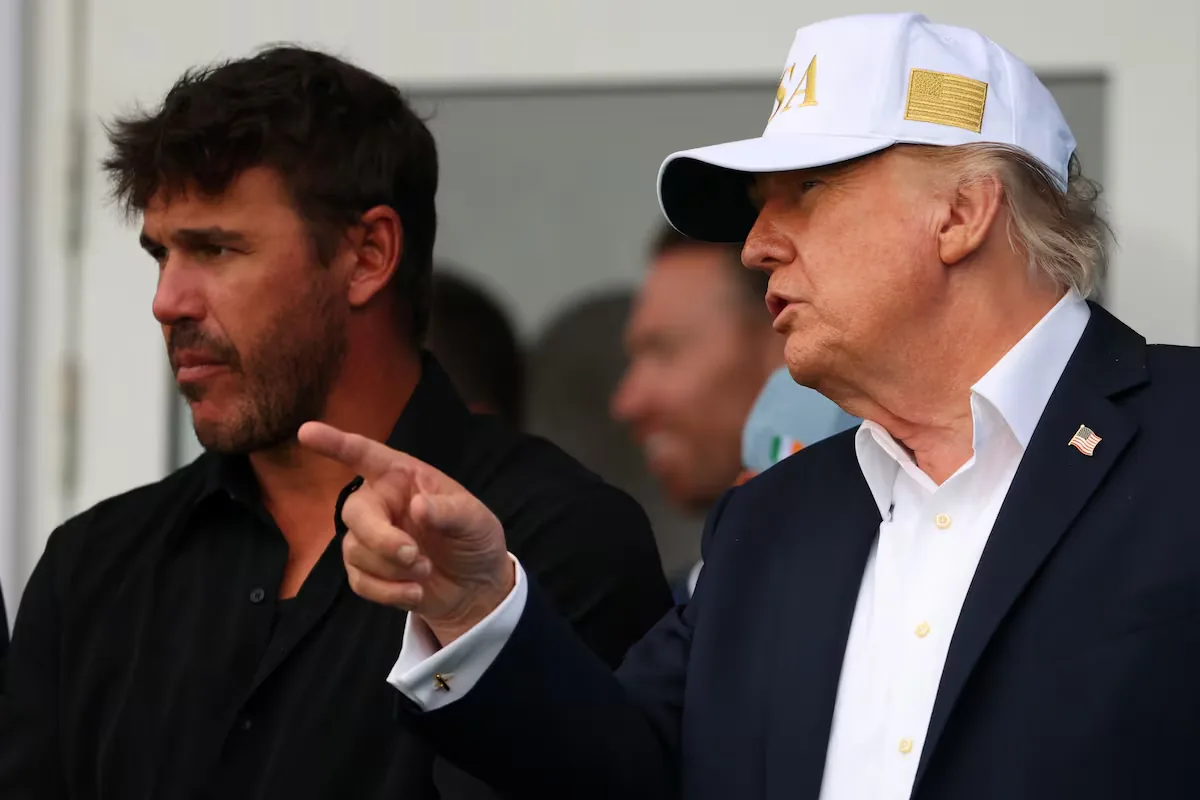

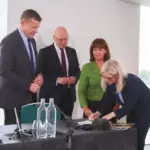





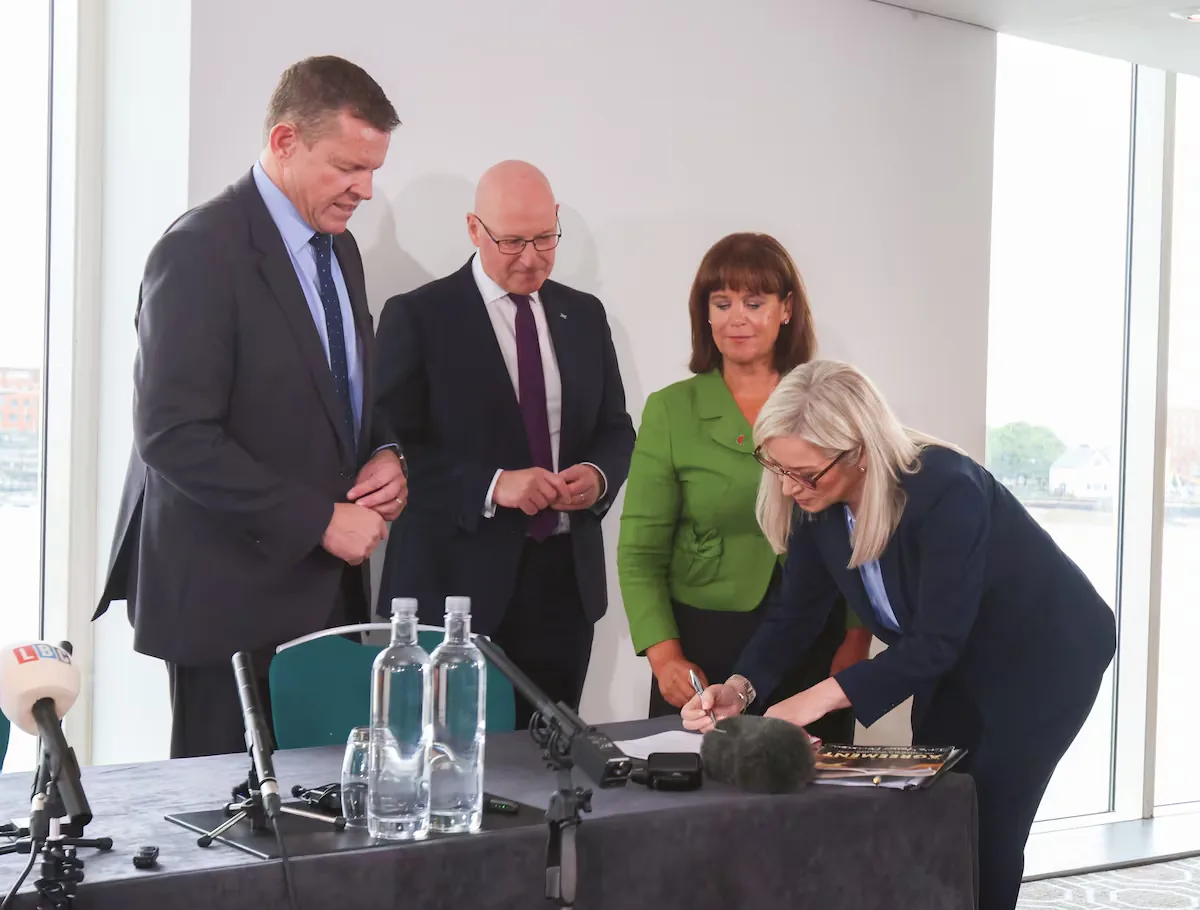
Coincidence or not, Donald Trump’s interference in the internal affairs of the United Kingdom, by suggesting this weekend in Dublin that a reunified Ireland would be “something fantastic,” has acted as the starting gun for a constitutional movement that will stir the waters of British politics. The leaders of the Scottish nationalist party SNP, John Swinney; Welsh nationalism of Plaid Cymru, Rhun ap Iorweth; and the Irish republicans of Sinn Féin, Mary Lou McDonald and Michelle O’Neill, signed a joint manifesto this Monday in Cardiff committing to coordinate their efforts to achieve their respective independences from the United Kingdom.
Read more China reacts to AI warnings by denouncing a “hidden agenda” to “strangle” its technology
“Each of our nations has the right to determine its own future, through democratic means and in accordance with the wishes of its citizens,” the text states.
“The political landscape of these islands is changing. For the first time, their citizens have first ministers [the equivalent of prime minister or head of government] in Scotland, Wales, and Northern Ireland, all committed to achieving independence from the United Kingdom,” they affirm.
A step of this magnitude carries a deep political charge that its promoters have sought to temper, and that is why they have all made it clear that they attended the meeting as leaders of their political parties and not as heads of their respective devolved governments.
In recent hours, the British Labour government of Andy Burnham has tried to take a firm stance on an issue that contains a political time bomb. Downing Street admits, for example, that the Good Friday Agreement that brought peace to Northern Ireland at the end of the 1990s contemplates the possibility of a reunification referendum. The decision would correspond to the Secretary of State for Northern Ireland, with the capacity to assess for himself whether polls or public sentiment suggest that the majority leans toward that solution.
That is the theory. In practice, with a very complex and delicate political situation in Northern Ireland, especially after Brexit, Burnham’s government rules out the consultation as something that “is not on the table today.”
In fact, the Northern Ireland Deputy First Minister, from the DUP (Democratic Unionist Party) unionists, Emma Little-Pengelly, has expressed her protest over O’Neill’s presence in Cardiff, the region’s first minister, who belongs to Sinn Féin. It is the first time in history that the republicans hold that position.
However, it is more symbolic than practical, because the Stormont Agreements that helped bring peace to that troubled part of the world require that devolved institutions be governed by consensus at all times, with the agreement of republicans and unionists for every relevant decision.
“[O’Neill] did not ask for my permission or my agreement to travel [to Cardiff], attend that meeting, or sign the joint declaration as First Minister of Northern Ireland,” Little-Pengelly made clear.
In fact, alongside O’Neill traveled her colleague and superior, Mary Lou McDonald, the president of Sinn Féin since 2028 based in Dublin.
Regarding Scotland, despite the SNP’s electoral setback in the 2024 general elections, and the nationalists not achieving an absolute majority (by a narrow margin) in this year’s devolved elections, their leader, Swinney, has doubled down on the party’s commitment to the goal of independence.
In Wales, Plaid Cymru’s plans are not yet very defined, but the recent devolved elections consolidated the party as the most voted, with spectacular results in which it doubled its number of seats and was able to govern in minority.
Read more Lamine Yamal challenges Mbappé in the race for the Ballon d’Or: “This year I would deserve it”