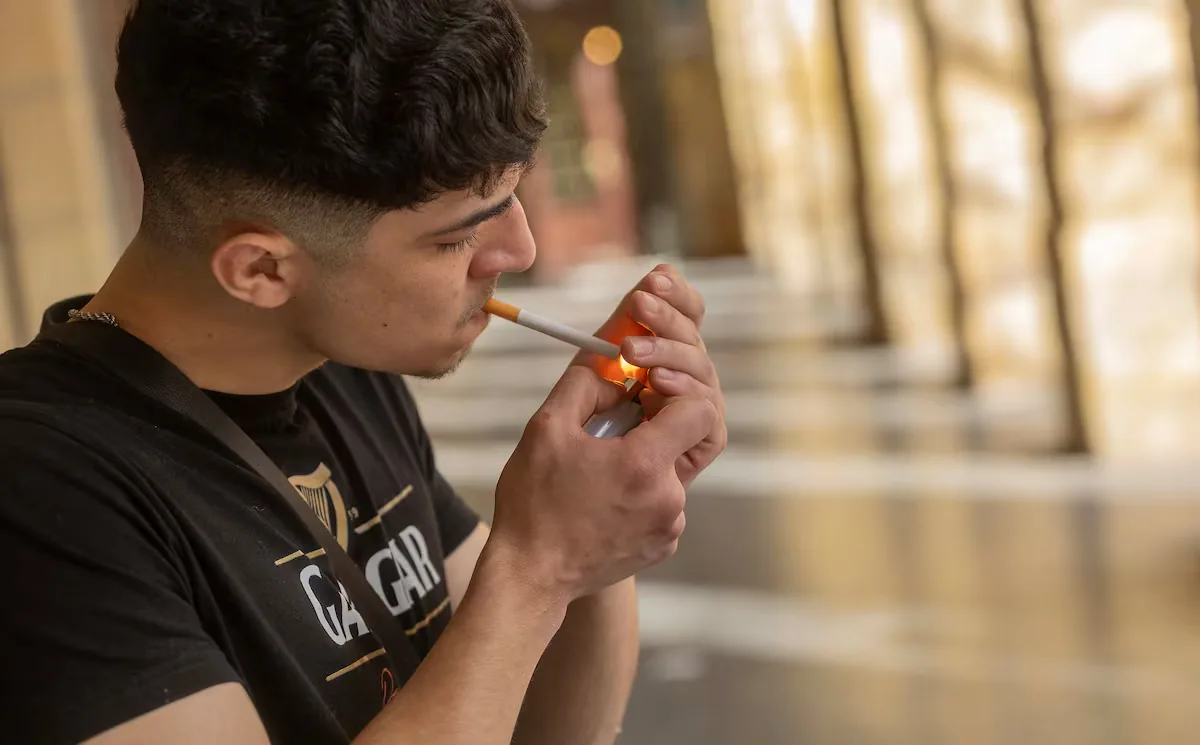








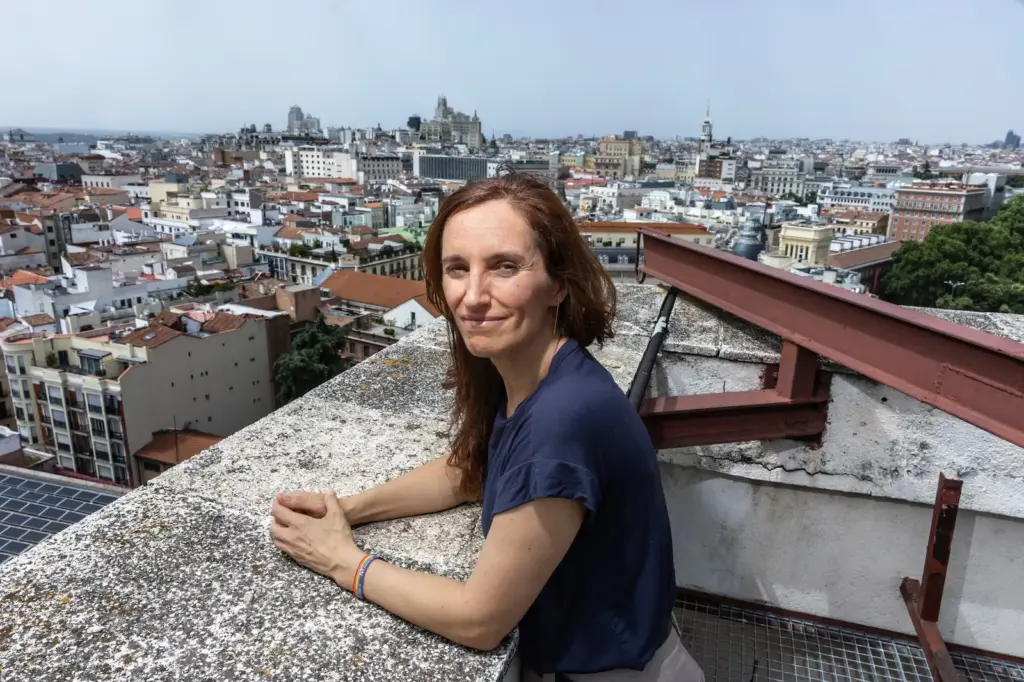
The Minister of Health, Mónica García (Madrid, 52 years old), presented the new tobacco law this Tuesday as a “great victory” for Spain and equated the initiative with the national team’s recent triumph in the Football World Cup. Sixteen years ago, she recalled, Spain’s first success in this tournament also coincided with the pioneering tobacco law, which eradicated smoke from indoor spaces in bars, restaurants, and workplaces. As then, however, the project has met with rejection from sectors such as hospitality, the tobacco industry, and tobacconists, among others. After passing through the Council of Ministers, the project must be approved by the Congress of Deputies, where it needs the support of parties such as the PP or Junts, which have already shown their reluctance. Despite this, the minister is confident that the parliamentary process will go ahead, and that the debate will improve the text on issues such as generic packaging, which prevents cigarette packs from acting as another advertising element. The minister speaks to EL PAÍS by phone.
Read more The federal prosecutor dismissed by Trump less than an hour after taking office files a lawsuit
Question. Why has the bill reached the Council of Ministers now, just before the holidays, and not before?
Answer. We have had to align the law with the directives of the European Commission and go through a series of procedures that have lengthened the process.
Q. Do you fear that the project will not pass through Congress?
A. We know that there are parliamentary balances that do not always respond to the needs of citizens, but rather to partisan logic. But this is a law that once again puts us at the forefront of public health protection, and we hope that responsibility will prevail and that a norm seeking to prevent 50,000 deaths a year, 140 a day, will not be stopped. Tobacco in all its forms is behind 30% of tumors, and 100% of cardiologists say that if they could remove one preventable risk factor, it would be tobacco.
Q. Have you had any contact with the PP or Junts?
A. Not yet. What I have just heard is Mr. Alberto Núñez Feijóo saying that the law is a smokescreen and that it will divide the country. I don’t know if he means it will divide those who want to have cancer and those who don’t. I don’t know exactly what division he is referring to. I do know that in 2010 we also heard catastrophic predictions that have not come true. Today we have a country with smoke-free indoor spaces, much healthier. And I am glad to see that bars and restaurants continue to enjoy very good health. We also want their workers and terrace users to have it.
Q. What led you to take the leap of prohibiting minors from smoking?
A. Tobacco in all its forms is an addictive toxic substance very harmful to health, and it is our obligation to protect minors, just as we do with alcohol. We are also seeing that tobacco-related devices are a gateway to addiction for minors and cause damage such as pulmonary hemorrhages.
Q. The law provides for fines of 200 euros if a minor smokes. Parents will face the fine, which can be replaced by community service. Is this a way to involve everyone against smoking?
A. The law, like others of its kind, must include a sanctioning regime, but in terms of public health, that concerns us less. The objective is not to sanction, but to reach a consensus on elements that we consider common sense and fundamental. We do not seek to persecute or collect revenue, but to raise awareness, educate, and respond to scientific evidence.
Q. It has been criticized that Spain will be a European “exception” by prohibiting smoking on terraces and that this will harm tourism and the country’s image.
A. Rather than a reason for criticism, it should be something we are proud of. The European Commission said in 2024 that smoke-free spaces should be extended, including to terraces. Being among the first to implement a measure that protects the health of the population and that other countries will surely follow should satisfy us. Tobacco is also the leading cause of preventable death in Europe, and there is a consensus among scientific societies.
Q. Was it so important to equate vapes with traditional tobacco? Critics say they are less harmful…
A. That debate is misleading. If these devices are intended to be a form of harm reduction, they should be used under medical supervision, like nicotine patches or pills. The industry knows this is not the case and is using it as an excuse to attract new young consumers with more appealing presentations that will create new addicts. What has concerned us most in the surveys is the increase in the consumption of these devices among young people.
Q. How do you assess the reactions from sectors such as hospitality and industry? Are you surprised that they are so similar to those in 2010?
Read more The Guadalajara fire enters «stabilization» phase after devastating more than 32,000 hectares
A. I am more surprised that some sectors have no memory, but they are a minority. There is a large majority of society that supports these types of measures because the benefits achieved in 2010 are still very present. We have also met many people who have quit smoking or want to and agree that smoke-free zones should be expanded because this helps them quit.
Q. You said that the approval of the bill has been delayed to align it with European directives. But you are criticized for not having waited for the European Commission to finish reviewing the directives on the matter.
A. That’s not true, we are aligned with the Commission. There is one thing on which the European position is not yet defined, for example, disposable vapes. We had introduced it into the text, but for now we have withdrawn it because it has not yet been agreed upon in Europe. That said, the law has a parliamentary process, and there are things that, if agreed upon in Europe during this time, we can introduce.
Q. Does it make sense to criticize the law with the argument that tobacco contributes almost 4 billion to GDP and generates 60,000 jobs?
A. The dichotomy of health in exchange for economy does not exist; it is false. If there is no health, there is no economy. 50,000 lives a year and the enormous suffering caused by tobacco-related diseases are priceless. And beyond the taxes you can collect, the healthcare costs of all these diseases triple them. It makes no sense to frame it in these terms. It’s another thing for companies to defend their economic interests, but our function is to protect the health of citizens. The economic interests of specific companies cannot be pitted against the life and health of an entire population.
Q. Why has generic packaging, which makes different brands indistinguishable, been left out of the law?
A. There were some portfolios that did not agree with generic packaging. We decided to postpone this point for the parliamentary process. We know that generic packaging works. Other countries already have it, and there is scientific evidence of the benefits of the pack itself not being another advertising element.
Q. So, does the PSOE oppose it, and Sumar wants to convince them in Congress?
A. Rather than opposing it, there are some doubts. We hope to resolve them and convince all parliamentary forces of the benefits of this measure.
Q. Another key issue is the price of tobacco. We continue to be one of the countries in Europe with the cheapest tobacco…
A. It is true that the evidence is very clear, and a price increase helps reduce the prevalence of smoking. But the competence belongs to another portfolio [Treasury]. In any case, it is good that the public debate is opened, because scientific evidence shows that bringing these issues to the table helps society reflect on the harm of tobacco and helps some people take the step to quit.
Q. How do you assess the UK’s approval of the “smoke-free generation,” where those born after 2009 will never be able to smoke conventional tobacco?
A. The goal of a future free from tobacco addiction is shared by all. We believe we can reach the same place by different paths, but we can all learn from each other and adopt measures that are successful elsewhere. Spain had not touched the Tobacco Law since 2010, and it was essential to give it a boost now. But we all pursue the same goal: to protect minors from addiction, to help those who want to quit smoking, and to prevent the smoke of those who still smoke from harming the rest of the population.