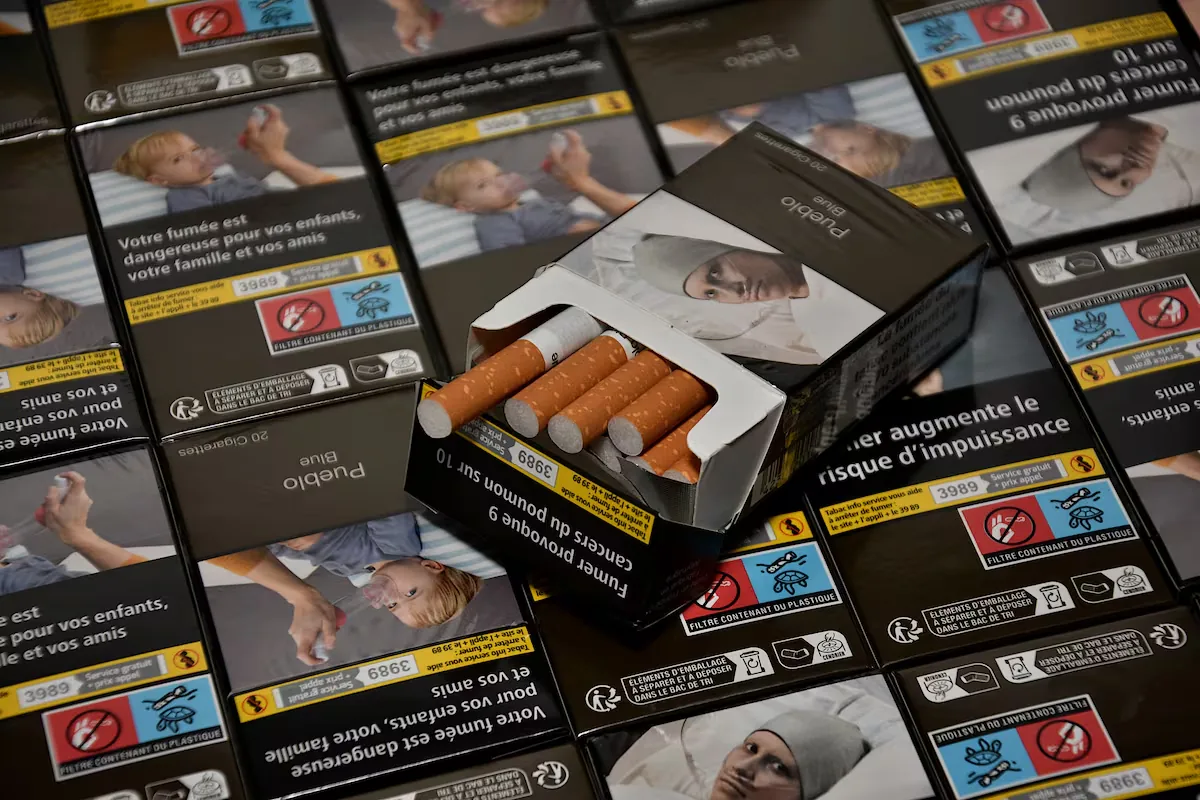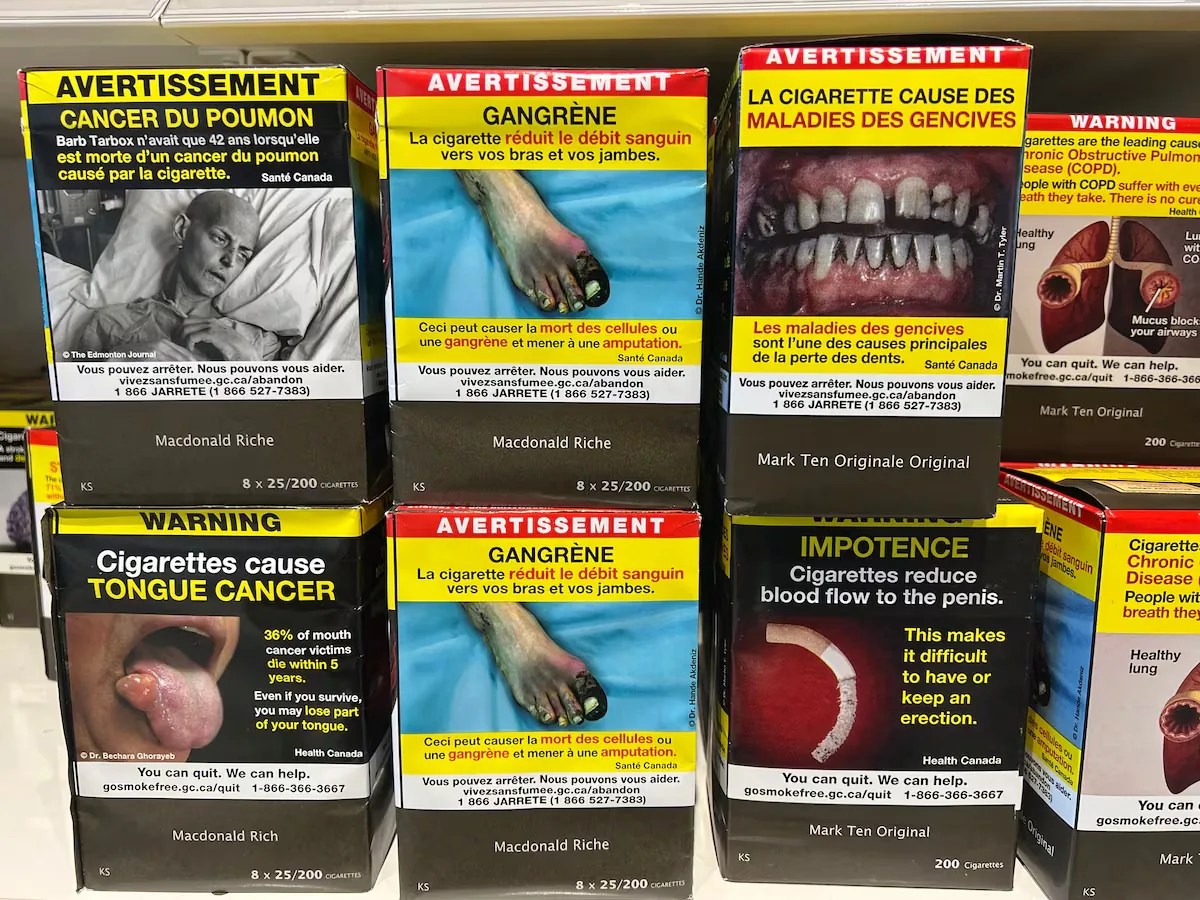
Australia became the global benchmark in 2012 in the fight against tobacco addiction. That year, despite strong pressure from the industry, the country implemented a package of measures that many governments have since followed in addressing a public health problem that causes seven million deaths annually, according to the World Health Organization (WHO). One of the flagship decisions was generic or plain packaging, which reduces the appeal of cigarette packs by removing brand logos and highlighting warnings about the harms caused by smoking. The government left nothing to chance and commissioned a consultancy to find the least attractive color for the packs. The chosen one was Pantone 448 C, a muted blend of brown, gray, and green that became popular as “the ugliest color in the world” and has since been imitated by other countries.
Since then, generic packaging has been at the center of major legal, economic, and communication battles between governments and tobacco companies, affecting several of the countries — about twenty — that have implemented it, including Belgium, Canada, Denmark, Ireland, the Netherlands, the United Kingdom, and Uruguay. None of them have reversed course and returned to branded cigarette packs.
The industry considers the measure an “expropriation” that infringes on private property and freedom of expression, among other arguments. The sector also argues that making brands indistinguishable encourages fraud and smuggling, shifting competition to prices. In their view, this has a counterproductive effect by facilitating uncontrolled consumption and access to tobacco by younger people. Additionally, the sector claims the change has significant negative economic repercussions, both in tax revenue and in economic activity and employment.
In response to these positions, governments and researchers have developed dozens of studies and reports over the past decade that conclude the opposite and support the success of the decision wherever it has been applied. In 2016, it was estimated that the measure had achieved in three years “a statistically significant decrease in smoking prevalence of 0.55% during the post-implementation period, compared to the prevalence that would have existed without the changes,” which amounts to about 108,000 fewer smokers.
Generic packaging is now gaining importance in Spain because the disagreements between the Ministry of Health — led by Mónica García, from Sumar, who supports the measure — and the Ministry of Finance — headed by the socialist Arcadi España and to which the Tobacco Market Commissioner, who regulates the commercial organization of the sector, is attached — have left it out of the new tobacco law, approved by the Council of Ministers on the 21st. This decision comes after veiled threats from tobacco companies to seek million-euro compensations if generic packaging was approved, as reported by EL PAÍS.
This rift in the majority supporting the government adds uncertainty to the parliamentary processing of the law, which is already expected to be uncertain because the project has been received lukewarmly by the PP and Junts (at least one of the two parties should support it for it to pass).
“The published scientific evidence, which is robust, takes on great relevance in this context for proper decision-making,” says Armando Peruga, researcher at the Tobacco Unit of the Catalan Institute of Oncology (ICO) and former manager of the WHO Tobacco-Free Initiative. This expert clarifies that “generic packaging was conceived not so much as a change to make people quit smoking, but to reduce the appeal of tobacco to young people and decrease the number of people who start smoking.”
This explains why the measure is usually included as one among broader policies. “Also why its beneficial impact increases over time, as it reduces the number of new smokers. Australia’s first estimate, for example, established a decrease of up to 1% annually. But more recent studies conducted in France, England, and Norway suggest this percentage is between 5% and 8% annually,” adds Peruga.
The pack matters
A systematic review by the Cochrane Collaboration — an international network that brings together researchers, health professionals, and patients — analyzed 51 studies with nearly 800,000 participants and concluded there was “strong evidence” that the change in packs reduces “their advertising and visual appeal.” “Tobacco in standardized packaging was generally perceived as having worse taste and lower quality than branded tobacco. Plain packaging also appeared to reduce misperceptions that some cigarettes are less harmful than others,” the authors add.
Another review conducted by researchers at James Cook University (Australia), which analyzed 19 studies with 19,000 adolescents, focused on the greater impact of tobacco risk warnings after applying the measure: “Health warnings with images and generic packaging appear to increase adolescents’ awareness of the dangers of tobacco use.”
Tobacco companies question these advances relying on reports funded by the industry itself — not subjected to the controls and peer reviews of scientific publications — and also focus on the supposed negative economic impact of plain packaging and its contribution to smuggling and fraud. “Product undifferentiation makes it easier to copy, facilitates counterfeiting, and expands the possibility of illegal trade and smuggling,” they argued in the objections submitted against the draft royal decree with which Health made a first attempt in 2024 to impose the change in packs in Spain.
The document also highlighted that “the serious economic damages that the implementation of generic packaging in Spain would cause, especially in Extremadura, Cantabria, and the Canary Islands,” regions where the sector has greater weight, “cannot be ignored. The measure “could lead to a significant decrease in the sector’s economic contribution at the national level, estimated between 257.8 and 458.6 million euros in terms of added value to GDP […] In terms of employment, the loss is estimated between 3,200 and 5,600 jobs,” the text added.
“Of all the ‘unintended consequences’ claimed by the industry, the supposed increase in smuggling is the best studied. There is a systematic review, several post-implementation studies, and official evaluations from countries that have applied the measure, and even a ruling from the World Trade Organization (WTO). And everything points in the same direction: no increase has been detected,” says Peruga. The mentioned review, carried out by British researchers, concludes that “there is no evidence suggesting that illicit tobacco consumption will increase after the implementation of standardized tobacco packaging, which contradicts the tobacco industry’s arguments.”
There are also no scientific studies showing the supposed job losses predicted by the industry, and those conducted by governments after applying the measure, such as the United Kingdom, have not corroborated the hypothesis. Experts consider that in this regard the general framework published by the World Bank more than two decades ago remains valid: reports commissioned by the industry focus only on some “sectoral losses” — for example, tobacco leaf producers or graphic arts — and ignore the “spending substitution effect.” This means that money no longer spent on tobacco is redirected to other sectors with an equal or greater capacity to create jobs and economic activity.
In a report published in 2021, the WHO compiles all the evidence supporting generic packaging as part of broader policies against tobacco addiction. The document laments that industry pressure is delaying its implementation in many countries, something it attributes to the “potential deterrent effect created by national and international litigation” driven by the sector.
Read more At least 14 dead and 27 injured in Russian attacks in the Kyiv region