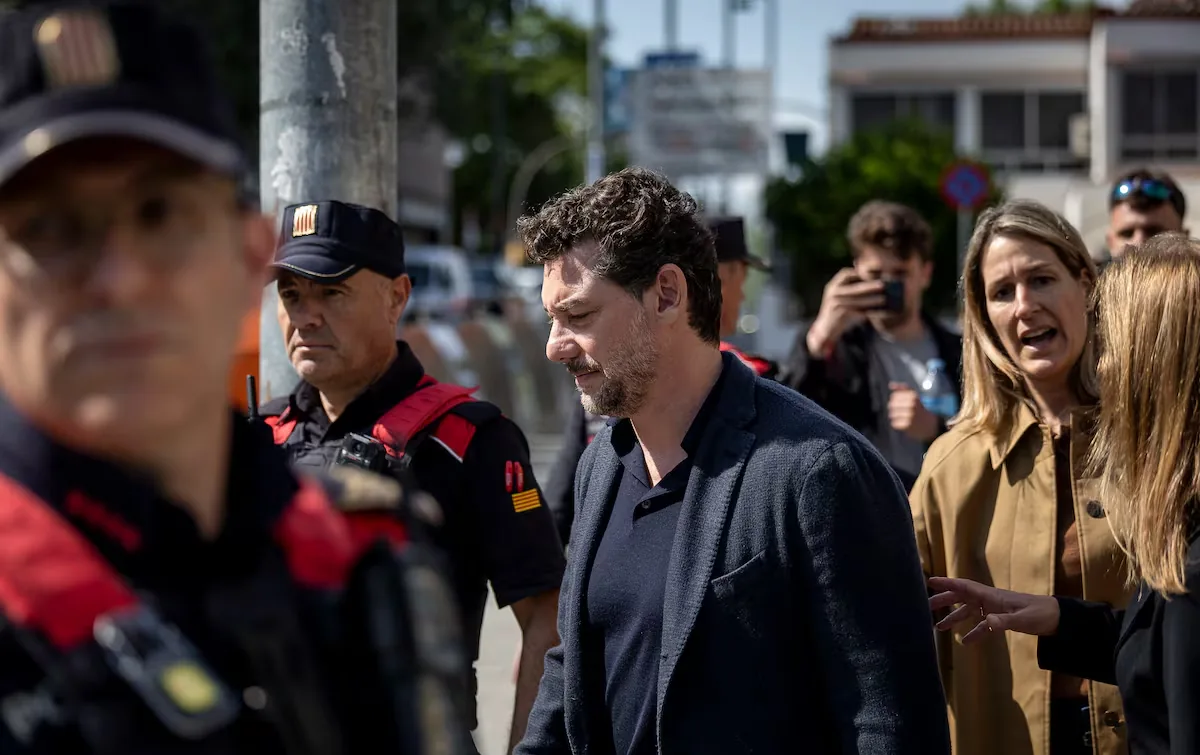






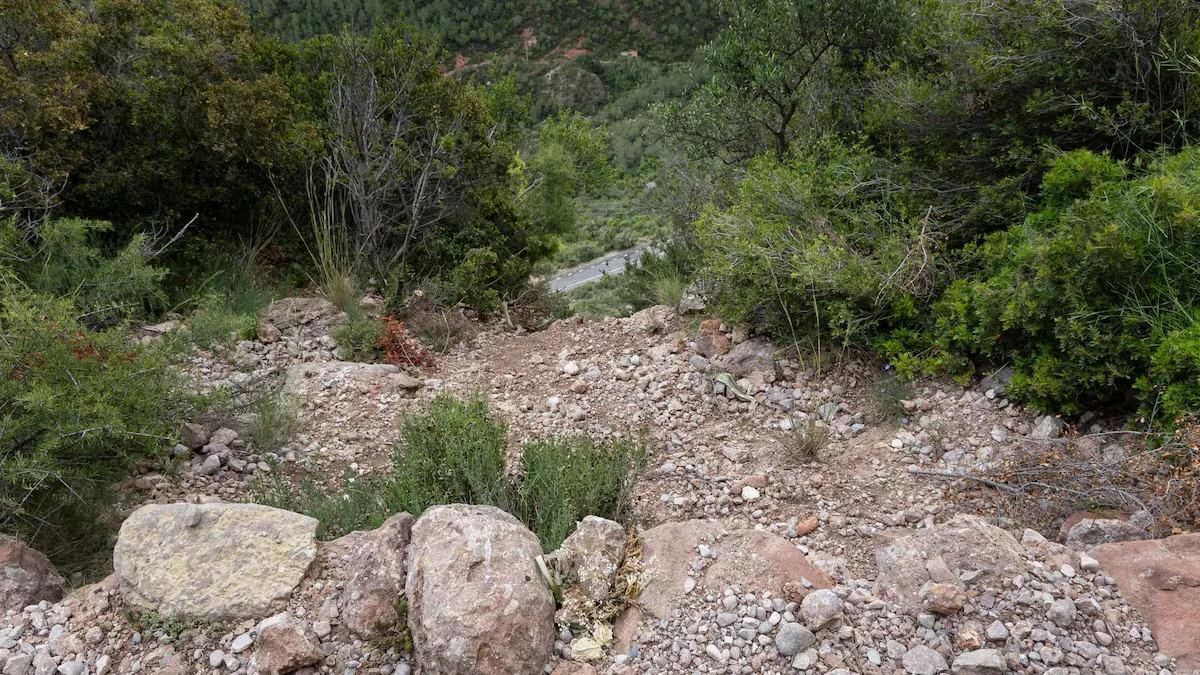
The strange therapy the Andic family was undergoing before the death of the father, Isak, has been placed at the center of the judicial process investigating the eldest son, Jonathan Andic, as the alleged perpetrator of his father’s death during a mountain excursion to Montserrat (Barcelona). To improve the deteriorated father-son relationship, the family had resorted to the services of Julia Lüderwaldt, a therapist who used a “dialectical confrontation” method with them that was so extreme that it even contemplated, according to a witness, an extreme experience in a ravine. This peculiar family intervention, now at the center of the judicial investigation, has also reopened the debate about the dangers of resorting to pseudotherapies to solve health problems or family conflicts: the therapist was not registered and her method lacks scientific evidence.
Read more Who are the ‘cockroaches’ behind the massive demonstrations in India, and what do they want?
Psychological interventions, like medications, are not harmless. They can have side effects, reminds Teresa Bobes, president of the Spanish Society of Clinical Psychology (SEPC-ANPIR): “A psychotherapy can cause adverse effects if it is poorly indicated or poorly performed. It can reactivate traumas, generate guilt, provoke conflicts, deteriorate family relationships, or delay access to validated treatments.” That is why it is fundamental that interventions are scientifically endorsed and carried out under the supervision of trained professionals, agrees Antoni Ramos Quiroga, Head of Psychiatry at Vall d’Hebron Hospital, and President-elect of the Spanish Society of Psychiatry: “There are enlightened people who create a technique they haven’t tested and say ‘I think it works.’ But in medicine, this is not valid. Things done badly can cause harm.”
From what has emerged about the Andic’s peculiar therapy, Bobes emphasizes, there are many “worrying” elements. To begin with, she says, “the absence of accredited health training” of the supposed therapist, as Julia Lüderwaldt is not affiliated with any professional association of psychologists or psychiatrists in Spain, nor is she listed in the national register of psychotherapists. “Another thing that tremendously worries us is the use of techniques without scientific evidence and the planning of confrontation situations in a physically dangerous environment,” she adds.
Lüderwaldt, summoned as a witness in the case and obliged to tell the truth, detailed her “method” to the judge, an approach that, according to the defense, seeks the dialectical “confrontation” of patients to “find growth.” Jonathan’s lawyers also rely on this therapeutic context to interpret some whatsaaps from the son to the father: “It doesn’t surprise me that you thought I was capable of killing you,” he wrote. The same message ends, as the defense pointed out, with a more positive tone: “I hope you enjoy this summer, I send you many kisses.” A witness, who occasionally collaborated with the therapist, later revealed that Lüderwaldt asked her to find a mountain route to confront father and son in an extreme situation as part of the therapy.
“From evidence-based clinical psychology, confrontation should never be confused with putting a person in a situation of physical or emotional danger. It never consists of provoking a limit situation to see what happens,” Bobes insists. In fact, confrontation, in clinical psychology, “is not about confronting or cornering, but about helping the patient identify contradictions between what they think or what they do, or to establish patterns” of behavior, explains the clinical psychologist.
In patients with anxiety, for example, “coping interventions are also carried out gradually with exposure techniques, but always controlling what will happen and within a safe environment,” she emphasizes. It is not about pushing the patient to the limit, but about getting them accustomed to a situation in a controlled environment, with a clinician present and preventing the patient from being overwhelmed.
Read more Trump is set to fuel trade war with new tariffs on several dozen countries
Ramos Quiroga, who has a master’s degree in systemic family therapy, also reminds that “not everyone can receive any psychological treatment.” And the figure of an accredited specialist to evaluate each case is key in this regard. “Because it can happen that you go for a relational conflict, but there is also another underlying pathology. That can greatly influence the relationship and is more difficult to redirect if there are, for example, problems of impulsivity or addictions,” he exemplifies.
Julia Lüderwaldt also used the “seven chronologies” method with the Andics, which divides life into seven stages, each with its own approaches and challenges. In her statement, the woman assured that the therapy bore fruit, but this technique has no scientific evidence whatsoever, and the consulted experts have not even heard of it. Nor did psychiatrist Antoni Bulbena, whom the family consulted on one occasion encouraged by Lüderwaldt herself, know what that method consisted of, as he admitted to the prosecutor.
“Excessive” Influence
Regarding the Andic’s therapeutic process, Bobes is also struck by the therapist’s influence over the family: “It seems she wielded excessive power, that they followed her like a leader.” Lüderwaldt, in fact, even mediated with the family that owns Mango on patrimonial matters and supported Jonathan when he asked his father to give him his inheritance during his lifetime to solve the problem. “Psychotherapy implies an asymmetrical relationship because the patient comes in a situation of vulnerability, but that is why very strict ethical rules exist. Trust can transform into dependence, and that should be an alarm signal,” she notes.
Ramos Quiroga agrees that, in psychotherapy, patient autonomy must be preserved. “When you work on the bond, you have to generate a relationship of trust, of empathy; not of dependence. And what pseudotherapists seek is that dependence.”
Bobes observes that there are increasingly more people without adequate health training who present themselves as therapists or facilitators. “Demand has increased, and unqualified and unethical professionals are proliferating. Every day new tricks and shamanic practices are invented and sold as miraculous cures. And that, with especially vulnerable people, can have catastrophic consequences.”
Read more Mónica García: “Partisan logic should not stop a law that seeks to prevent 140 deaths a day”