









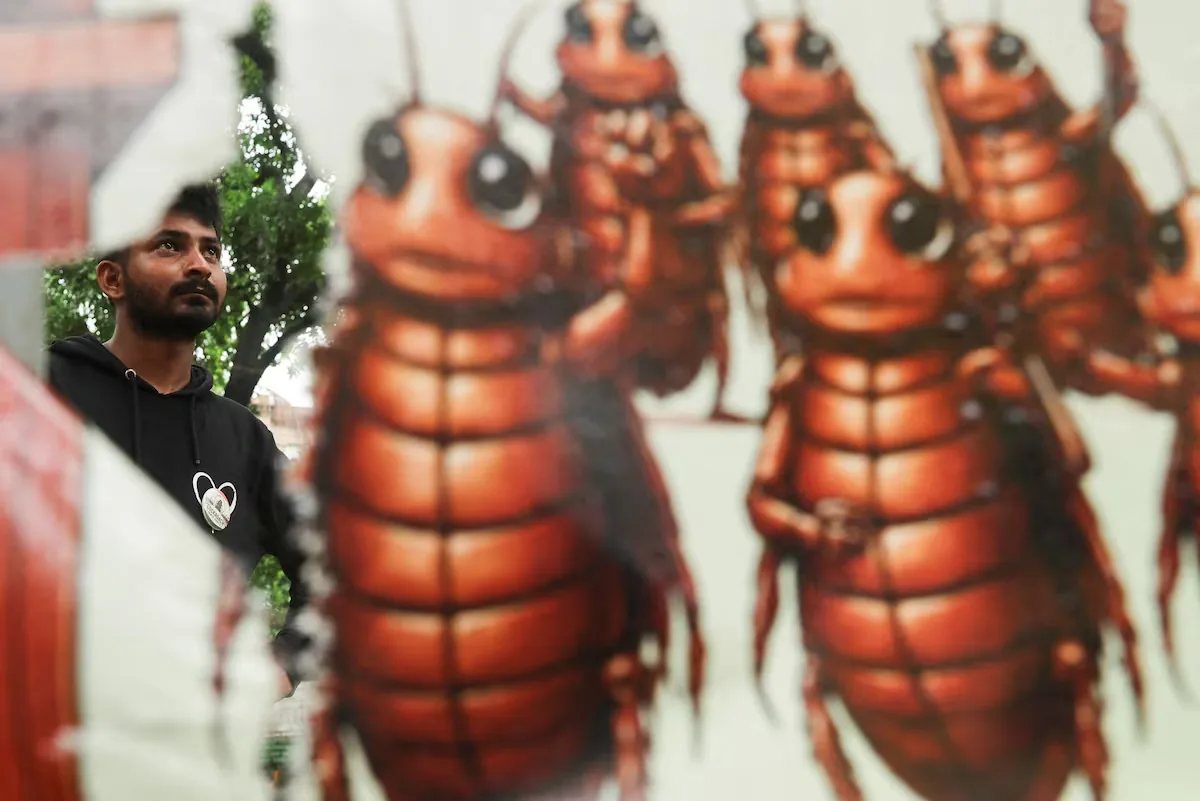
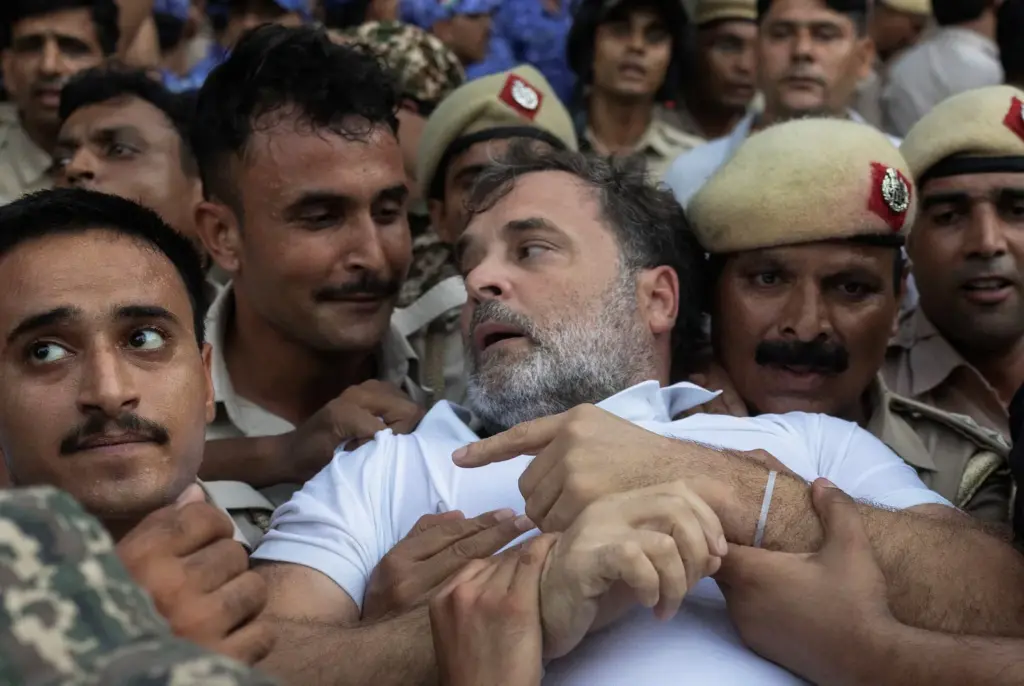
Two massive protests in India’s capital this week have resulted in dozens of police and protesters injured in the march towards Parliament called on Monday, in addition to arrests, including opposition leader Rahul Gandhi, who joined the march on Tuesday in front of Prime Minister Narendra Modi’s residence to denounce police violence the day before.
Read more Trump is set to fuel trade war with new tariffs on several dozen countries
The organizers of Monday’s protest, the youth movement of the Cockroach People’s Party —Cockroach Janta Party (CJP), which began as an internet satire, playing on the words of Modi’s Bharatiya Janata Party (BJP, Indian People’s Party)— denounce the use of tear gas and violence against the crowd of young people who were marching “peacefully” towards Parliament. They speak of at least 150 civilians treated in hospitals, according to Reuters. The authorities, however, state that nearly 180 people —of whom 118 were officers— were injured in the clashes in the center of the capital.
Beyond the war of figures of injured and detained, to understand the origin of the discontent of young Indians that has ended in an outburst in the streets, one must go back to May 3. That day, reports began to circulate that the entrance exams for medical schools in India, taken by millions of students each year, had been leaked. The suspicions were confirmed in an investigation, which forced the authorities to repeat the test. But the damage was done. For a good part of the country’s youth, it represented a confirmation of corruption in institutions to benefit the elites.
The criticism was not well received in Modi’s circle. And on May 15, the country’s Supreme Court president, Surya Kant, described unemployed young people as “cockroaches” who, unable to find work, use social media, journalism, and activism to “attack the system.” He called all of them, in a hearing, “parasites of society.” Two days later he issued something akin to an apology, but the seed of discontent had already been sown.
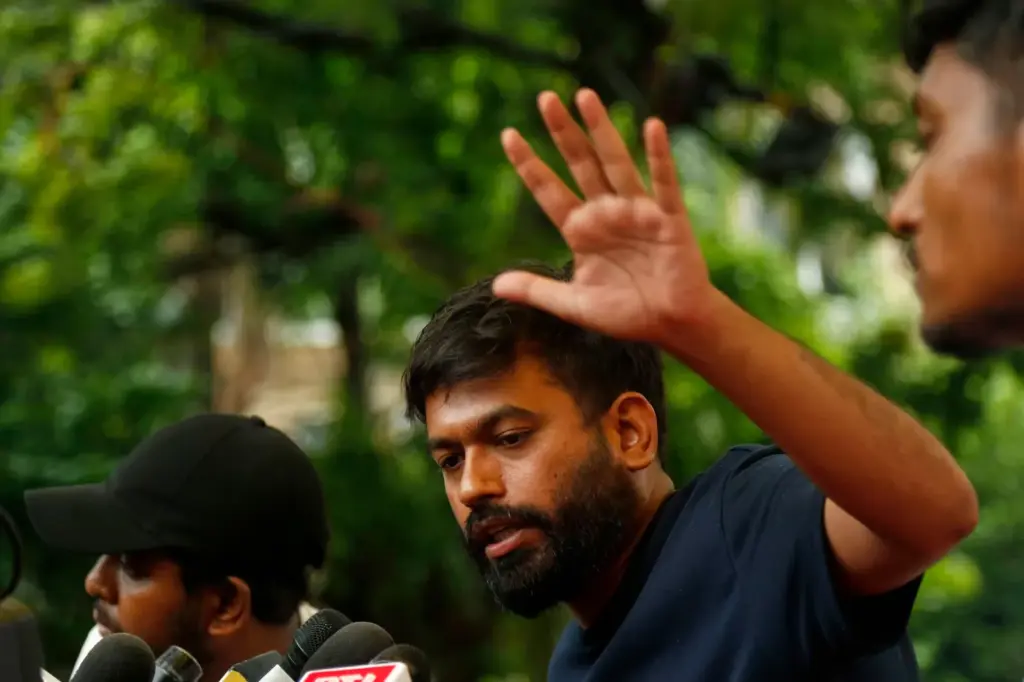
Abhijeet Dipke, a 30-year-old Boston University Public Relations graduate looking for employment, felt addressed by the insult. And a day later, on May 16, he posted on his X account: “What if all the cockroaches united?” That question was the spark that ignited among Indian youth. The avalanche of responses he received, about 11,000 in the first 12 hours, encouraged him to go further, and that same day he founded, as a satire, the Cockroach Janta Party, with its own website that he designed with the help of AI and a friend in a couple of hours, as he told The New York Times. “The voice of the lazy and unemployed” is its founding motto.
“India is a very young society with few opportunities,” explains Ana Ballesteros Peiró, a professor at the Complutense University of Madrid and a non-resident senior researcher at the Elcano Royal Institute, specializing in Asia. Approximately half of India’s 1.4 billion inhabitants are under 30 years old. For them, she says, “education is sacred” because access to the best schools or universities is the only tool for social advancement, “to escape the low social class into which they were born.”
The expert is not surprised that it was precisely the leak of some exams that triggered one of the biggest crises Modi has faced since coming to power in 2014. “Nepotism has been on the rise; elites close to the prime minister and the ruling party are increasingly benefiting,” notes Ballesteros. “Either the demographic dividend is well utilized and millions of young people entering the labor market each year are provided with jobs, or discontent will eventually explode.”
It already happened in 2019, when Modi’s BJP passed a new citizenship law in Parliament, without any consultation, thanks to its absolute majority. The norm facilitated obtaining an Indian passport for immigrants of six religions —Hindus, Sikhs, Buddhists, Jains, Parsis, and Christians— from Pakistan, Afghanistan, and Bangladesh who had arrived in the country before the end of 2014. Muslims were not included in this accelerated procedure.
“It marginalizes a large part of the migrant population in India and basically grants nationality to those citizens who are not Muslim,” Ballesteros details. The norm was criticized by human rights organizations and triggered protests from a segment of society disillusioned with the government and social inequalities. Those, like now, were also repressed with violence and met with insults from the authorities. “That outburst was silenced by the onset of the pandemic, but it left a residue of frustration,” notes the researcher.
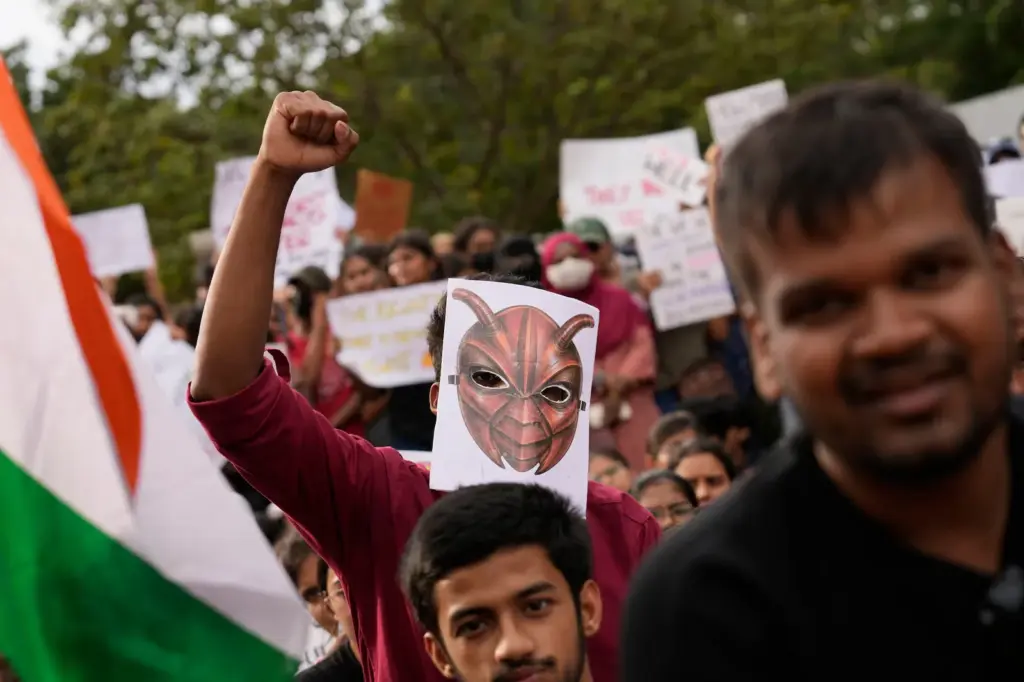
But this time, Dipke has turned the insult into a symbol: cockroaches. And his exasperation into a movement that has grown exponentially every day, transforming into an organization that brings together more than a million members, according to its data. To be one, only four requirements must be met: “We do not look at religion, caste, or gender,” the CJP clarifies on its website. With irony, it states that to join one must be unemployed —”whether by obligation, by choice, or by principle, we don’t ask; be lazy, only physically; the brain can keep spinning”; stay chronically connected “a minimum of 11 hours a day, including bathroom breaks,” and have “the ability to rant professionally. As long as the content is incisive, honest, and points to something that really matters.”
Read more Mónica García: “Partisan logic should not stop a law that seeks to prevent 140 deaths a day”
In addition to members, the movement has garnered tens of millions of supporters on social media. In just five days, it had 18 million followers on its Instagram account, double that of the ruling BJP’s profile on the same platform. In two months, it has reached over 24 million, despite repeated attempts at closure and hacking it has suffered, as reported.
The main demand of the Cockroach People’s Party is the dismissal of the Education Minister, Dharmendra Pradhan, in office since July 7, 2021, whom they hold responsible for the exam leak. It also demands that the government financially compensate the families of students who, as Dipke published in an open letter to Modi, took their own lives “due to the leak crisis.”
The cockroaches soon made the leap from the web to the streets. Since June 20, they have organized several protests in New Delhi and other major cities such as Bangalore, Mumbai, or Pune. In all calls, they have insisted on their “peaceful” nature and have denounced, through their channels, with photos and videos, police violence.
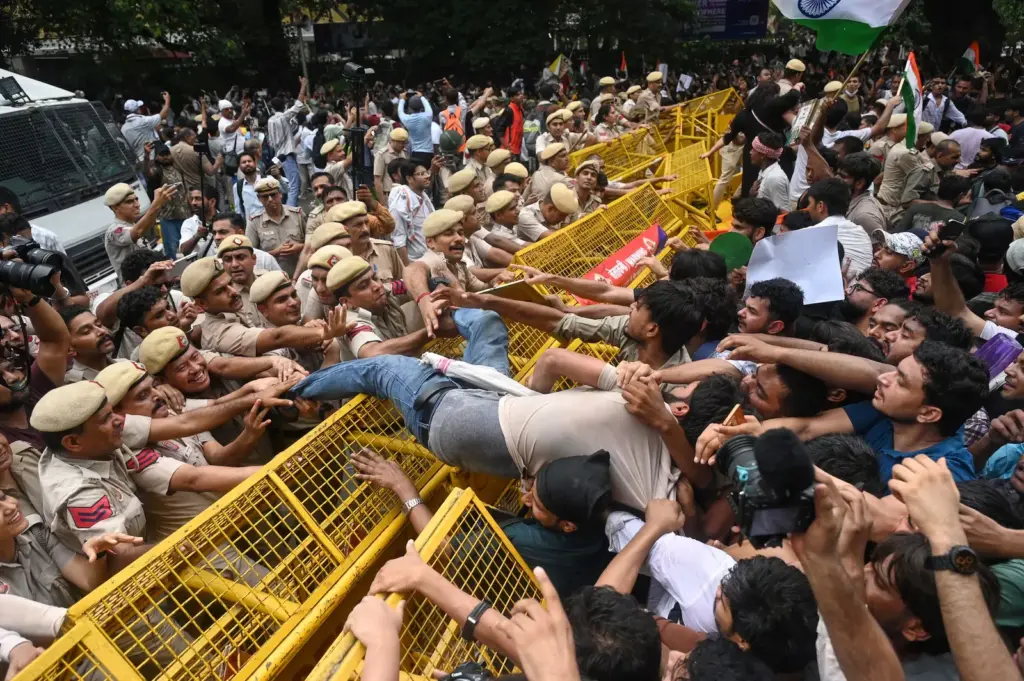
But the repression by security forces last Monday crossed a red line that led representatives of the Cockroach Janta Party to cancel Tuesday’s march towards Parliament and to ask people to maintain a peaceful demeanor and gather only at the epicenter of their protest, in front of the Jantar Mantar astronomical observatory, in the capital.
Opposition leaders, however, met the next day in front of the prime minister’s residence to protest against the Modi government’s harsh response and demand his resignation. The location represented a national security risk, security forces alleged, and they arrested Rahul Gandhi, leader of the main opposition party in Parliament, the Indian National Congress Party.
The founder of CJP publicly apologized to the injured and requested that anyone who had suffered an assault write to him privately to speak personally. To those arrested facing charges, the Cockroach movement offered legal support, and on Tuesday night confirmed that “all” had been released.