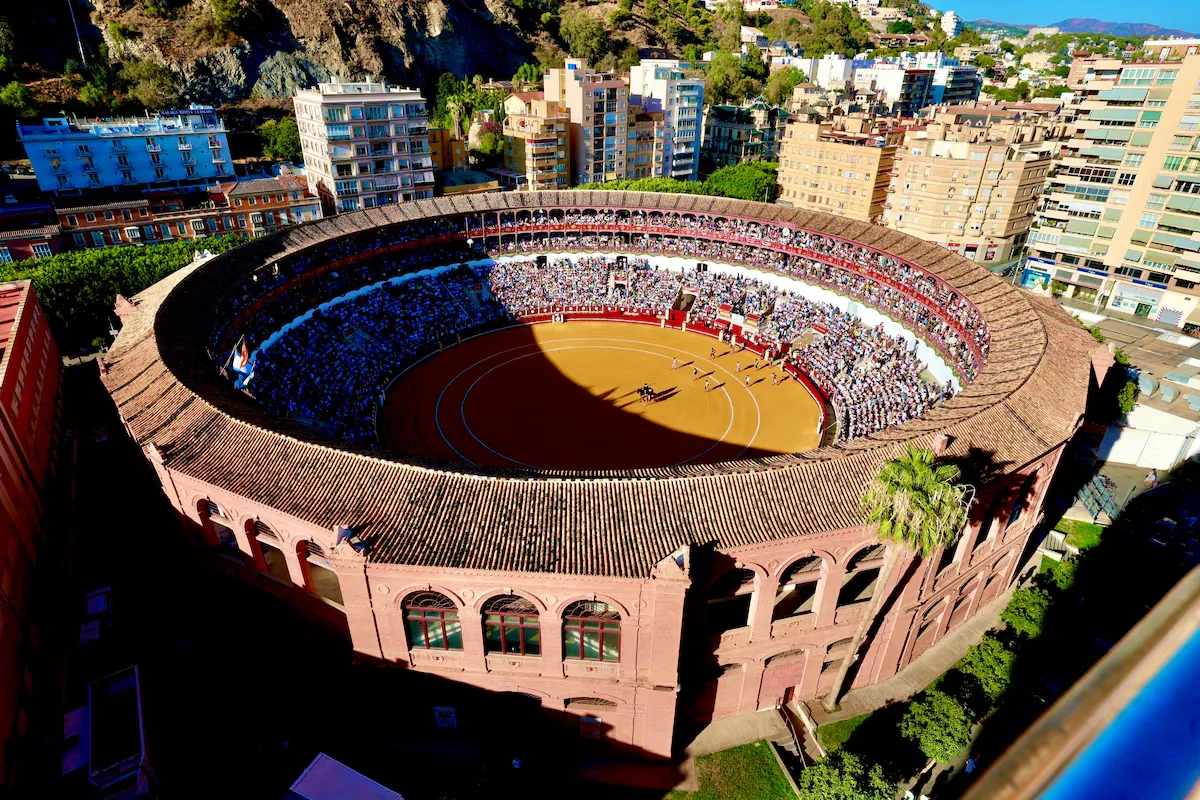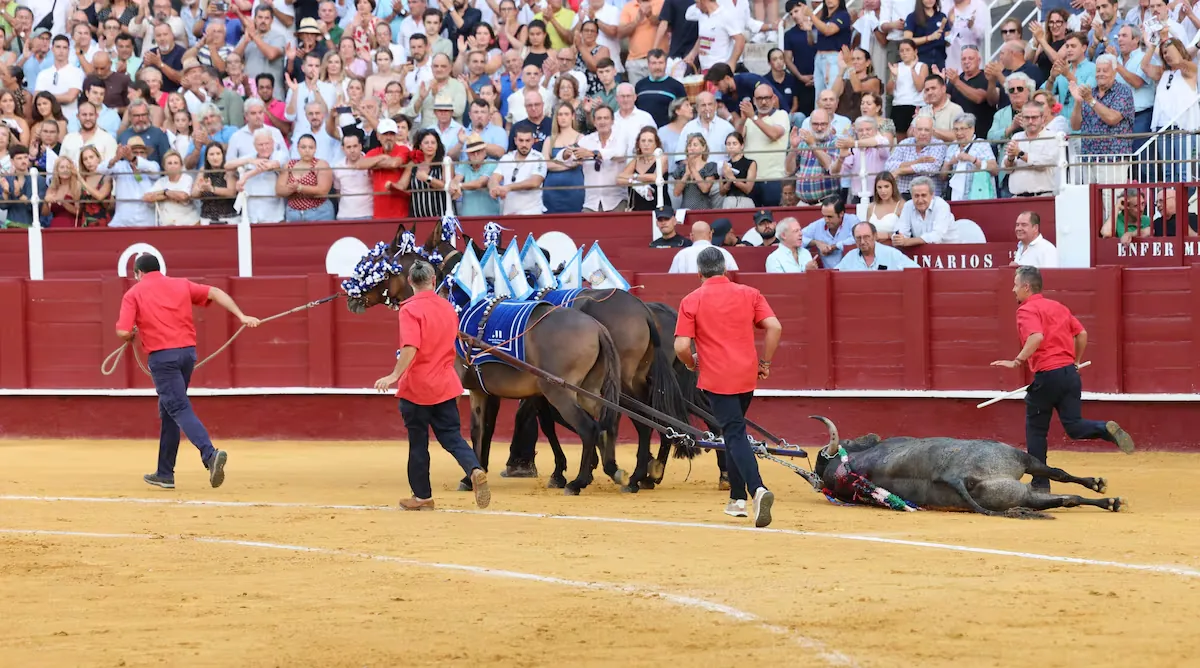

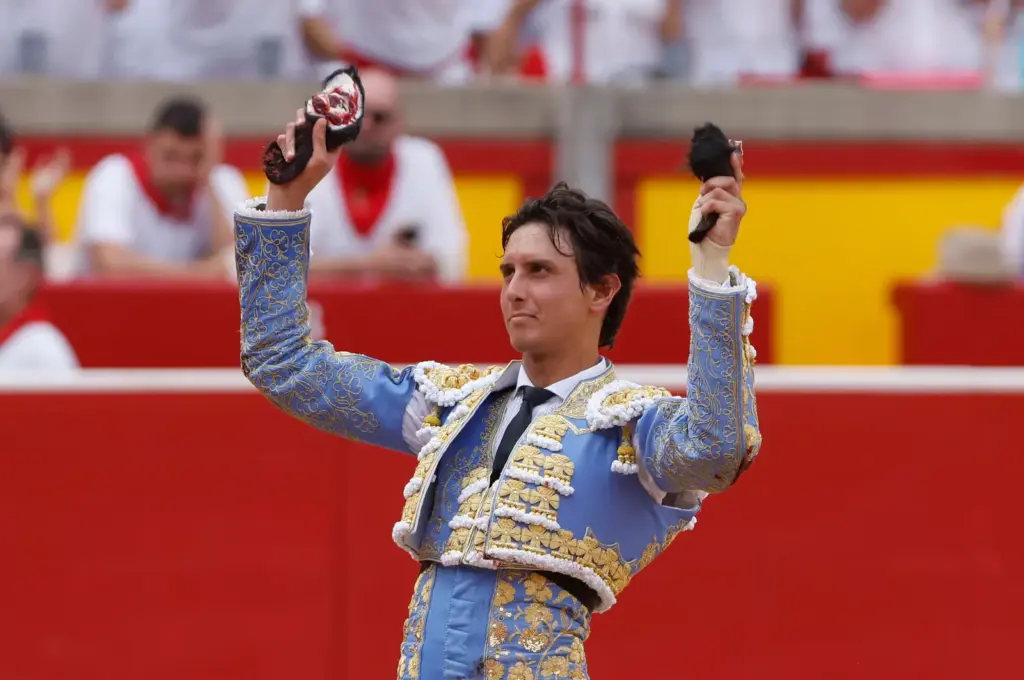
“The Peruvian bullfighter Andrés Roca Rey and David de Miranda from Huelva were carried out on shoulders from the Monumental bullring in Pamplona today, after each was awarded two ears from the second and sixth bulls of Victoriano del Río, respectively, based on very cheap criteria and the rigor of a portable bullring, in what was already the fifth celebration of the Sanfermines.”
“The unjustified granting of the second trophies for each of the performances, which at most deserved one, came from today’s president, the former mayor of the Navarrese capital Cristina Ibarrola, who joined the populist atmosphere with which bullfights – very serious bullfights – have long been viewed in a bullring where the quality of bullfighting is the least important circumstance of what happens in the arena and in the stands.”
This is how Paco Aguado, a prestigious bullfighting critic for the Efe agency, began his San Fermín chronicle on July 9. And that was the general tone of his reviews throughout the fair: a festive bullring where bullfighters obtain cheap trophies thanks to their populist displays in the sunny stands, occupied by spectators unrelated to the fight, and granted by a presidency that sits in the box for strictly political reasons and not for their bullfighting knowledge.
And let’s not forget that Pamplona is a first-class bullring, enjoys all legal blessings, and no one utters a word about all the outrages committed there.
The bullfighting festival in Navarre is the great victim of the incomprehensible interest of the Autonomous Communities in approving their own bullfighting regulations without known effectiveness
The bullfighting festival in Navarre is the great victim of the incomprehensible interest of the Autonomous Communities in approving their own Bullfighting Regulations; in fact, six different regulations are in force in Spain: the national one, and those approved by the governments of Andalusia, Aragon, the Basque Country, Castilla y León, and Navarre.
It makes no sense for it to be this way, but it is. And the Navarrese legislators decided that the presidency in the bullrings of the autonomous community should correspond to the mayor of the town where the event is held, who may delegate to a councilor or a recognized bullfighting enthusiast, as stated in article 39 of the autonomous regulation.
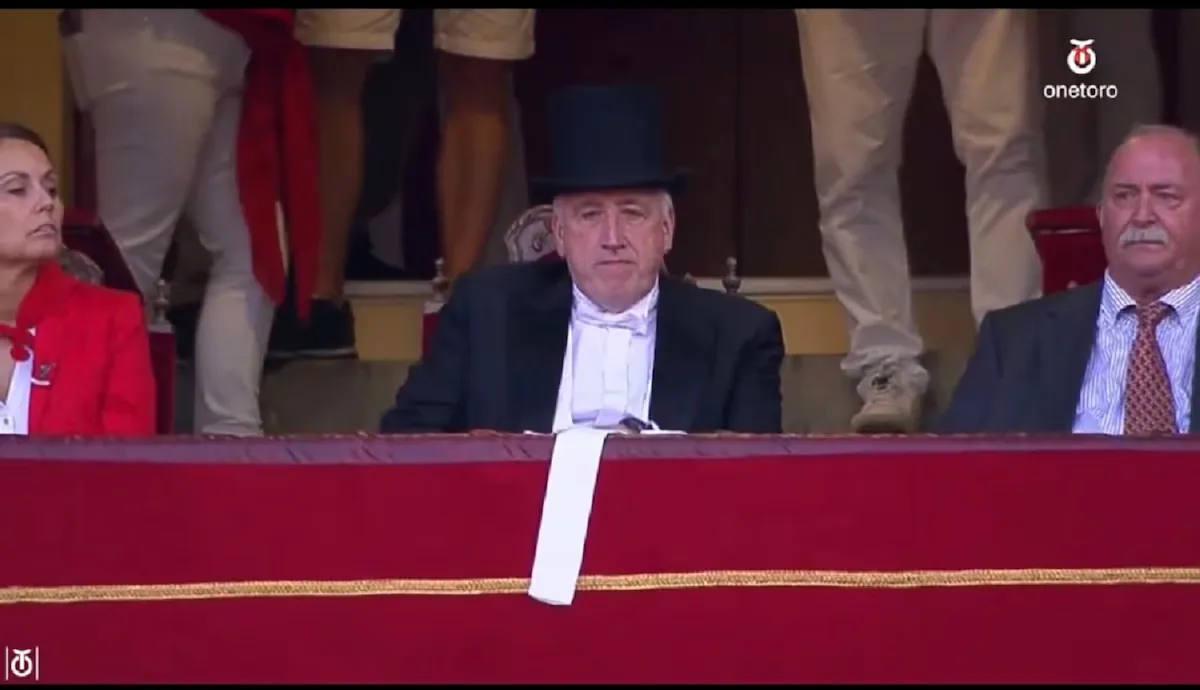
This year, the mayor of Pamplona has reserved the bullfight on San Fermín’s day for himself – this is customary, whoever the mayor may be – and has distributed the remaining seven days among councilors from Geroa Bai, UPN, PSN, and PP. The recognized bullfighting enthusiast is relegated to the novillada (bullfight with young bulls) and the rejoneo (bullfight on horseback) event.
Thus, they, dressed in tailcoats, with top hats included, and they, in their finest attire, settle into the box and prepare to enjoy their particular moment of worldly glory beyond the daily political squabbles.
Of course, they enjoy the privilege that their position allows them, but perhaps they are unaware that their audacity seriously harms the bullfighting festival. It’s not that they lack the minimum knowledge to assume the responsibility of directing a bullfight in a first-class bullring, which they do lack, but it is evident that they assume the position as an amusement, submit to the criteria of the sun-drenched stands, and have no qualms about granting trophies as if dealing cards at a gaming table.
Read more The Generalitat will compensate the families of the rural agents murdered in Aspa with 617,000 euros
This is, at least, the impression they convey, and Paco Aguado has reflected it in his chronicles, so very few of the 17 ears granted have corresponded to merits earned in the arena.
And it is a shame that the sector remains silent in the face of the degeneration suffered by bullfighting, even if the councilors’ tailcoats are protected by law. This is how it is, but it is still a daily blow to the integrity and purity of the spectacle.
And the bullfighters, who know the score, shamelessly contribute to the discredit of the spectacle, competing in knee-drops and empty displays to excite the “peñas” (fan clubs), who are the ones who rule in the bullring, and not the shaded stands, which are neither present nor expected.
This is the blatant consequence of the excessive and vain interest of the autonomous communities in having a differentiated bullfighting regulation, and it is yet to be proven that any of them have contributed anything positive to the development of the spectacles.
Bullfighters, who know the score, do not hesitate to compete in knee-drops and empty displays to excite the “peñas”, who are the ones who rule in the Pamplona bullring
On March 27 of last year, Andalusia approved a new Regulation that replaced the one from 2006, and which Antonio Sanz, Andalusian councilor, described as “the culmination of a complex work that has lasted four years and is born from the consensus and unanimity of the Andalusian Bullfighting Affairs Council, in which the entire sector is represented.” “The norm arises with a strong national vocation,” he added, “because it is not logical that different regulations exist in Spain, and that of Andalusia aims to be the basis for a future homogeneous regulation for all autonomous communities.”
So far, and more than a year has passed, no one has raised their voice, an unequivocal sign that everyone wants to maintain their own norm, even if it serves little purpose.
For now, it does not seem that the mayor and councilors of Pamplona are willing to renounce their privilege for the benefit of bullfighting. Nor are the politicians of the other autonomous communities willing to give up a share of power. Because that is what it is about, making authority visible in a mass spectacle, even if the effects of the autonomous norm are not noticeable.
After all, we are (were) in San Fermín and the peñas come to have fun; what does one more or less ear matter? What does it matter if the Pamplona bullring fills up every day… even if it is converted into a portable one?
Read more France fights against three large active fires in the south of the country