









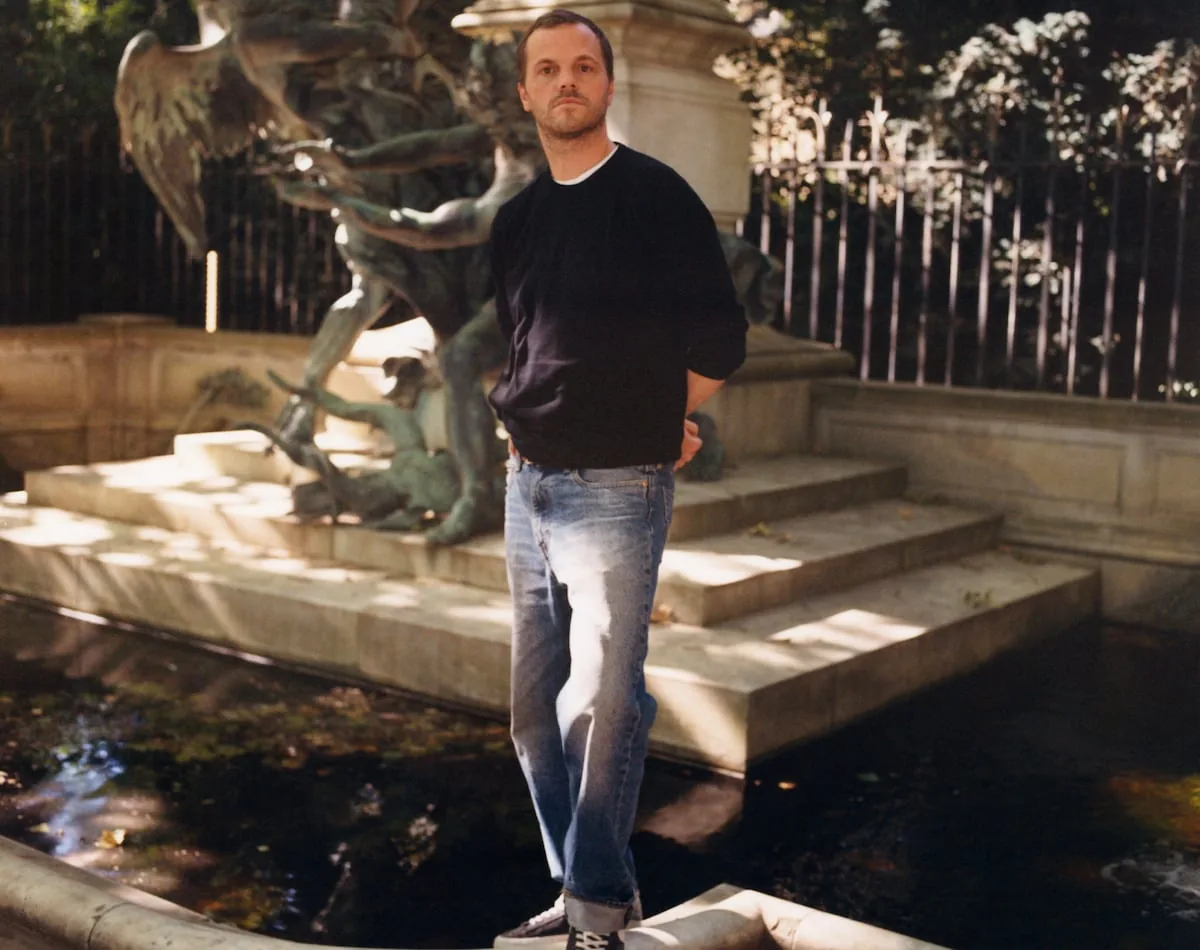
Matthieu Blazy pulls a sheet of paper out of his pants pocket and begins to read “Chanel is a caterpillar and a butterfly. We need dresses grounded to the earth and dresses that fly, because the butterfly doesn’t go to the market but the caterpillar doesn’t go to the dance either.” It is an interview with Coco Chanel in Le Figaro published in the fifties. “When I read it, I thought, there it is: function and fiction. That is Chanel, it contains that paradox,” Blazy explains to a small group of journalists after his autumn show. “In fact, once they asked her what her favorite color was, expecting her to say black, but suddenly she said: what I like are iridescent things. So I thought… we have to make these contrasts, that’s Chanel,” he says.
For decades, Chanel’s collections have been explained through episodes of her biography: where she was or with whom, what her apartment was like or what places she had visited. Karl Lagerfeld first and Virginie Viard later thus gave new life, a contemporary view, to the most personalist brand that exists. The only one that signed that knew how to create a kind of uniform that has not gone out of style in more than a hundred years, because Coco Chanel’s revolution (conceiving an active and rebellious woman at a time when her role was quite the opposite) was much more social than merely aesthetic. With Blazy, who arrived at the house a year and a half ago and debuted last September, it is the first time that it is not necessary to talk about Chanel’s life, but about her way of seeing fashion and approaching materials. The designer says he loves to open and cut old garments to see how they were made, and remake them from the skeleton: “There is a kind of grammar in the weave of the jackets. And in the linings. Chanel loved making linings, and they had the same quality and importance as the exterior,” he explains. So now those linings have become, for example, blouses, and the pattern of some jackets has served him to create outerwear from different materials, from cotton to technical fabrics and from wool to iridescent silk.
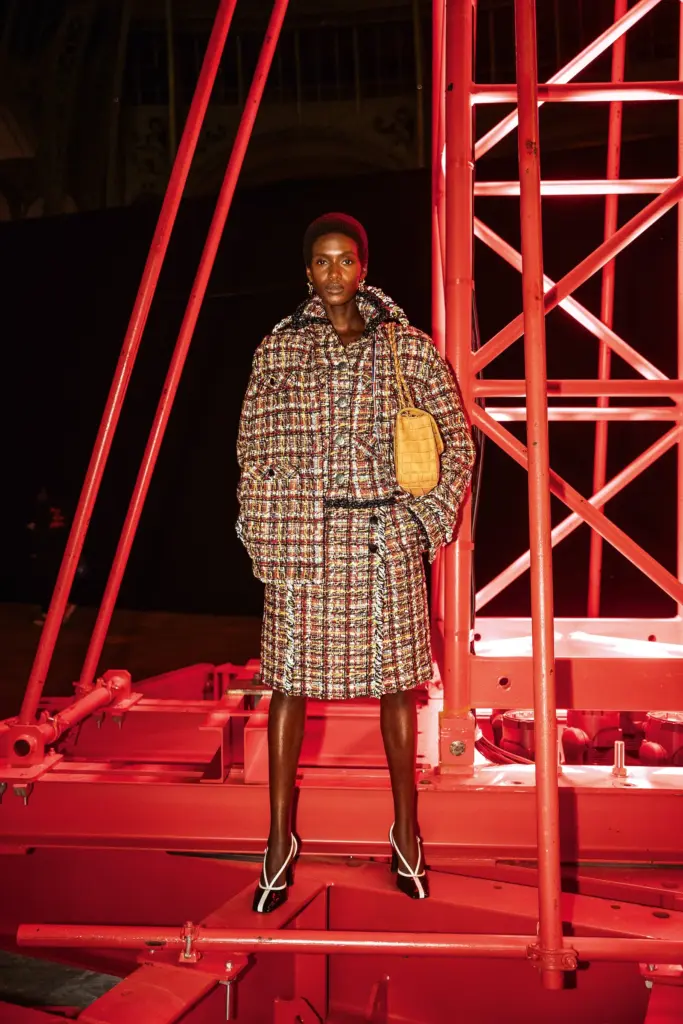
Two days before Blazy presented this second collection, the first one arrived in stores. The truth is that after seeing the direction the brand was taking in that debut, a more comfortable and lighter Chanel, but also more colorful and daring than that of its predecessors, many wondered if the longtime client would react positively to the change. In one weekend, many handbag models and some garments were already sold out and, at least in Paris, the lines to enter the boutiques almost wrapped around the block.
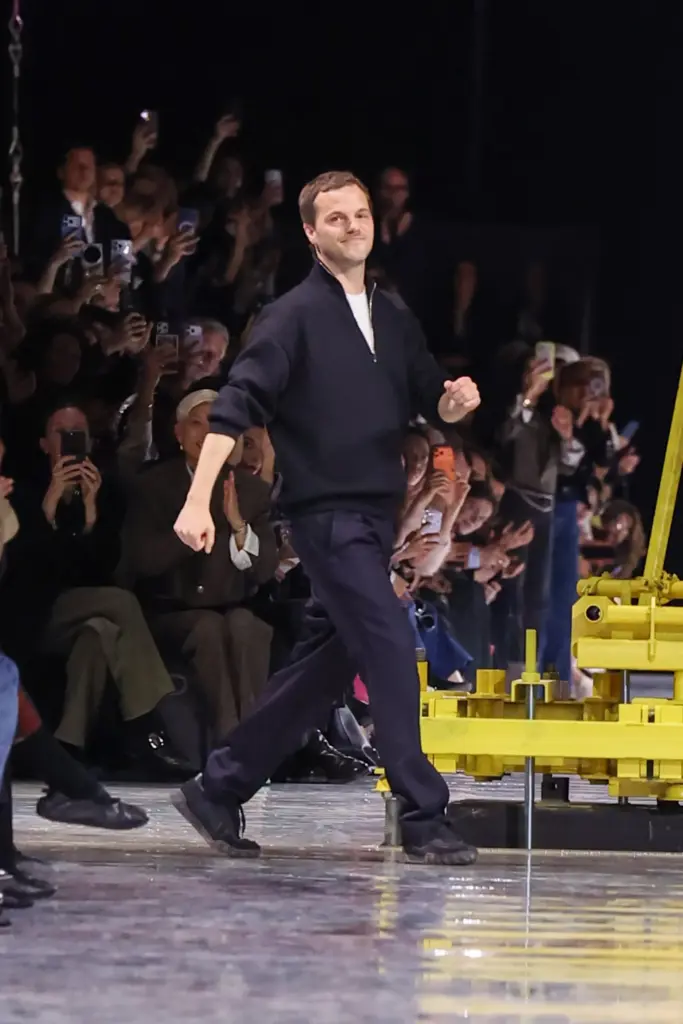
Blazy repeats several times that he is happy, and smiles while explaining that he conceives the collections “as a continuation. This second one is a response to the first, I like to establish a kind of dialogue with what came before.” And, while enthusiastically recounting how he conceived almost every one of the more than seventy looks of the show, he repeats the word movement several times. “Everything is movement, it is the starting point, movement,” he says. In his years at Bottega Veneta his work was one of the most acclaimed precisely because he was able to make some garments float when walking. Also because he managed to play the trompe-l’œil masterfully, with knits that looked like leather, and vice versa or with cottons treated to simulate hair. “Here there is also trompe-l’œil,” he comments. And he points to two iridescent printed designs. “A journalist talking about number five described it as ‘the impression of a flower.’ Not the smell of a flower but the idea of a flower, something like an impressionist painting, which is not reality but the idea of that reality, so I wanted to play with that vision in which prints and light are almost like their own visions rather than copies of reality,” he says.
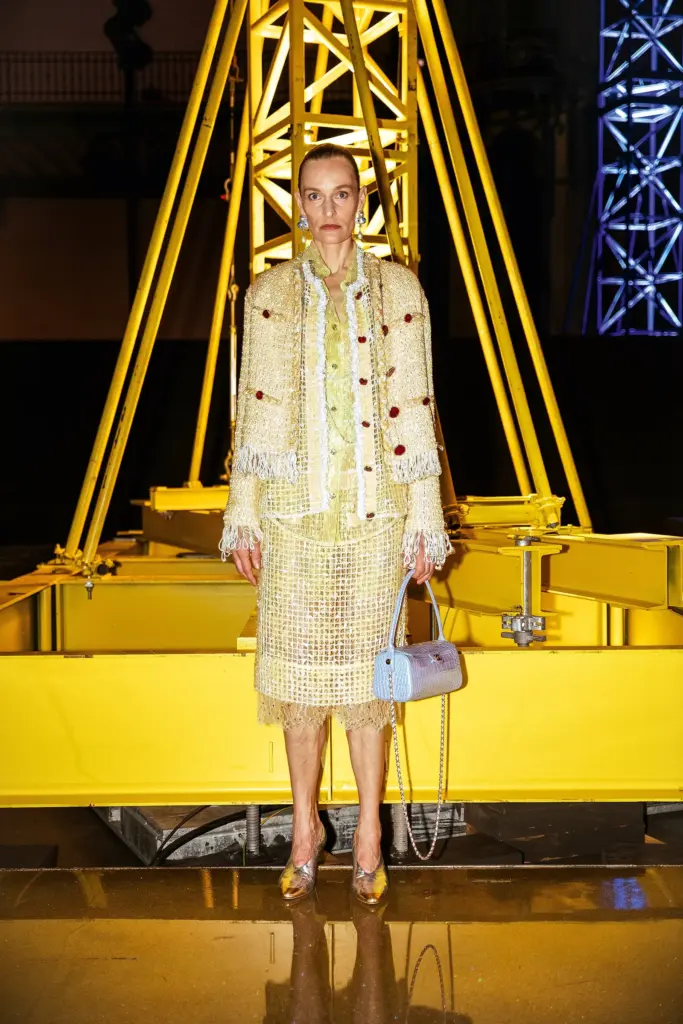
Blazy is one of those few designers capable of the simplest and the most complex. The show, in fact, opened with a Chanel suit turned into a zip-up sweatshirt. “It’s the idea of pure function, you can’t reduce it more,” he says. It closed with a simple draped black dress. “Without any superfluous ornament, it’s like closing the circle. Caterpillar, butterfly, and back to the caterpillar.” In between, a technical and aesthetic display that includes absolutely everything. “Suits, suits, suits, in all their forms,” he says. Also slip-like dresses and others with very low waists adorned with a belt, a nod to the flapper dresses of the twenties and of course to Chanel herself, who was a flapper in her own way. “In her early years she would take a huge men’s sweater and put a belt on her hip. That gesture seems masterful and liberating to me,” Blazy explains. It’s clear he has a lot of fun exploring the house’s enormous archive. For a materials obsessive like him, the French brand allows him to play in a way diametrically opposite to how he did at Bottega Veneta. Here he doesn’t make the expensive and exclusive, leather and silk, look like cotton or knitwear. Here he makes fabrics like cotton and knitwear look expensive and exclusive. “Because unlike Balenciaga, Chanel didn’t need very expensive raw materials to design. She started working with humble materials, she actually liked that they were popular fabrics, because in her beginnings she surrounded herself with people who wore them,” he explains. “She was a woman who made haute couture with sportswear,” he says enthusiastically. “Also, she was already making suits with separate and combinable pieces thirty years before Yves Saint Laurent. That’s why there are so many suits with different pieces here, because that’s everyday life, but before it was very pioneering,” he adds.
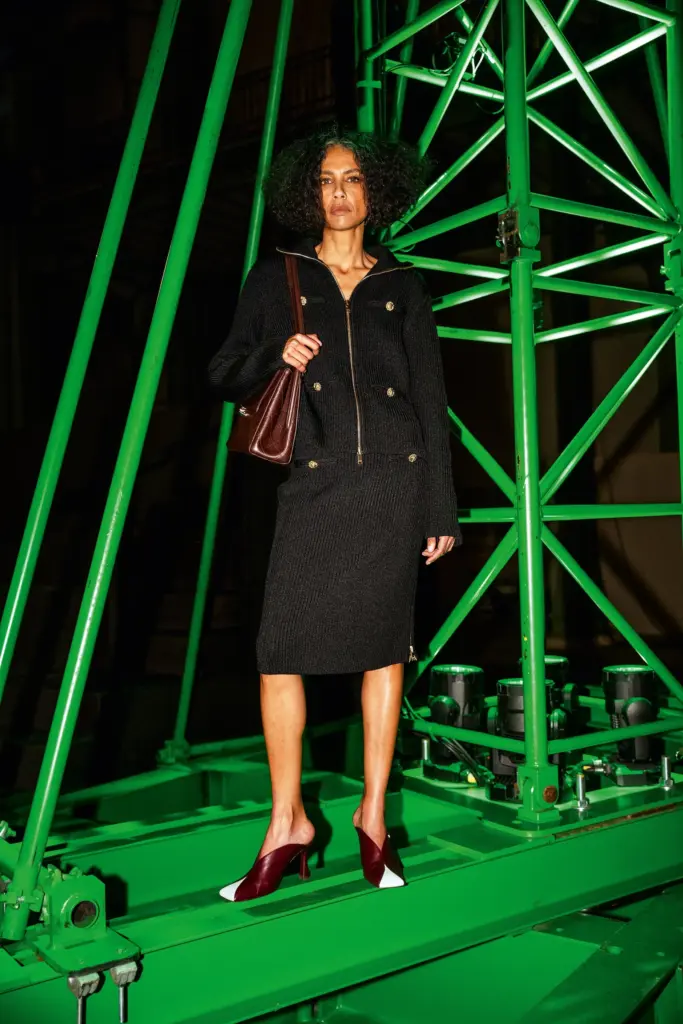
It was very difficult, almost impossible, for Chanel to change and still be Chanel. The house needed fresh air, freshness, and comfort. Also un-corseting to truly remain faithful to the free and unprejudiced attitude of its founder. But Chanel is a house where it is easy to cross certain red lines and, suddenly, with a small detail or a minimal gesture, turn it into something else. Blazy has achieved a complicated balance, not crossing certain limits but at the same time changing its position and structure: with his ingenious and wearable designs, his appreciation for the legacy, his casting of models of diverse ages, faces, and appearances that appeals to normality, and his optimistic campaigns. The audience attending the show went from a gesture of astonishment to a smile intermittently. He is the only current designer who has achieved unanimity among critics, the public, and clientele. “It makes me happy to work here,” he says shyly at the end of the meeting. It shows.
Read more Catalonia will invest 20 million to install ceiling fans in schools this summer