








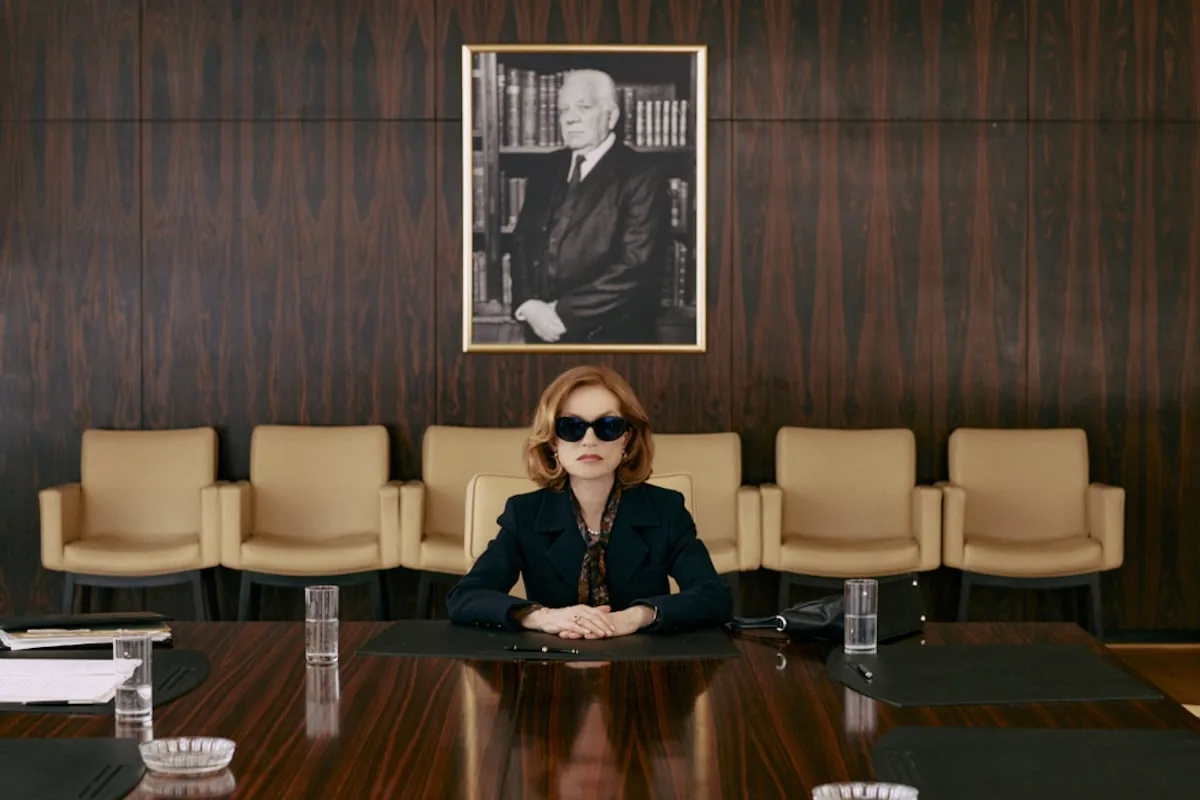
Isabelle Huppert’s new film, The Richest Woman in the World (Thierry Klifa), delves into one of the most notorious scandals in recent French social chronicles. The film, which will hit Spanish theaters on April 17, is loosely inspired by the so-called Bettencourt affair, a case that had all the ingredients to capture the attention of the press and public opinion: an unconventional “friendship” story, wealthy people at odds with each other, hidden recordings by a butler, political corruption, suspicions of tax fraud… The central figure of the scandal was Liliane Bettencourt, the all-powerful heiress of the giant L’Oréal, who passed away in September 2022. The cosmetic empire is now in the hands of her only daughter, Françoise Bettencourt-Meyers, owner of a fortune of more than 43 billion. When the case came to light around 2007, Liliane’s fortune was estimated at 17 billion euros, an astronomical figure that made her the richest woman in France. And for several years she was even the richest woman in the world, according to Forbes magazine. Netflix already bet on this rocambolesque story when it released the documentary series The Bettencourt Scandal: The Richest Woman in the World Scandal in 2023. But how does someone amass such a fortune? Well, like the vast majority of today’s great fortunes: thanks to very privileged origins.
Read more Catalonia will invest 20 million to install ceiling fans in schools this summer
Liliane Bettencourt was born on October 21, 1922, the only daughter of Louise Madeleine Berthe and the chemist Eugène Schueller, founder of L’Oréal and considered a pioneer of modern advertising. Schueller’s roots were humble (his father ran a bakery), but he managed to study chemistry, and after several jobs related to the cosmetics world, specifically hair dyes (the origin of L’Oréal), he established himself as a businessman. His relationship with his daughter was close for the time since Liliane lost her mother as a teenager. She very soon became part of the family business when the company did not yet have the colossal dimensions it has today. Apparently, she started by labeling products in one of the factories. In the 1930s, she met her husband, André Bettencourt, a politician, journalist, and businessman who flirted with fascism in his youth. In fact, he was part of La Cagoule, a pro-Nazi group funded by Liliane’s father and dissolved in 1937. Liliane and André married in 1950, and in 1953 their only daughter, Françoise Bettencourt Meyers, was born, now the majority owner of the L’Oréal empire. Throughout his life, André held several prominent political positions with the governments of Pierre Mendès-France, Georges Pompidou, Maurice Couve de Murville, Jacques Chaban-Delmas, and Pierre Messmer. Therefore, the Bettencourt family’s proximity to the political sphere was always very close.

After Eugène Schueller’s death in 1957, Liliane Bettencourt became the main shareholder of the company. In the following years, L’Oréal grew thanks to increasing product diversification and went public in 1963. Fearful that the cosmetic giant would be nationalized after the 1974 French elections (with Valéry Giscard d’Estaing winning the second round), the businesswoman exchanged half of her shares in L’Oréal for 3% of shares in the Swiss company Nestlé, which currently owns 20.1% of the French group’s shares.
In 2026, Françoise Bettencourt Meyers remains the main shareholder of a conglomerate of brands that generated 6.127 billion euros in profit last year. Although its growth has declined by 4.4% compared to the previous year, the company’s future is promising, as reflected in the company’s latest major move: the acquisition for 4 billion euros of Kering’s beauty division (owner of the niche perfumery brand Creed and the fragrance licenses for Gucci, Balenciaga, and Bottega Veneta).

The great soap opera that shook France
Returning to Liliane’s figure, although the film The Richest Woman in the World relies on fiction to shape the plot, the story is loosely based on the all-powerful businesswoman and her relationship with photographer and writer François-Marie Banier, to whom she gifted presents worth 1 billion euros (from works by Picasso, Mondrian, or Matisse, to mansions or life insurance), to the shock and outrage of the Bettencourt family. The magnate is played by Isabelle Huppert, who stated that the film does not “intend to be a real copy of the facts.” “A film is a film, and that’s why I have very little in common with this woman. Really, it’s a step into a world of fiction. But in France, we say reality almost always surpasses fiction. In this case, it’s totally true,” she added during the film’s presentation at the last Cannes Festival, in statements collected by Deadline. Banier was an old acquaintance of the Bettencourt family and, although he was not part of their elitist world, he had mingled with celebrities and stars from all fields. He himself recounted that as a teenager he used to carry Dalí himself on his motorcycle. His friendship with Liliane began while her husband André was still alive, who died in 2007, and lasted several years.
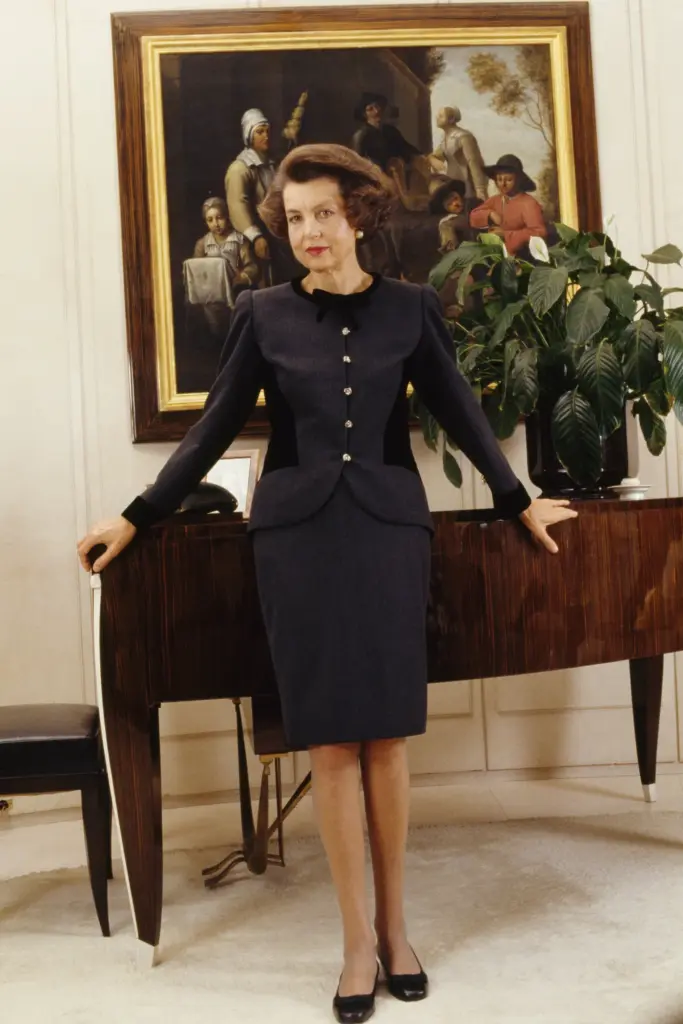
The Bettencourt soap opera went to trial in 2007 after her daughter Françoise accused Banier and other people close to her mother of taking advantage of the elderly woman, who suffered from Alzheimer’s. The case turned into a political corruption case when recordings made by Pascal Bonnefoy, the businesswoman’s butler, were made public. In theory, Bonnefoy claimed to have recorded those private conversations to show how some people like Banier sought to take advantage of the elderly woman. However, there was much more in those closed-door talks. The recordings involved the then Budget and Public Accounts Minister, Éric Woerth (belonging to UMP, Sarkozy’s party), who allegedly intervened to help Bettencourt fiscally, owner of several accounts in Switzerland and an undeclared island in the Seychelles. To make matters worse, the minister’s wife worked as Bettencourt’s economic advisor (with a salary of 13,000 euros per month) until her resignation when everything came to light. Furthermore, delving into this family story, the judicial investigation revealed alleged illegal financing of Nicolas Sarkozy’s party, the supposed recipient of money from the Bettencourt fortune, as revealed to the police by a former family accountant (Sarkozy was eventually exonerated in court for this matter). The story’s conclusion came a few days before Liliane Bettencourt’s death on September 21, 2017. Before the billionaire’s passing, her daughter Françoise and photographer François-Marie Banier reached an agreement to end a litigation that had already lasted a decade. By then, all of France had witnessed the intimacies and dirty laundry of the country’s most powerful family.