




They are the ones who shape the news, who sculpt the story. They are behind the report, the informative TikTok video, they carry a newsroom on their shoulders, they sustain the nerve of editorial decision-making, or they think up strategies so that journalism is not only profitable but also doesn’t die. They are Puerto Ricans, Spaniards, Venezuelans, Mexicans, Cubans. They have an accent when they speak English and switch to bilingualism with the grace of incorrectness, especially by placing the language in function of what they do. Where surveys see a percentage, they see a face; where the system sees a migrant, they see a person. Now they have gathered at the largest event for Hispanic journalists in the United States to talk about what they do and who they are.
Read more Is women’s right to vote at risk of being abolished? The new crusade of the far right
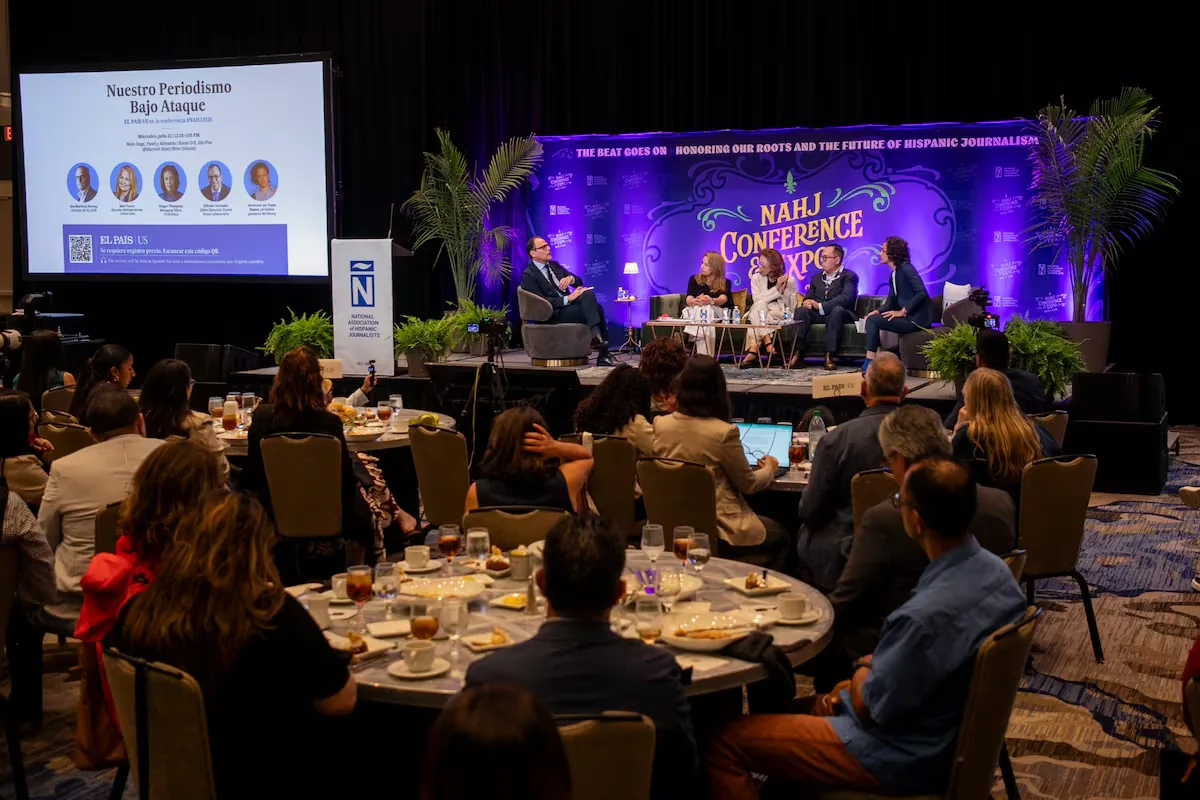
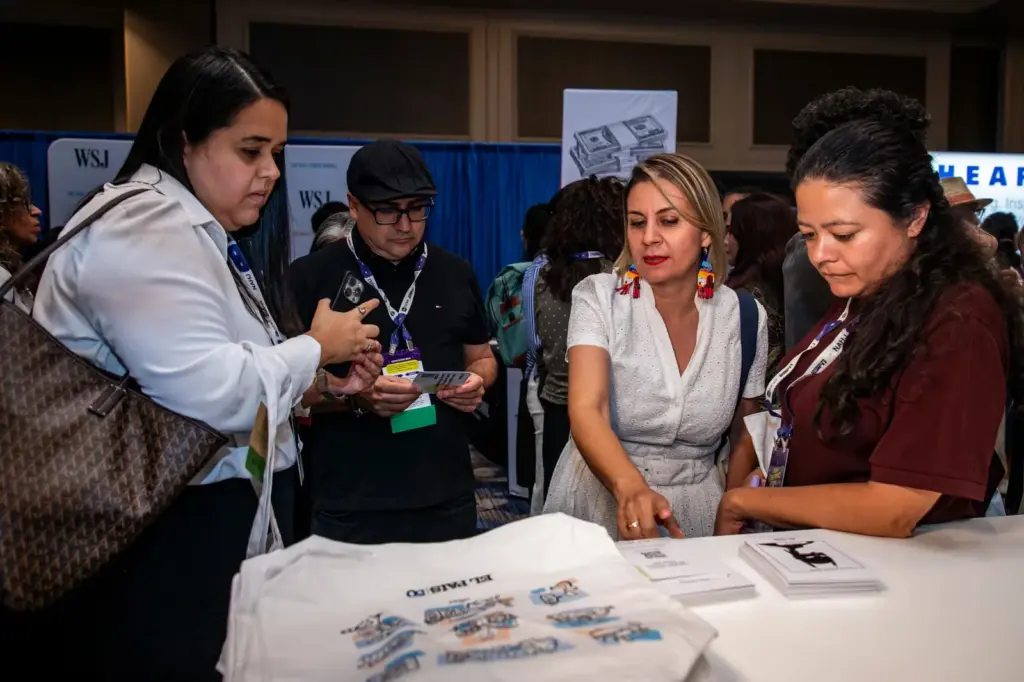
Since last Tuesday, the New Orleans Marriott hotel, in the southern city of New Orleans, hosted the conference of the National Association of Hispanic Journalists (NAHJ), the largest organization that, for more than four decades, fosters and promotes journalism made by and for Hispanics in the United States. Nearly 4,000 members, including journalists, students, professors, and media professionals, gather each year to converge and reflect on journalism aimed at one of the communities historically least represented in the press.
Mariana Navarrete flew from New York to attend the event. She is a 26-year-old Mexican journalist to whom one of the bosses at the media outlet where she worked in Connecticut once said: “Why would you get involved in spaces that only speak Spanish, if they don’t even read us?” Navarrete had wanted to start telling the stories of the more than 735,000 Latinos living in that state. It wasn’t possible, or at least not as she had envisioned. She had to fight to bring forward the stories that mattered most to her.
That is why for a long time the guild of Hispanic journalists in the United States has had the awareness and obligation to take charge of what some major media outlets do not prioritize. It is about the community that has had to tell its own story, to deal with the stories that the *mainstream* has buried. The setbacks are many: Spanish-language journalism has been precarious, invisible, and deprived of spaces.
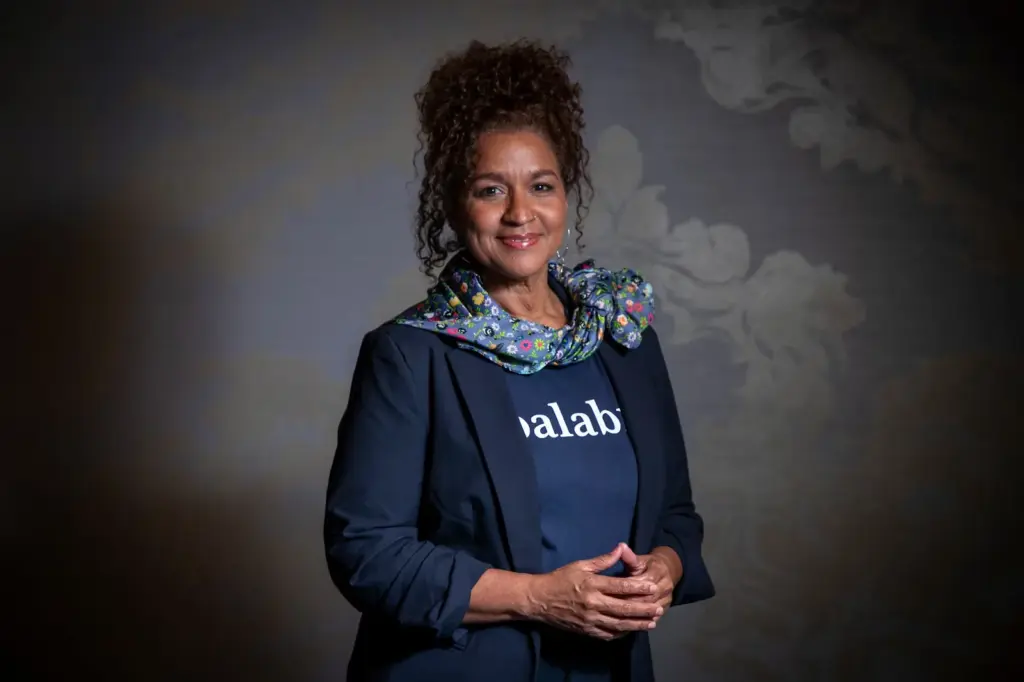
In one of the hotel corridors where the conference took place, Tamoa Calzadilla was sitting, the Venezuelan journalist who has led investigative teams and who today holds the role of editorial chief of *Palabra*, a platform for independent journalists associated with the NAHJ. Calzadilla asserts that, in a country with an audience of more than 60 million people of Hispanic or Latino origin —among whom, according to the latest Census, about 39 million speak both languages and about 18 prefer to speak only Spanish at home— the “information deserts” today are striking.
“They have information needs that are not being met. There are areas in the country with at least only one media outlet or none, where people who speak Spanish have nowhere to get information. So there is a great void regarding Spanish-language media,” she maintains.
A Pew Research Center survey revealed in 2024 that just over half of Hispanic adults in the country (54%) get their news primarily in English, compared to 21% who get it from Spanish-language media. For a long time, spaces aimed at Latinos were restricted to promoting entertainment, believing that novels and participation programs settled the debt with the Hispanic audience. Although this view has been overcome today, Spanish-language journalism is still at a disadvantage. Some media outlets are just appendages of their English counterparts. Even salaries are much lower, and job opportunities are also scarce. In recent times, many Spanish-language media outlets have had to lay off their journalists en masse, reduce their newsrooms, and even close down.
Amidst this scenario, the Telemundo network has been able to expand, after several decades of service to the Hispanic audience. Spanish journalist Marta Planells, Vice President of Digital News and *Streaming* for Telemundo, who has been working in the journalism industry in the United States for 10 years, is clear that the path has been to find a way to be independent both editorially and economically. “We have achieved it because there is a clear vision from the top,” she says. Although Telemundo is part of NBCUniversal, it is not limited to being its exclusive Spanish-language service, but rather a media outlet with autonomy.
“We are siblings, in such a way that the content generated at NBC News in English reaches Telemundo in Spanish, but also the content we create at Telemundo is translated into English. And that is the novelty we have managed to achieve thanks to our understanding of the audience,” Planells states. “I think the challenge for media now is to understand that the digital business is very diverse, and we must find a business model that is profitable, taking into account the number of platforms and the massive consumption that exists.”
Spanish-language journalism in the Trump era
The situation today becomes much harsher for Hispanic journalists or those who practice journalism from Latino communities, one of the most attacked by the Donald Trump administration. Professionals like Mariana Navarrete have had to stop covering migration-related topics or stop attending protests, for fear that their legal status in the country could be jeopardized.
Ten years ago, when President Trump was campaigning for the White House —among other things, with the promise of tackling migration— the bilingual journalism master’s program at the Craig Newmark Graduate School of Journalism at the City University of New York was also born. The objective was clear: “To bet on Hispanic communities having that space so that they can be reported on, but through bilingual students, who can navigate the reality of both languages, and who in turn can amplify the situations and stories of that community that are so frequently stereotyped and poorly understood in the media,” says Carmen Graciela Díaz, director of the program, who has also participated in the annual journalism event.
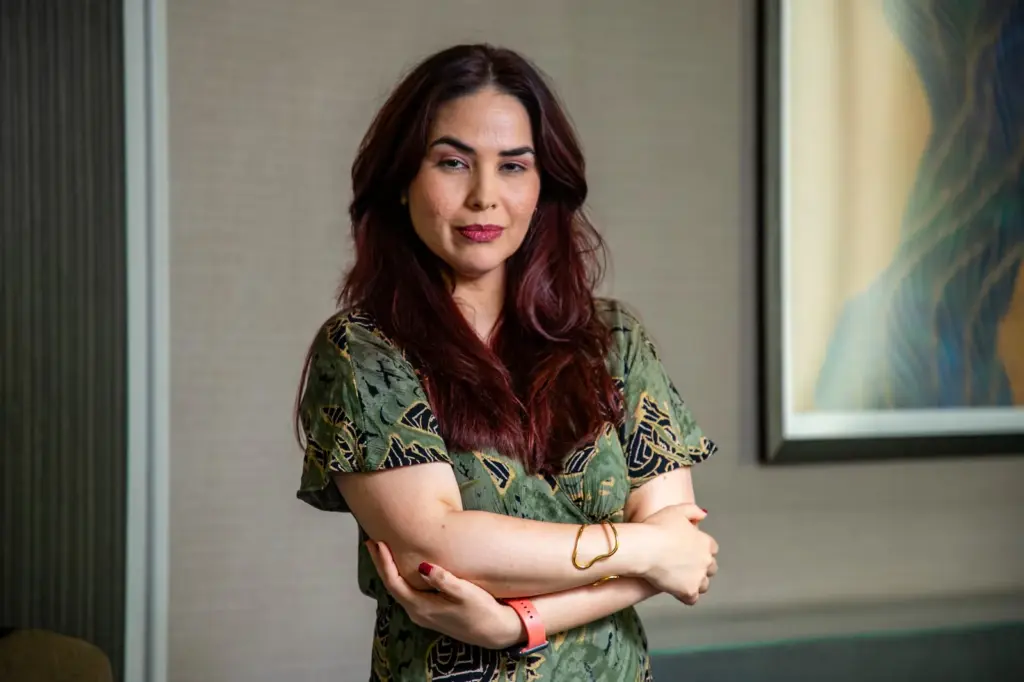
According to Díaz, the goal was to transform “newsrooms with greater representation of our community with new generations of journalists.” Ten years later, with Trump back in the White House, the landscape is much more aggressive. Today, the journalists who graduated there already know that they will face covering the stories of people who, among other things, have suffered the most from the current Administration’s anti-immigrant policy. The initial challenge remains: “To think about how we stay relevant, how we serve and ensure that journalists cover Hispanic and Latino communities with dignity, rigor, respect, and balance at a time when we again have so much noise. Spanish is not just a linguistic matter. I see it as a tool, as a cultural bridge,” Díaz points out.
Jasmine Garsd, migration correspondent for National Public Radio (NPR), came to New Orleans to offer a workshop on how to report in vulnerable communities and share lessons on how to stay safe. She is one of the journalists who has been on the ground telling the stories of the aggressive anti-immigrant policy unleashed from Washington. She has personally experienced the marks of this era.
“We are in a moment of great intimidation for journalists. This year I worked in Minneapolis, and we were tear-gassed on several occasions. There is a general atmosphere of intimidation towards journalists. It is an Administration in which the official line is that journalists are lying, that they are a force of the opposition. Work is being done to discredit journalism. There is also emotional and psychological exhaustion,” she assures.
Nevertheless, although it continues to be a challenge for Hispanic journalists —both physical, psychological, and monetary— Hispanic and Latino communities continue to drive Spanish-language journalism. Even when that means taking a stand. “Here the commitment is not to do tightrope journalism; we are honestly telling, with journalistic resources, the stories that must be told, and no one better than a journalist who belongs to the community to know what to tell and how to tell it,” assures Tamoa Calzadilla.
Read more Three minors dead and the same pattern of violence in militarized academies in Mexico