







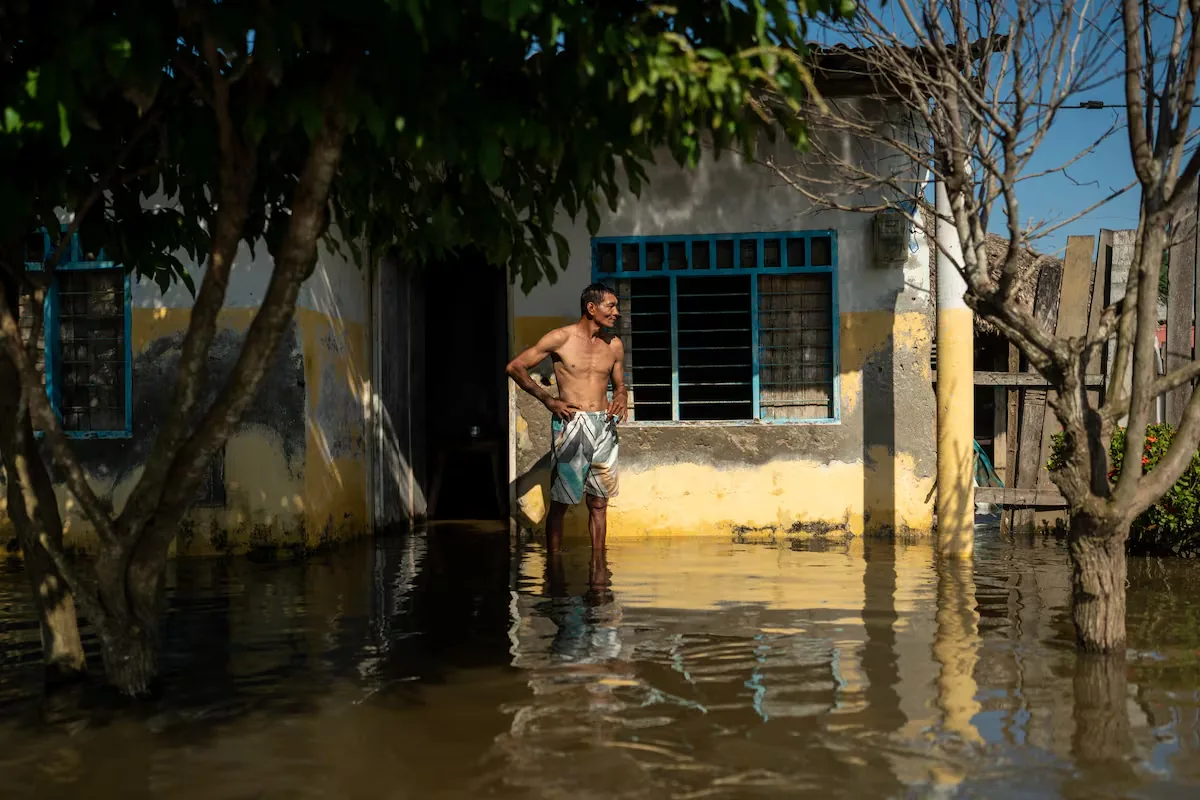
In the coming months, Colombia will face what could be the worst El Niño phenomenon since 1950, according to forecasts from the Institute of Hydrology, Meteorology and Environmental Studies (Ideam). A few days before the end of his term and amidst expert concerns about the system’s capacity to ensure energy supply, the Government of Gustavo Petro declared a national disaster situation to confront the risks of the climatic event, which in the country produces less rain, elevated temperatures, risks of water scarcity, and forest fires.
Essentially, the declaration – which comes four months after the first alerts and two weeks before the change of president – allows for the allocation of resources and budget transfers to finance response actions. The National Unit for Disaster Risk Management, an entity that has been at the center of public debate due to corruption scandals during the outgoing administration, will be responsible for implementing a plan focused on water supply, food security, public health, and environmental protection.
Although he has not revealed the details of the measures, the president ordered the reallocation of four trillion pesos that were destined for other purposes, and demanded the acceleration of solar panel installation in communities. “It’s not with more gas, it’s with more solar panels because there will be a lot of sun throughout the territory, including Bogotá,” he assured in an extraordinary session of the National Council for Disaster Risk Management. In total, the UNGRD will have eight trillion pesos (about 2.5 billion dollars) to address the situation.
Ideam warns of an 81% probability that El Niño will reach a “very strong” intensity between October and December, especially in the Pacific, Andean, and Caribbean zones, and probabilities exceeding 97% that it will persist until the first quarter of 2027. These forecasts increase uncertainty in a country that depends on hydroelectric plants for 75% of its total energy supply, and that relies on thermal plants, which run on gas, coal, and liquid fuels, thereby increasing the financial and environmental costs of energy.
Former Minister of Mines and Energy, Tomás González, explains that the biggest concern is whether enough energy can be secured to cover demand when the margin under normal conditions is small. “When El Niño arrives, rainfall decreases and generation is reduced by half or less. The backup has to be done with thermal plants, but we have been slow in the entry of new projects,” he points out regarding a backlog that has grown in recent years.
The alert comes at a time of system fragility, with lower gas reserves, growing demand, and problems that cannot be resolved in the short term, adds González. “Reservoirs should be at 80% when the electrical summer arrives. It is key that solar projects come online, that thermal plants are capable of delivering all their energy, and that they have fuel. If we don’t achieve this, the only solution is to make cuts,” he notes.
Read more Video analysis | The Caribbean power of the De la Espriella Government
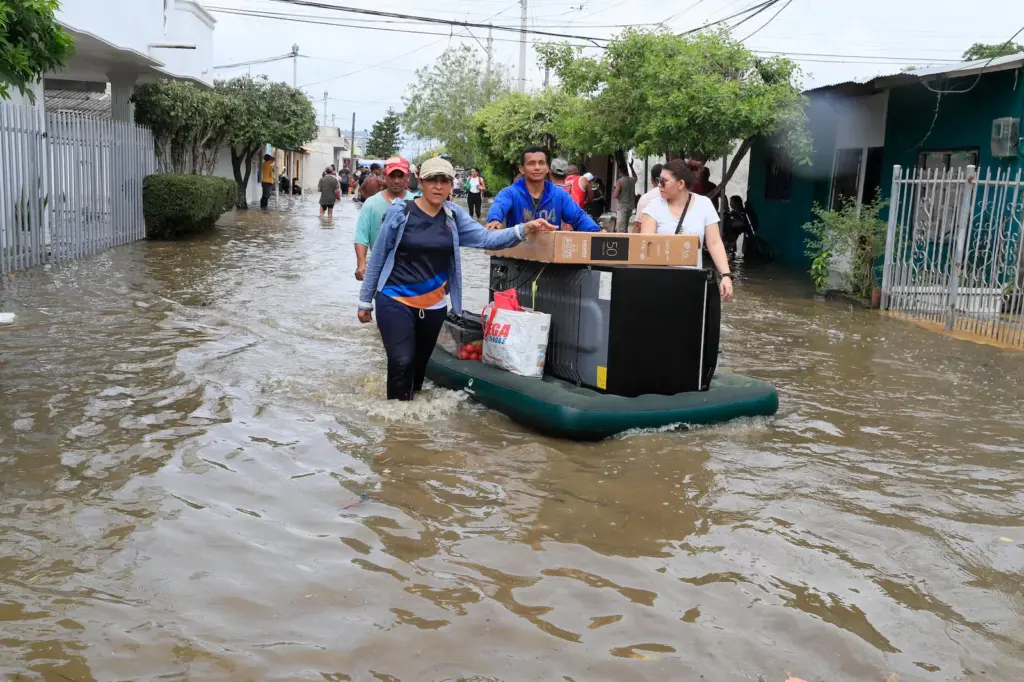
The warning echoes in a country that does not want to repeat the history of the early nineties, when it experienced a national blackout that prompted major reforms across the entire sector. Between 2015 and 2016, the El Niño phenomenon once again tested the electrical system and required contingency measures, including campaigns like “Turn off, it pays” to reduce energy consumption in homes.
The Colombian Association of Capital Cities (Asocapitales) reported that the window they have to reduce the impacts of the climatic phenomenon is 132 days, before the start of the highest risk season in December 2026. For his part, the Minister of Mines and Energy, Edwin Palma, asked the Ministries of Labor and Education to temporarily adopt telework and home study schemes to reduce energy demand while the maintenance of the regasification plant of Sociedad Portuaria El Cayao (SPEC) in Cartagena, the country’s only terminal that receives imported gas, is completed, scheduled until August 3. The proposal has not been transformed into new decisions.
The measures seem insufficient in the face of structural problems. The president of the Bogotá Energy Group (GEB), Juan Ricardo Ortega, has warned that the capital could face energy supply problems starting in 2028 if new electricity transmission lines, which allow energy generated from other areas of the country to be brought in, do not advance, a concern that increases in drought scenarios. With this outlook, the El Niño phenomenon looms as the first major management test for the government of Abelardo de la Espriella, which begins on August 7.
Former Vice Minister of Environment, Sandra Vilardy, says that actions should not focus exclusively on the electricity sector. “Centralism invisibilizes the risks for low and hot areas: access to drinking water, the impact on agricultural production, and public health in vulnerable populations such as the elderly, minors, and informal workers. Mayors must take action, authorize changes in classes to avoid exposing students to heat, promote saving and efficient use of water, and have energy backup in health centers,” she points out. The challenges are many and time is short.