

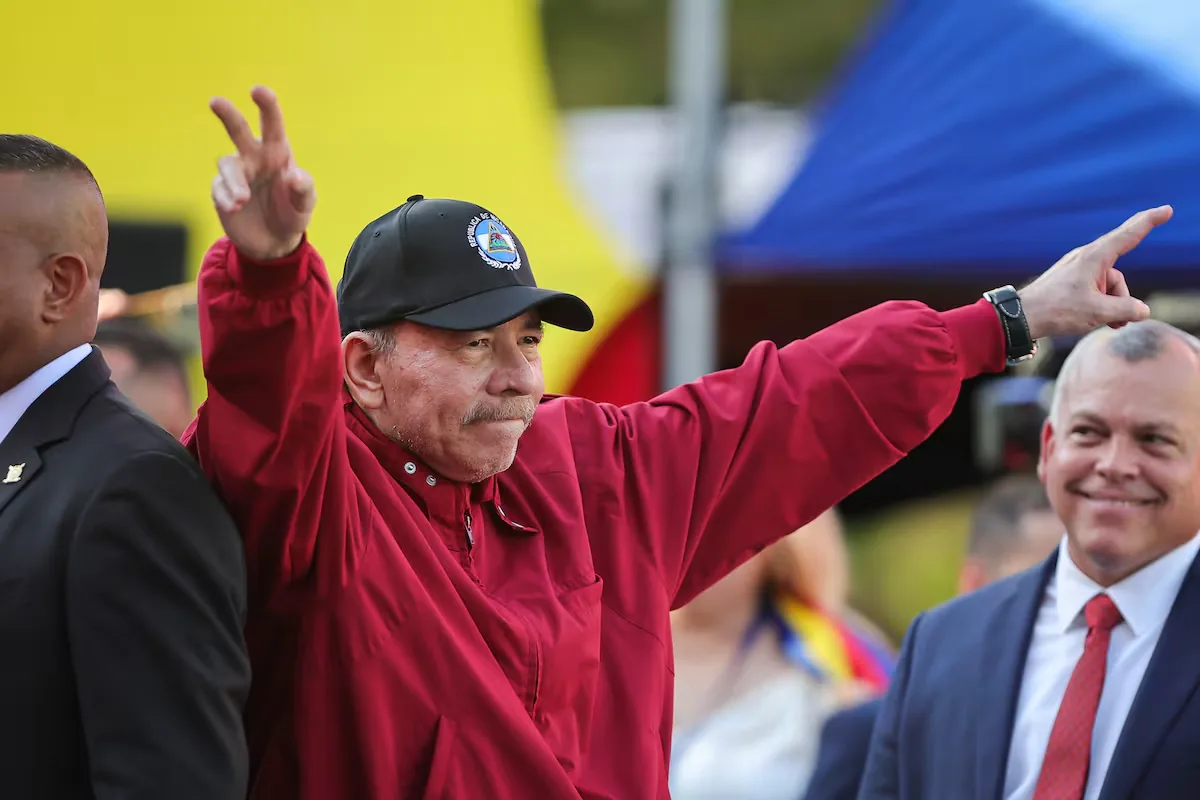
When Nicaraguans thought they had seen it all, Daniel Ortega decided to go a step further. The president, who has governed the Central American country with an iron fist for 25 years, 19 of them uninterruptedly, announced last Sunday that by his order, citizens will no longer be able to go to the polls to elect their rulers. “Let them forget, there will be no more elections here,” declared the 80-year-old leader, to the cheers of thousands of his most loyal followers and collaborators.
Ortega already dominated practically everything in his country. In 2025, the National Assembly unanimously approved appointing his wife, Rosario Murillo, as co-president. The presidential couple also exercises absolute control over the courts, the police, and the Armed Forces. All opponents who had a chance in the last presidential elections in 2021 were imprisoned. Social protests have been repressed, and the complaints of farmers, students, priests, and journalists have been silenced. Most of those who have dared to speak out have ended up dead, in prison, or in exile. Amidst a permanent decline, the elimination of voting was, however, a line the regime had not crossed.
“Democracy is not for us”
There are only a handful of countries where citizens do not vote. The list includes absolute monarchies, such as Saudi Arabia, United Arab Emirates, Oman, Qatar, and Brunei. There are rare cases in microstates like the Vatican or fundamentalist governments like that of the Taliban, who eradicated the fragile institutions that existed in Afghanistan. There are military juntas that have indefinitely postponed the organization of elections, such as those in Mali, Burkina Faso, and Niger.
There are also countries with single-party systems that do not hold elections for national offices, such as China or Eritrea, and others that do so in a simulated manner and under the absolute control of the ruling group, such as North Korea, Cuba, Laos, and Vietnam. The Nicaraguan Assembly announced on Tuesday that it is already working on constitutional reforms to comply with Ortega’s whims.
“We are talking about the harshest dictatorships,” notes Marina Nord, a researcher at the V-Dem Institute at the University of Gothenburg (Sweden), which monitors the political systems of 179 countries. “The case of Nicaragua is unprecedented; no other country has announced in the 21st century that it will no longer hold elections,” concludes the specialist.
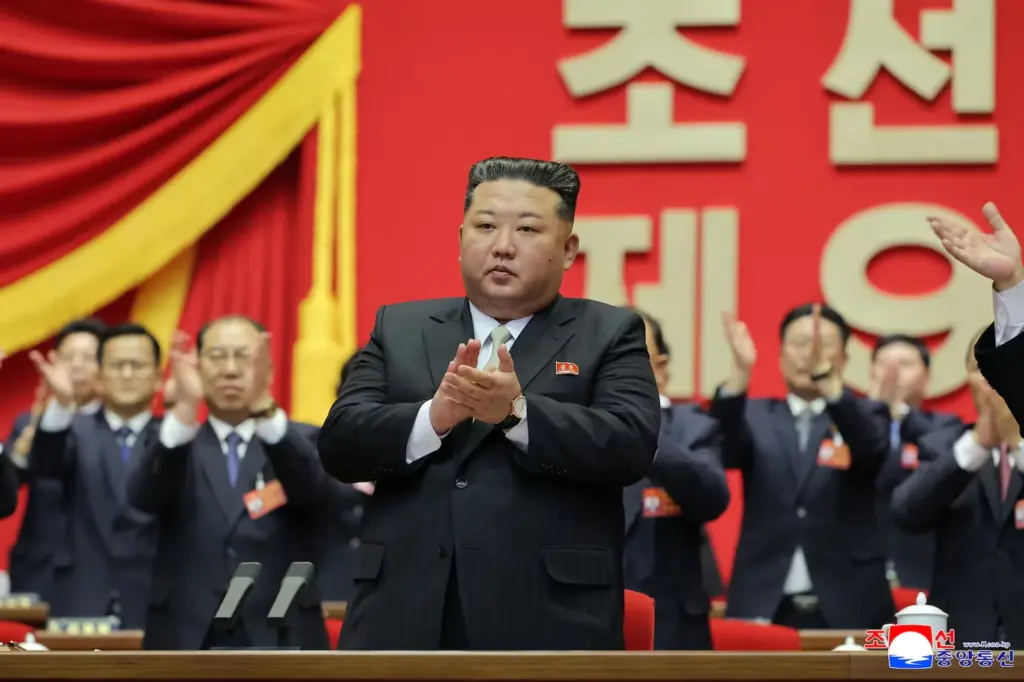
The latest authoritarian drift of the Ortega and Murillo regime has once again triggered criticism from those who place it among the worst dictatorships on the planet. “Nicaragua is becoming a kind of North Korea in the Western Hemisphere,” says Kevin Casas Zamora, secretary general of the International Institute for Democracy and Electoral Assistance (International IDEA), based in Stockholm. The specialist states that the suppression of voting and the prohibition of opposition political parties marks a turning point for the country: never before had the presidential couple concentrated so much power, nor had they shown so little tolerance for dissent.
Reaching this point took time. Casas Zamora states that Ortega has gradually tilted the political playing field in his favor since his return to the presidency in 2007, after a first term between 1985 and 1990. At that time, the expert saw similarities between the leadership of the Sandinista leader and that of Robert Mugabe, who ruled Zimbabwe for 37 consecutive years until his fall in 2017. “He is a former guerrilla leader who came to power through armed struggle and who initially allowed the emergence of a certain democratic practice in Nicaragua, only to later become another despot who eliminates the opposition, imprisons his adversaries, and isolates himself from the world,” he explains.
Casas Zamora identifies points of contact between the shift of the Nicaraguan regime and the speeches of other leaders, which are part of a process of democratic deterioration that has spread throughout the world over the last two decades. “Ortega’s move is a symptom of the next phase of the global attack on democracy, an attempt to challenge the electoral institution and practice itself as a foreign imposition,” he adds. Nord adds that it is a phenomenon that has gained ground in the Global South in the last decade and benefits from democratic disaffection to try to justify more authoritarian models.
The Nicaraguan president has not been the only one to speak out in favor of burying the electoral path and closing the door to the “coup-plotting” and “sellout” opposition. Captain Ibrahim Traoré, who seized power in Burkina Faso after a coup in 2022, has called elections an “imperialist legacy.” “The people have to forget about this democracy business. Democracy is not for us,” said the Burkinabe leader, who enjoys immense popularity in his country, in an interview with state television last April.
In 2021, the Nicaraguan president won the elections with more than 75% of the votes, 60 points above his closest competitor, amidst criticism from the international community and accusations of fraud from the opposition. Casas Zamora assures that now autocrats are dropping their masks. If before the trend among dictators was to simulate elections, now he sees it more likely that more and more of them will directly choose not to hold elections.
Read more Mexico negotiates the future of USMCA amidst Trump’s tariff escalation
The creation of a dynasty
Gerardo Berthin, president of the Freedom House organization, also sees parallels between North Korea and Nicaragua, albeit with differences such as Pyongyang’s extreme isolation, due to the kind of dynasty that has been established in the Central American country and the one that has controlled the North Korean dictatorship since the middle of the last century. Eight of the Ortega-Murillo couple’s children hold positions and spheres of power in the government or state-owned companies. “It is a patriarchal and kleptocratic model, in which public resources are extracted for the benefit of the ruling family,” he states.
The sudden elimination of elections and political rivals has also led to comparisons with single-party regimes, such as Cuba or China. María Fernanda Arocha, head of research for Central America at the ACLED think tank, points out that similarities with the Cuban case abound, from the revolutionary foundational myth shared by both countries to their demographic profile.
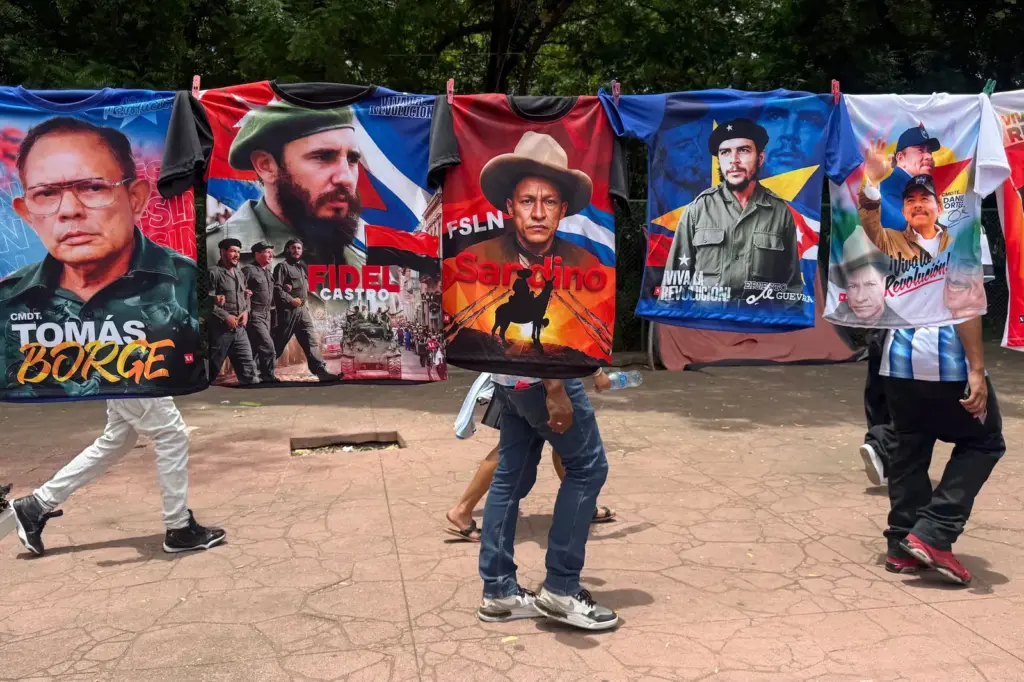
There are, however, some nuances. The Sandinista National Liberation Front, Ortega’s party, does not have the level of institutionalization or the bureaucratic apparatus of the Communist Party of Cuba, Arocha points out. And in Nicaragua, there are no figures outside the ruling family or within Sandinismo, where the president has carried out purges against his former comrades-in-arms, with their own political prominence or social pull.
Erosion of rights
The regional context also provides some clues behind Ortega’s decision. “He sees a risk and is anticipating what happened in Venezuela,” Arocha points out, regarding the capture of Nicolás Maduro by United States forces last January and the establishment of Delcy Rodríguez’s tutored government. The prohibition of elections and the dismantling of the organized opposition can be read as a “defensive move” in the face of Washington’s pressures to force a transition of power, Berthin adds. The US is, despite the charged rhetoric between both countries, the main destination for Nicaraguan exports.
The cult of personality and mechanisms of control over the population are recurring elements in analyses of Nicaragua. Freedom House warns that in the last two decades, no other country in Latin America has lost more civil liberties and political rights, according to its annual measurements. In the rest of the world, the setback is only surpassed by Mali. And the V-Dem Institute places Nicaragua in its report this year at 175th among 179 territories analyzed for the quality of their democracies, even before the announcement by the Managua regime.
The announced measures cast uncertainties over the country’s future. Ortega’s latest moves point to a possible line of succession so that his family can perpetuate itself in power, even after his death. “In the case of North Korea, the death of leaders has implied an immediate family succession,” comments Berthin. “When Ortega dies, there will be the symbol of the co-president and some of the children, who also play an important role in the decisions they make.” However, the president’s health has become a taboo, and the regime has not publicly detailed what will happen after the leader’s death.
Nord points out that autocracies choose to hold elections, even if simulated, to legitimize themselves, obtain information about their acceptance or the opposition, and to have a rotation of elites in their systems. But also to define issues such as succession. “The absence of succession mechanisms can even trigger a civil war or lead to a system that functions as a monarchy,” explains the specialist. “In the long term, that will be the main problem for the Nicaraguan regime.”
“So this is how liberty dies… with thunderous applause.” The phrase is from Episode III of Star Wars and has gone viral on social media as an analogy for the collapse of democracies from within and the rise of authoritarianism in the world. Beyond fiction, also amidst cheers and proclamations, Commander Ortega announced before the Plaza de la Fe, the largest in Central America, that he was ready to bury the last vestiges of democracy in his country.
Read more Video analysis | The cancellation of elections in Nicaragua consolidates Daniel Ortega’s regime