






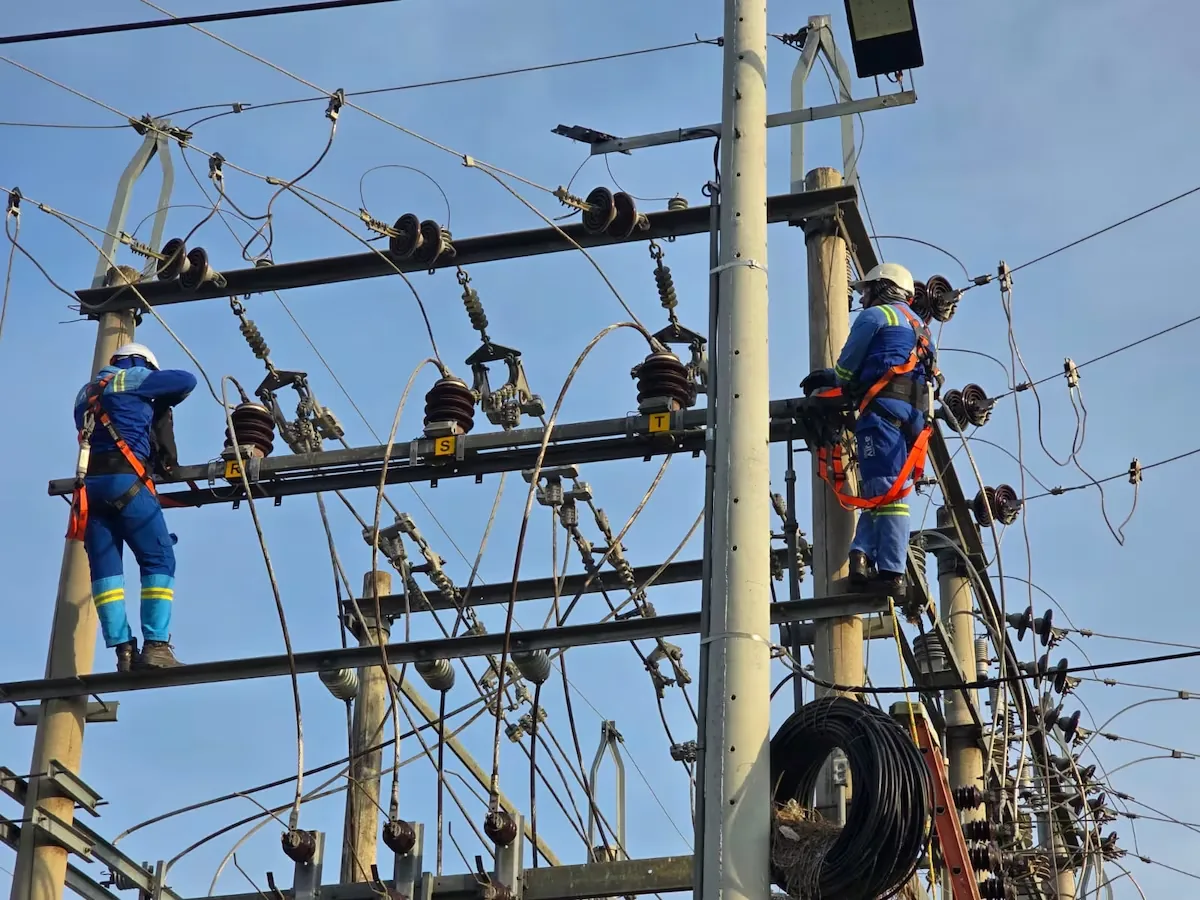
Energy is sustained by decisions, not by speeches. It travels through transmission lines and gas pipelines planned years in advance, and through substations that rarely make headlines, but whose absence can paralyze a country.
Read more Colombia is preparing to face the ‘El Niño’ phenomenon with an emergency declaration
Societies do not prosper from the quality of their diagnoses. They prosper when they convert those diagnoses into works and infrastructure. The new Government in Colombia arrives at a time when the time for postponing decisions has run out.
Over the last few years, the country opened a necessary discussion about energy transition. However, too often it ended up facing two objectives that should advance together: protecting the environment and building the infrastructure that makes a cleaner economy possible.
While illegal mining and deforestation continue to destroy ecosystems of enormous environmental value, indispensable projects to transport electricity and incorporate new renewable sources remained blocked for years by processes that, in many cases, have prioritized particular interests over the general interest. Citizen participation strengthens democracy. What cannot happen is that it ends up indefinitely preventing essential works for millions of Colombians. When a transmission line takes a decade to build, the cost ends up being paid by all of society.
In Colombia, the consequences have already begun to be felt. For years, planning was based on overly conservative demand scenarios, and reality disproved those projections before the country adjusted its decisions. Energy consumption is growing above expectations, 55% of transmission projects are delayed, and several generation sources are still waiting for the necessary infrastructure to deliver their energy to the system. These are not isolated facts. They are the consequence of having postponed decisions for too long.
The combination of these factors takes on an even greater dimension in the face of the upcoming El Niño phenomenon. It is fair to acknowledge that, in the last months of the outgoing Government, indispensable environmental licenses began to be unblocked to accelerate projects that had been waiting for a decision for years. This progress confirmed that it is possible to protect the environment without giving up development. The challenge is that these decisions arrive when the energy system’s room for maneuver is increasingly limited. Colombia will face higher temperatures, record electricity consumption, and the risk that sedimentation in some reservoirs will force preventive maintenance that reduces generation.
Added to this is a transmission network that today does not allow energy to be transported from regions with surpluses, such as Antioquia and the west, to the center of the country. If this situation persists, the system will continue to lose the flexibility necessary to respond precisely when it is most needed.
But infrastructure not only faces the challenge of what remains to be built. It must also respond with assets that arrive weakened at this critical moment.
In this context, the situation of Air-e, the company that distributes electricity to 1.3 million users in the Caribbean region of Colombia, requires a structural solution. After nearly three years of state intervention, the company faces a deep financial deterioration with a debt that already exceeds 2.5 trillion pesos, affecting the payment chain of the electricity sector, and an infrastructure that shows years of insufficient investment and maintenance. When one of the country’s main energy distributors reaches a period of maximum demand with a lagging network and compromised financial balance, the risk ceases to be regional and begins to compromise the reliability of the national electrical system.
Exactly the same thing happens with natural gas. For years, Colombia stopped investing in exploration, production, and infrastructure, and today faces a growing dependence on imports. This lower national supply, coupled with market concentration and regulatory uncertainty, has contributed to increases of over 300% in the price of the molecule, making it even more urgent to strengthen the conditions that guarantee a reliable and competitive supply. Gas is the backup that guarantees the reliability of the electrical system when hydroelectric generation decreases. But that reliability also depends on having the necessary infrastructure to timely supply the main thermal plants when they are most required. No serious country designs its energy system for normal days; it designs it to respond when the worst circumstances coincide. Pretending to face a severe drought without ensuring gas supply and the necessary infrastructure to supply the main thermal plants means assuming a risk that could have been avoided with better planning.
In this entire context, the designation of Dr. María Nohemí Arboleda to head the Ministry of Mines and Energy by President-elect Abelardo de la Espriella constitutes a positive signal. Her experience, knowledge, and technical legitimacy will be decisive in ensuring the continuity of the decisions the country needs and accelerating the development of energy infrastructure.
Nothing will be resolved by seeking culprits. Nor by believing that companies can replace the role of the State. Each has a different responsibility. The private sector contributes knowledge, technical capacity, and execution capacity. The State must guarantee stable rules, timely decisions, and institutions capable of thinking beyond the next political cycle. The energy security, the country’s competitiveness, and the quality of life of millions of Colombians depend on this balance.
For more than three decades, Colombia has built one of the most reliable electrical systems in Latin America. That heritage is not guaranteed forever. Maintaining it will require exceptional coordination among the Government, regulatory authorities, companies, and communities. It will require recovering the ability to anticipate and understand that energy infrastructure is not improvised when a crisis arrives; it is built many years in advance.
Infrastructure has a virtue that politics rarely has: it transcends those who make decisions. The transmission lines we build today will continue to carry energy long after this and the next Government. The gas pipelines we expand today will continue to support the economy for several decades. That is the difference between managing a conjuncture and building a country.
Nations do not fail for lack of ideas. They fail when decisions arrive after reality has already overtaken them. Colombia still has time to avoid that mistake. But to achieve it, it will have to regain the ability to decide before the next crisis arrives.
Read more Video analysis | The Caribbean power of the De la Espriella Government