









EL PAÍS offers the América Futura section openly for its daily and global informative contribution on sustainable development. If you want to support our journalism, subscribe here.
Read more The value of deciding before the crisis
At home or in a bar. Alone or accompanied. In the morning, after lunch, or as an excuse for a long chat. In Argentina, any moment seems good for a coffee. Each person consumes, on average, about 208 cups a year, equivalent to about a kilo of coffee. However, behind this daily ritual lies a paradox. Almost none of the millions of cups served each day are prepared with beans grown on Argentine soil.
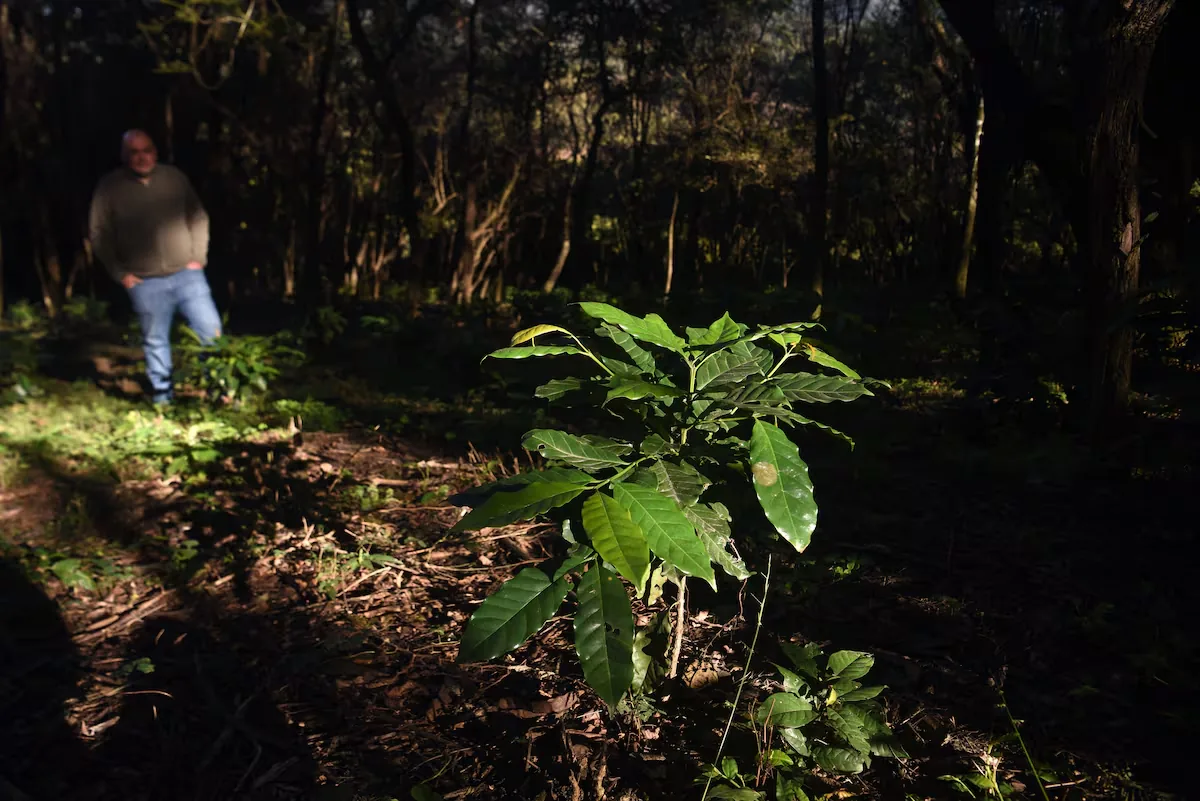
The beans arrive from Brazil, Colombia, and Peru. But also from other destinations, driven by the rise of specialty coffees and barista culture in the country. Since 2025, the province of Tucumán, located in northwestern Argentina, has been conducting experimental coffee production tests in piedmont areas, in an attempt to contribute to the productive reconversion of a province where sugarcane and lemon are pillars of agribusiness.
Currently, about 35 producers cultivate between one thousand and nine thousand coffee plants each. In 2025, they carried out the first harvest, and this year they expect to complete the second. By 2027, many of these plants will reach productive maturity, a stage where they offer higher yields and better quality. This process coincides with the displacement of tropical crops towards the subtropics, a phenomenon that opens new possibilities for coffee in regions where decades ago it was unviable.
“Coffee and sugarcane entered Tucumán with the Jesuits 400 years ago. Sugarcane yielded more fruit and became established in the province. Then there were other attempts, and the province even exported coffee at one point,” says Mariano Jasinski, agronomist, advisor, and leader of the group of coffee producers in Tucumán.
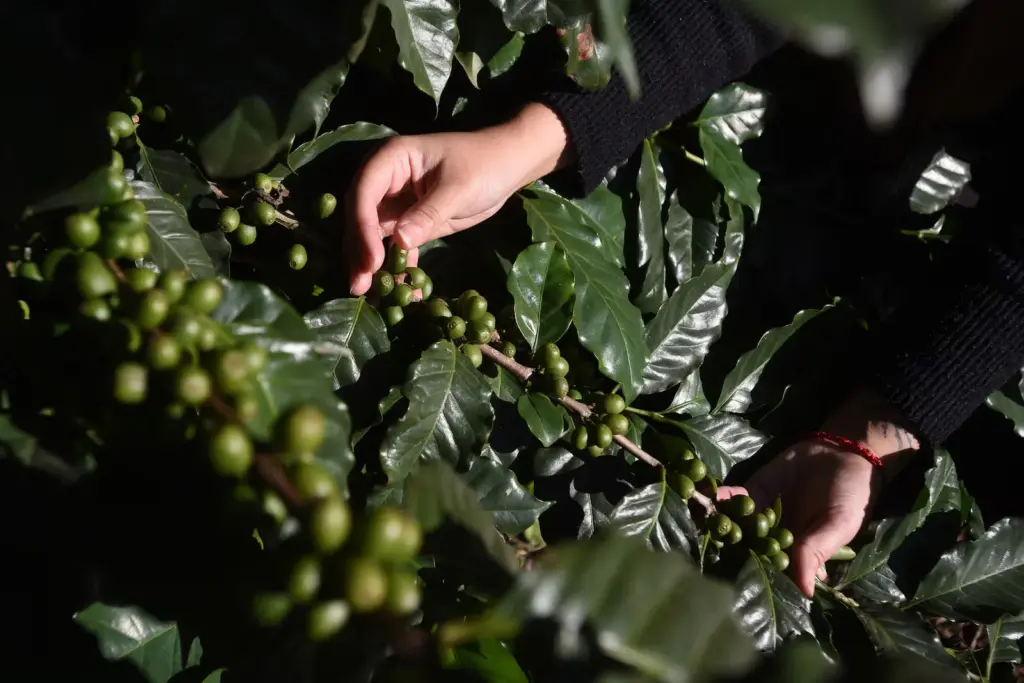
Understory production, which is carried out in the province, allows for better cup quality, according to Jasinski. “For now, production is developed in piedmont areas, where conditions offer better results than the open-sky cultivation predominant in Brazil. Although they obtain a higher yield per hectare there, our bet is on the quality of the bean. We did the first harvest in 2025, and production from the new plants, which are two and a half years old, is already coming out. For an Argentine coffee industry to exist, the commitment of the producer and all sector actors is needed,” he explains.
With the aim of developing viable and efficient production, the Institute of Productive Development of Tucumán (IDEP) began to promote visits and missions with technicians and producers from Brazil and Colombia to tour the plantations and create a development plan for coffee cultivation in the province. “Frosts can also be a limiting factor, but with the phenomenon of global warming, there is a displacement of tropical crops to the subtropics. We took advantage of the fact that the province had a history of coffee and the existence of some producers who already had plants and a well-defined productive cycle,” said Juan Casañas, vice president of IDEP, which depends on the provincial government of Tucumán. The plantations are mainly concentrated in the west, although there are also ventures in other parts of the territory.
Currently, in the Yungas of Salta province, beans are grown to produce Café Baritú, one of the first brands of Argentine origin coffee. Casañas maintains that the future of Argentine coffee lies in regional production, driven by the northern provinces of the country, and not in the isolated development of a single jurisdiction.
Read more Colombia is preparing to face the ‘El Niño’ phenomenon with an emergency declaration
“We have already sold plants to Salta, Jujuy, Catamarca, and even Corrientes. We have the commercialization part quite well oiled. The specialty coffee business is growing, and there is a lot of room to grow there. We also made progress in that aspect, with the signing of a training agreement with Café Cabrales, and we are working on educating consumers’ palates,” said Casañas, who sees an opportunity in the trend among younger people to move away from alcohol.

“If northern Argentina works in an articulated way between the public and private sectors, I believe we have the opportunity to position ourselves productively and consolidate a coffee hub of global relevance. In Panama, Colombia, and Brazil, there is already interest in knowing what will happen with Argentine coffee. They are used to associating the country with steak or Malbec wine from Mendoza. Now, an Argentine coffee can also appear,” he concludes.
Tucumán is betting on producing specialty coffee rather than developing an industry based on volume. Although the beans have not yet reached the market, the first tastings have already begun. In one recently held in Tafí Viejo, 10 kilometers from the capital of Tucumán, specialists from Café Martínez, the Argentine chain that today has more than 200 stores in the country and abroad, participated.
“The first coffee already presented sweet notes, with a harmonious balance and an acidity that was not very high, but perceptible, generating freshness in the mouth,” evaluated David Ledesma, a specialist in coffee origin and quality at Café Martínez, after his visit to Tafí Viejo. “Peach notes appeared. For an experimental bean, it has a very high profile. I expected a greener, more astringent coffee with little sweetness. Instead, it already had a very good harmony in the mouth.”
The specialist highlighted the “sweet, fresh, and fruity” notes of Tucumán coffee, as well as the region’s conditions with abundant rain, humidity, and vegetation. “These are conditions similar to those of a coffee plant in Central America. The big challenge is frost. The conditions are given, and there are many fruit trees that provide shade. The challenge is to turn frosts, traditionally a problem, into an advantage,” he pointed out.
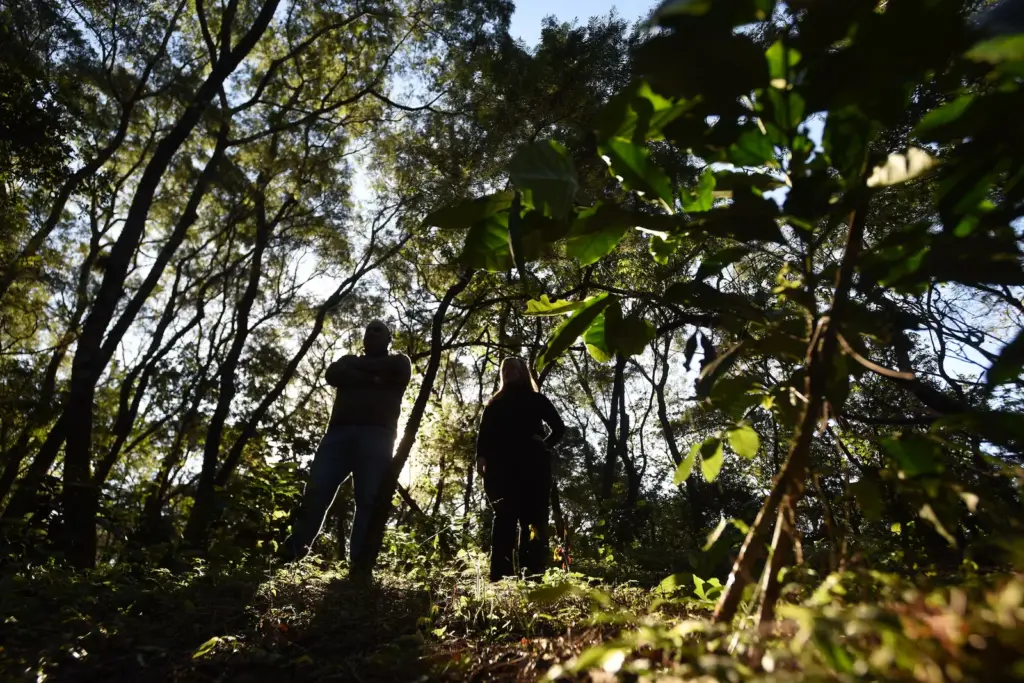
Northern Argentina’s bet is to produce high-quality coffee with complex profiles that can conquer a market eager for the world’s second most consumed beverage. With favorable climate and soil conditions, interested producers, and a network of institutions and specialists promoting the project, Tucumán seeks to lay the foundations for its own coffee industry. As a specialist, Ledesma is excited about a local coffee with identity: “The bet is on exceptional microlots; it will be a niche crop. But a niche can generate an important market. El Salvador is smaller than Tucumán, and yet it is a coffee-producing country. There is potential. Now we will have to see how far it can scale.”