


Bad news arrives from South Korea for the Galician region of Ribeira Sacra. The UNESCO World Heritage Committee, meeting in the Korean city of Busan, rejected on Monday to award it this recognition and returned its candidacy for the central government and the Xunta to introduce improvements. The race of this enclave located between the provinces of Lugo and Ourense to become a World Heritage Site remains alive, but is up in the air. “We have one year to try again. We will redouble our efforts and I hope that next year we will succeed,” wished the president of the Xunta, the popular Alfonso Rueda, who thanked the support of the socialist Pedro Sánchez’s government.
The Ribeira Sacra is the only Spanish candidacy among the 33 presented for World Heritage that the 21 countries that make up the committee analyze in Busan. Under the name Water Landscape of Ribeira Sacra, it already started at a disadvantage after the unfavorable report issued last March by Icomos, UNESCO’s advisory body. The document, although it recognizes the good state of conservation of the territory and the quality of its tourist infrastructures, questions whether the landscape of this region meets the necessary characteristics to be considered an exceptional example of traditional human settlement or unique use of the territory.
In addition to considering it “vulnerable to depopulation,” Icomos doubts that it meets the requirements of “integrity and authenticity” and rejects that the reservoirs built on the Miño and Sil rivers that cross the region represent “an organic evolution and continuity” of the traditional mills. The Xunta and the central government argued upon learning of this ruling that it is not binding. The conselleiro of Culture, the popular José López, claimed that other sites have obtained the distinction with unfavorable advisory reports.
This Monday the plenary session of the UNESCO committee approved a technical return, the most favorable option when a candidacy does not achieve immediate inscription. The proposal passed thanks to the support of a block of 15 countries led by Peru, reports Europa Press. Other states such as Switzerland and the Czech Republic advocated for a postponement, a more severe measure that would have forced practically the entire candidacy to be redone. The agreement reached includes an on-site advisory mission from Icomos. The experts from this UNESCO advisory body will thus work jointly with the Xunta and the central government to perfect the candidacy before it is evaluated again. Icomos itself has expressed satisfaction with this solution and has shown its willingness to collaborate.
This region, crossed by the Miño and Sil rivers, aspires to become the fifth site in Galicia chosen as a World Heritage Site, after the historic center of Santiago de Compostela, the Camino de Santiago, the Roman Wall of Lugo, and the Tower of Hercules in A Coruña. The path to UNESCO distinction has been very bumpy. In 2021, the government and the Xunta already decided to withdraw their candidacy to reformulate it.
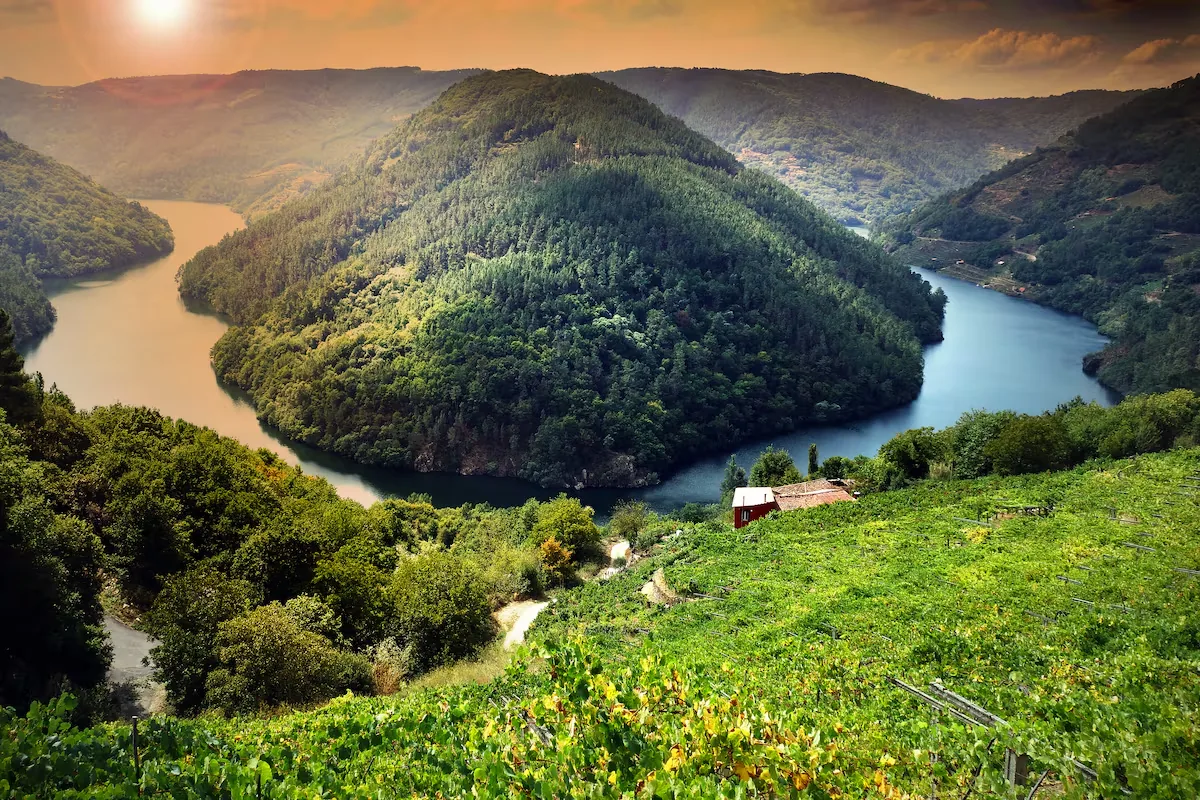
Ribeira Sacra presents itself to UNESCO as a territory “sculpted by water and a paradigm of a water culture, in which the traces that have marked its construction over more than 1,500 years of continuous occupation are vividly recognized,” born from the “ancient eremitic and monastic tradition.” It includes 83 documented monasteries, a network of springs and water-related devices from all eras, from the unique drainage systems of the “socalcos” or cultivation terraces to sacred fountains, 668 traditional mills, 19th-century power plants, or 20th-century reservoirs. All this over steep river canyons that have required the implementation of unique cultivation techniques, including the so-called heroic viticulture.
A few days ago, the president of the Xunta described the candidacy as “solid, rigorous, and innovative.” He assured that it is the result “of a long work started decades ago” and coordinated between the Galician government, the Spanish ambassador to UNESCO, Miquel Iceta, and the Ministry of Culture. After learning that it has not yet succeeded before UNESCO, the BNG has asked the Rueda government that in addition to improving the candidacy, it changes its policies in Ribeira Sacra to preserve it. “The correction should also be made in policies,” defends nationalist deputy Iago Tabarés, “in betting that it is not simply a declaration, but that it is a space to be revitalized, conserved, and lived in.”
Read more The Canary Islands will support the Government’s new regional financing